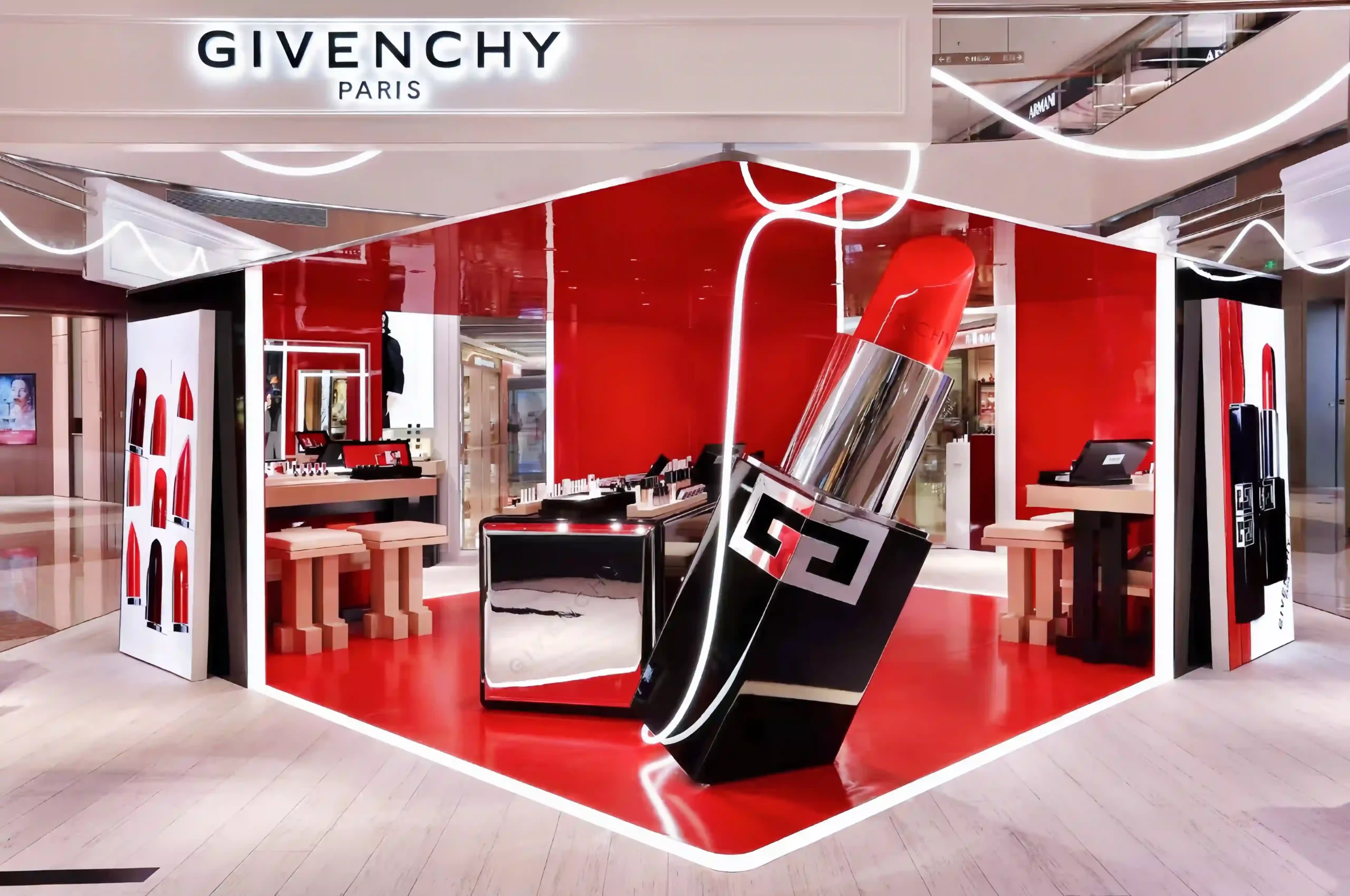
Seasonal retail window displays work because shoppers already understand the mood before they look closely. Christmas means gifting and celebration. Spring means renewal and flowers. Summer means travel and lightness. Valentine’s Day means romance. The emotional context is already there — the display’s job is to make that feeling belong to the brand.
But from a production point of view, seasonal windows are some of the most demanding projects a brand can commission. They have fixed deadlines, multiple stores, fragile finishes, customized props, export packaging and very little room for delay.
This guide covers seasonal retail window display planning for fashion, beauty and jewelry stores, with practical production notes from a display props manufacturer’s perspective. If you need broader creative direction first, start with our full guide to retail window display ideas, then return here to plan your seasonal campaign at the production level.
What Makes a Seasonal Retail Window Display Effective?
A seasonal retail window display is a storefront installation designed around a specific time of year — such as Christmas, spring, Valentine’s Day, summer, Lunar New Year or a product launch period. The display uses seasonal cues to connect the brand’s product with a moment shoppers already care about.
A strong seasonal window should do three things. First, it should make the season instantly recognizable from the street. Second, it should connect the seasonal mood to the brand’s product, not just to the holiday itself. Third, it should be realistic to produce, ship and install before the campaign deadline.
The idea can be emotional, but the execution needs discipline. A concept that cannot be produced on time, packed safely or installed cleanly is not a good seasonal display — no matter how beautiful it looks in a rendering.
Christmas and Holiday Window Displays
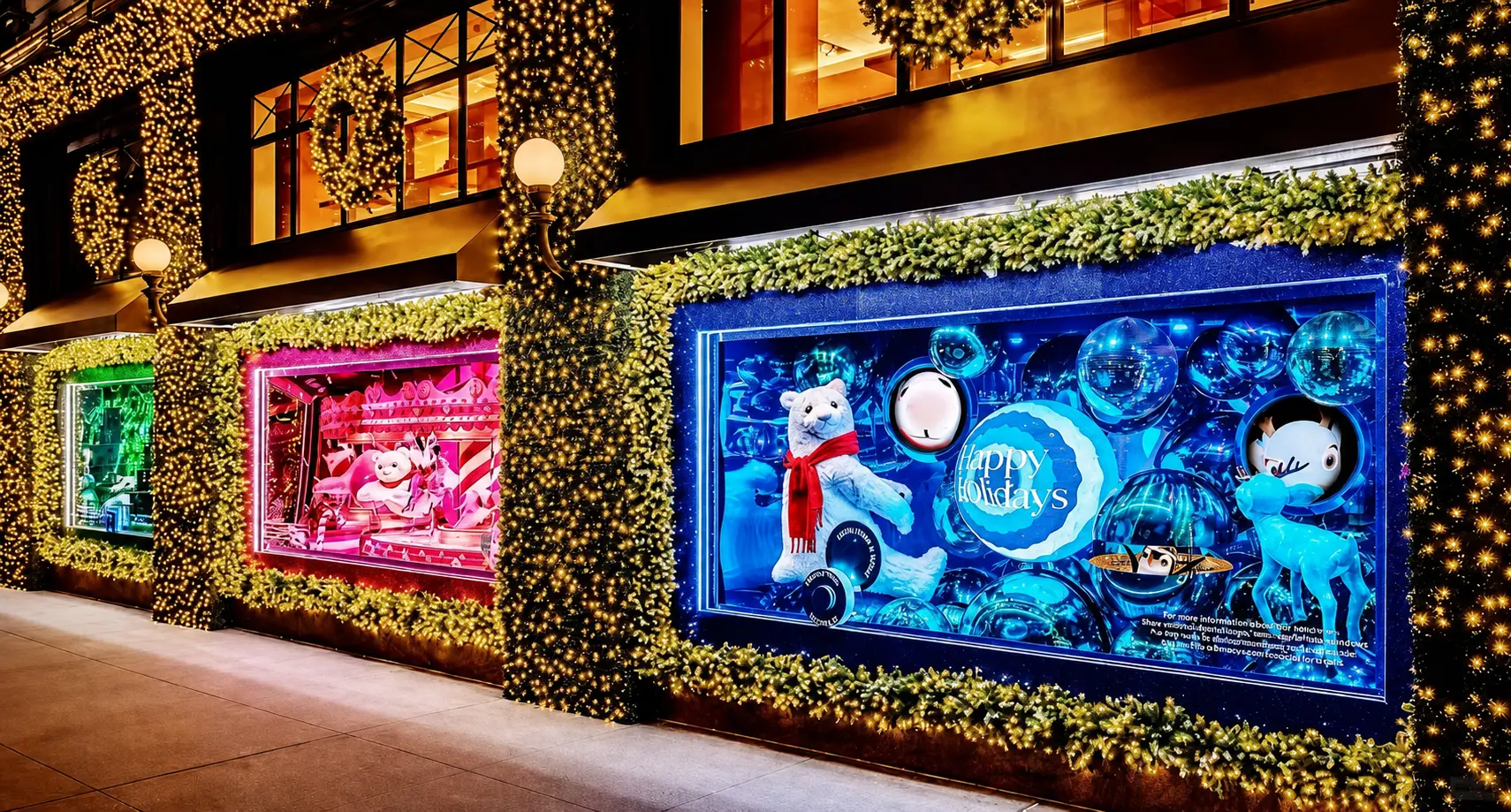
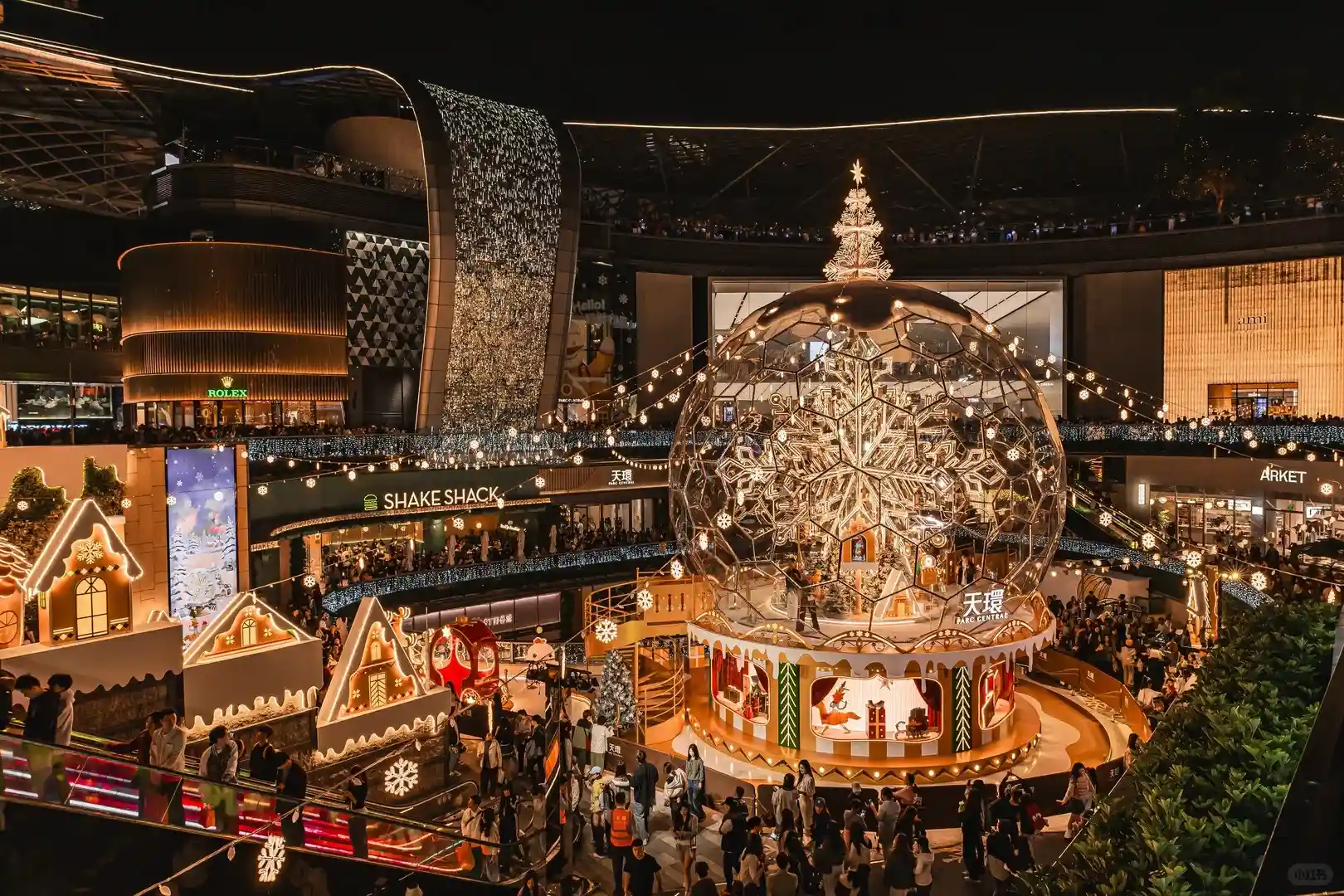
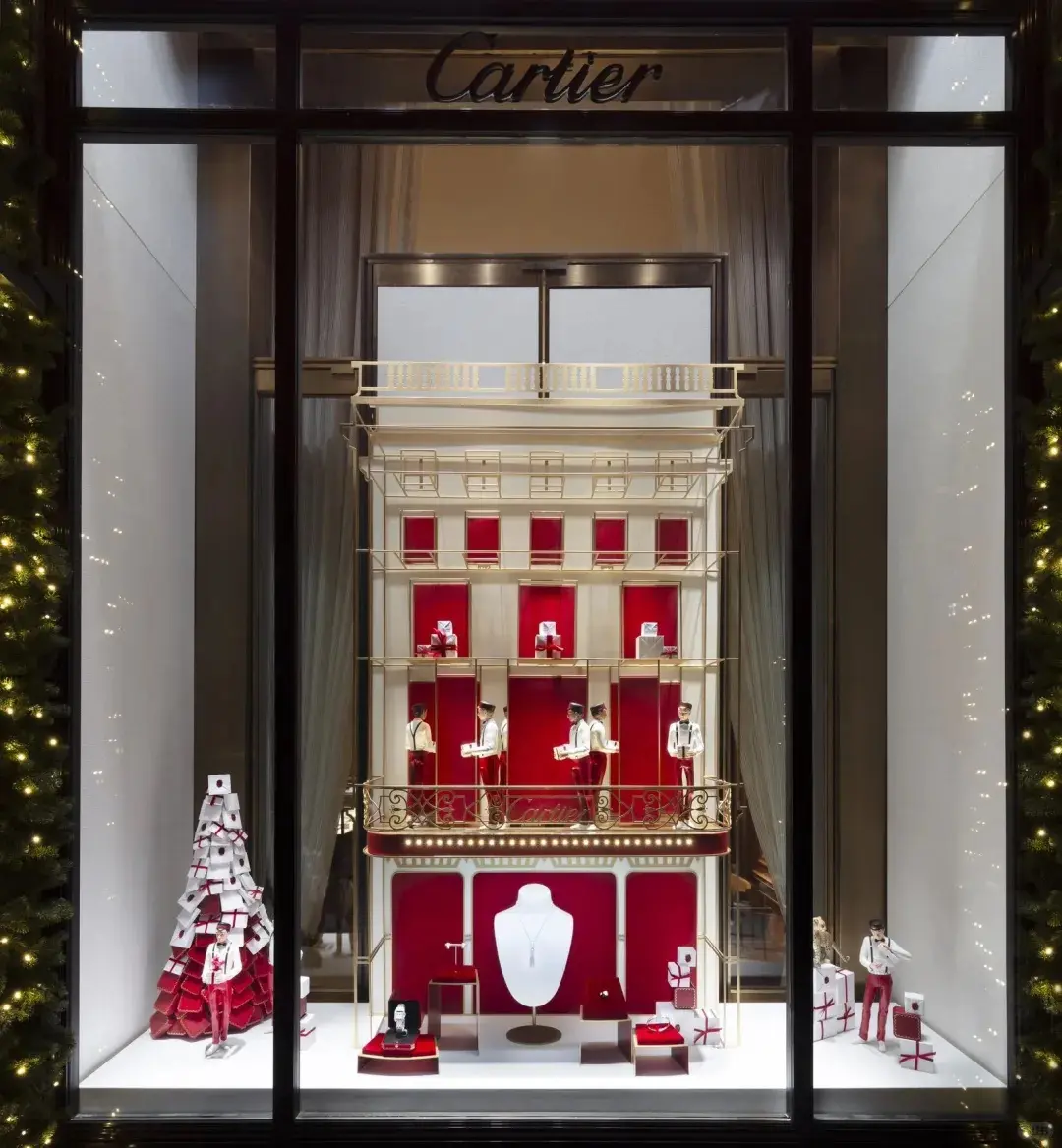
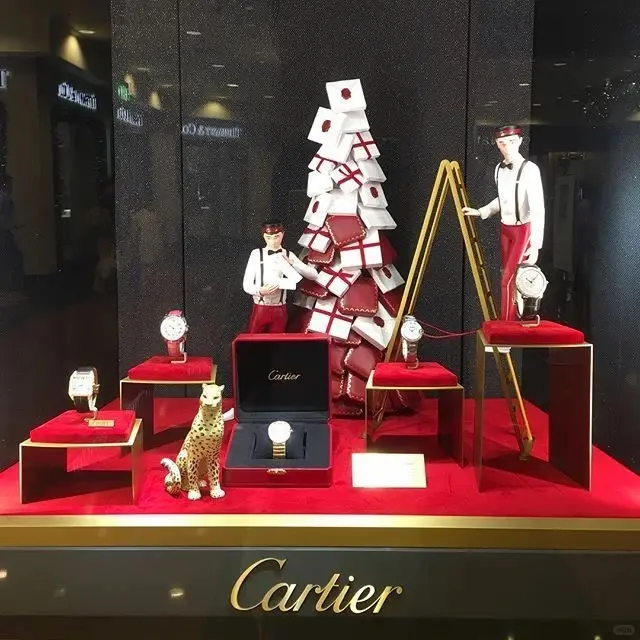
Christmas windows are usually the most competitive seasonal displays of the year. Every brand competes for attention, and every shopper is already primed for gift-oriented storytelling.
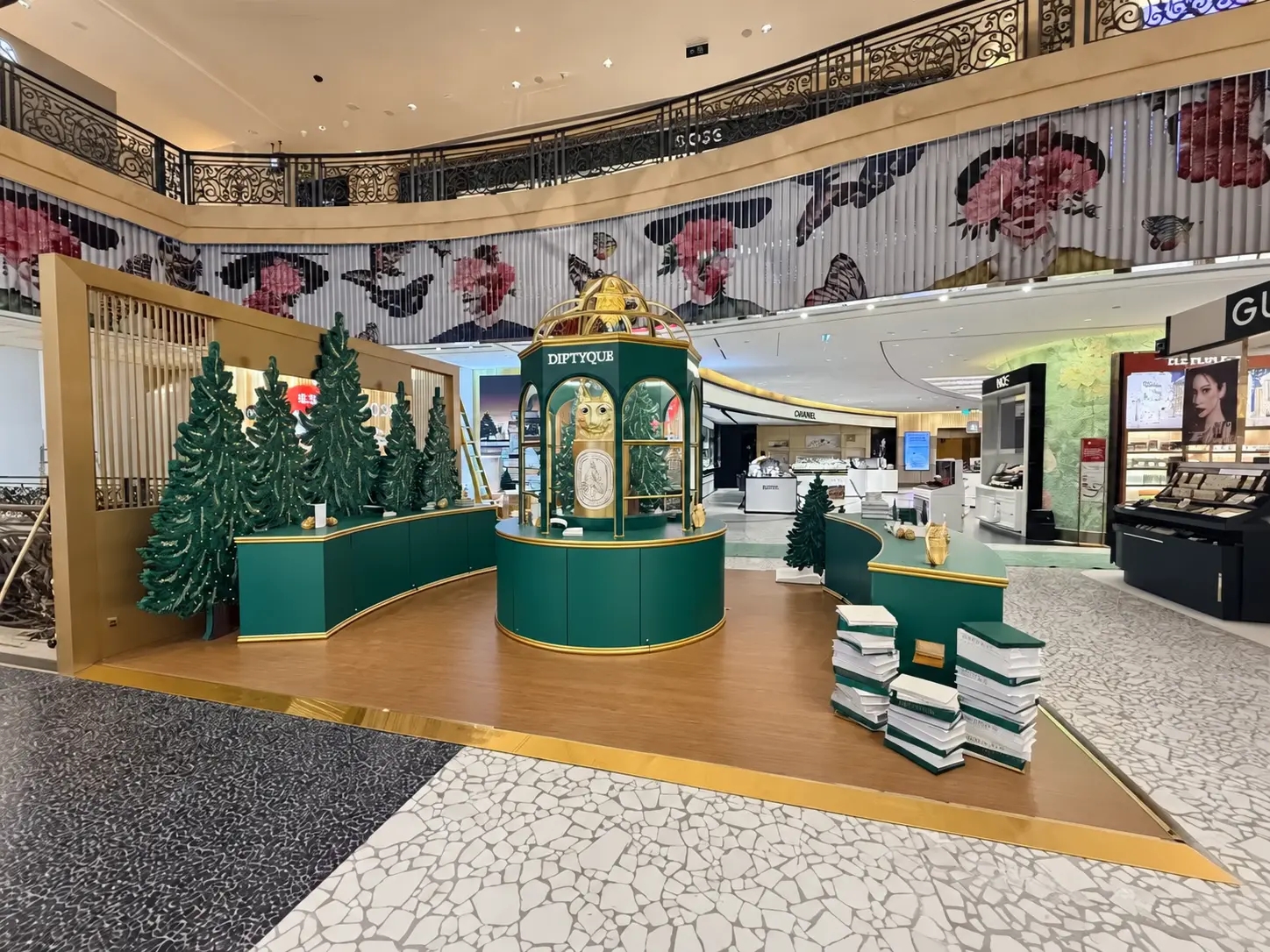
For fashion brands, Christmas windows typically use mannequins, gift boxes, oversized ornaments, snow textures, ribbons, metallic finishes and warm lighting. For beauty brands, they may feature oversized product replicas — a perfume bottle sculpture, candy-shaped props, mirrored balls or glowing gift sets. For jewelry brands, Christmas windows tend to work better with restraint: velvet surfaces, gold accents, soft directional lighting and precise product focus.
Production planning for Christmas windows
Christmas display production follows a well-established industry rhythm. For global retail rollouts, brands and agencies typically begin concept discussions in April or May. By June and July, sample rounds are usually underway — confirming materials, finishes, colors and structural details. Starting sample confirmation in August is generally too late for sea freight delivery to European or North American stores before mid-November installation dates.
Sea freight to Europe or North America takes approximately 40 to 50 days. If production finishes in September, goods may not arrive at the client warehouse until late October or early November — leaving very little installation buffer. For urgent projects, air freight can deliver door-to-door in roughly 8 to 12 days, but at significantly higher cost.
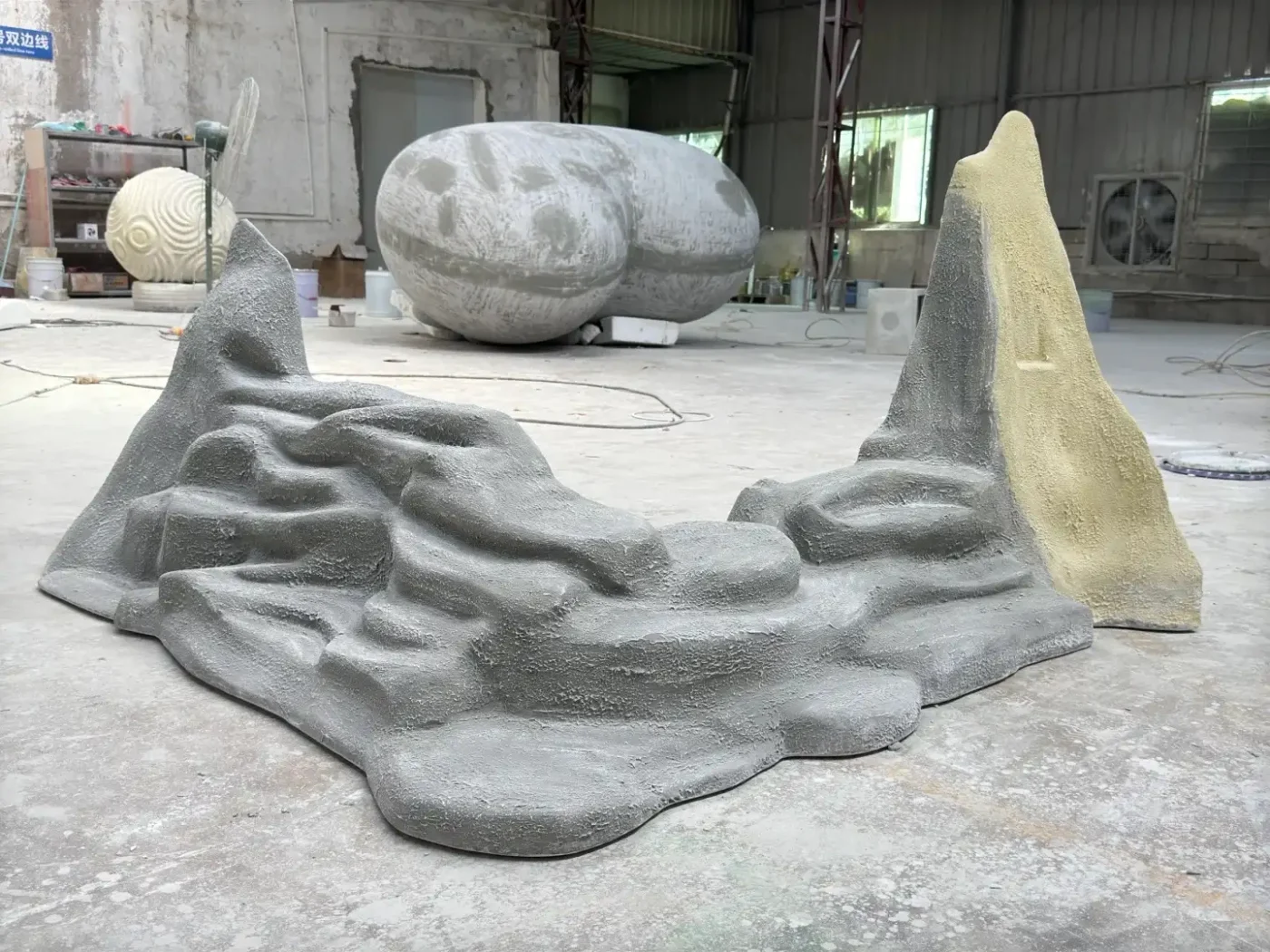
If the display includes FRP sculptures, flocked surfaces, chrome or electroplated finishes, acrylic elements, LED lighting or custom packaging, each of these materials adds production steps that must be sequenced correctly. Flocking, for example, is applied after the FRP body is complete and surface-filled, so it cannot start until the sculpture is structurally finished. Chrome and electroplated finishes follow a similar dependency — vacuum metalizing requires surface preparation with two-component body filler, sanding, and base coating before the metallic layer can be applied.
For a detailed Christmas-specific timeline, see our Christmas window display production timeline for global retail rollouts.
Spring Floral Window Displays
Spring windows are a natural fit for fashion, beauty, fragrance and jewelry brands. Flowers immediately communicate freshness, softness and renewal. The floral direction can be romantic, sculptural, abstract or oversized — from delicate printed petal graphics to immersive garden-scene installations with large artificial flowers, paper flowers, EVA foam roses, FRP petals or mixed floral compositions.
Production planning for spring floral displays
Floral props require material decisions based on scale, durability and campaign duration. Paper flowers can create beautiful layered effects but are fragile during transport and handling. EVA foam produces soft, lightweight oversized petals but has limited structural strength for very large installations. FRP is the more durable option for sculptural flowers that need to hold shape, support their own weight and survive repeated handling across multiple stores.
Artificial flowers can add background depth and layering but should be specified carefully — low-quality artificial flowers can undermine a premium window instantly.
For spring campaigns launching in March, production planning ideally begins in December or January. FRP floral prop sampling — from mould creation through electroplated or painted finish — typically takes around 15 working days. Batch production for a multi-store rollout adds another two to four weeks depending on quantity and finish complexity.
Valentine’s Day Retail Window Displays
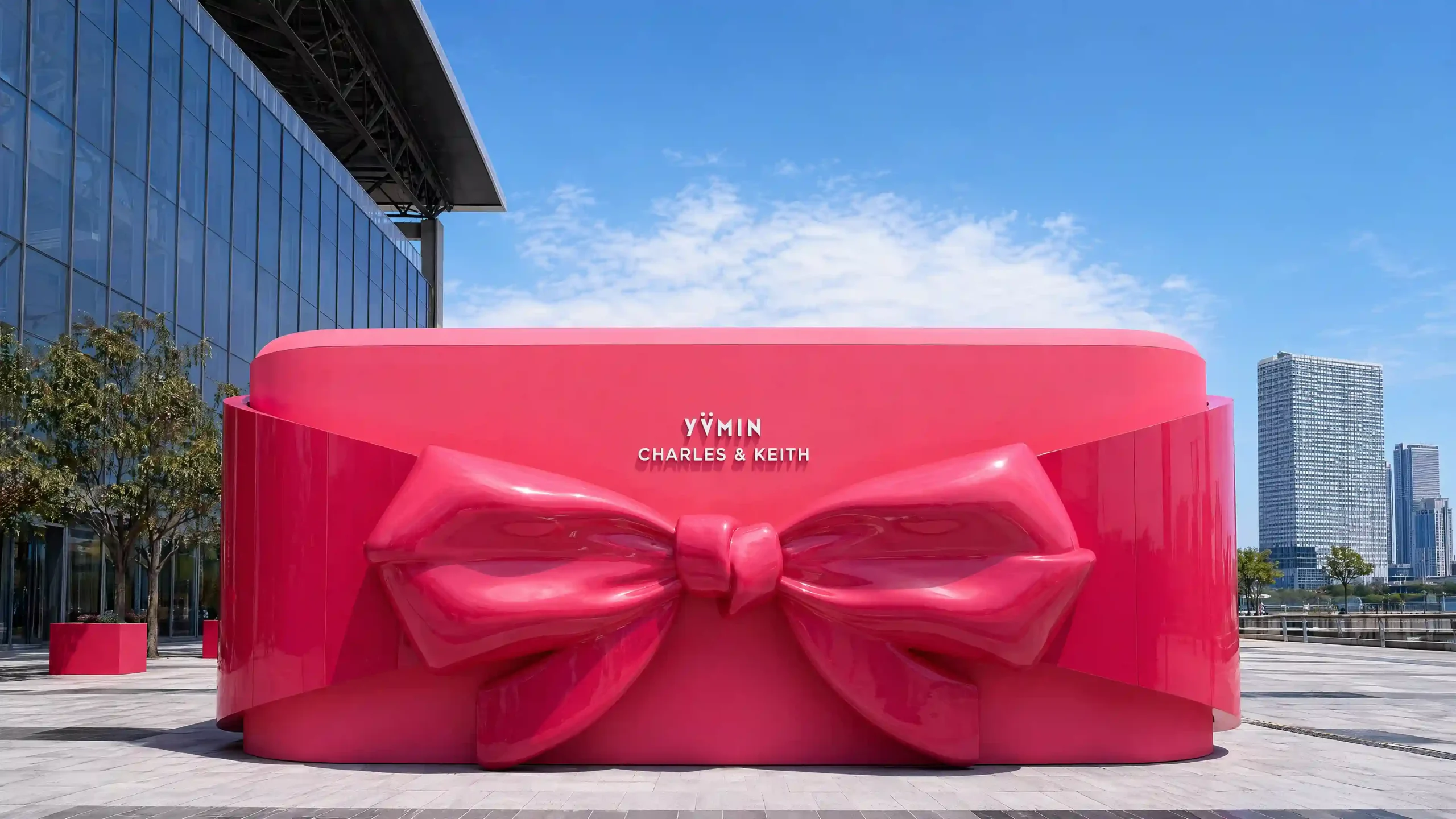
Valentine’s Day windows commonly use hearts, red and pink tones, flowers, ribbons, gift packaging and intimate lighting. For jewelry brands, this season is especially strong because the product naturally connects with gifting and emotion. For fashion brands, Valentine’s displays can range from playful to sophisticated. For beauty brands, lipstick, perfume, blush and skincare gift sets can become the visual hero.
Production planning for Valentine’s windows
The most effective Valentine’s displays avoid generic decoration and instead connect the seasonal shape language to the product itself. A heart motif can function as a product platform, a suspended sculptural prop, a mirrored form, a lightbox graphic or an oversized acrylic sculpture — each version requires a different production method and material.
Valentine’s campaigns typically install in late January or early February. Working backwards, production should ideally be confirmed by November, with sampling completed before the Christmas factory shutdown period. This is a common planning gap — brands focus on Christmas production through November and December, then realize Valentine’s materials have not been briefed.
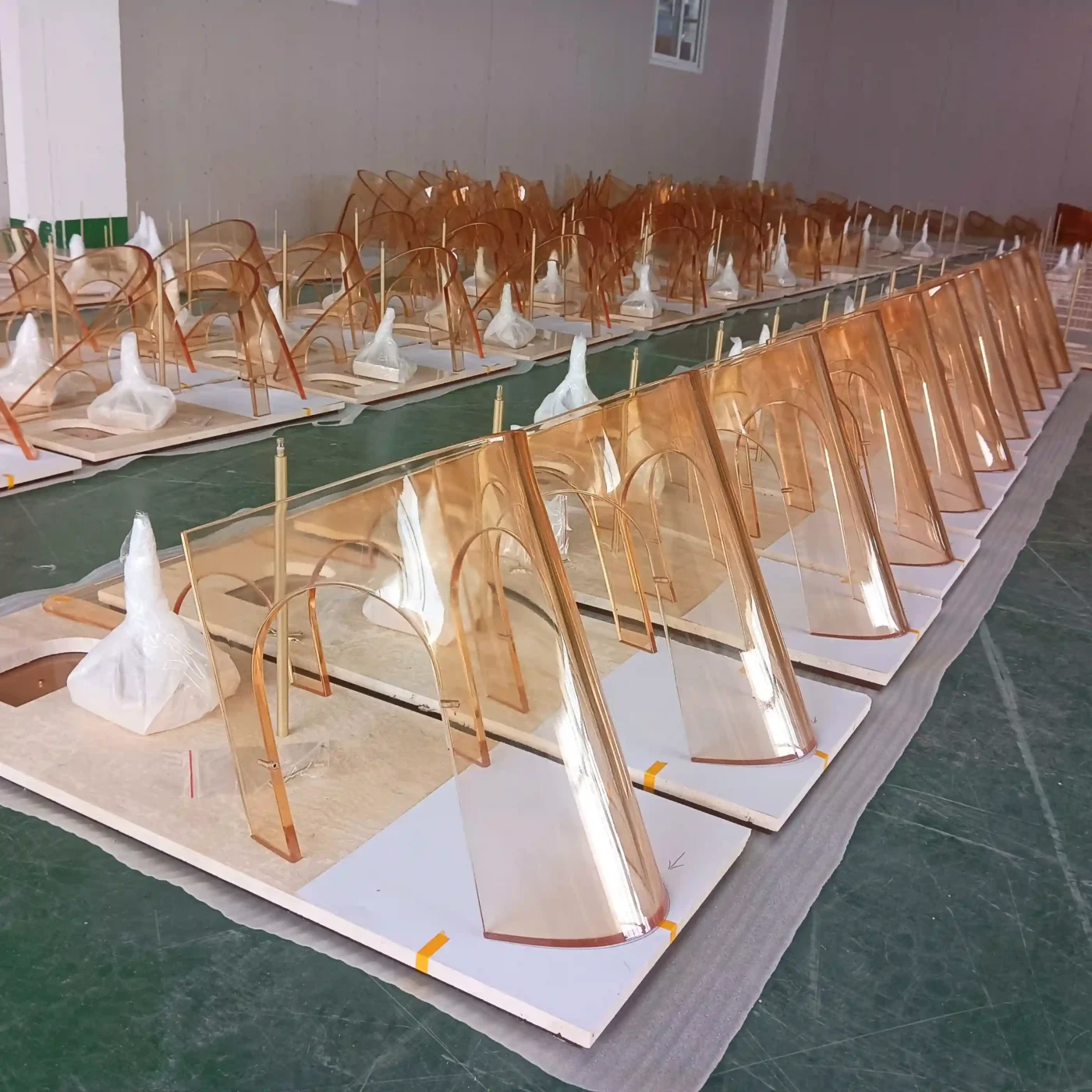
Materials commonly used for Valentine’s display props include acrylic (for clean, polished heart forms and tinted surfaces), mirror-finish stainless steel, painted FRP, velvet-covered platforms and printed lightbox graphics.
Summer and Resort Window Displays
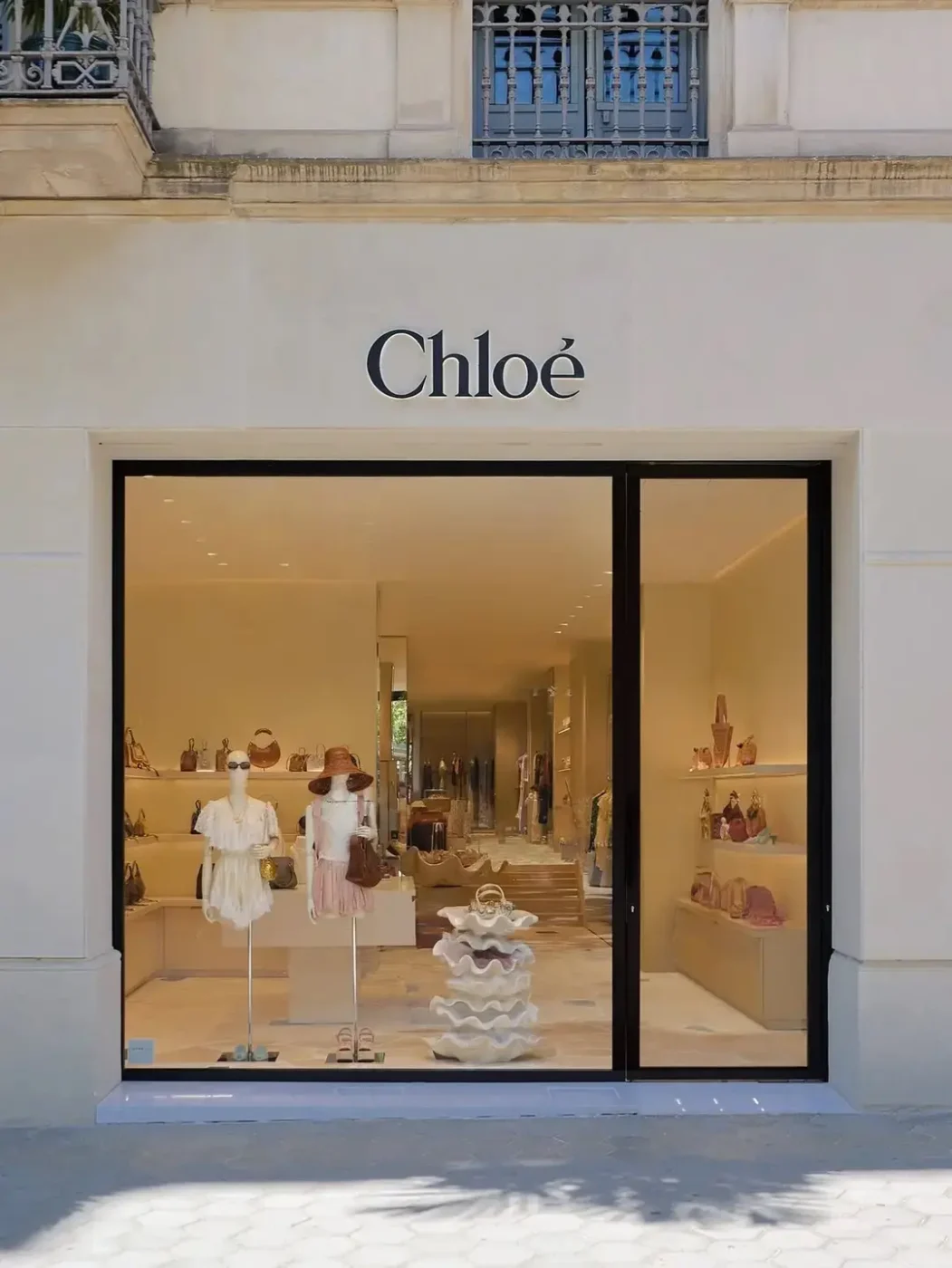
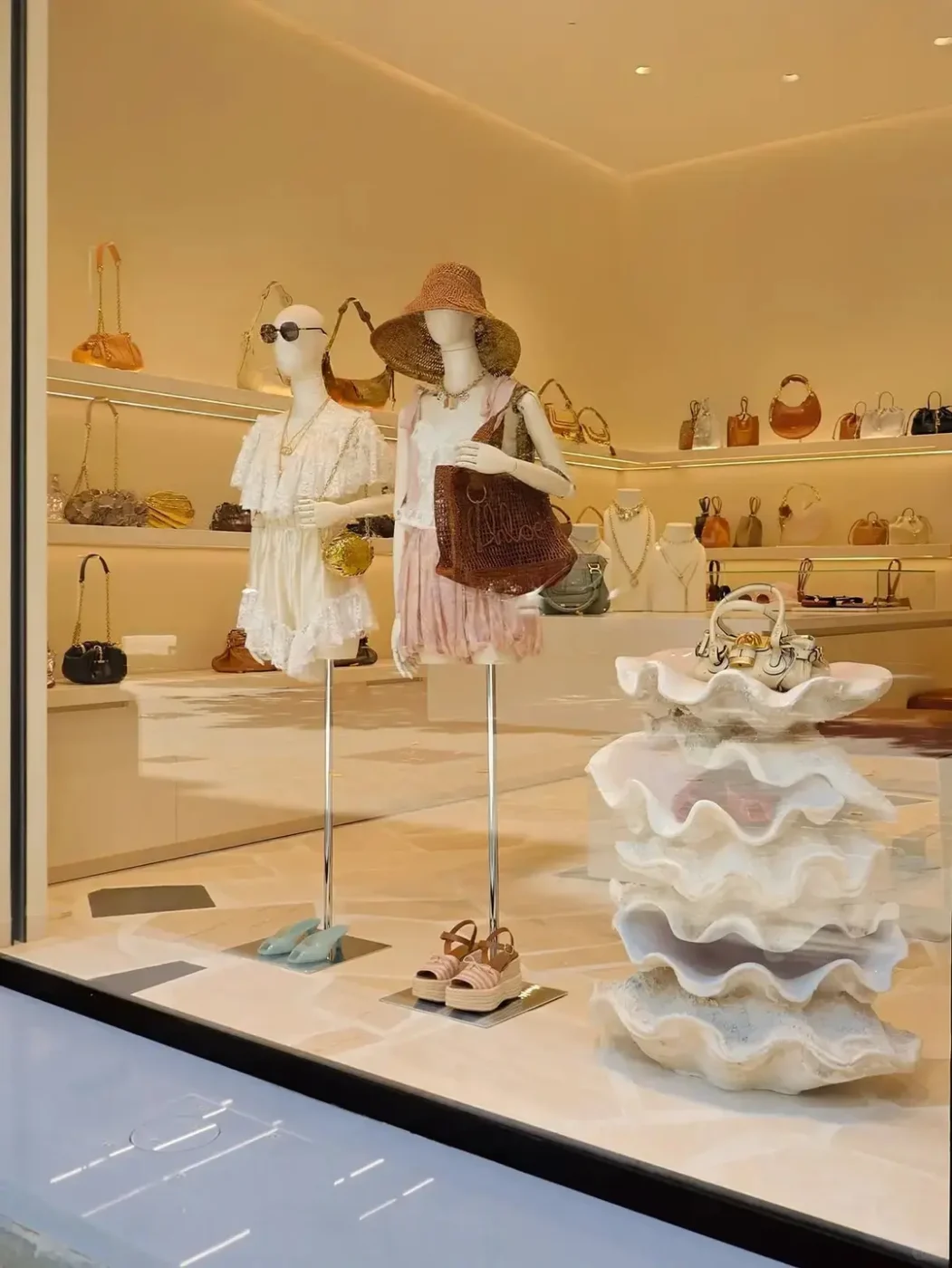
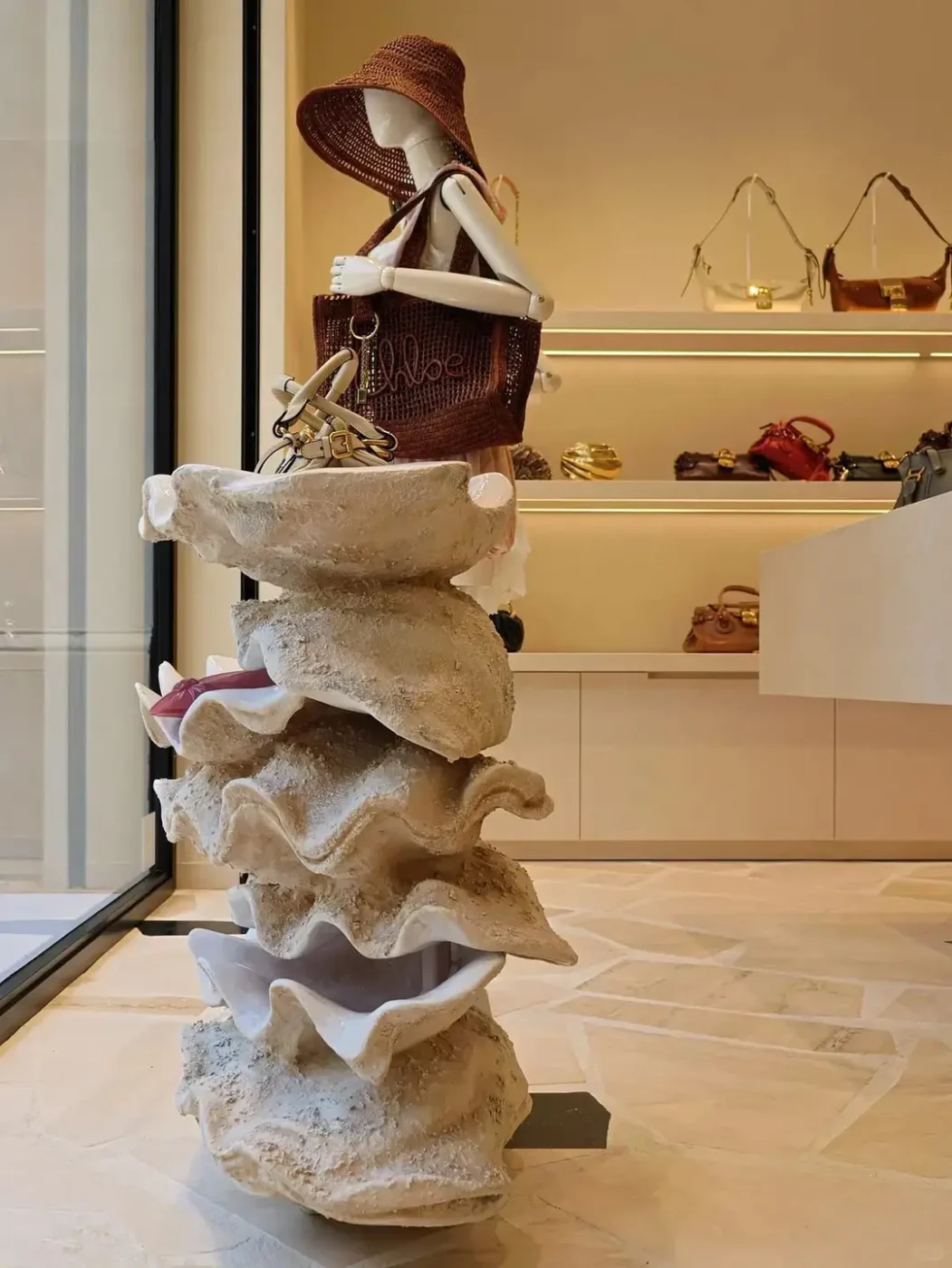
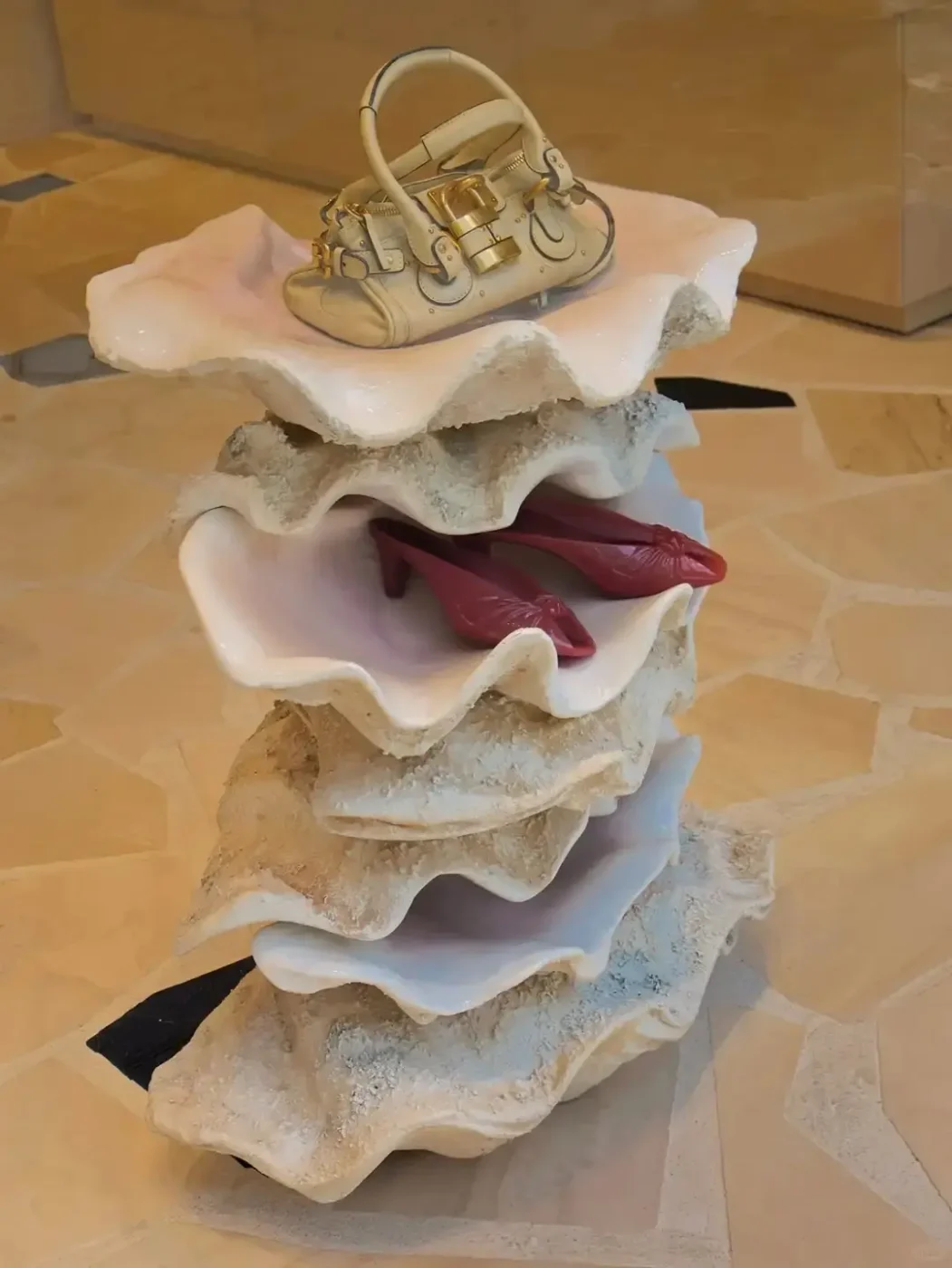
Summer windows work well with travel, resort, sunlight, ocean, fruit, luggage, beach scenes and lightweight materials. Fashion brands can use resort wear styling with travel props. Beauty brands can focus on sunscreen, fragrance and fresh color palettes. Jewelry brands can use gold, turquoise, shell forms or reflective surfaces for a warm seasonal mood.
Production planning for summer displays
Summer windows often need bright, clean materials that create a sense of lightness. Acrylic, polished metal, translucent panels, lightboxes and shell-like FRP forms are all effective choices.
One practical consideration for summer windows is direct sunlight. If the display sits in a sun-facing window, material fading, heat expansion and adhesive softening should be evaluated during material selection. Printed graphics on acrylic panels may need UV-resistant lamination. Painted FRP surfaces may need automotive-grade UV-stable clear coats to prevent yellowing.
For Northern Hemisphere summer campaigns launching in June, production planning should begin around March. Southern Hemisphere timing runs approximately six months offset.
Lunar New Year Window Displays
Lunar New Year displays are especially important for brands with stores in Asian markets — mainland China, Hong Kong, Singapore, Malaysia, South Korea, Vietnam and communities across North America, Europe and Australia. The visual language typically includes red, gold, lanterns, flowers, zodiac animals, lucky symbols and layered decorative patterns.
A strong Lunar New Year window should feel festive without becoming visually crowded. The best displays usually combine one clear symbol — such as a zodiac animal sculpture or an oversized lantern structure — with premium material finishes.
Production planning for Lunar New Year displays
Gold finishes, red acrylic, metallic surfaces, lantern structures and sculptural zodiac animal props each require specific production methods. Mirror-gold metallic finishes, for example, follow a multi-step process route: vacuum forming the base shape, applying two-component body filler for surface leveling, sanding, then electroplating or vacuum metalizing to achieve the gold surface.
An important scheduling consideration is the Chinese New Year factory shutdown itself. Most manufacturing facilities in China close for one to three weeks during the Lunar New Year period — typically late January or early to mid February. If props are being produced in China for Lunar New Year campaigns, production must be completed and shipped before the shutdown begins. This often means confirming designs and starting production in October or November.
For brands planning modular Lunar New Year displays that will be reused across years, designing interchangeable elements — such as swappable zodiac panels or re-colorable base structures — can reduce future production cost. The metal or acrylic frame stays the same; only the decorative zodiac element and color accents change annually.
Beauty Product Launch Seasonal Windows
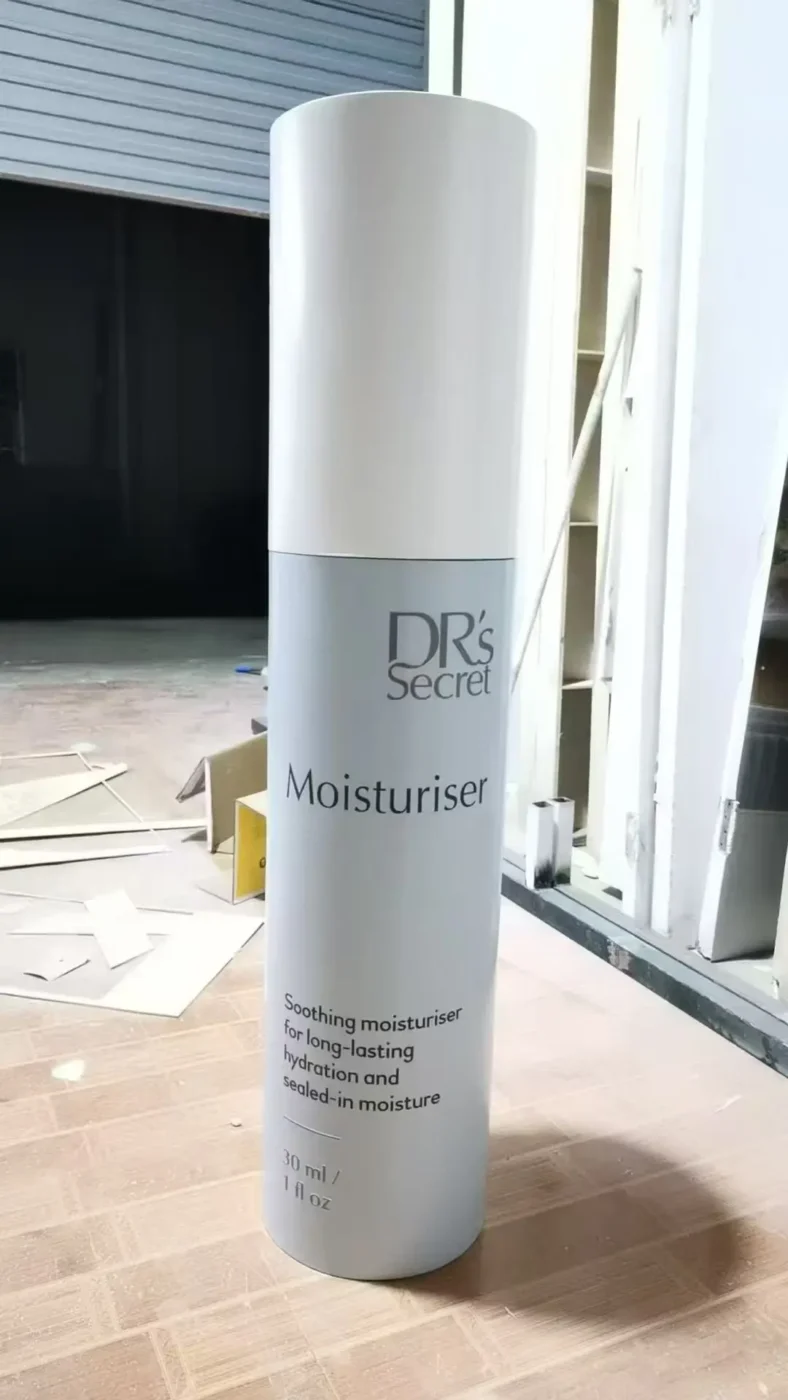
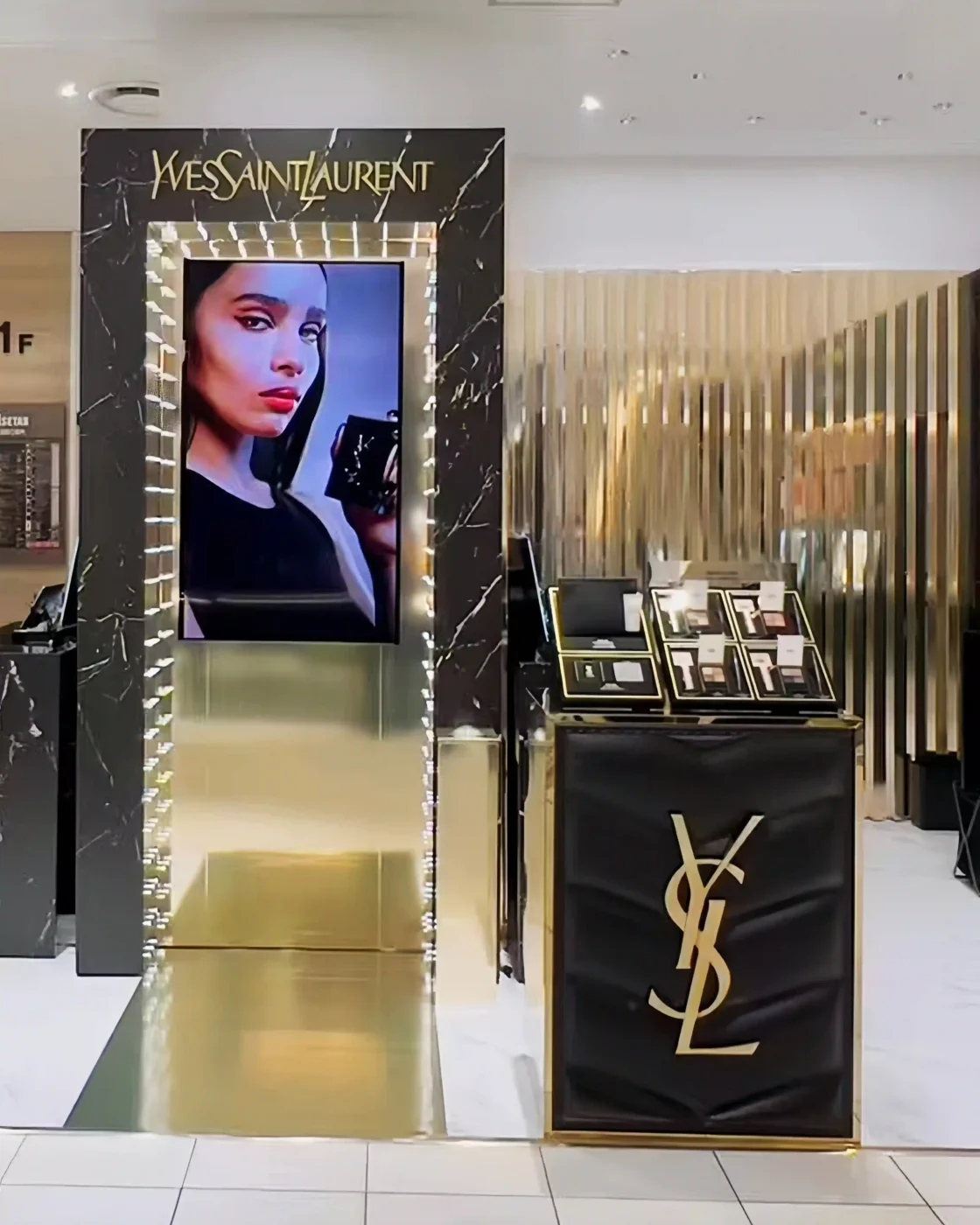
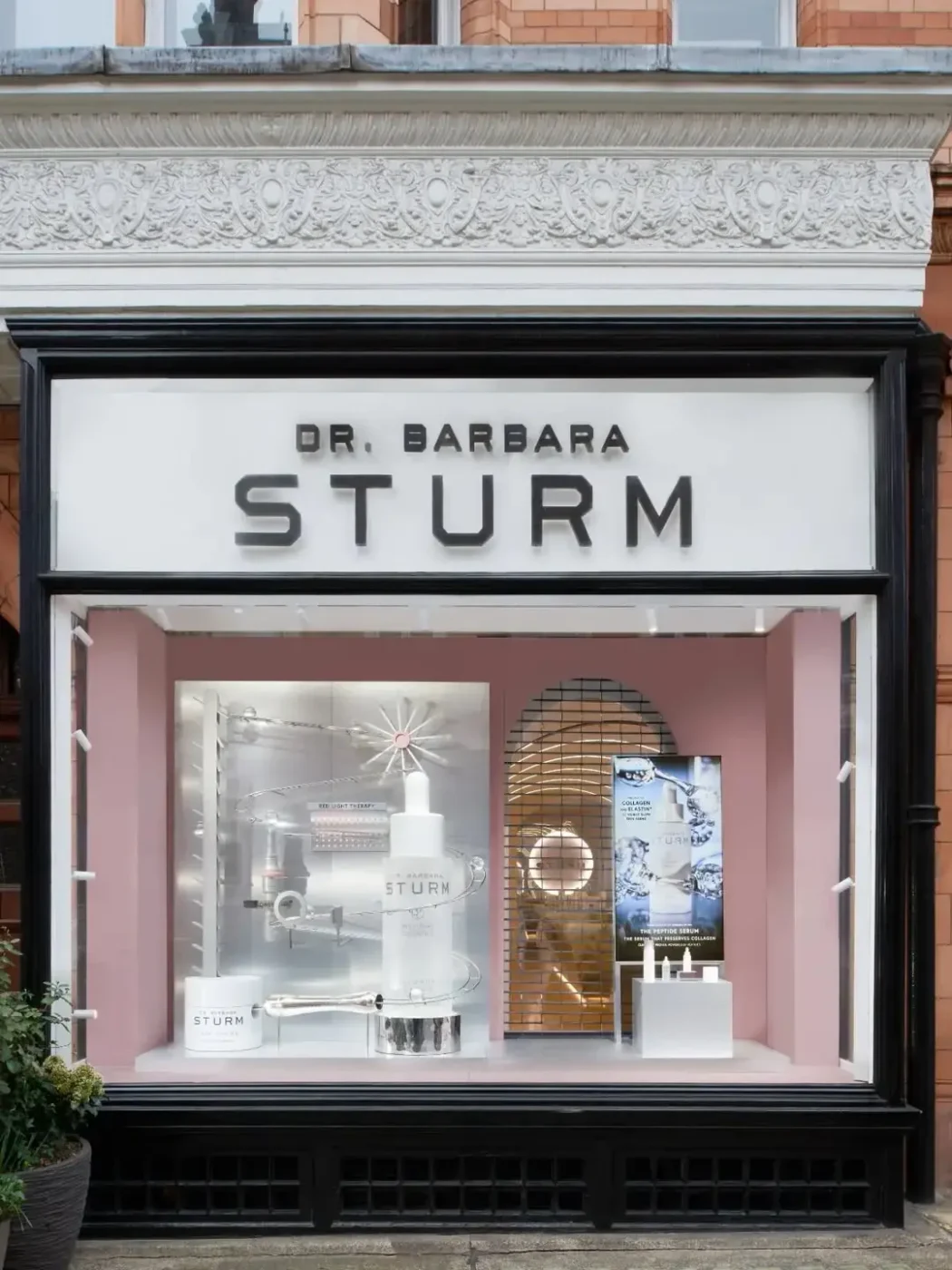
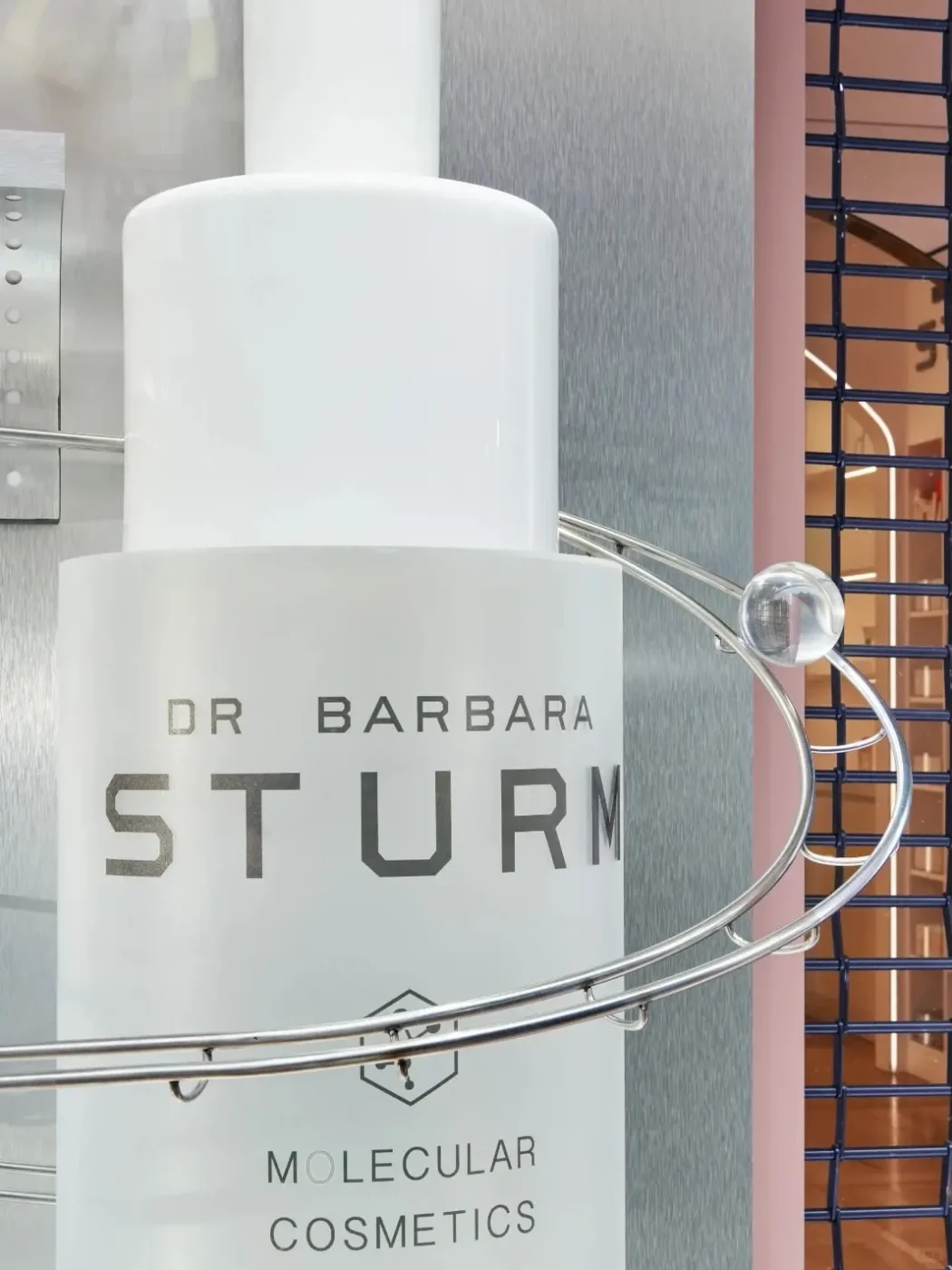
Beauty brands frequently use seasonal windows to launch limited-edition colors, fragrances, holiday kits or skincare routines. The product packaging often becomes the visual language of the entire window — a lipstick shade may set the campaign color, a perfume bottle may become an oversized FRP sculpture, a skincare jar may become a glowing hero replica on an acrylic plinth.
Production planning for beauty windows
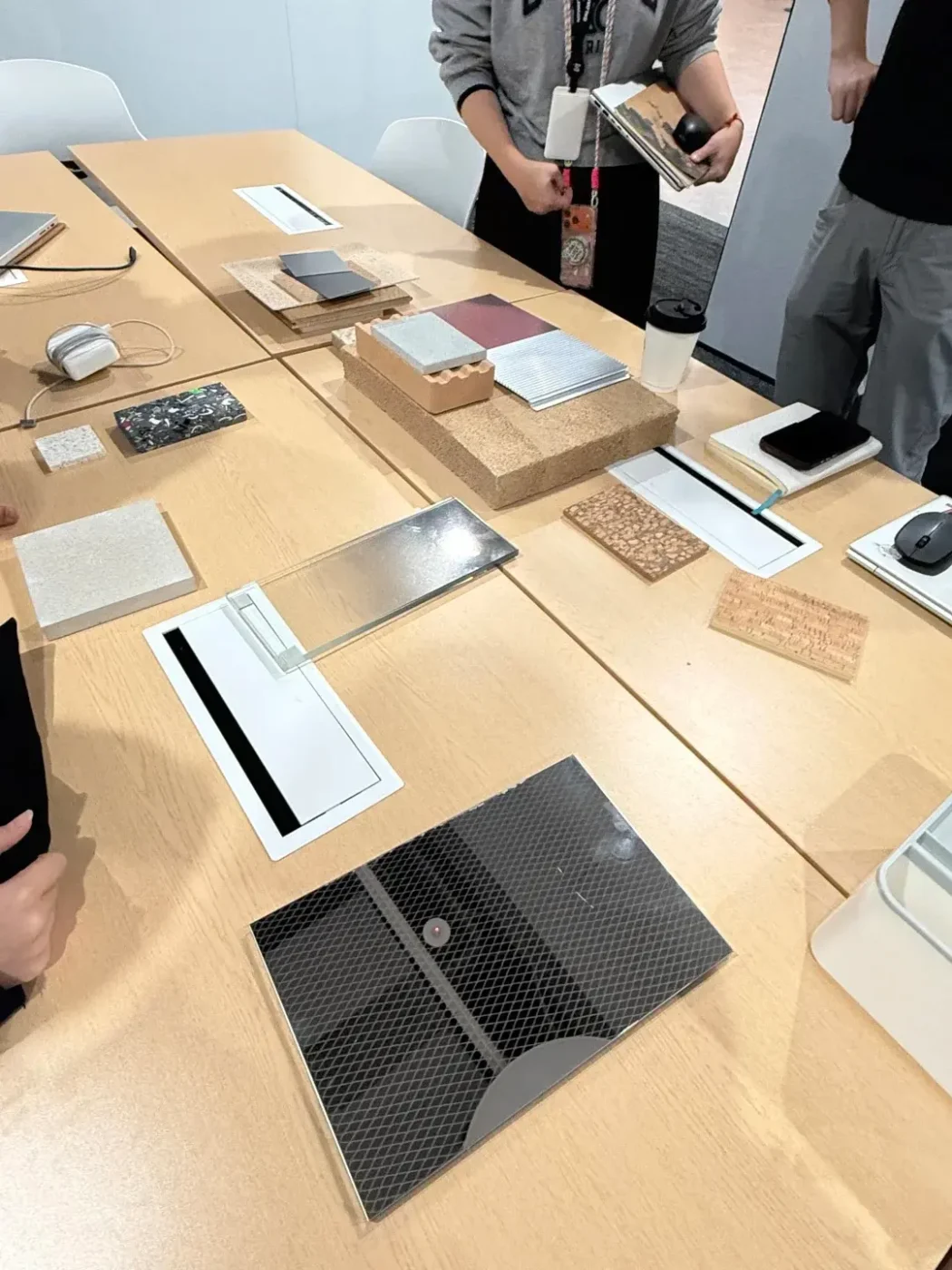
Beauty display props demand high-gloss finishes, precise color matching, clean acrylic fabrication, printed graphics and product-safe display platforms. Color accuracy is critical — a small difference between the actual product shade and the oversized prop color can undermine the campaign’s coherence. Physical samples are essential because screen colors and printed proofs do not reliably predict the final painted or sprayed surface.
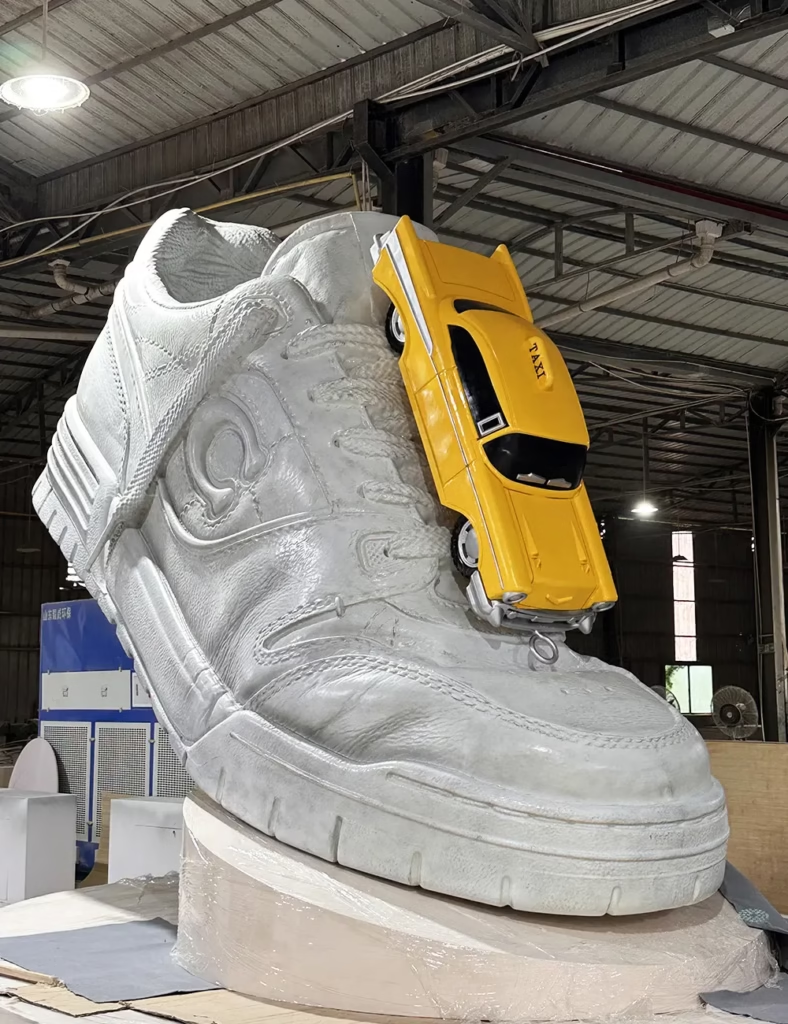
Oversized product replicas are typically produced in FRP. The process begins with 3D modeling based on the product’s actual dimensions and proportions, followed by mould creation, FRP lamination, surface filling and finishing, and finally painting or coating to match the product color. For a single oversized replica, sampling typically takes around 15 working days from mould to finished piece.
Beauty brands launching seasonal collections often have tight coordination requirements between global marketing teams, packaging design, retail operations and visual merchandising — so confirming the display brief early helps avoid bottlenecks.
Jewelry Seasonal Window Displays
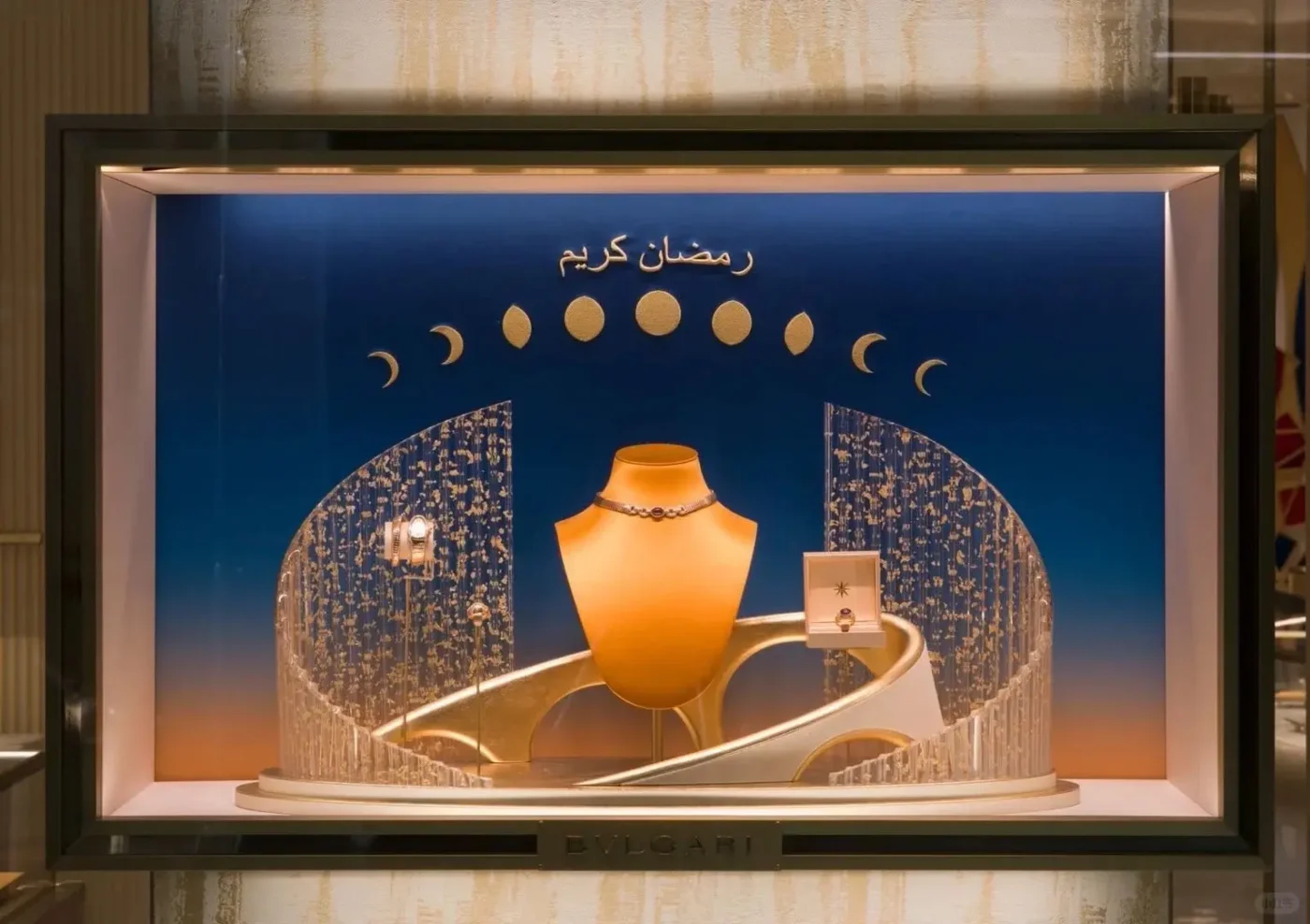
Jewelry windows require a different approach from fashion or beauty windows. The product is small, valuable and visually delicate. The display should support the product without overpowering it. Seasonal jewelry displays can incorporate moon, star, floral, crystal or abstract sculptural motifs, combined with velvet surfaces, mirrors, metallic arcs, soft backlighting and minimal structural elements.
Production planning for jewelry displays
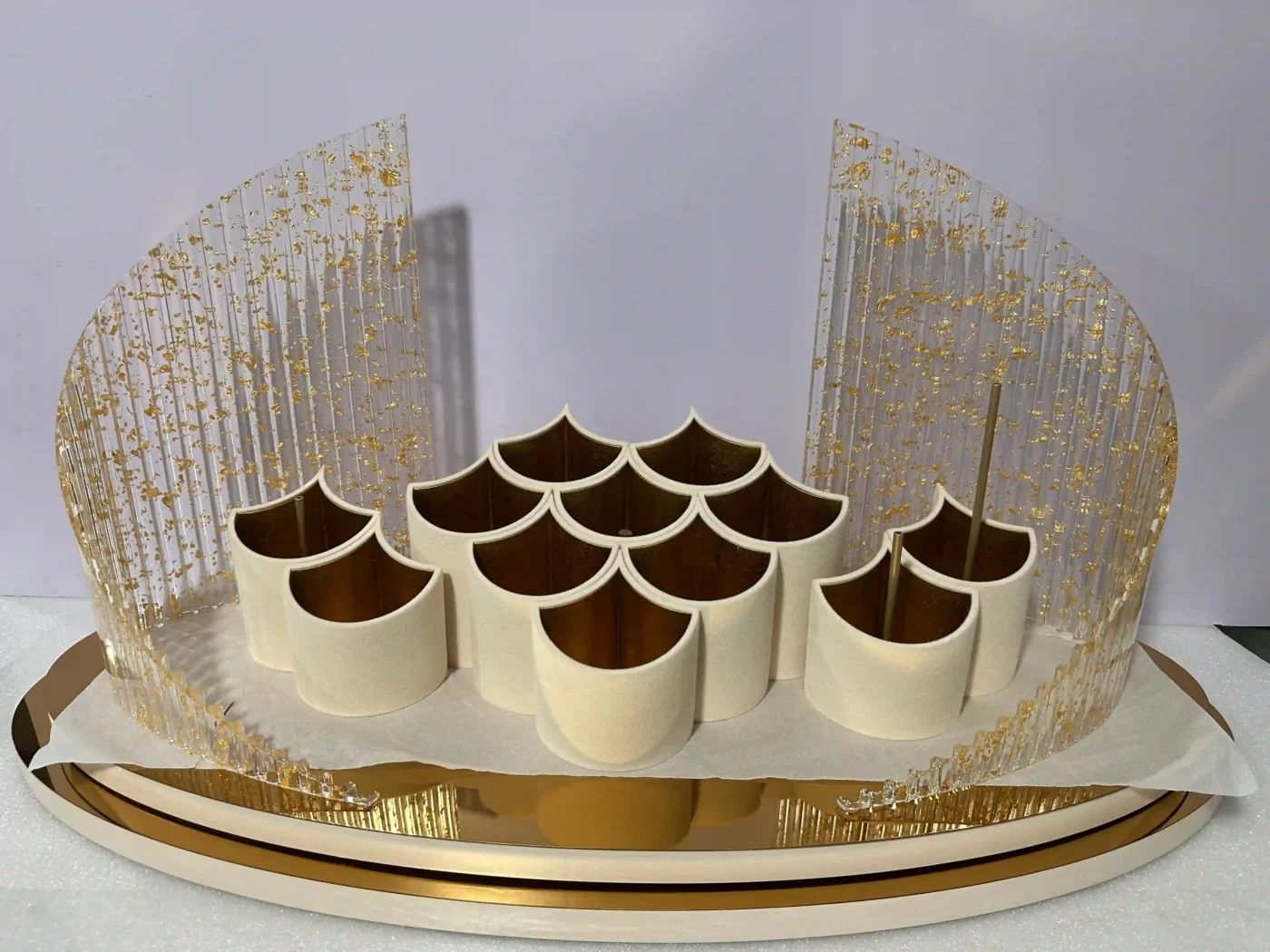
Small-scale display props demand precision. Plinth height, lighting angle, mirror placement and surface finish quality all directly affect how jewelry appears in the window. Common materials include acrylic, brass, stainless steel, velvet-wrapped platforms and mirror panels.
PVD (Physical Vapor Deposition) coating is frequently used for jewelry display fixtures to achieve durable metallic finishes — gold, rose gold, brushed champagne or black titanium — without the maintenance issues of traditional plating. PVD-coated stainless steel props resist fingerprints, scratching and tarnishing, which matters for displays that will be handled during product rotation.
For multi-store jewelry campaigns, consistency is especially important. If the same prop looks slightly different in color, height or finish across stores, it weakens the campaign. Confirming one approved production sample before batch production — and using numbered packing labels per store — helps maintain consistency.
Multi-Store Seasonal Rollout Displays
Seasonal campaigns frequently need to appear in many stores simultaneously — from flagship locations to department store concessions, travel retail, shopping mall pop-ups and regional boutiques. This creates a production challenge that goes beyond making a single beautiful window.
The display must be beautiful, but it must also be repeatable. Every store needs the correct parts, assembly labels, installation drawings and the right sequence of steps to recreate the same visual result.
Production planning for multi-store rollouts
For rollouts, the most important production principle is to confirm one fully approved sample before authorizing mass production. Changes discovered after production has started are expensive and time-consuming — especially when dozens or hundreds of sets are involved.
Practical rollout production practices include numbered parts within each store kit, packing labels organized by store location, printed installation photos showing assembly sequence, and spare components for common breakage points. If different stores have different window dimensions, a modular design approach — where base elements stay standard but spacing or arrangement can adjust — is safer than designing one fixed structure.
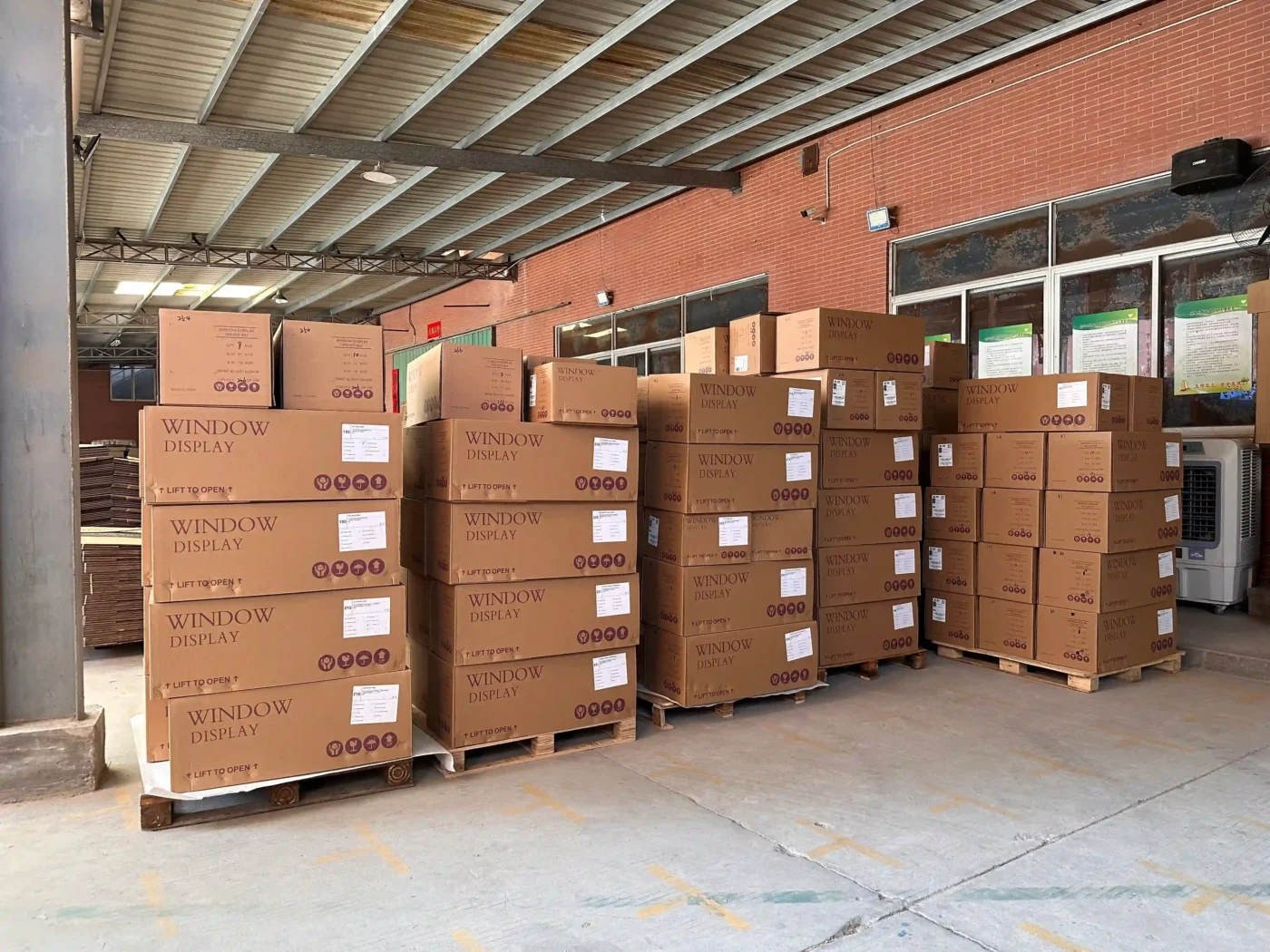
Packing quality matters more for rollouts than for single-store projects. If one store out of a hundred receives a damaged prop, replacement logistics can cost more than the prop itself. Purpose-built packaging — honeycomb cartons, foam-lined crates or custom wooden boxes depending on fragility — should be specified during the quoting stage.
For a real-world example of rollout logistics, our recent multi-store holiday campaign for a US fashion retailer involved 358 store locations across the continental United States, Canada, Hawaii and Puerto Rico. The project required store-by-store distribution lists, non-uniform quantity allocation by store size, batch shipping sequences organized by region, and a target completion date of mid-November to align with the pre-Thanksgiving retail window.
How Early Should Seasonal Window Displays Be Planned?
Production planning lead times depend on the scale and complexity of the project.
For a single local store window using simple materials, one to two months may be sufficient. For a custom luxury window with sculptural FRP props, metallic finishes, LED lighting and export packaging, three to four months is a safer planning window. For global multi-store rollouts, planning often begins five to seven months before the installation date.
A practical production timeline for a mid-scale seasonal display project may follow this general sequence. Concept development and reference gathering typically takes one to two weeks. Material and production proposals take approximately one week once references are clear. 3D modeling and production drawings require one to two weeks. Sample approval — including any revisions — usually takes one to three weeks. Batch production runs two to six weeks depending on materials and quantity. Packing and shipping time depends on the destination: approximately 40 to 50 days by sea freight to Europe or North America, or 8 to 12 days by air freight for urgent deliveries. An installation buffer of at least several days before the campaign launch date should always be protected.
The closer the deadline, the more important it becomes to simplify materials and reduce production risk. Swapping a chrome finish for metallic paint, reducing sculptural complexity, or choosing a proven material over an experimental one can buy critical days in a compressed timeline.
How to Brief a Manufacturer for a Seasonal Window Display
A clear production brief accelerates quoting and helps the manufacturer recommend practical materials and methods. A useful seasonal display brief should include the season or campaign theme, the product category being featured, reference images or moodboard, store location and window dimensions, the number of stores, the required installation date, preferred materials, lighting requirements, quantity per store, packing and shipping requirements, the destination country or countries, and budget range if available.
A vague brief — such as a single reference image with no dimensions, no quantity and no deadline — creates slow quoting because the manufacturer must make assumptions that may not match the brand’s expectations. A clear brief allows the manufacturer to respond with specific material recommendations, realistic timelines and accurate pricing within one to two business days.
For guidance on what to prepare before requesting a quote, see our custom display props quote requirements page.
Frequently Asked Questions
What is a seasonal retail window display?
A seasonal retail window display is a storefront installation designed around a specific season, holiday or retail moment — such as Christmas, spring, Valentine’s Day, summer, Lunar New Year or a product launch period. It uses seasonal visual cues to connect the brand’s product with a time of year that shoppers already associate with specific emotions and buying intentions.
What makes a seasonal window display effective?
An effective seasonal window display should be easy to understand from the street, emotionally relevant to the season, consistent with the brand identity, and practical to produce and install before the campaign deadline. The strongest seasonal displays connect the season to the product clearly — rather than decorating the window with generic seasonal elements that could belong to any brand.
When should brands start planning Christmas window displays?
For custom Christmas displays with sculptural props, metallic or flocked finishes and multi-store rollout logistics, brands should ideally begin planning in April or May. Sample confirmation typically runs through June and July. Production and shipping follow through August to October. Starting after August is generally too late for sea freight to reach European or North American stores before mid-November installation dates.
What materials are commonly used for seasonal display props?
The most common materials for seasonal retail display props include FRP (fiberglass reinforced plastic) for sculptural forms, acrylic for clean transparent or colored surfaces, stainless steel and mild steel for structural frames and fixtures, MDF and wood for platforms and backdrops, foam for lightweight oversized shapes, artificial flowers and paper craft for floral installations, printed graphics and backlit films for lightbox panels, and LED lighting for illuminated elements. Surface finishes may include painting, flocking, PVD coating, electroplating, vacuum metalizing and chrome effects.
Can seasonal window displays be reused across campaigns?
Yes. Modular design approaches allow many seasonal display elements to be reused. Lightbox frames can accept new printed panels each season. Metal or acrylic base structures can be refreshed with new colors, graphics or decorative attachments. Standard display bases, plinths and fixtures can serve multiple campaigns. Designing for reuse from the start — with replaceable graphic faces, front-access wiring and modular attachment points — reduces long-term seasonal display costs.
How much does a seasonal retail window display cost?
Seasonal display costs vary widely based on materials, size, finish complexity, quantity and shipping requirements. A simple printed lightbox panel may cost a few hundred dollars. A custom FRP sculpture with metallic finishing may range from several hundred to several thousand dollars per piece. Multi-store rollout projects are typically quoted per store, factoring in production, packing, labeling and freight. Requesting a quote with clear specifications — including reference images, dimensions, quantity, deadline and destination — helps manufacturers provide accurate pricing quickly.
Final Thought
Seasonal retail window displays are powerful because they connect brand storytelling with moments shoppers already care about. But timing matters. Materials matter. Installation matters. A seasonal idea has to arrive on time, survive handling and still look beautiful behind glass.
If you are planning a Christmas, spring, summer, Valentine’s Day or multi-store seasonal retail display, prepare your moodboard, window dimensions, quantity and installation date early. Request a custom display props quote to discuss your seasonal campaign with our production team.
For more visual direction and inspiration, continue reading our full guide to retail window display ideas.