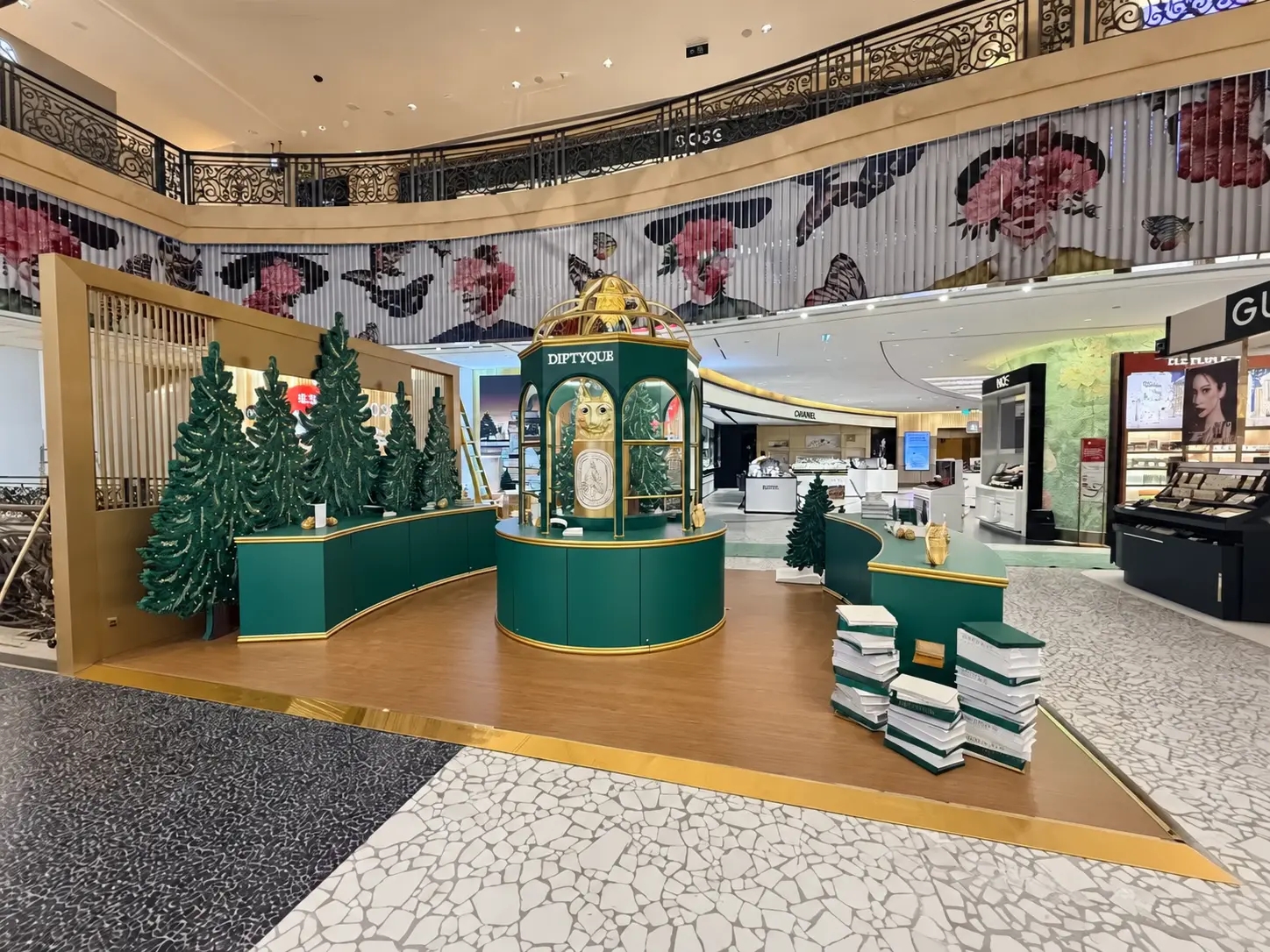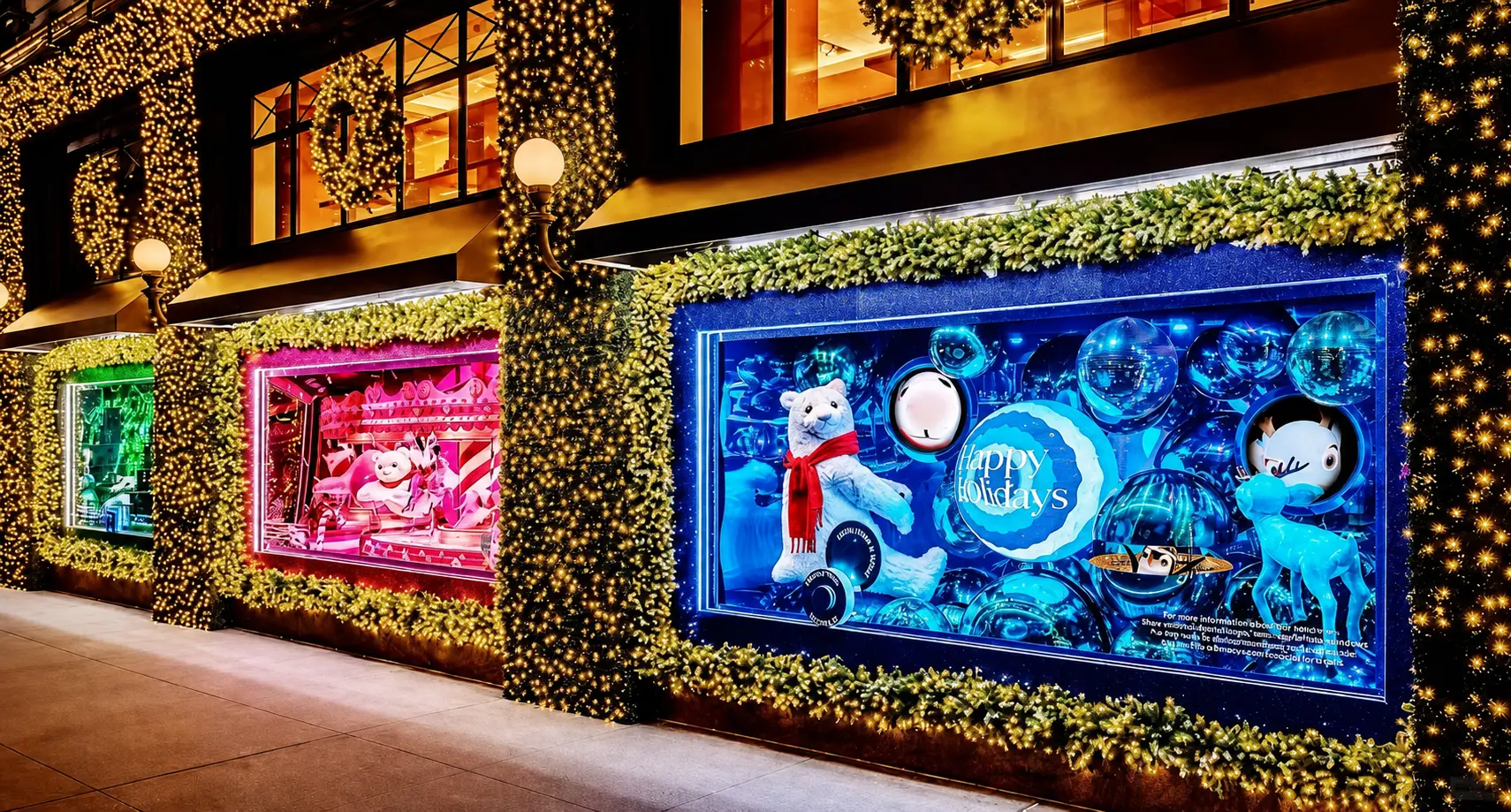
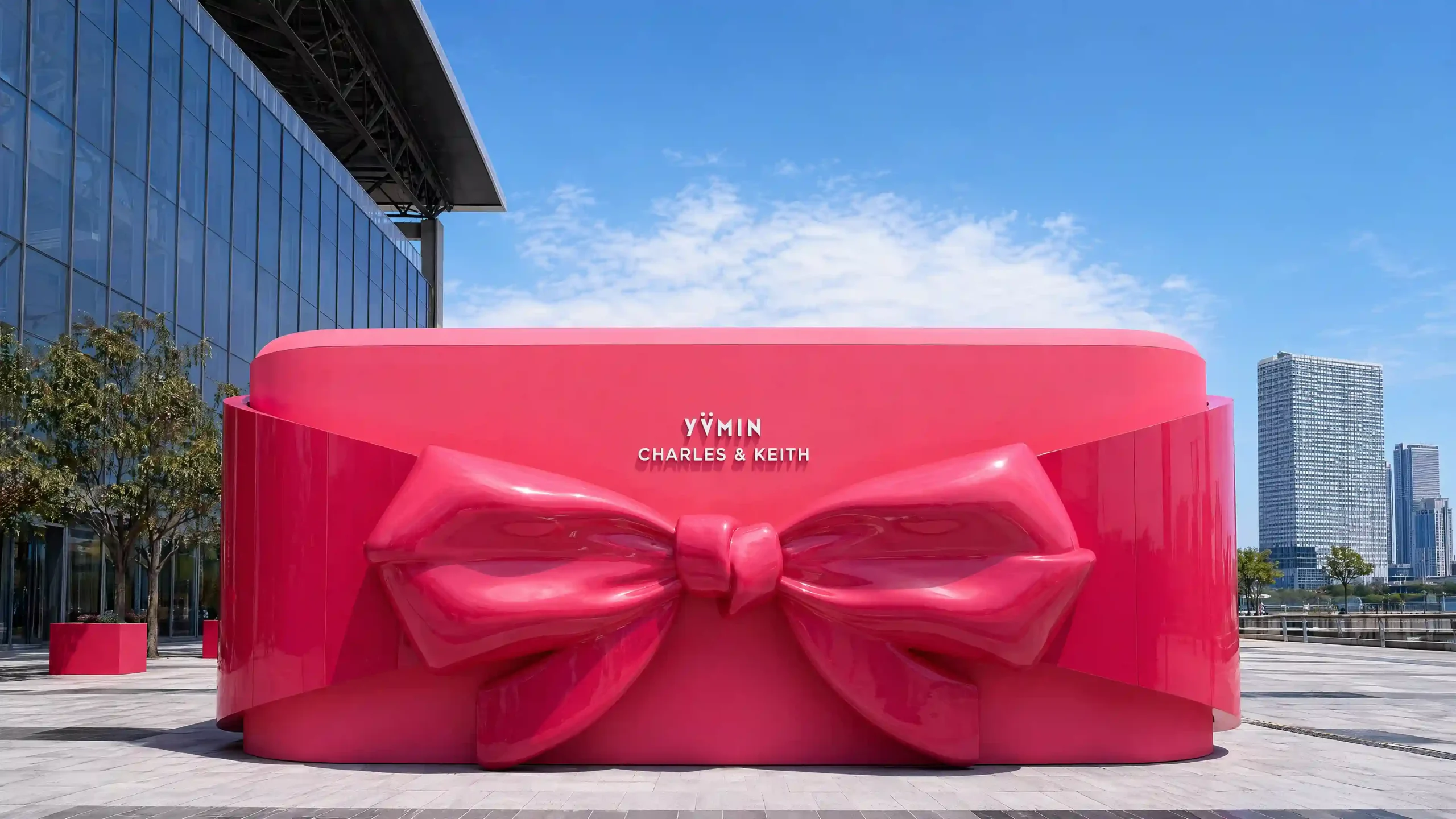
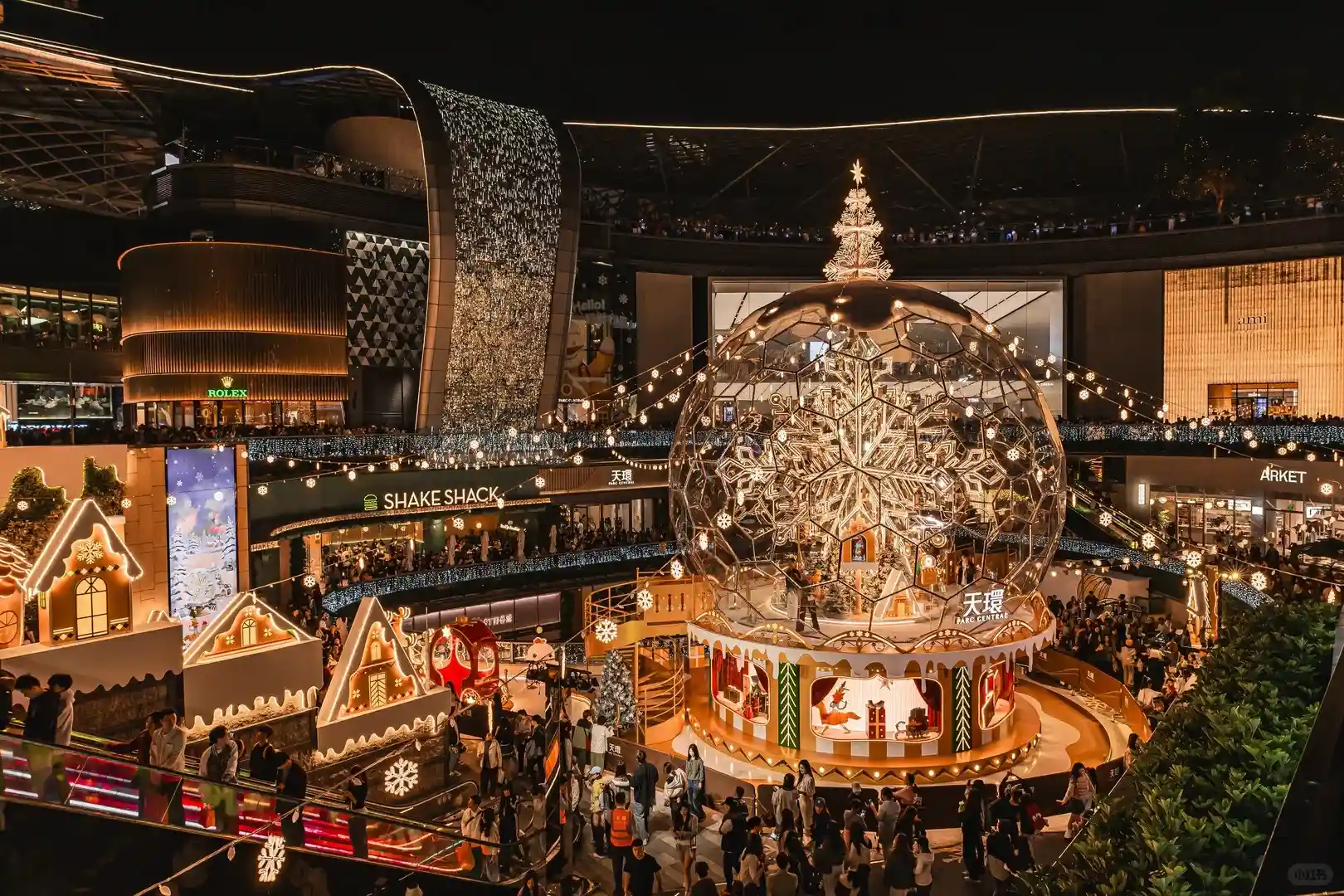
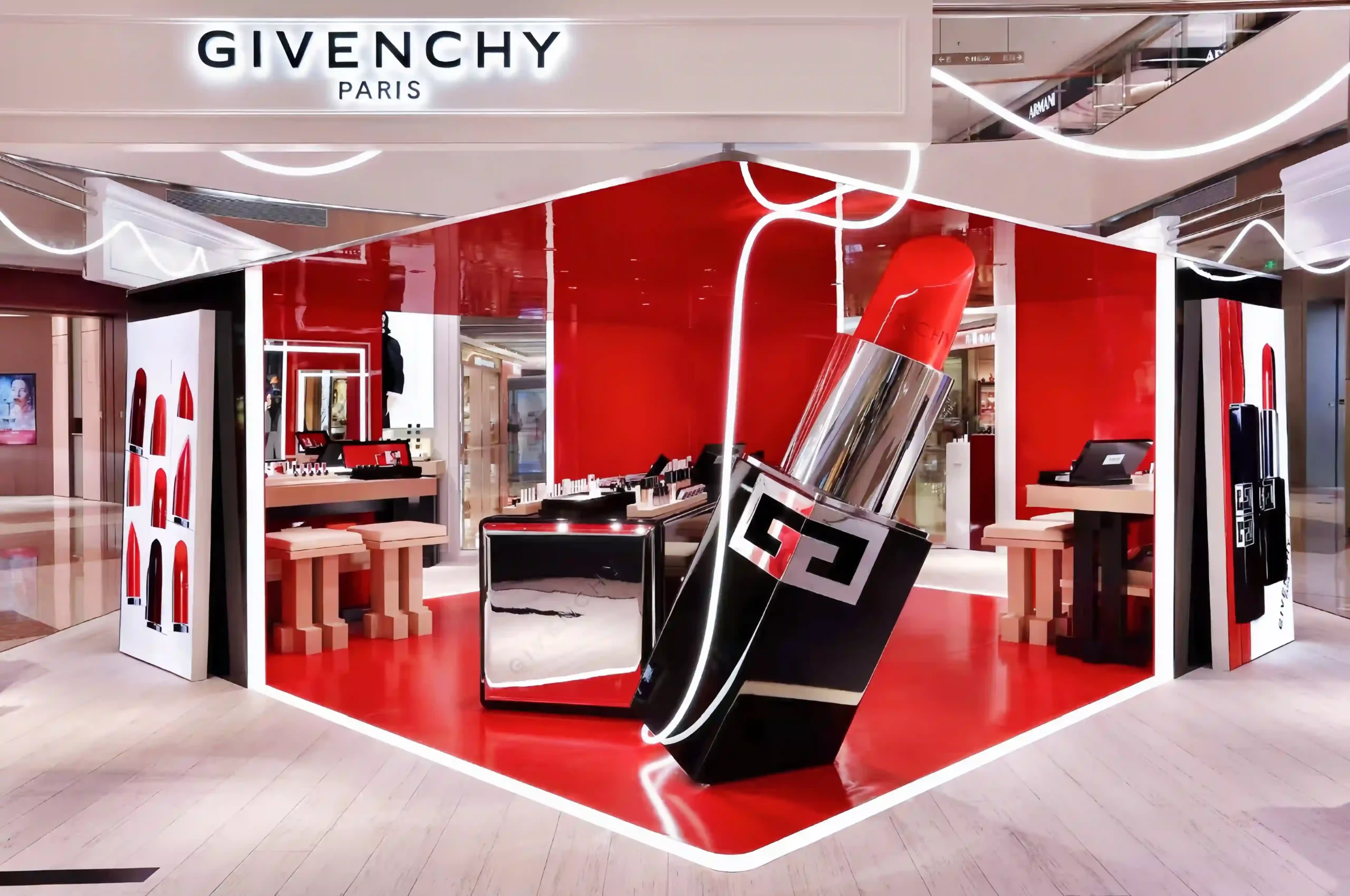
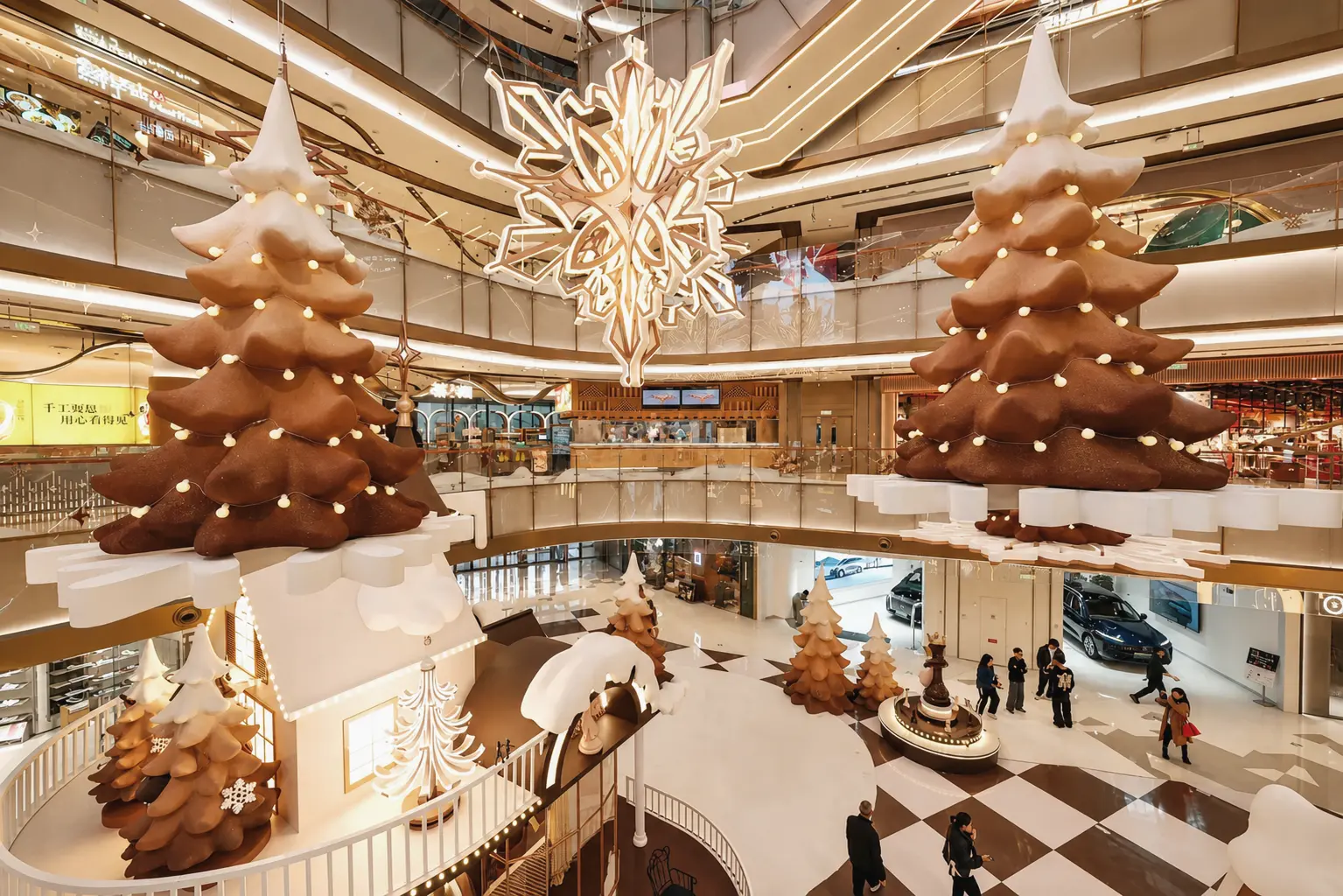
For many shoppers, Christmas window displays appear almost overnight. One week the storefront is quiet; the next, the glass is filled with oversized ornaments, glowing candy props, sculptural trees, moving figures, branded plinths and festive product stories.
But for visual merchandising teams, retail design agencies and display production partners, the Christmas season starts much earlier. In most global retail rollouts, July and August are already serious production months. By that stage, campaign direction has usually been approved, sample rounds are underway, and suppliers are being checked for material capability, production capacity, certificates, packaging standards and delivery timing.
From our position as a custom window display props manufacturer, we see the same pattern each year: the most successful holiday displays are not rushed at the end. They are planned backwards from the store installation date.
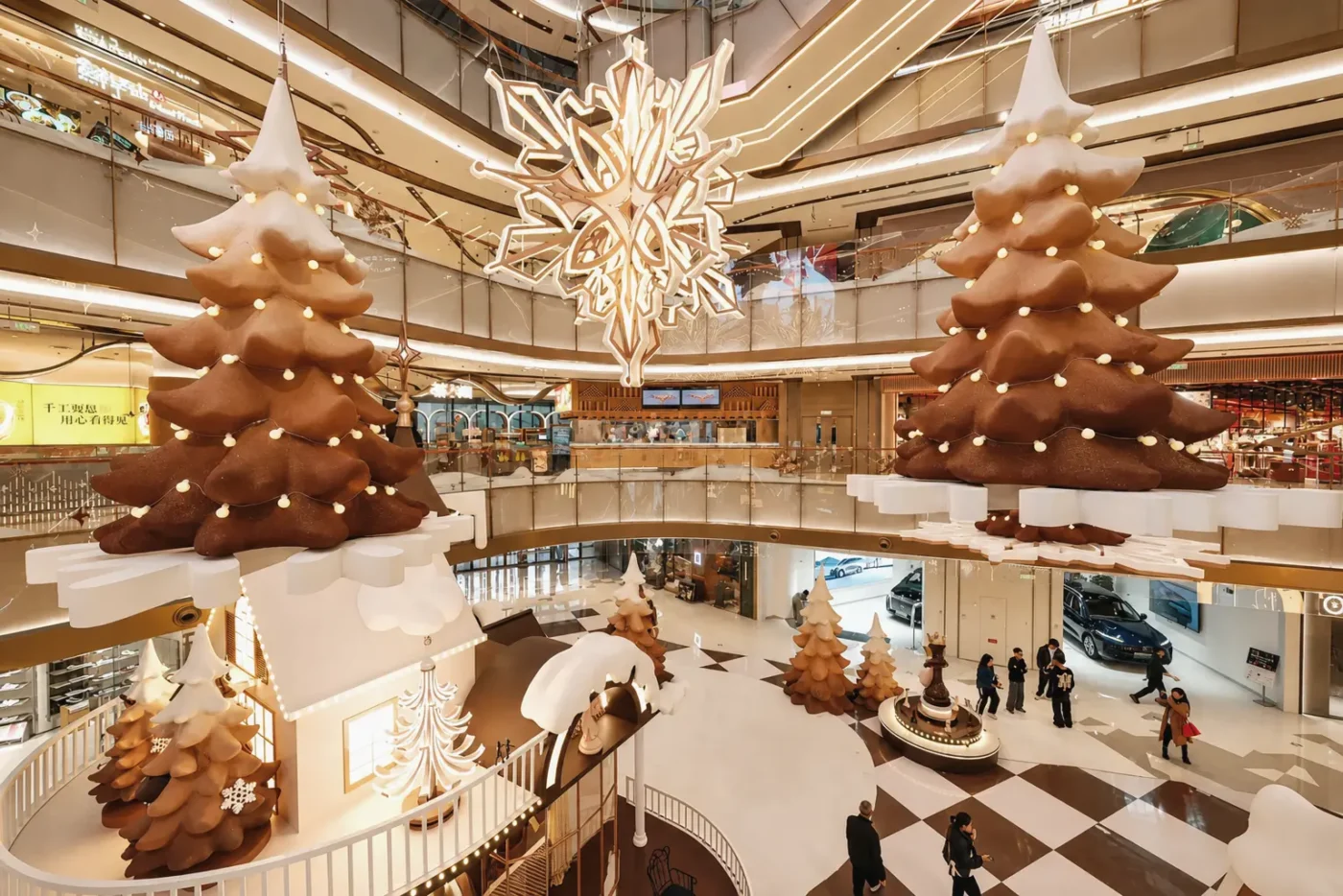
Why Christmas Display Planning Starts Before Summer Ends
For large retail brands, Christmas window display production is rarely a single-store project. A campaign may need to cover flagship stores, department store concessions, travel retail locations, shopping mall pop-ups and regional boutiques. Even when the creative idea is simple, the production reality is layered.
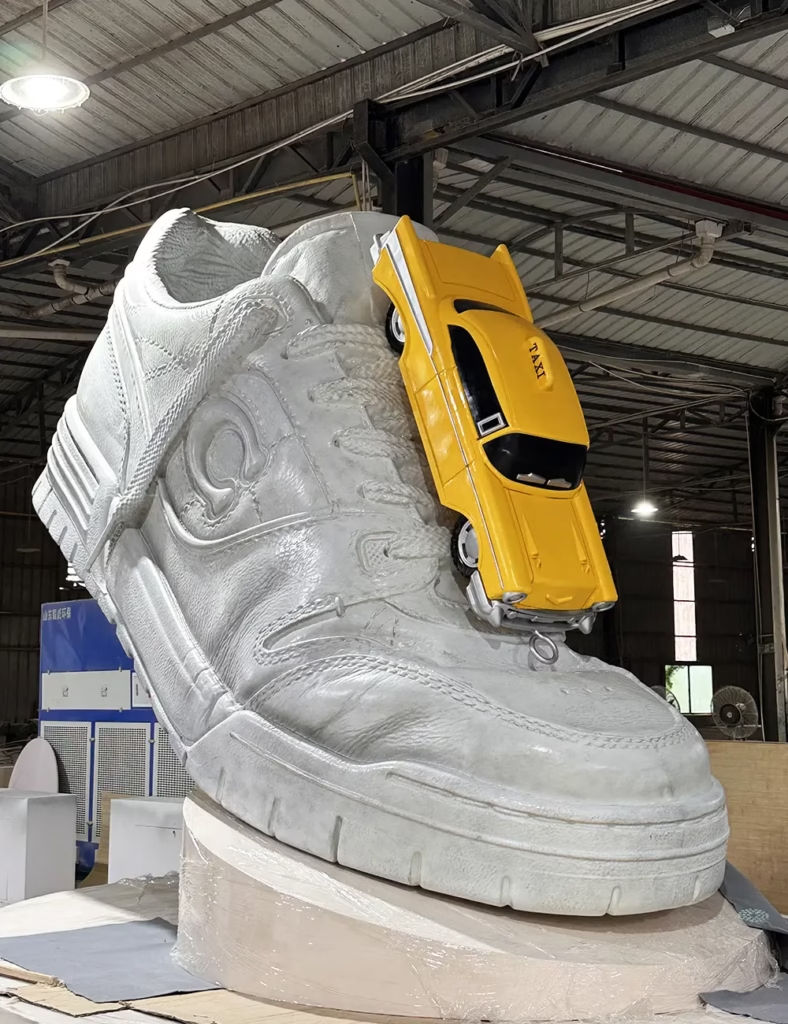
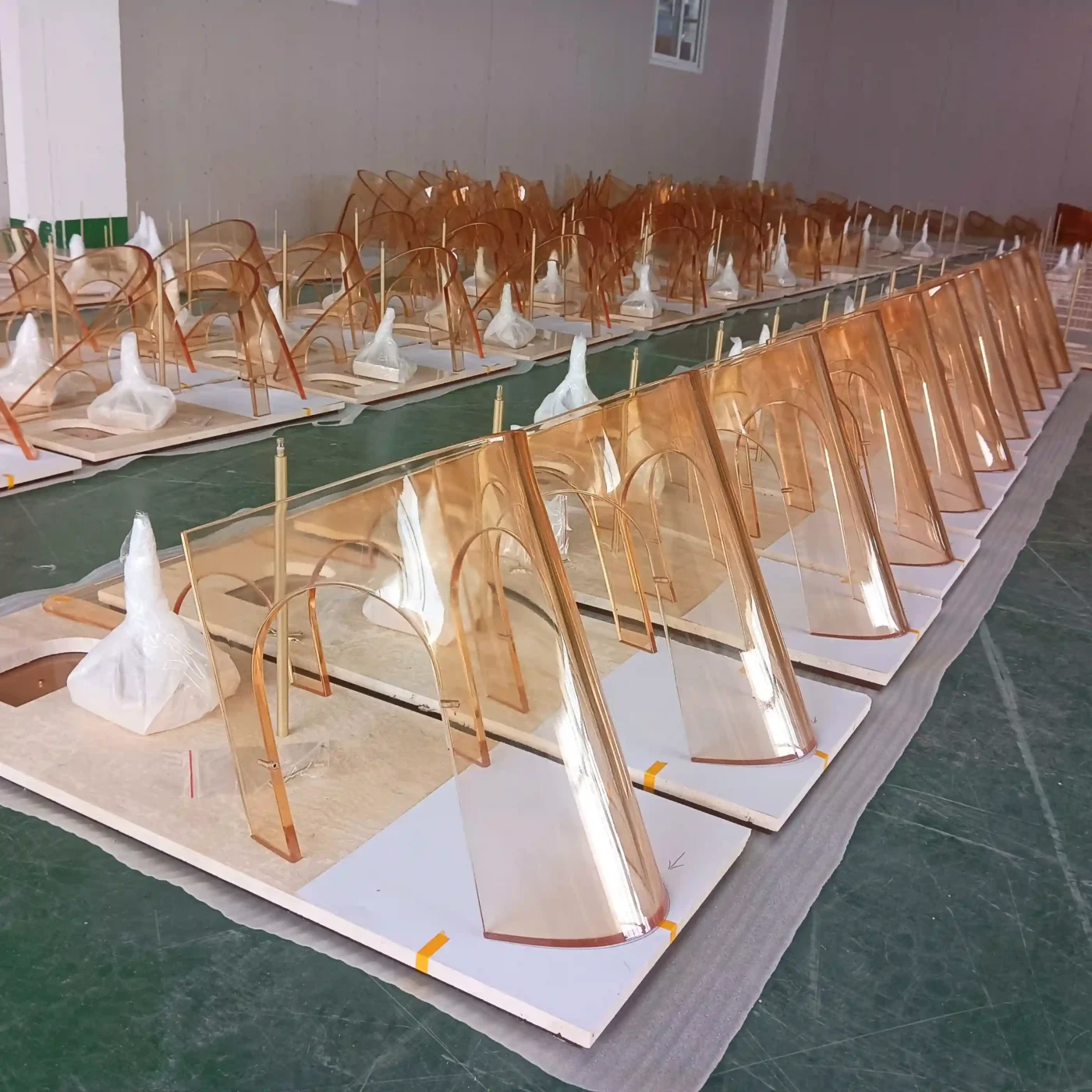
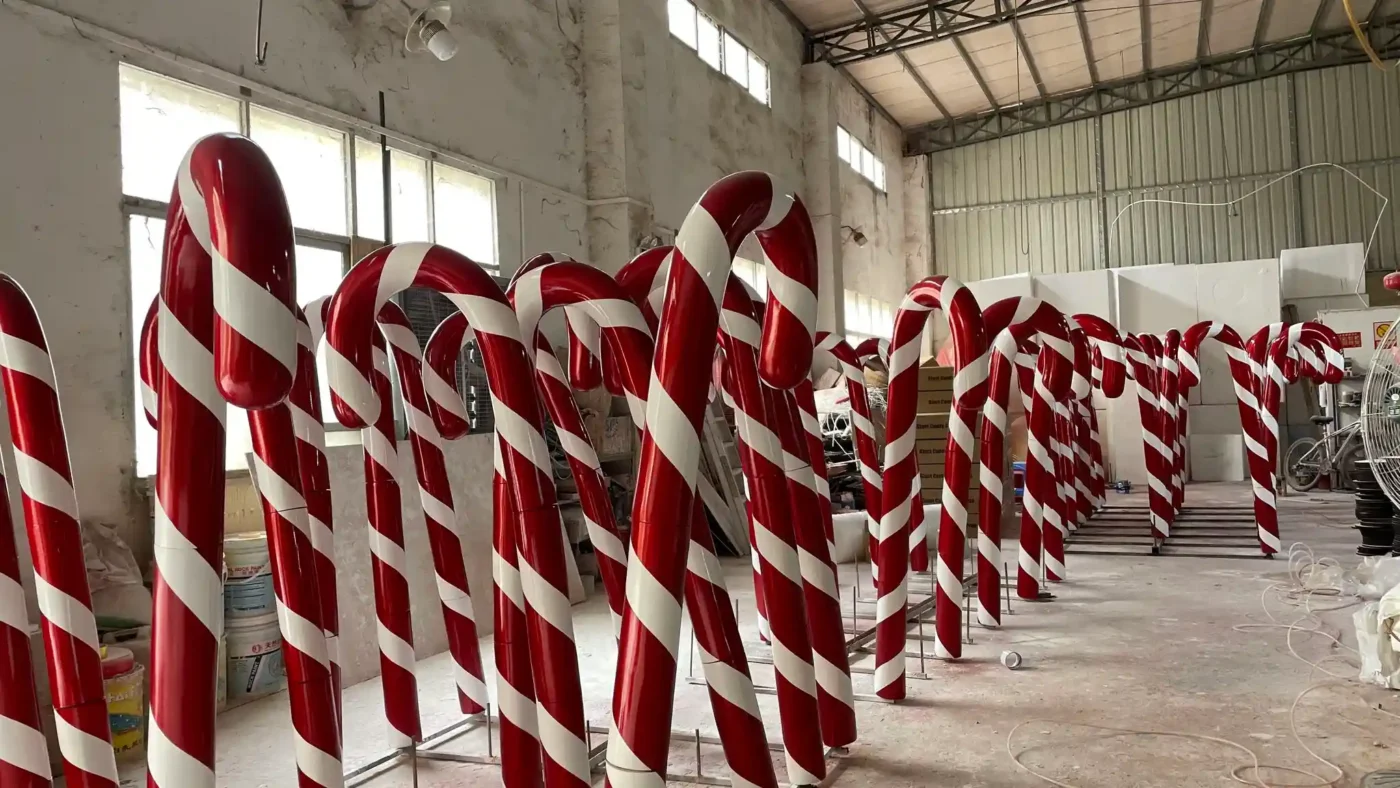
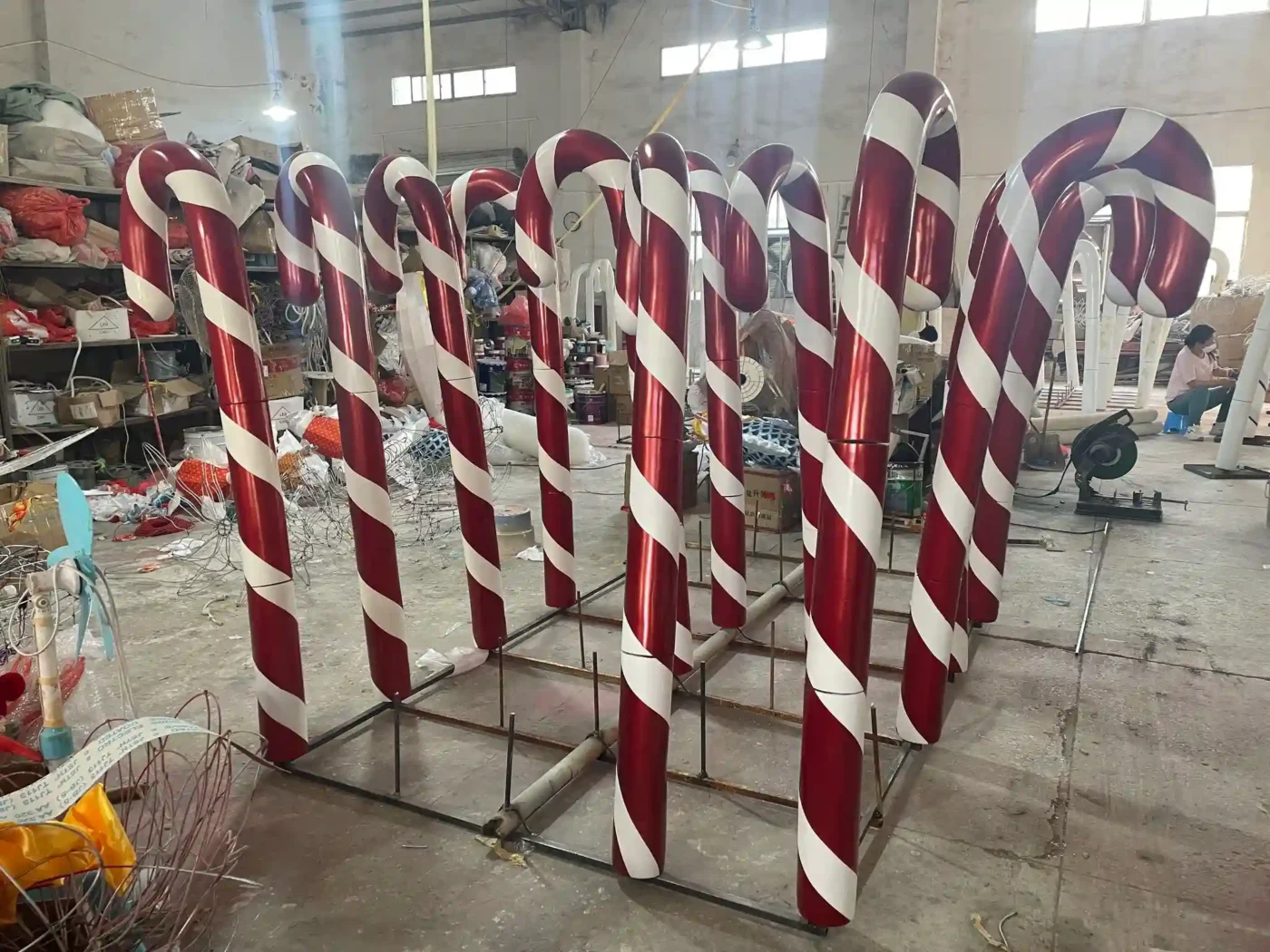
A festive window display may include FRP sculptures, acrylic candy props, metal bases, LED lighting, printed graphics, flocked textures, hanging elements and custom packaging. Each material has its own sampling process, curing time, finishing risk and packing requirement. FRP alone typically needs seven to ten days for full cure, sanding and multi-layer coating before it is ready for finishing checks.
That is why July and August matter. If the final store installation is planned for November, the project team needs enough time for design interpretation, prototype approval, mass production, international shipping and local distribution. A late brief does not only compress the factory schedule. It also removes the buffer needed for creative adjustment.
For brands still defining their holiday concept, our custom visual merchandising services often begin with practical questions: What is the maximum height inside the window? Will the props be suspended or freestanding? Does the display need lighting? How many stores are involved? Is the shipment going to one warehouse or multiple markets?
A Practical Christmas Display Production Timeline
A realistic Christmas retail display timeline usually works backwards from the installation date.
If the display must be installed in early November, the goods often need to arrive at the client warehouse by late October. If ocean freight is involved, production may need to finish four to six weeks earlier. If the rollout includes the United States, the United Kingdom or multiple European countries, freight planning and carton labeling become just as important as the props themselves.
A practical schedule usually looks like this:
- April to June: creative concept, supplier sourcing and early budget discussion
- July to August: sampling, technical drawings, material confirmation and cost approval
- August to September: production molds, structural engineering and batch production
- September to October: finishing, lighting checks, pre-assembly, QA and packaging
- October to November: warehouse arrival, allocation, store delivery and installation
This is not a fixed rule, but it is a useful rhythm. For smaller one-off window projects, the timeline can be shorter. For global rollouts with dozens of stores, the earlier schedule is usually safer.
The holiday shopping season is one of the most concentrated windows in the retail year — a period where storefront visibility, campaign memorability and store traffic all compound. That is exactly why VM teams treat production timing as a strategic decision rather than a logistical one.
From Creative Concept to Manufacturable Prop
A Christmas display usually begins with a moodboard, sketch, 3D render or agency concept. That concept may look beautiful, but it still needs to become a real object that can stand, hang, ship, assemble and survive the full campaign period.
This is where production thinking becomes important. A giant bauble may look simple in a render, but the real prop needs a stable inner structure, a smooth surface, a durable coating and a packing method that prevents scratches. A candy prop may need to be lightweight enough for store staff to move, but strong enough to hold its shape under lighting and handling. A hanging ornament may require embedded hardware, balanced weight and safe installation points.
In our factory process, we normally translate the visual idea into material decisions first. FRP is often used for sculptural forms, acrylic for clean shapes and transparent effects, metal for load-bearing structures, MDF or wood for plinths and display bases, and LED systems for illuminated details. This connects directly with our display props manufacturing capabilities.
Why Sampling Is the Most Underrated Step
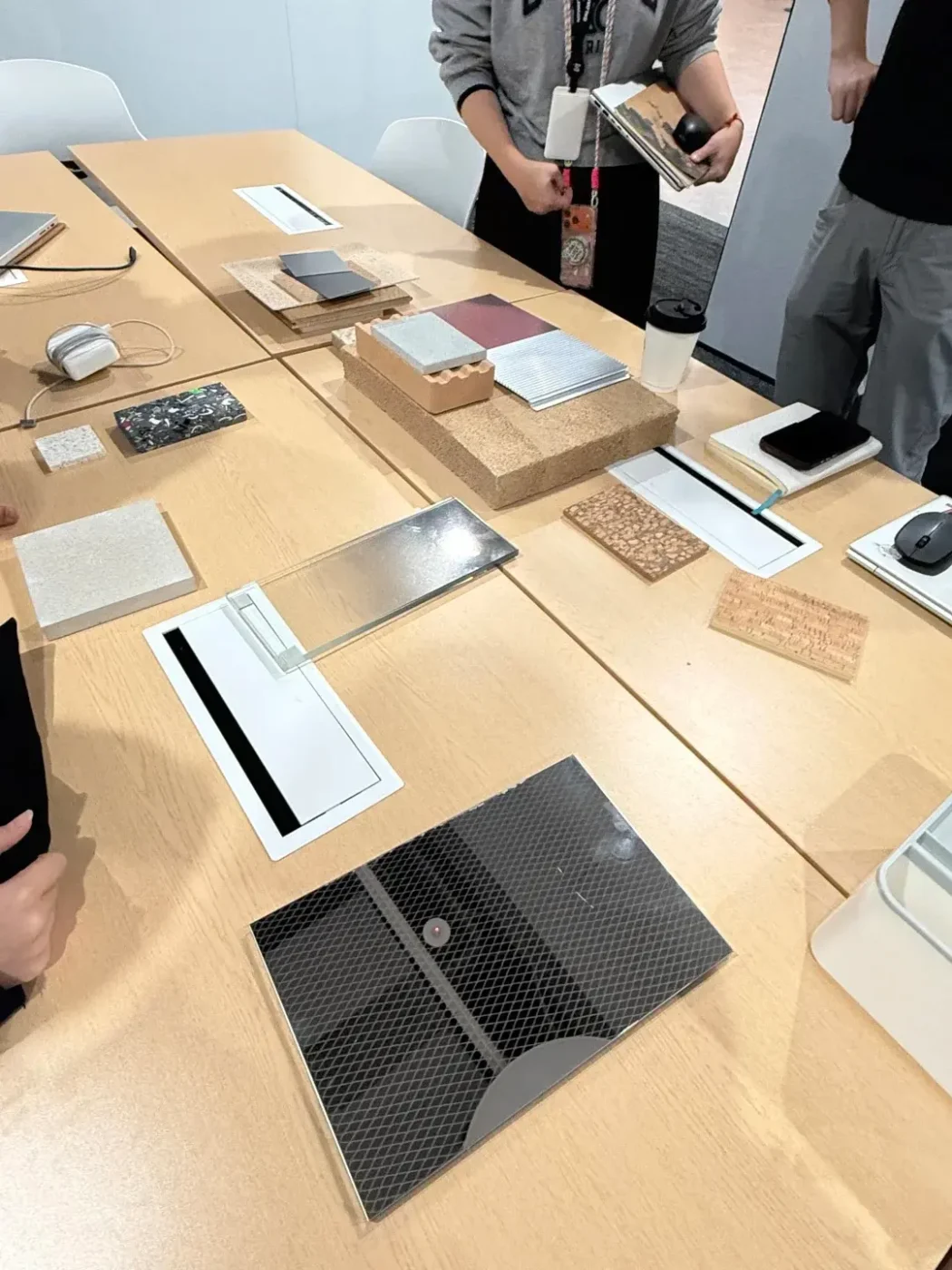
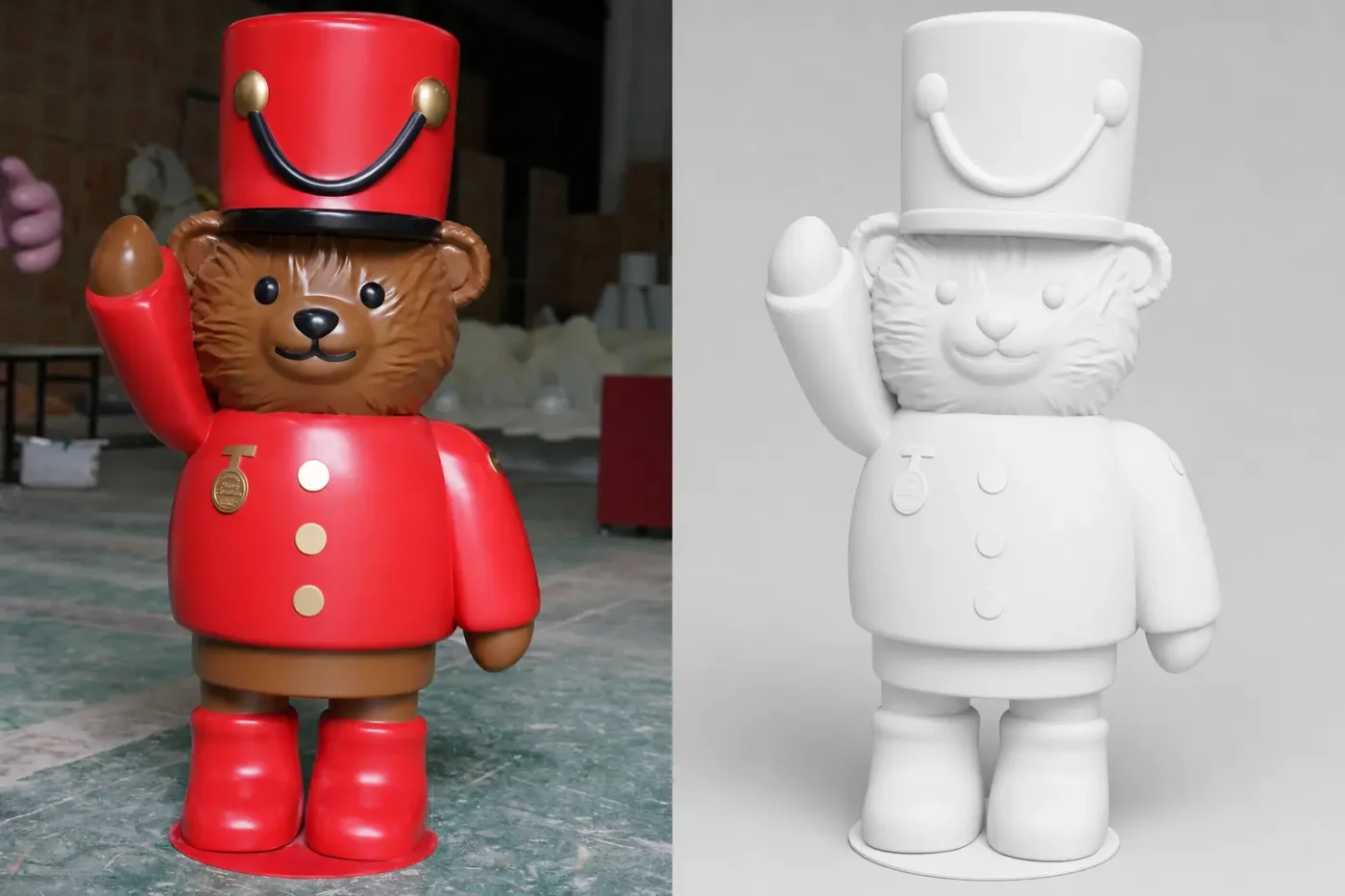
Sampling is one of the most misunderstood parts of Christmas display production. Some buyers see a sample as a small preview. In reality, it is a decision-making tool.
A good sample answers practical questions before the full order begins:
- Does the size feel correct in relation to the window?
- Does the color match the brand direction under lighting?
- Is the finish premium enough for close customer viewing?
- Can the prop be packed safely?
- Can the structure be repeated consistently across multiple stores?
- Is the installation method realistic for the retail team?
For Christmas displays, sample approval matters even more because the season leaves very little room for delay. If a finish problem appears after batch production, there may not be enough time to remake the goods. A single sculptural FRP prop typically needs 10 to 14 days from mold to painted finish — which is why sample approval directly protects the rest of the rollout.
Materials Commonly Used in Christmas Window Displays
Christmas displays often combine visual softness with structural reliability. The most common materials include FRP, acrylic, metal, MDF, foam, fabric, flocking and LED systems.
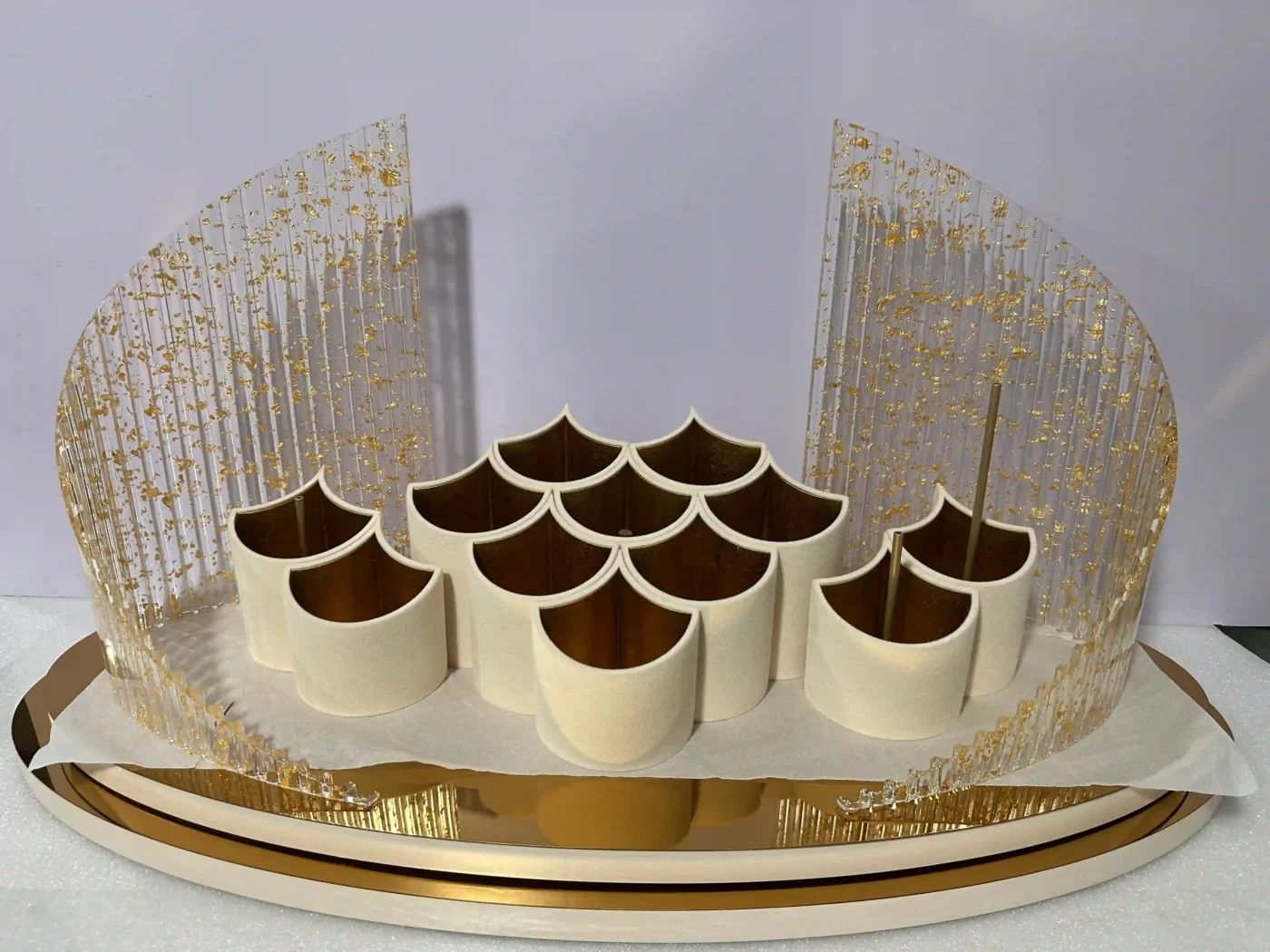
FRP is suitable for oversized candy canes, sculptural figures, large baubles, animals, fantasy characters and irregular shapes. Acrylic works well for glossy candy props, transparent panels, logo elements and illuminated decorations. Metal is often hidden inside the structure, but it is critical for stability, hanging points and repeated installation. MDF and wood are useful for plinths, bases and scenic structures.
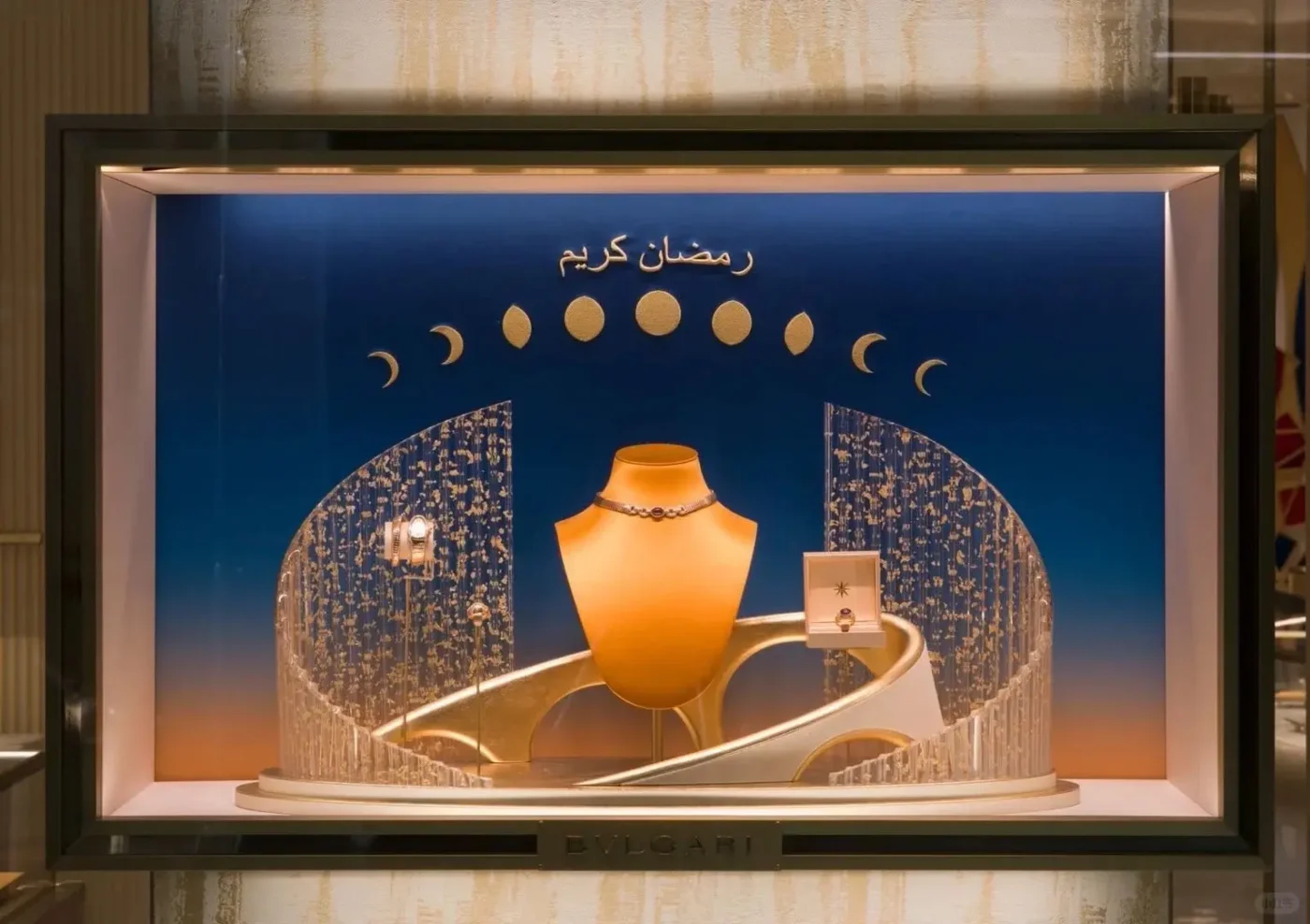
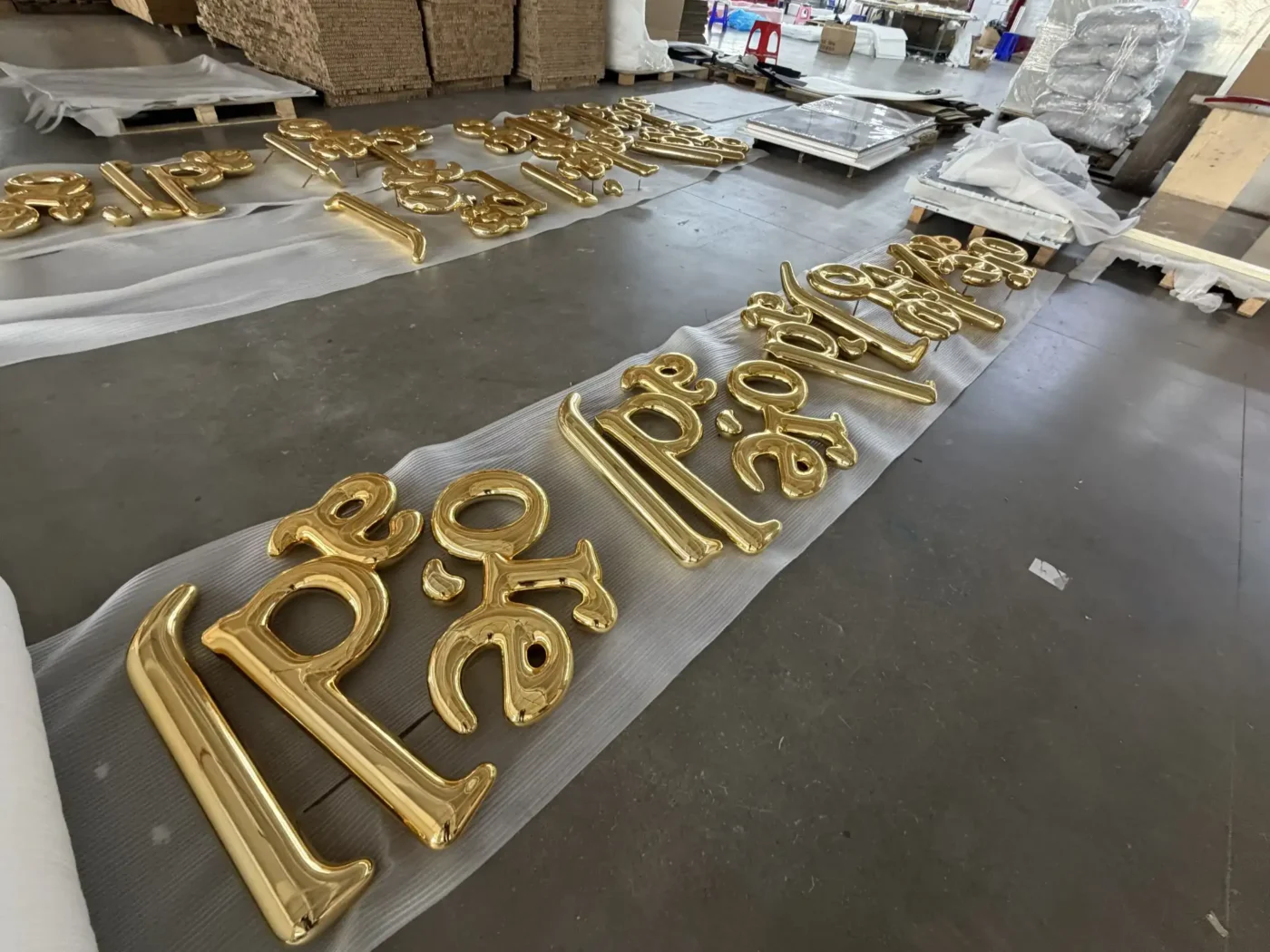
Surface finishing is where the display begins to feel festive. Metallic paint, mirror finish, glitter, flocking, gold leaf, spray paint and leather-like wrapping can all change the mood of a display. A simple form can become premium if the surface is handled well.
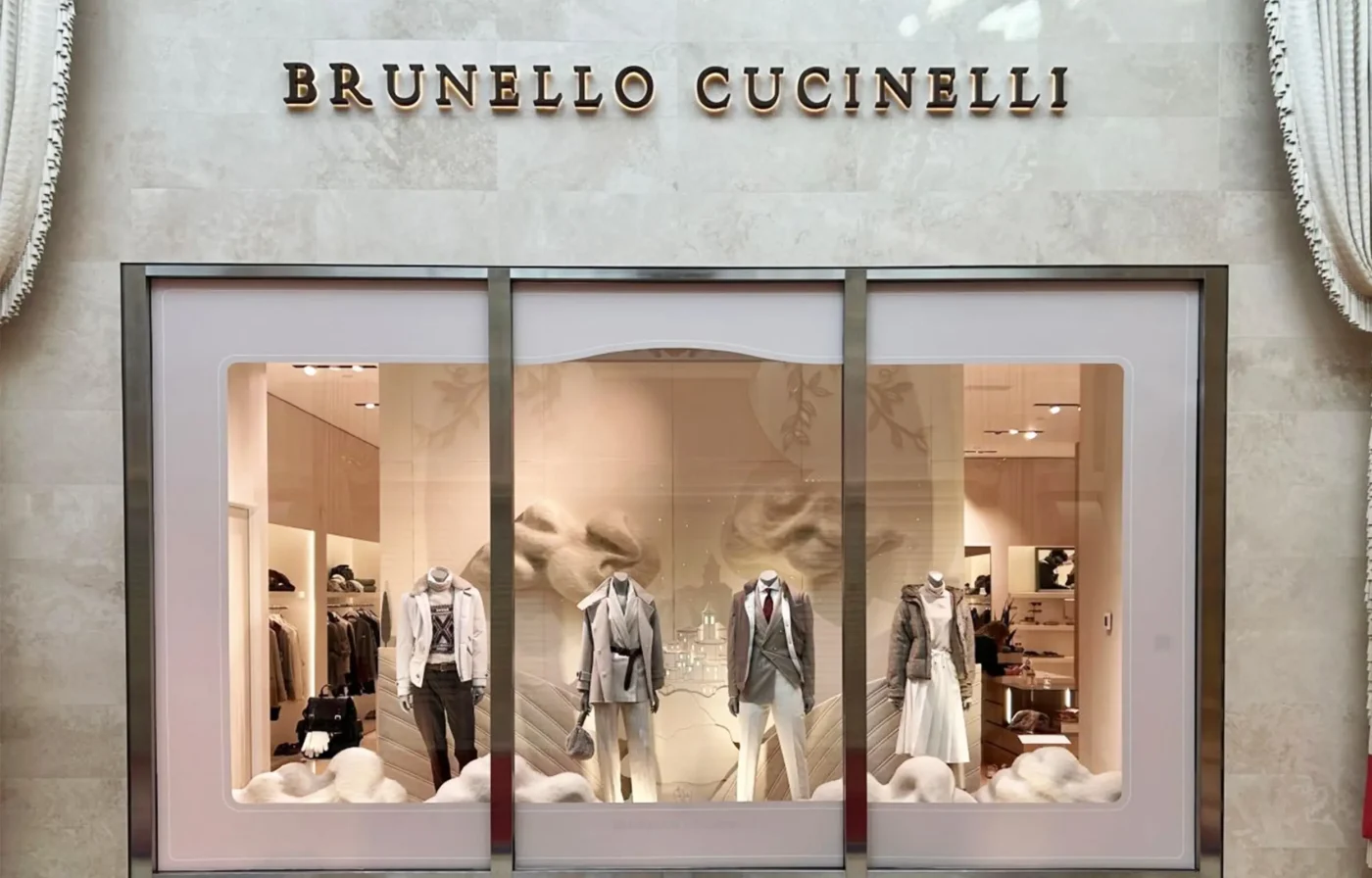
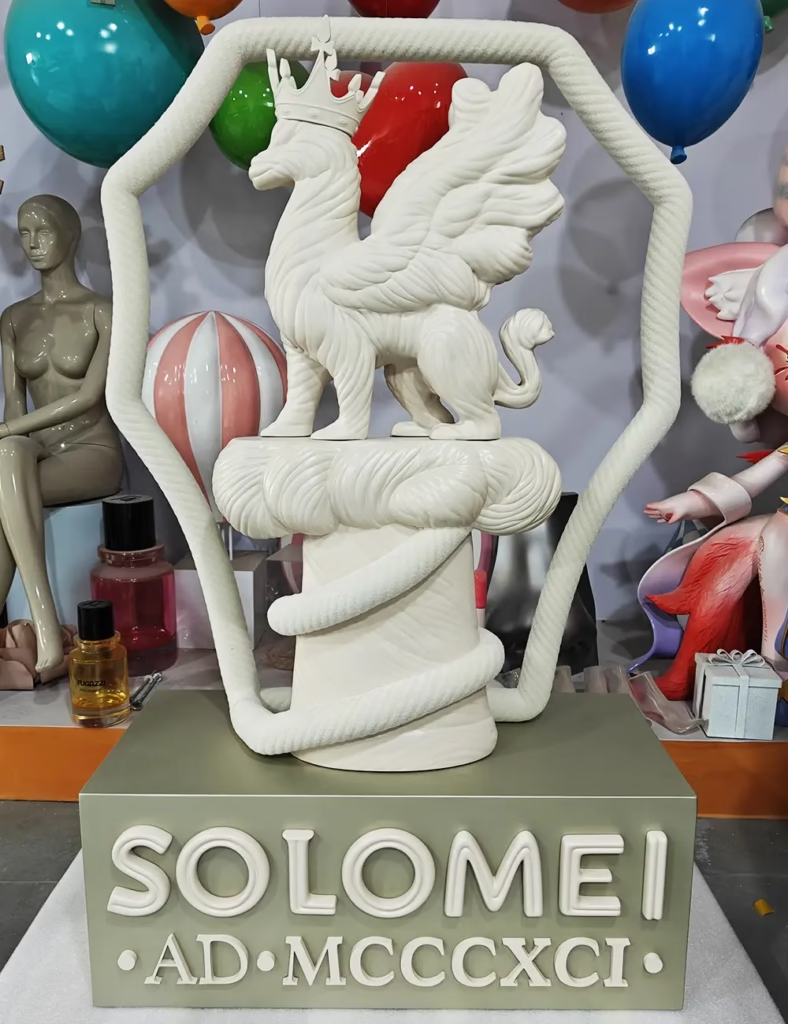
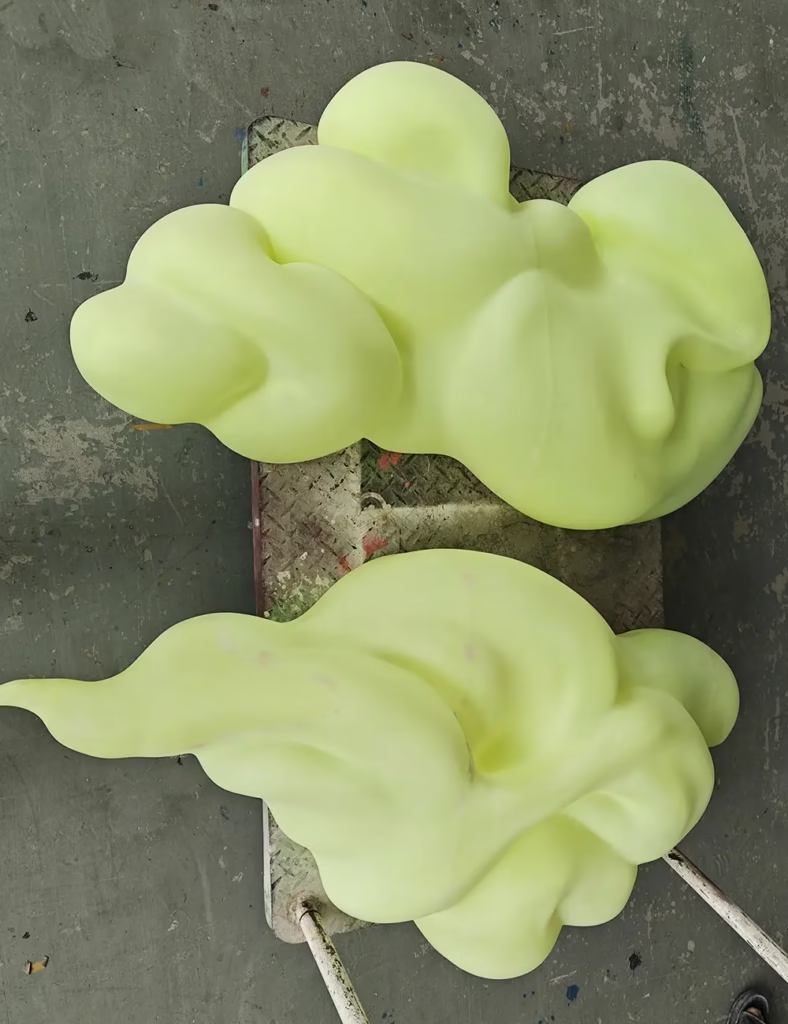
For a concrete reference, our Brunello Cucinelli holiday window displays from the 2025 Christmas season show how sculptural cloud forms, restrained finishing and quiet hanging structures come together for a luxury holiday window. The visual idea is deliberately soft, but the production discipline behind it — FRP sculpting, matte surface treatment, balanced hanging points and market-by-market packing — is what allows the same concept to hold up consistently across every store.
The Hidden Work Behind Multi-Store Christmas Rollouts
When a Christmas display is produced for many stores, the most difficult part is not always the sculpture itself. Often, it is repeatability.
Every store may have slightly different dimensions, ceiling conditions, window depths, access routes and installation teams. A prop that looks perfect in one flagship window may need adjustment for smaller stores. That means production teams need clear labeling, modular structures, installation notes and strong packaging.
For multi-store rollout projects, we normally recommend:
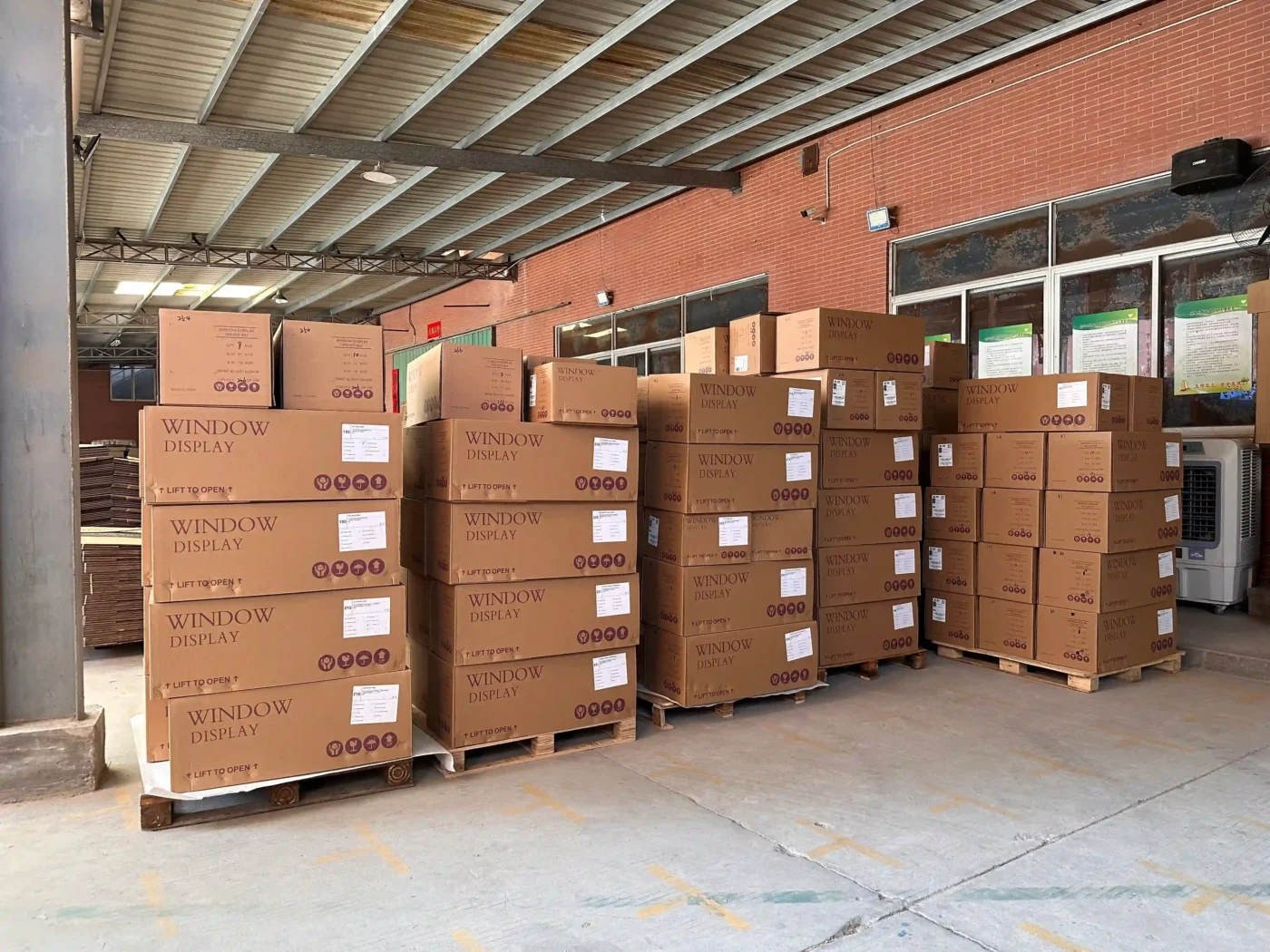
- Numbered cartons by store or market
- Pre-assembly inspection before packing
- Photo records for each finished batch
- Protective wrapping for mirror or glossy surfaces
- Extra spare parts for fragile elements
- Clear installation drawings
- Weight and dimension records for logistics teams
Retail display logistics should be considered during production, not after. A beautiful prop that arrives damaged, late or unlabeled creates unnecessary pressure for the brand team. Industry platforms such as the VM & Display Awards reinforce the same point every year: award-level retail displays are rarely just decorative — they are coordinated, engineered and delivered with precision.
If a Christmas Display Brief Only Arrives in Late Summer
Late briefs are common. In a normal year, a meaningful share of holiday display projects are still being confirmed in August or even early September. When that happens, the question is not whether the project is possible — it is which parts of the ideal timeline have to be adjusted.
A late brief usually forces four practical shifts:
- From ocean freight to air freight. For rollouts landing in the US, UK or continental Europe, sea shipping typically needs four to six weeks. When the calendar no longer allows that, air freight becomes the buffer, at a higher unit cost.
- From full physical sampling to hybrid approval. Instead of a full first-article sample for every SKU, high-risk items (oversized FRP, mirror finish, LED-integrated pieces) still need a physical sample, while simpler items can be approved through digital renders, material swatches and reference photos.
- From fully custom to semi-modular. Existing molds, standard hanging systems and pre-tested acrylic profiles are prioritized. Fully custom sculpting is reserved for the hero prop, not every SKU.
- From sequential to parallel workflow. Structural engineering, finishing tests and packaging design run in parallel rather than in sequence. This requires tighter coordination but keeps the calendar realistic.
None of these adjustments compromise the final look if the supplier is experienced. What they do compromise is margin for error. That is why late briefs work best with partners who already have the material library, tested finishes and installation know-how to move quickly — not with suppliers who are still calibrating on the first project.
If your Christmas rollout is still being finalized, sending an early feasibility enquiry — even with only a reference image and rough store count — is more useful than waiting for a complete brief.
What Brands Should Prepare Before Requesting a Quote
To make the production timeline more accurate, buyers should prepare the following information:
- Campaign theme or reference images
- Rough prop dimensions
- Quantity by item and store
- Preferred materials or visual finish
- Whether the props need lighting
- Indoor or outdoor use
- Installation method
- Destination country or warehouse address
- Target delivery date
- Any brand color or logo requirements
If the project involves many stores, it is also helpful to provide a rollout list. Even a rough store quantity helps the manufacturer estimate molds, labor, packaging volume and production sequence.
For buyers comparing suppliers, the cheapest quote is not always the safest choice. For Christmas retail projects, reliability, communication, sample accuracy and packing quality matter heavily. A supplier must understand both the creative side and the engineering side of holiday VM props.
FAQ
When should a brand start a Christmas window display project?
For global retail rollouts, April to June is ideal for concept and supplier discussion, while July and August are the working months for sample confirmation and production planning. Smaller single-store projects can start later, but they need faster decisions and less creative iteration.
What is the minimum production time if a brief lands in August or September?
For late briefs, an eight to ten week window is workable if the design leans on tested finishes, existing hanging systems and semi-modular structures, and if air freight is used for at least part of the shipment. Fully custom hero pieces still require a physical sample, so those must be prioritized first.
Can Christmas display props be produced without a physical sample?
For simple repeat items or graphic-driven decorations, digital approval with material swatches can be enough. For oversized FRP sculptures, mirror or metallic finishes, LED-integrated props and any structural piece, a physical sample is strongly recommended — the risk of finishing or scale surprises is otherwise too high.
What materials are best for Christmas window display props?
The most common combinations are FRP for sculptural forms, acrylic for glossy and transparent effects, metal for load-bearing structures, MDF and wood for plinths, and LED systems for illumination. Finishing choices — flocking, gold leaf, mirror paint, glitter — carry most of the festive mood.
Why do multi-store rollouts need more production time than a single flagship window?
Multi-store production requires repeatable quality across every unit, store-level carton labeling, export-grade packaging, spare parts, installation drawings and logistics coordination. Even when the props are visually identical, the production system behind them is significantly more complex.
Does switching to air freight solve a late Christmas display brief?
Air freight buys back roughly three to five weeks compared to ocean freight, which can rescue a late calendar. It does not solve upstream problems: if the sample is not approved, the mold is not made or the finish is not tested, faster shipping only moves the delay to a later stage.