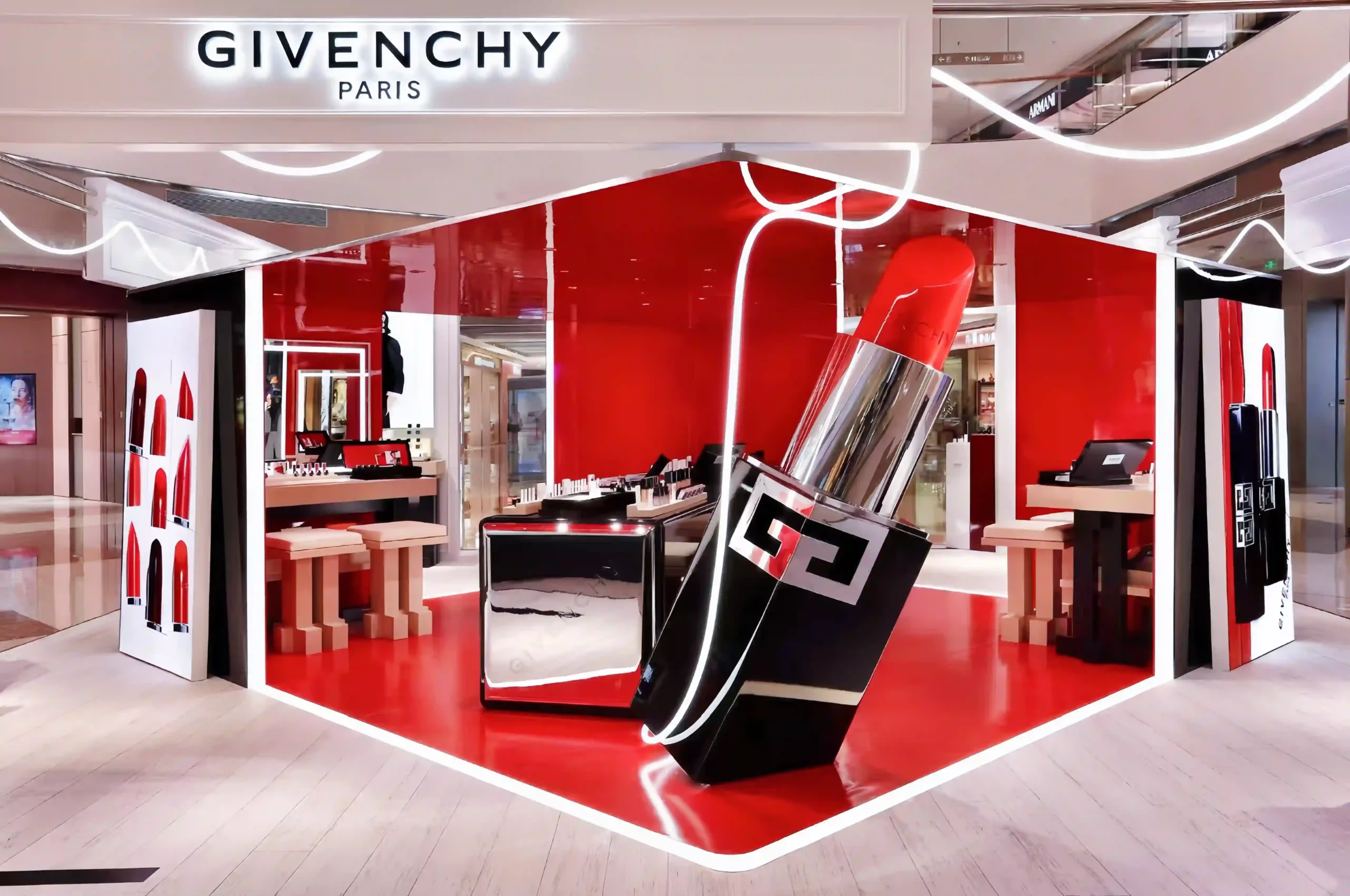
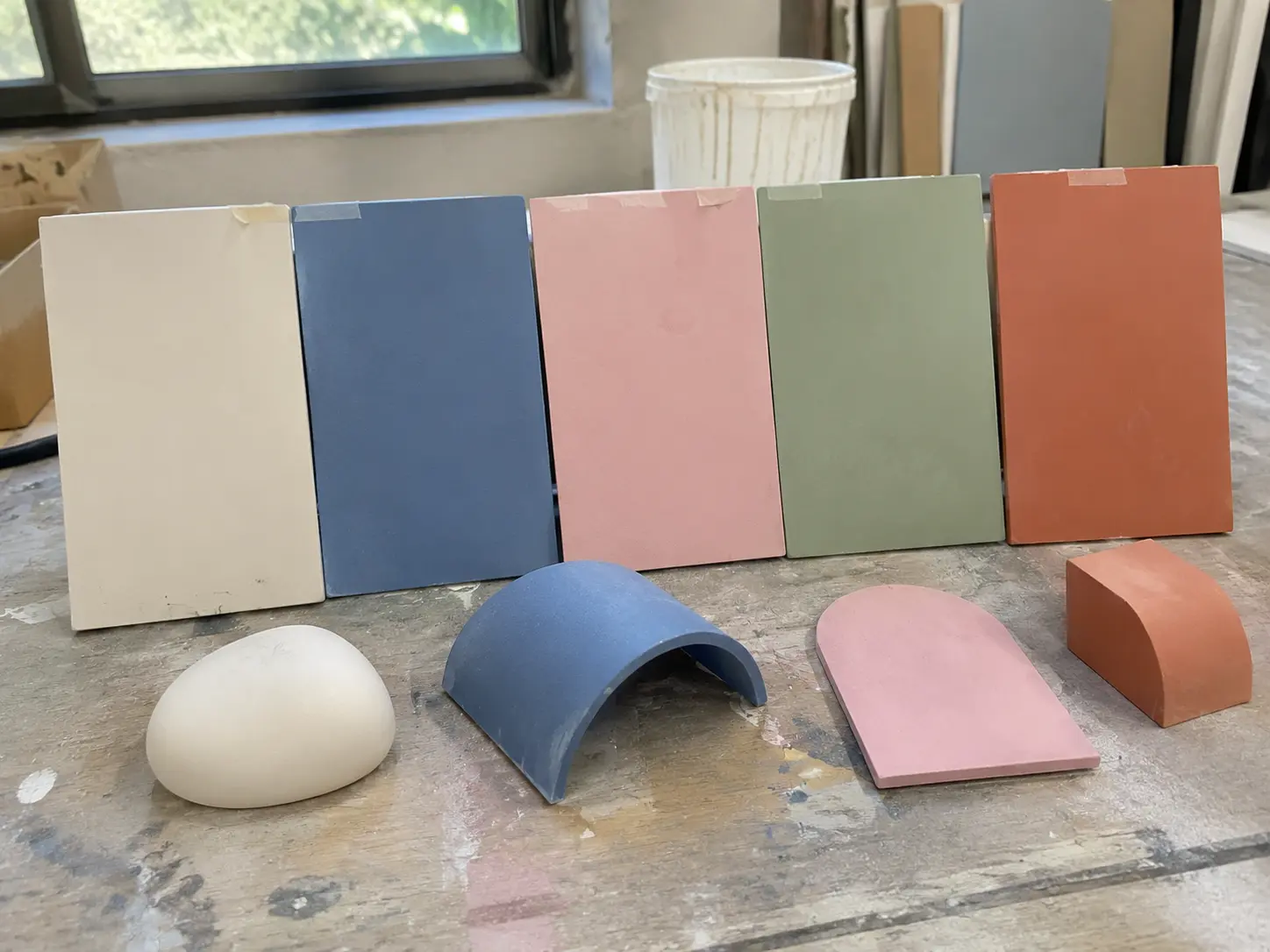
Trend reports describe what will look current in 2027. They rarely describe what happens when that look meets a spray booth, a fibreglass mould or a shipping crate.
A pale finish that reads as calm in a render can turn faintly yellow under storefront spotlights. A handmade texture that charms in one sample can drift across forty stores. A kinetic piece that delights at the presentation has to keep moving quietly through ten-hour trading days.
This guide reads the main window display trends for 2027 from the production side. For each one, it sets out where the signal comes from, how the piece is usually built, what tends to go wrong, and the one decision worth making early.

2027 Window Display Trends at a Glance
The seven directions below are drawn from colour forecasters, trade fairs and recent luxury windows. The right-hand column is the production question each one raises first.
| Trend | Where the signal comes from | First production question |
|---|---|---|
| Soft white to saturated blue | Pantone 2026, WGSN and Coloro 2027 | Which physical colour standard, per material? |
| Sculptural forms | Retail design trend reports | Where do the split lines go? |
| Crafted materiality | Retail design trend reports | What variation is acceptable across stores? |
| Kinetic windows | Luxury windows and design-week installations | What duty cycle must the mechanism survive? |
| Large-scale 3D printing | Flagship window installations | Print the final part, or print a master and mould it? |
| Neo Deco and metal | Pinterest Predicts, Art Deco revival | Real metal or a metallised finish? |
| Sustainability as structure | EuroShop 2026 | One season, or several? |
1. Colour Moves from Soft White to Saturated Blue
Pantone chose Cloud Dancer, a soft white, as its Colour of the Year for 2026, the first time a white has held the title. For 2027 the direction swings the other way. WGSN and Coloro named Luminous Blue their Colour of the Year 2027, alongside four SS27 key colours: Energy Orange, Pop Pink, Meadowland Green and Clay.
Both ends of that range are demanding in production, for different reasons.
Why pale white is the hardest finish to hold
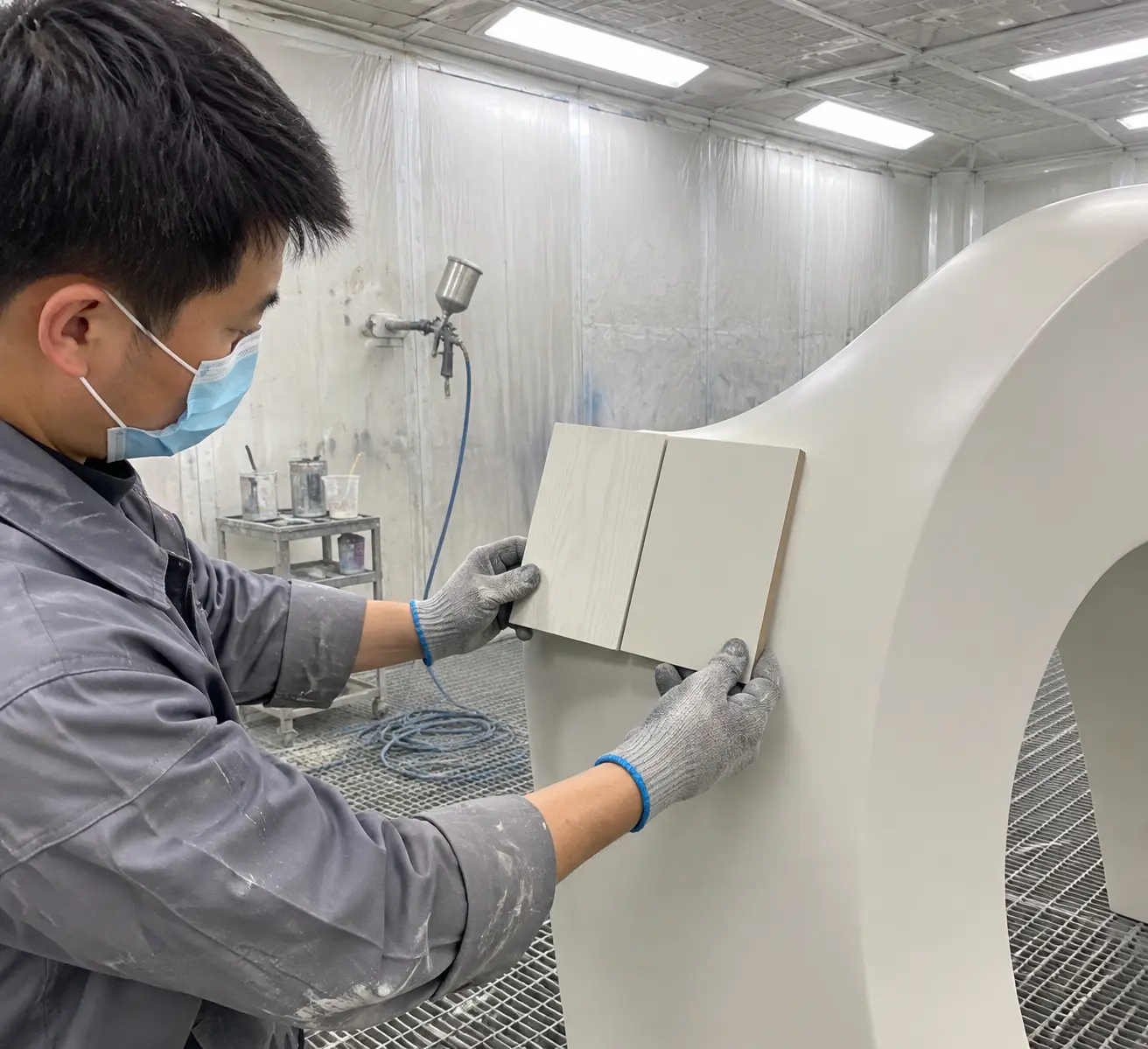
A clean, opaque pale white is one of the finishes most likely to fail in display work. The substrate matters more than the paint.
- Hand-laid FRP. The resin base carries a slight yellow cast, and glass fibre or body filler can ghost through the topcoat. A stable pale white needs sealing primer and several white coats. Any shortfall in sanding shows as pinholes or bleed-through, and the finish can yellow slowly under window spotlights. High-gloss pale white on FRP is especially prone to colour drift, grain and orange peel.
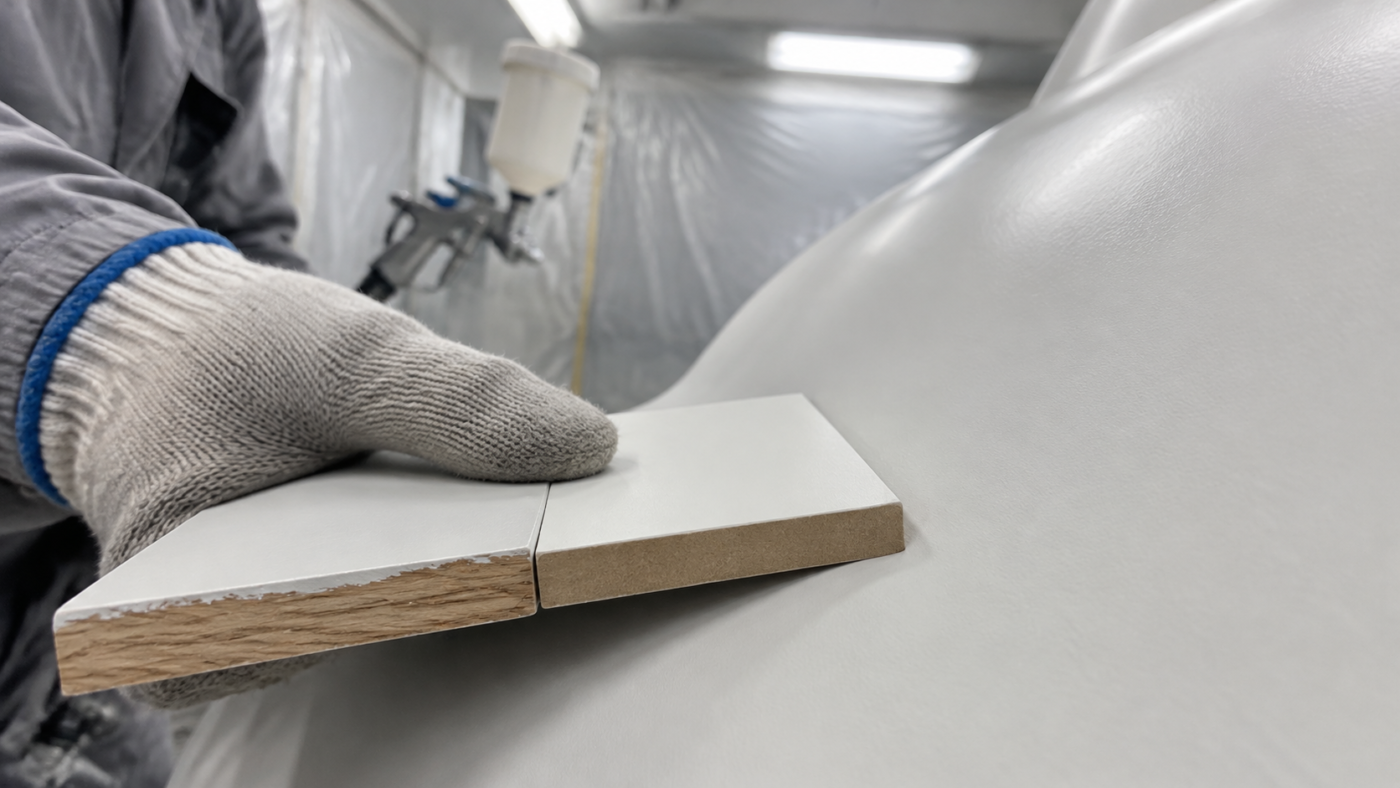
- Solid timber such as oak or birch. Natural tannins push through pale paint and darken or warm it. Even when sealed, changes in temperature and humidity can bring colour back. A thin coat gives a cream that shows the grain, not a solid white. Opaque cool white on timber is achievable, but it costs considerably more.
- Standard MDF. Fibre colour varies through the board, so paint absorbs unevenly and pale finishes can look blotchy or yellow in patches. Edges and chamfers expose the substrate first. A demanding white needs full sealing, with edges primed before the faces.
If a concept calls for one true cool white across several materials, choose the substrates with that in mind, or agree early that a warmer off-white is acceptable.
Why saturated colour needs a physical standard
Strong colours shift more visibly between substrates. The same blue will read differently on cast acrylic, a sprayed panel and a powder-coated frame. Coloro runs feasibility checks on its key colours across materials before release, and a display programme needs the same discipline: one physical colour standard, approved separately on each material in the window.
How long colour approval takes
Colour approval is short per round, but rounds add up when several materials are involved. Typical timings for a first colour sample:
| Sample type | First round | Each further adjustment |
|---|---|---|
| Flat sprayed panel (MDF, steel or PVC, matt pale white) | 3–5 days | +2–3 days |
| Powder-coated metal part | 7–10 days, as the powder is colour-matched by the supplier | +3–5 days |
Decide early: the physical colour reference, and which materials it must be matched on.
2. Sculptural Forms Replace the Block Plinth
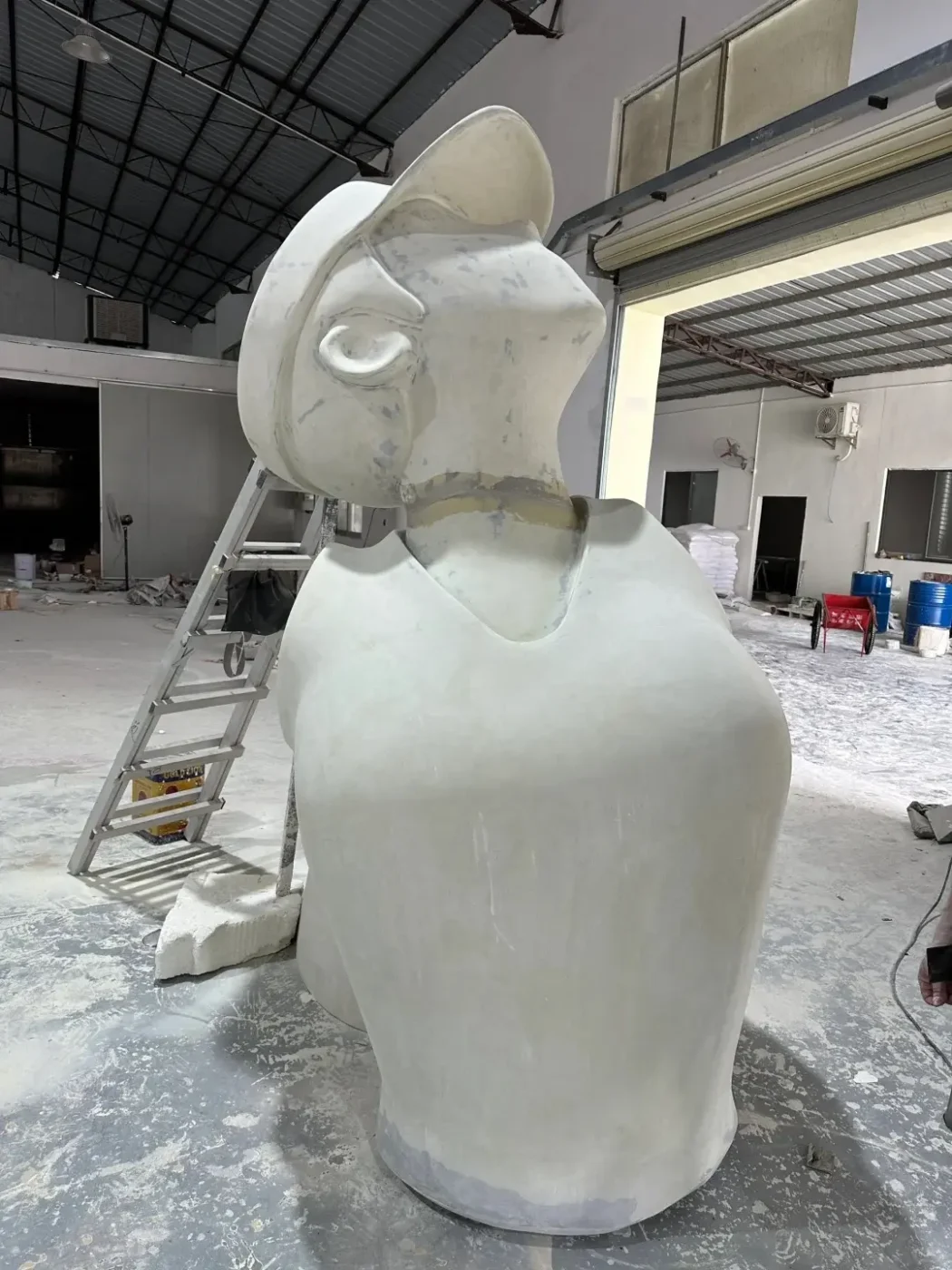
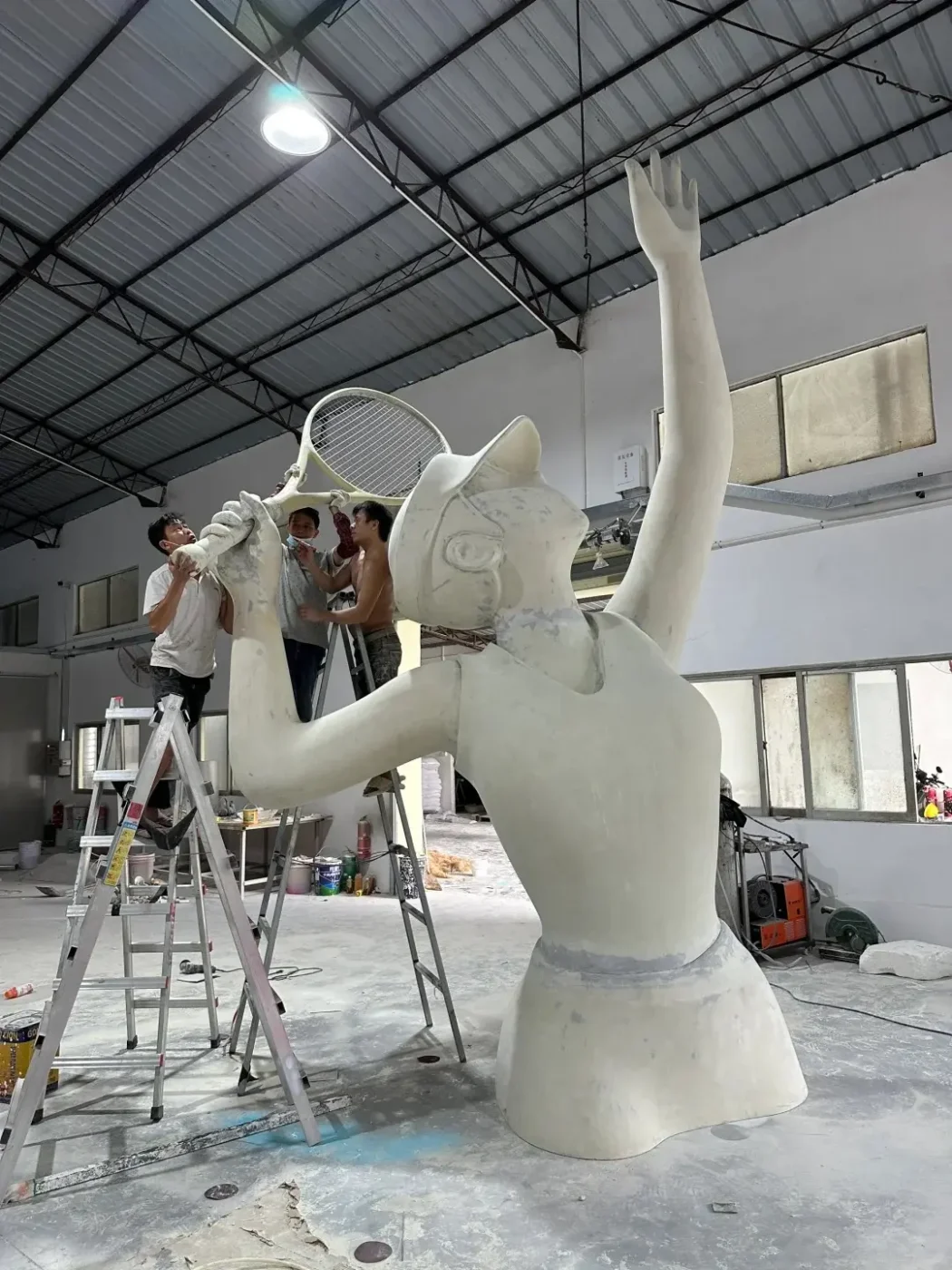
The Bernard Group’s 2026 trend files describe retail displays moving towards art-led, organic forms: curved or abstract pedestals in place of cubes, built from moulded composites and mixed materials.
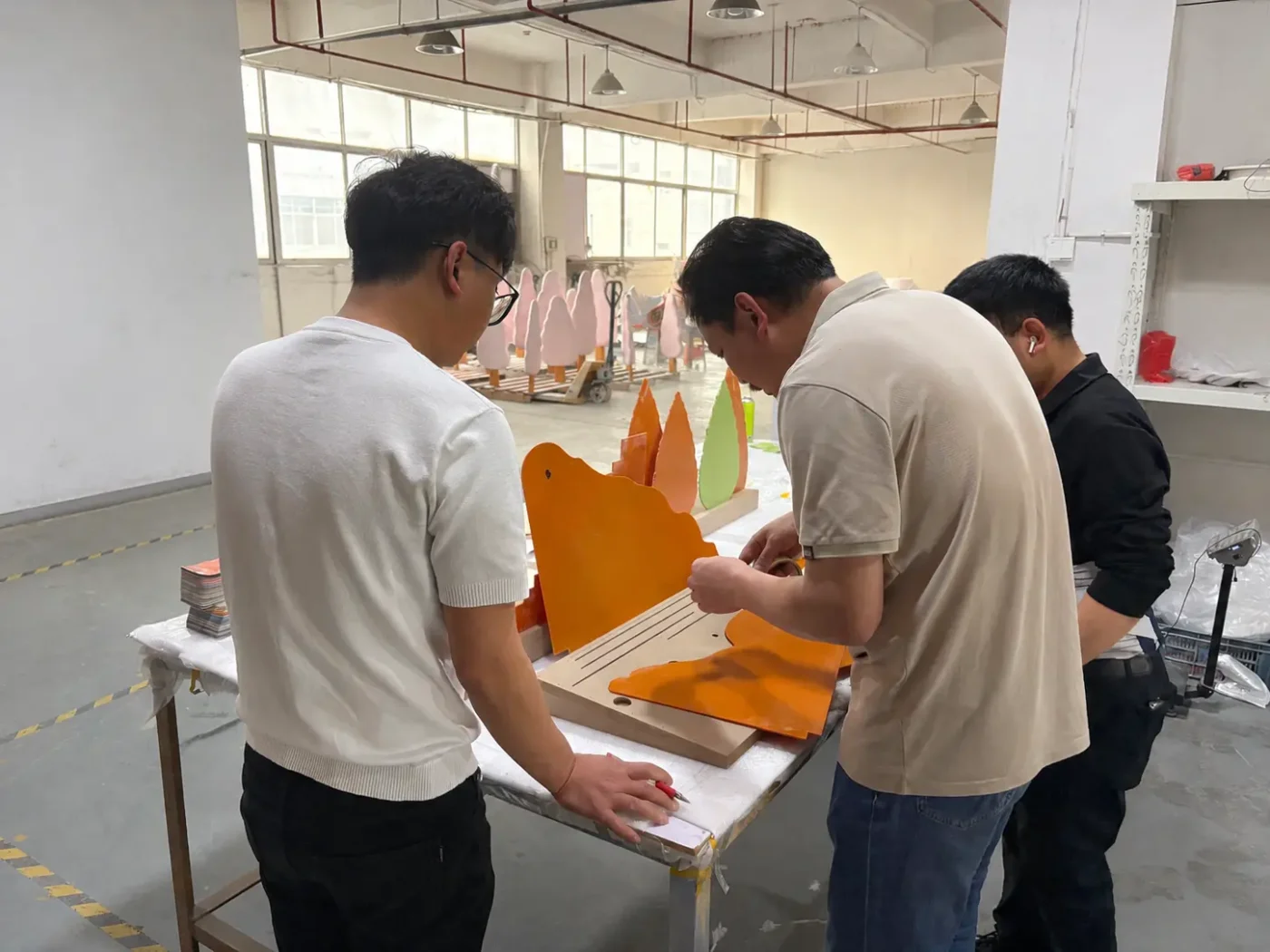
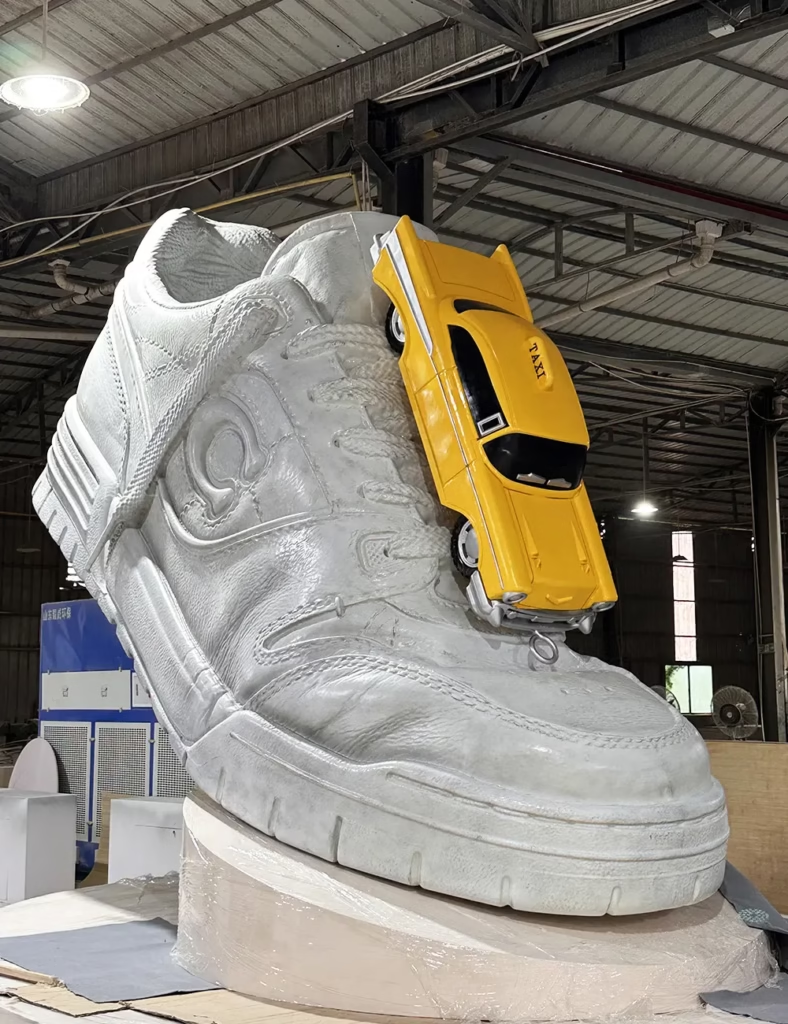
How it is usually built. A 3D model is developed first, then a full-size master is CNC-cut in foam or printed. For repeated pieces, a mould is taken from the master and the parts are produced in FRP, then filled, sanded and finished. One-off pieces can sometimes skip the mould and be finished directly over a hard-coated foam core. 3D drafting for display props is where most of the later decisions are set.
What tends to go wrong.
- Large forms have to split for transport and access, and badly placed split lines show under raking light.
- Tall or cantilevered shapes need an internal steel frame for stability and fixing points.
- Curved surfaces reveal finishing faults that a flat panel would hide.
- Crates for organic shapes take longer to design than the shapes themselves suggest.
Decide early: quantity and split lines. Quantity decides whether a mould pays for itself, which is the largest single driver in the production cost of a window display. Split lines are easiest to hide when they are designed into the form, not cut into it afterwards.
3. Crafted Materiality at Rollout Scale
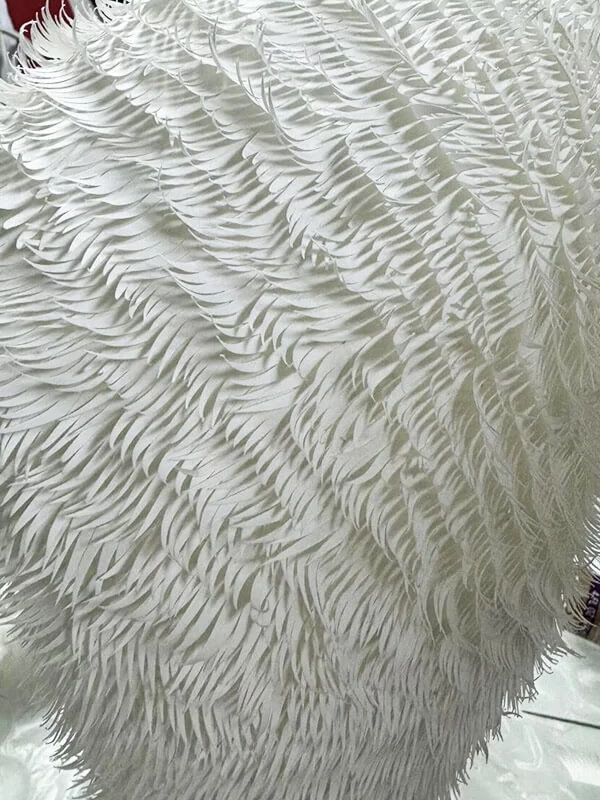
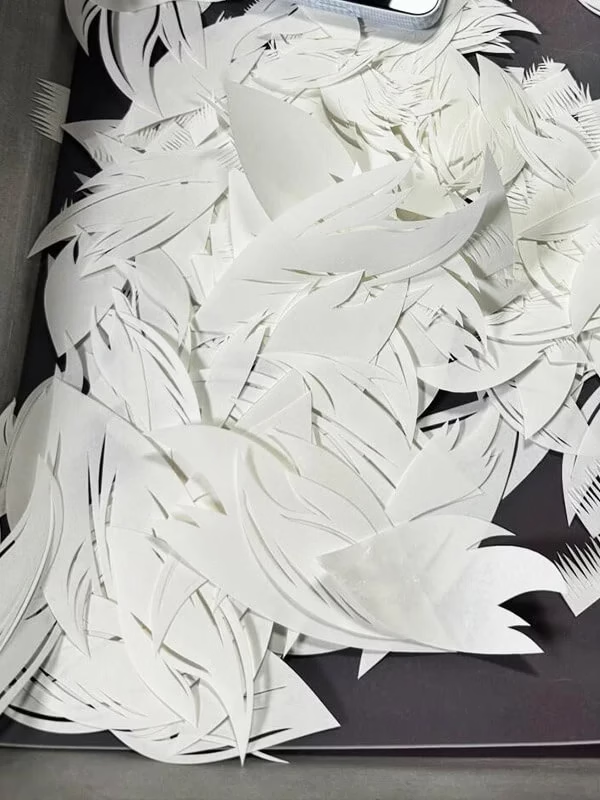
The same trend files point to crafted materiality: paper, leather, textiles and metal, with visible handwork and a tolerance for imperfection. The appeal is warmth and authenticity at a time when shoppers question mass production.
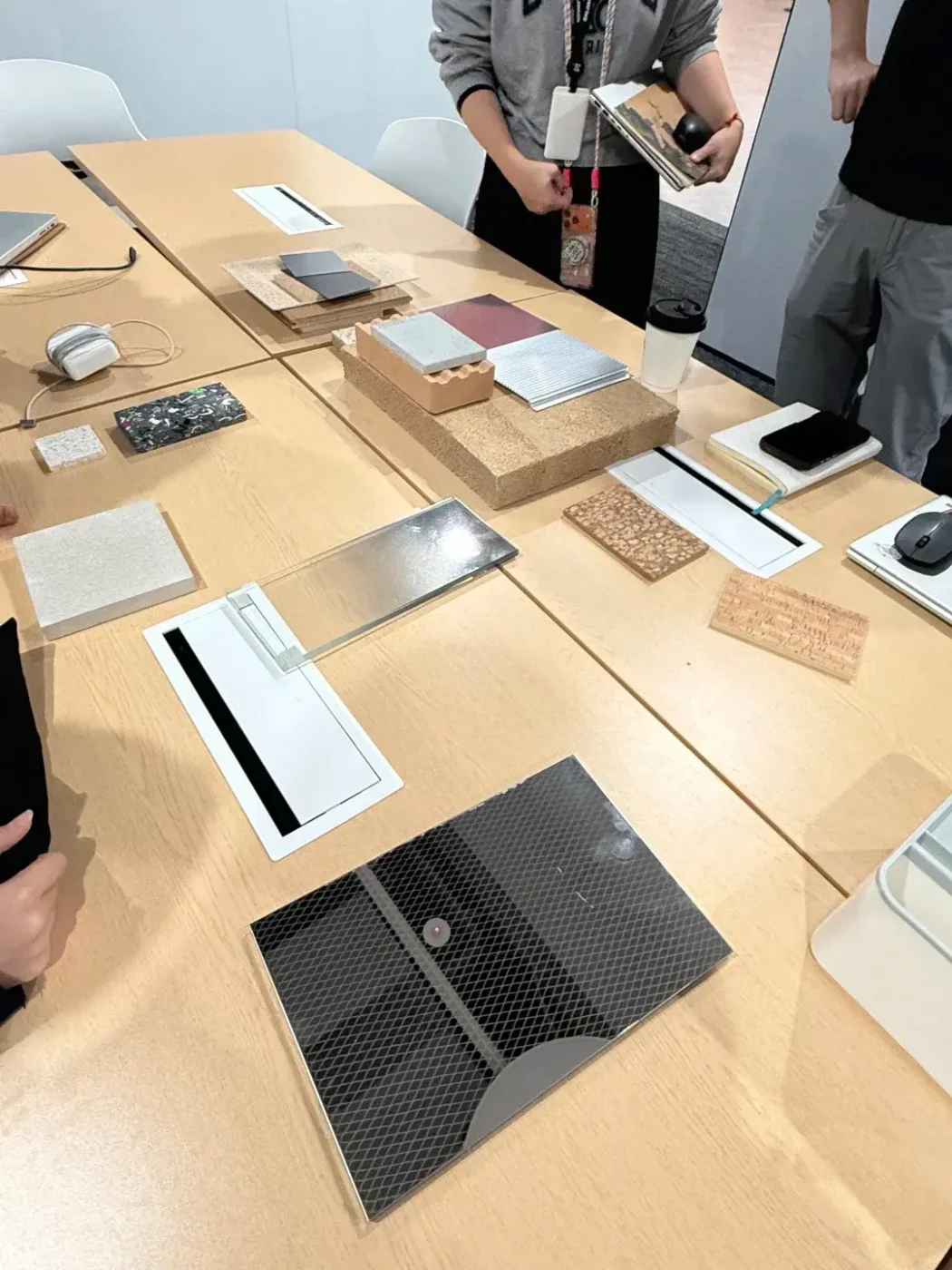
The production tension is obvious. A handmade surface is valued for being individual, yet a campaign needs it to look like the same campaign in every store. Consistency comes from controlling the process around the handwork, not from removing it:
- Golden sample and limit samples. Instead of one reference, approve a set: the target, the edge of acceptable, and a reject. Everyone then judges variation against the same physical range.
- Machine-cut base, handmade finish. Laser cutting, CNC or printing fixes the shape and proportion. Hand processes are kept to the final surface, where variation reads as character.
- Templates and jigs for hand steps. Fold lines, distressing zones and spray masks can be fixed with templates so that hands repeat the same positions.
- One material lot. Paper, leather and fabric bought in a single batch avoid dye-lot differences between stores.
- One team for the full run. A change of hands is the most common source of drift.
- First-article approval, photographed. The first piece of each batch is compared with the golden sample under the same light and angle, and spot checks follow the same method.
- Central production and inspection. Every store set is made and checked in one place before it is split for delivery.
Fire performance. Paper and fabric elements should be specified in certified flame-retardant grades where possible. Where a material is only available untreated, a flame-retardant treatment is applied. Requirements differ by mall, department store and country, so confirm them before sampling, not after.
Decide early: the acceptable range of variation, agreed on physical samples. For the wider system behind consistent multi-store delivery, see our guide to a multi-store window display rollout.


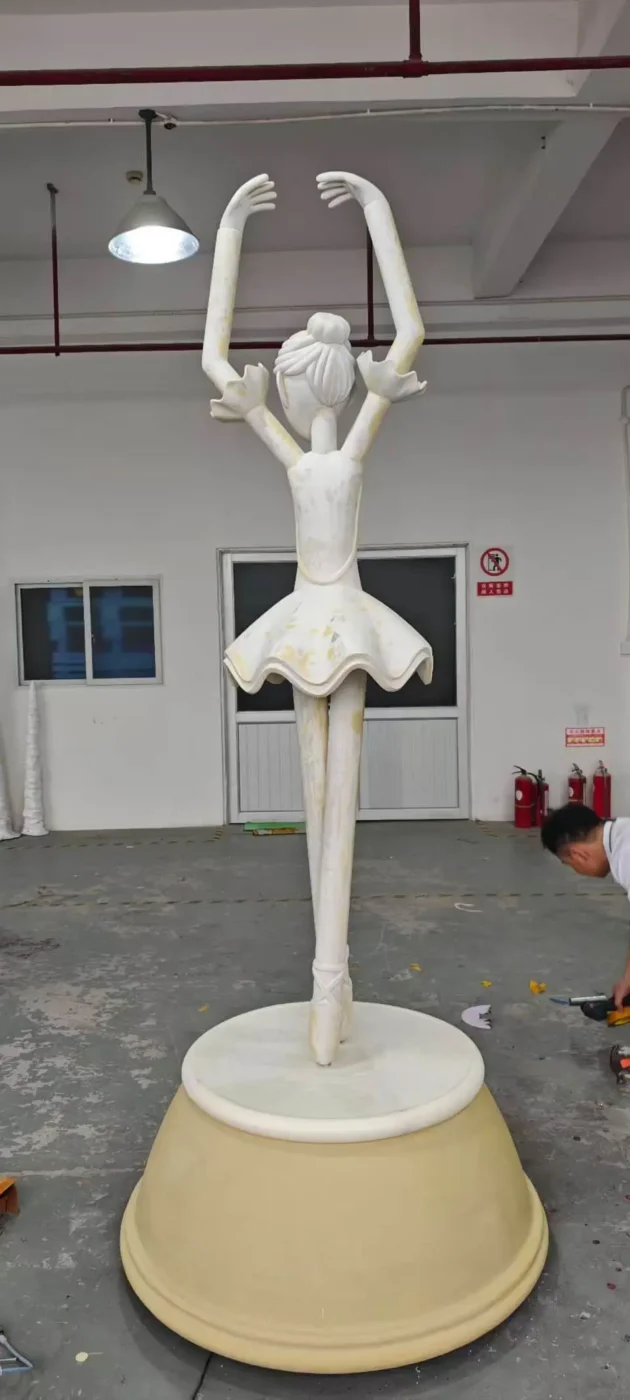
4. Kinetic Windows Return
Movement keeps returning to luxury windows and design-week installations. Hermès has shown a kinetic window by artist Johannes Langkamp whose structures sway as if in a breeze. Shiseido’s Ginza building has hosted a window by we+ in which paper leaves rise and fall, with ceiling lights tied to each leaf’s movement. For Valextra at Salone del Mobile, engineers concealed every moving framework while holding the product securely in place.
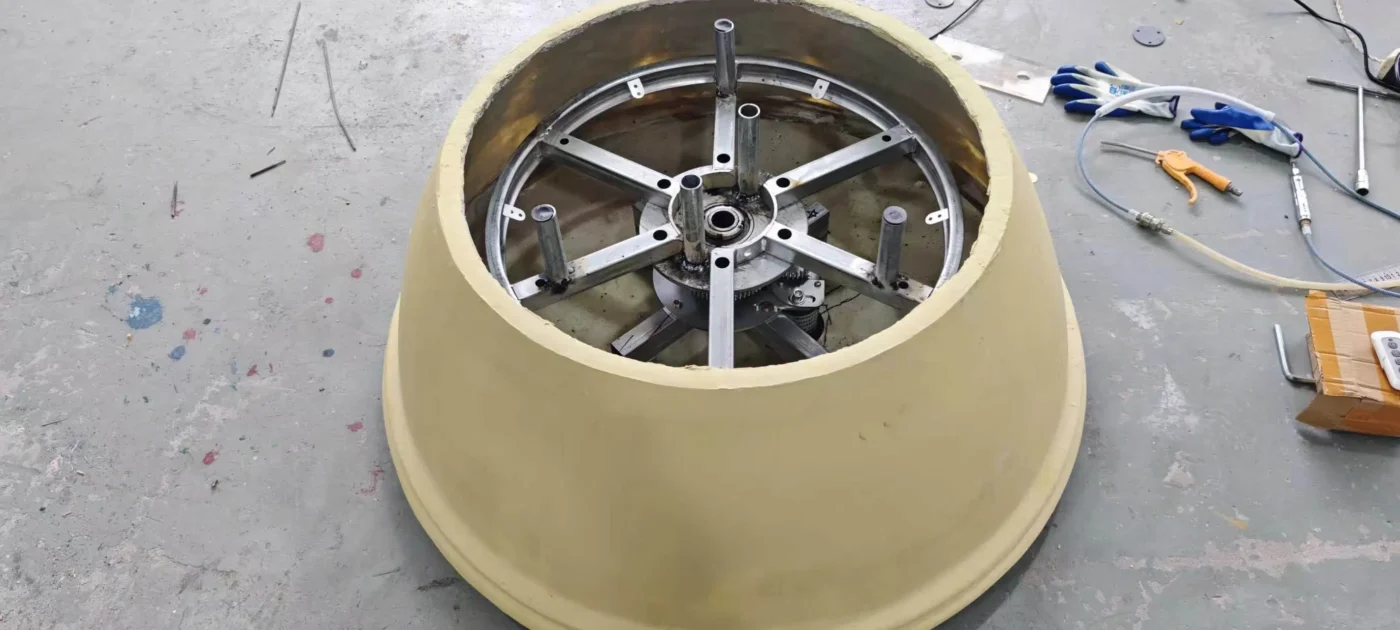
How it is usually built. Most window movement falls into three types: rotation, lifting and swinging. Each relies on a motor, a reduction mechanism and a controller, concealed inside the prop or its base.
What tends to go wrong.
- Noise that is unnoticeable in a workshop becomes obvious in a quiet boutique.
- Heat and wear build up over long trading days and multi-week campaigns.
- Store teams need a simple way to reset or switch off the piece without opening it.
- Power supply and electrical requirements differ between markets.
Decide early: the type of movement, how many hours a day it must run, for how many weeks, and who will reset it in store. Every kinetic piece should run continuously before it ships, checked for noise, heat and stability, ideally as part of a full-size window display prototype.
5. 3D Printing Moves into the Flagship Window
Large-format 3D printing has moved from prototyping into finished windows. For its Amsterdam store, Hermès worked with Aectual and MVRDV on Galloping Through the Park, a printed window of around 100 square metres unveiled in May 2025 and built up in eight coloured layers.
How it is usually built. Large parts are printed in sections, then joined, sanded and coated. Alternatively, a print serves as the master for a mould, and the final parts are cast.
What tends to go wrong. Seams between sections, visible layer texture, and flatness or stiffness in large panels. On high-finish pieces, post-processing often takes longer than the print itself.
Decide early: whether to print the final part or print a master and mould it. Small quantities and complex geometry favour printing; larger runs and gloss finishes often favour the mould. See 3D printing for display props for how the route is chosen.
6. Neo Deco and the Return of Metal
Pinterest Predicts 2026 identified “Neo Deco”, a sleek reading of Art Deco built on chrome, brass and geometric motifs such as chevrons and fan arches. The revival has a retail history behind it: Louis Vuitton’s Art Deco exhibition in Paris gave a full section to the house’s historic window displays.
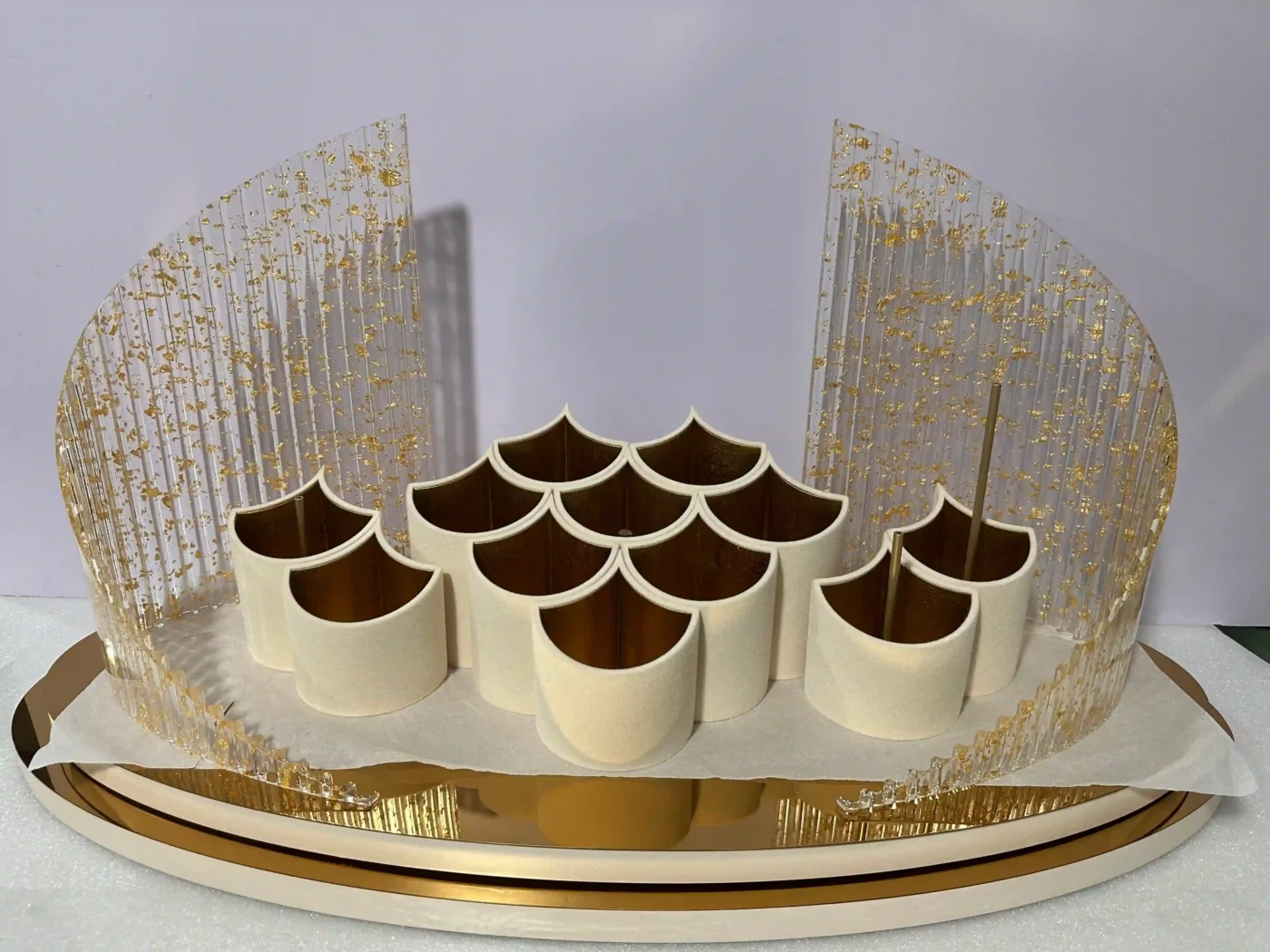
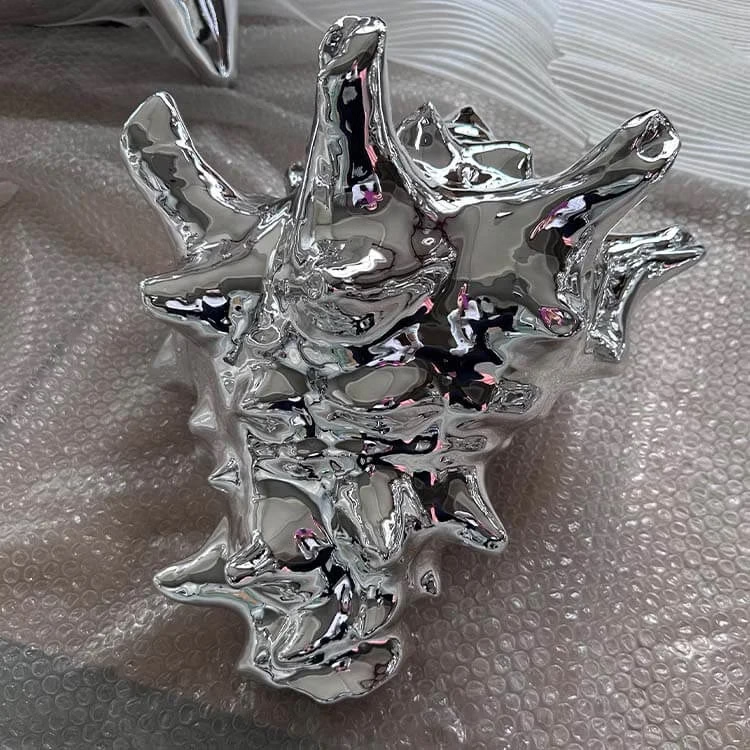
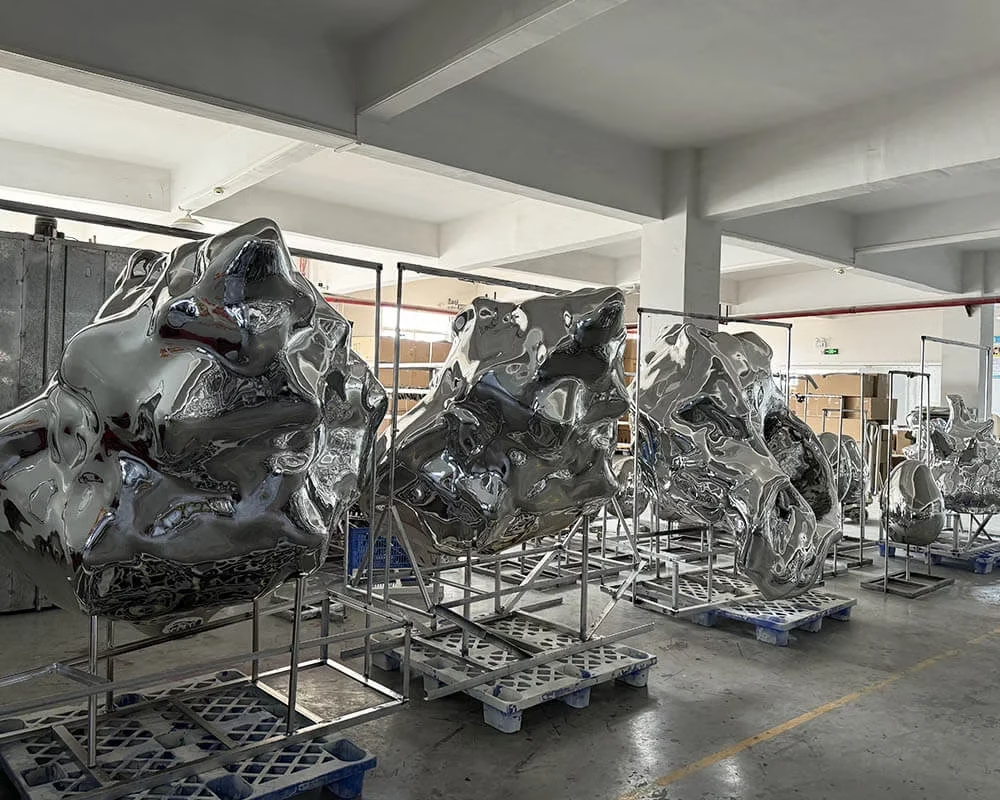
How it is usually built. Two routes reach a metal look. Real metal, such as stainless steel finished with PVD coating, suits durable, touchable parts and frames. UV vacuum metallising puts a chrome or gold finish on lighter, more complex forms in plastic or composite, and is generally better suited to decorative parts than to surfaces handled every day.
What tends to go wrong. Fingerprints, scratches, visible welds, waviness across large mirror surfaces and damage in transit. Polished metal is unforgiving at every stage after the workshop.
Decide early: real metal or a metallised finish. The choice moves weight, cost, durability and how close the shopper can get to the surface. Protective film and part-specific packing should be planned with the finish, not added at dispatch.
7. Sustainability Becomes a Structural Decision
EuroShop 2026, the retail industry’s largest trade fair, named AI and digitalisation, emotionalisation and sustainability among its central themes. Coverage from the fair noted a wider use of recycled materials in displays, mannequins and hangers.
For custom window props, sustainability is less about a single material and more about structure:
- a reusable frame that carries new surfaces each season
- mechanical fixings in place of glue, so parts can be separated
- fewer mixed materials bonded permanently together
- crates designed for storage and a second journey, not only the first
Decide early: whether the piece is meant for one season or several. Reuse has to be engineered into the first build. It is very difficult to add once the props exist.
Spectacle and Restraint, Both at Once
2027 is not moving in one direction. Large sculpture, movement and saturated colour sit alongside a quieter line. Balmain’s Fall-Winter 2026 window, created with artist and set designer Jeanne Briand, deliberately favoured restraint over spectacle.
Restraint is not the cheaper option. With fewer elements, each surface sits closer to scrutiny, and there are fewer places to hide a joint, a colour step or an uneven edge. A minimal window often asks more of finishing than a busy one.
What to Decide Early, Whatever the Trend
| Trend | The decision to make first |
|---|---|
| Soft white or saturated colour | A physical colour standard, approved on each material |
| Sculptural forms | Quantity and split lines |
| Crafted materiality | The acceptable range of variation, on physical samples |
| Kinetic windows | Movement type, daily run time and in-store reset |
| Large-scale 3D printing | Print the final part, or print a master and mould |
| Neo Deco and metal | Real metal or a metallised finish |
| Sustainability | One season or several |
Each of these decisions is easy at sketch stage and expensive after sampling has begun. Our overview of store window displays from concept to installation shows where they sit in the full project sequence.
Bringing a 2027 Concept into Production
If a 2027 concept is taking shape, the most useful moment for a production conversation is before the render is final. Share the concept, the likely store count and the target installation date, and we can review the material route, the sampling needed and the points that will affect the schedule.
For campaigns already close to their installation date, our guides to seasonal retail window displays and the Christmas display production timeline show how far in advance each stage needs to begin.
Frequently Asked Questions
What are the main window display trends for 2027?
The main directions are a move from soft white towards saturated colour, sculptural forms in place of block plinths, crafted handmade surfaces, kinetic movement, large-scale 3D printing, a Neo Deco revival in chrome and brass, and sustainability built into the structure through reusable frames and re-skinnable surfaces.
What is the colour of the year for 2027?
WGSN and Coloro named Luminous Blue their Colour of the Year for 2027, with Energy Orange, Pop Pink, Meadowland Green and Clay as SS27 key colours. Pantone’s Colour of the Year for 2026 is Cloud Dancer, a soft white, and Pantone announces its following colour each December.
Are kinetic window displays practical for multi-store rollouts?
Yes, when the mechanism is simple, concealed and tested. The key points are the type of movement, how many hours a day it runs, noise in a quiet store, and how staff reset it. Every unit should run continuously before shipping to check noise, heat and stability.
How early should a trend-led window concept go to a manufacturer?
Ideally at sketch stage, before the render is final. Decisions such as colour standards, split lines, mould or print, and real metal or metallised finish are inexpensive to change early and costly once sampling has started.