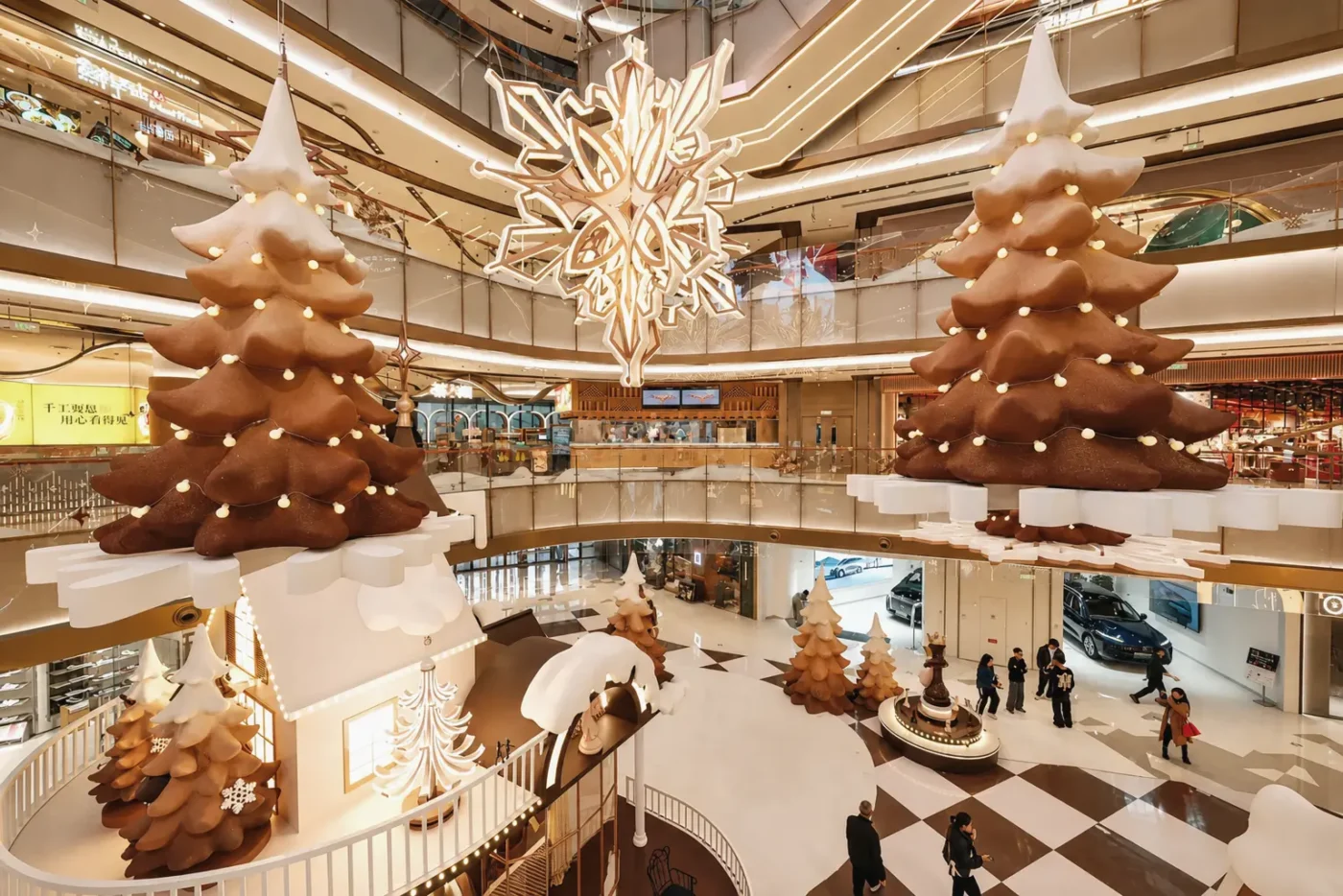

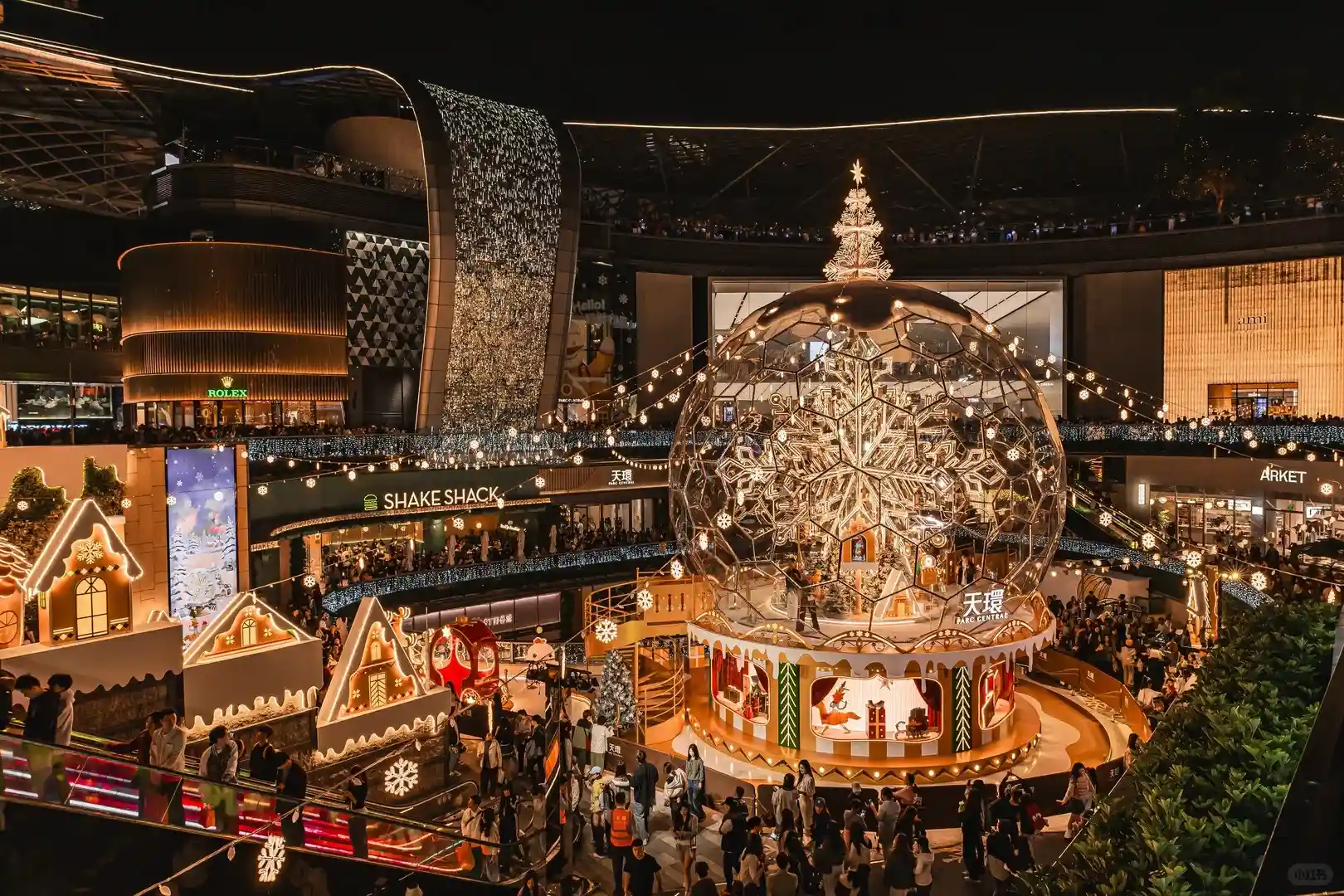
Walk into any luxury boutique and count the surfaces. The plinths, the shelving, the cash desk, the wall cladding, the seasonal podiums — most of what you see is wood, and most of that wood is MDF under lacquer. Fiberglass gets the sculptures and metal gets the structure, but woodwork is the quiet majority of every store build and most window schemes we produce.
It is also the material where quality is hardest to judge from a photograph. Two MDF podiums can look identical on delivery day. Six months later, one still reads as a lacquered monolith; the other has a swollen base edge and a paint line ghosting through every joint. The difference was decided in the workshop, in steps a buyer never sees. This guide covers what we check on our own floor — and what you should ask any woodwork supplier before you sign off.
The Boards: What We Build With and Why
Four board families cover nearly every retail woodwork brief. Each has a distinct cross-section, which is also how we verify what a supplier actually used.
| Board | Character | Where we use it | Cross-section check |
|---|---|---|---|
| MDF | Dense, uniform, machines beautifully, takes lacquer better than anything else | The default for display props — podiums, cladding, sculpted forms | Uniform and fine, like a chocolate biscuit; no layers, no grain |
| Plywood | Higher strength, better dimensional stability and moisture resistance than MDF | Load-bearing structure, base panels, backboards | Visible stacked veneer layers |
| Particleboard | Cheapest option; weak, poor screw retention | We do not use it for brand work | Coarse compressed chips — if you see this, ask questions |
| Solid wood | Natural grain, genuine material presence | High-end props where real timber character is the design intent | Natural, non-repeating grain |
Board grade matters as much as board type. Good MDF runs 650–800 kg/m³ with uniform fiber density; cheap MDF is lighter, coarser, and loses screw grip quickly. Our workshop test is blunt but reliable: try to snap a corner offcut by hand. Quality MDF resists; low-grade board crumbles.
MDF’s One Weakness — and Why Edges Decide Everything
MDF is compressed wood fiber, and wood fiber drinks water. An unsealed cut edge wicks moisture, swells, and deforms — and once an edge has swollen, no amount of refinishing recovers it. This is the single most common failure mode in retail woodwork, and it almost always starts on a surface nobody looked at: the underside of a base, the back face against a wall.
Every cut edge on every MDF component must be sealed — edge-banded or closed with primer and lacquer — including the faces that will never be seen. When we inspect white bodies before paint, we turn every piece over. A supplier who seals only the visible faces has told you exactly how they think about quality.
This is also why MDF props are specified for interior use. For humid environments, exterior installations, or anything near water features, the conversation should move to FRP instead.
The Production Sequence
A woodwork prop moves through ten stages: cutting → CNC routing → edge sealing → assembly → filling and sanding → primer (2–3 coats) → sanding → topcoat (2–3 coats) → hardware installation → final QC and packing.
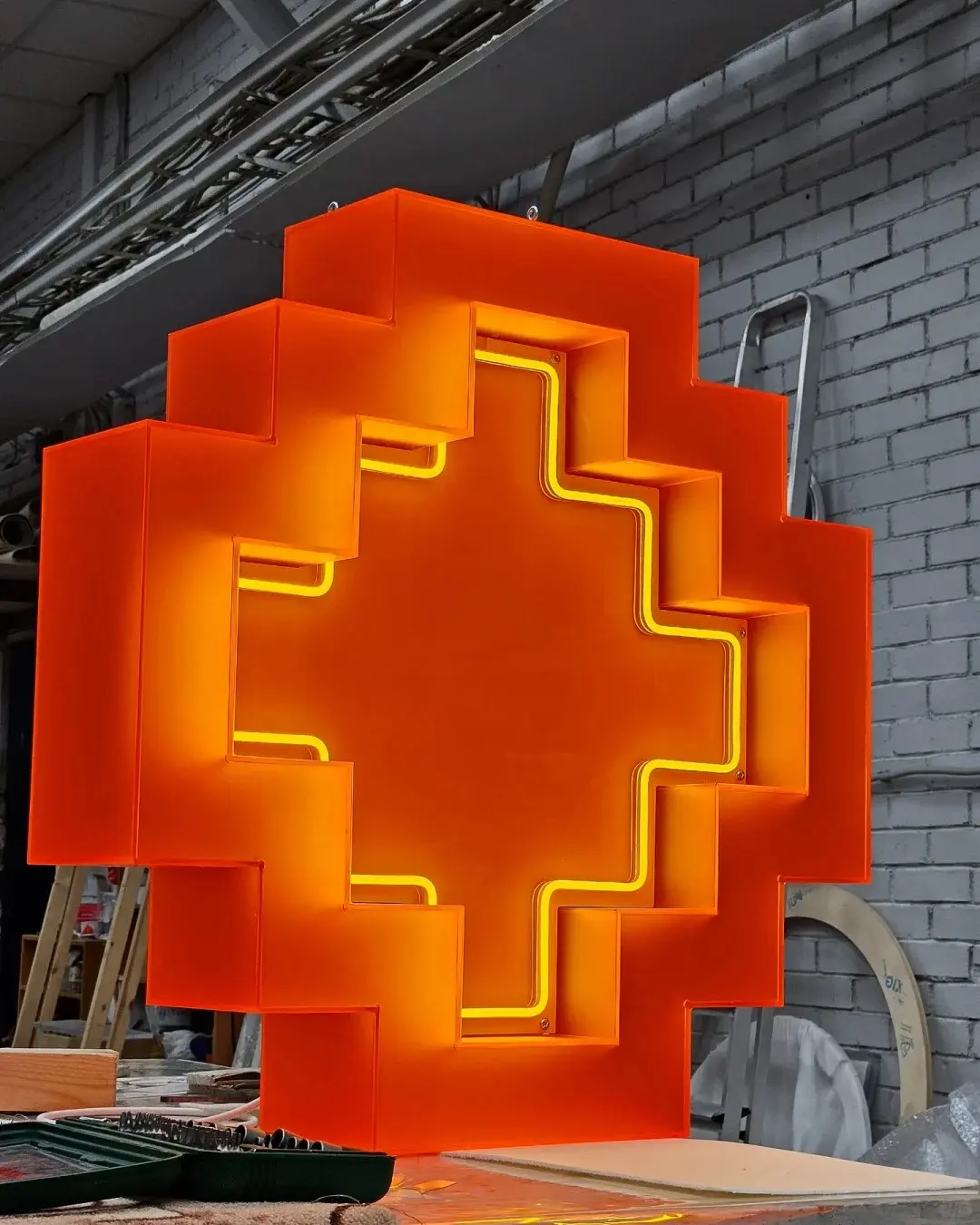
Three of these stages carry disproportionate weight. Edge sealing, covered above. Filling and sanding — every screw hole and joint line is filled with automotive-grade filler and sanded flat; a joint that isn’t properly filled will telegraph through the finished lacquer as a visible seam the moment a store spotlight rakes across it. And the paint system, which deserves its own section.
The Lacquer: Where 70% of the Quality Lives
The same MDF blank, sprayed well or sprayed badly, produces two entirely different products. In our experience, the finish accounts for the large majority of how a woodwork prop is judged — and it is also where a workshop under schedule pressure saves time first.
| Factor | Done properly | Cut corner | Consequence |
|---|---|---|---|
| Coat count | 2–3 primer + 2–3 topcoat (4–6 total) | 1 + 1 | Thin film, scuffs and chips in weeks |
| Inter-coat sanding | 600-grit or finer between every coat | Coats stacked wet-on-dry, unsanded | Poor adhesion between layers |
| Environment | Dust-free spray booth, controlled temperature and humidity | Open workshop floor | Dust nibs locked into the surface |
| Lacquer system | Branded, batch-consistent lacquers | Unbranded economy paint | Color drift, poor coverage, low durability |
| Drying | 4–8 hours per coat, fully cured before recoat | Recoated half-dry to hit a deadline | Soft film that bruises, prints and blisters |
The arithmetic matters for your schedule: four to six coats, each dried and sanded, means the paint process alone takes five to eight days. A supplier promising a full lacquer finish in three days is either skipping coats or spraying over uncured film. Neither survives a flagship lighting rig.
The hand test at inspection is simple: a properly finished lacquer surface feels completely smooth under your palm — no grit, no texture. Then check it again under raking light from the side: no orange peel, no waves, no runs, and full coverage on the arrises, the sharp edges where spray coverage is thinnest and wear arrives first.
Where Corners Get Cut
Six shortcuts appear again and again in woodwork sourced on price alone:
- Primer skipped or reduced to one coat. Primer seals MDF’s open fibers and gives the topcoat something to grip. Without it, color lays down unevenly and the film delaminates.
- Joints painted before they’re properly filled. The seam disappears for a week, then reappears as a shadow line under store lighting.
- Low-grade MDF substituted after sampling. The density and corner-snap checks above catch this at goods-in.
- Edges left unsealed on hidden faces. Turn every piece over. Always.
- Spraying outside a booth. Run your hand across the finish — dust contamination is immediately obvious to touch even when it hides from the eye.
- Hardware brand substitution. A build specified with Blum hinges arriving with unbranded copies is a classic late-stage swap. Genuine hardware carries the brand mark stamped or labeled on the component itself — check every hinge and runner, not a sample of one.
Lead Time Reference
| Project type | Typical lead time | Notes |
|---|---|---|
| Simple podiums / shelving | 7–10 days | Straightforward forms, standard finish |
| Display cabinets with drawers or lighting | 12–18 days | Includes hardware and wiring |
| Large wall features / feature cabinets | 18–25 days | Complex forms, multiple processes |
| Full-store prop packages | 25–40 days | Volume and complexity dependent |
Lacquer drives the schedule more than joinery does. When a timeline compresses, protect the paint process — it is the one stage that cannot be accelerated without visible cost.
Wood Against the Other Materials
Woodwork rarely travels alone. In a typical scheme, MDF carcasses carry [metal](Metal Fabrication知识文章URL) trims and armatures, acrylic product risers, and occasionally FRP sculptural elements — and finishes like PVD-coated hardware are specified to match lacquer tones. Choose wood when the form is architectural rather than organic, when a deep lacquer finish is the design language, and when the installation is interior. Our MaxMara vintage-television window is a working example: MDF forms in matte lacquer, carrying acrylic, 3D-printed and metal components in one build.
How We Inspect
Our QC gates for woodwork fall at three stages. White body, before paint: all dimensions verified, every MDF edge sealed including undersides and backs, joints filled flush, structure checked for racking by hand. After lacquer: hand test for smoothness, raking-light check for waves and runs, color verified against the approved swatch, arrises inspected for full coverage. After hardware: brands verified against specification, doors and drawers cycled for smooth action and even gaps, lighting powered up and checked for brightness, color temperature and flicker.
None of this is exotic. It is simply done every time, on every piece, including the faces that face the wall.
Specifying woodwork for a store program or seasonal scheme? Send us the drawings — we’ll come back with a material and finish recommendation within two working days.
FAQ Section
Why is MDF the default material for retail display props?
Its uniform density machines cleanly under CNC, holds crisp routed detail, and accepts lacquer better than any other board — critical for the deep, flawless finishes luxury retail expects. Plywood is stronger but its layered edge and surface grain fight against a perfect paint finish.
How many coats of lacquer should a display prop have?
Four to six: two to three primer coats and two to three topcoats, with 600-grit sanding between every coat and 4–8 hours of drying per coat. Anything less produces a thin film that scuffs quickly under store conditions.
How long does woodwork production actually take?
Simple podiums run 7–10 days; cabinets with hardware and lighting 12–18 days; full-store packages 25–40 days. The lacquer process alone accounts for 5–8 days — a quote that ignores this is a quote that plans to cut coats.
Can MDF props be used outdoors or in humid environments?
No. MDF swells irreversibly on moisture contact, even when sealed. For exterior or high-humidity installations, specify FRP or metal fabrication instead.
What’s the difference between MDF and plywood in a display build?
MDF for anything visible and lacquered; plywood for hidden structure that carries load or needs moisture resistance. Most quality builds use both — the failure is using particleboard for either.
How can I verify the hardware brands specified weren’t substituted?
Genuine hardware from brands like Blum carries the maker’s mark stamped or labeled on each hinge and runner. Check every unit at inspection, not a sample — brand substitution typically happens on the pieces you don’t open.