What Is Acrylic (PMMA)?
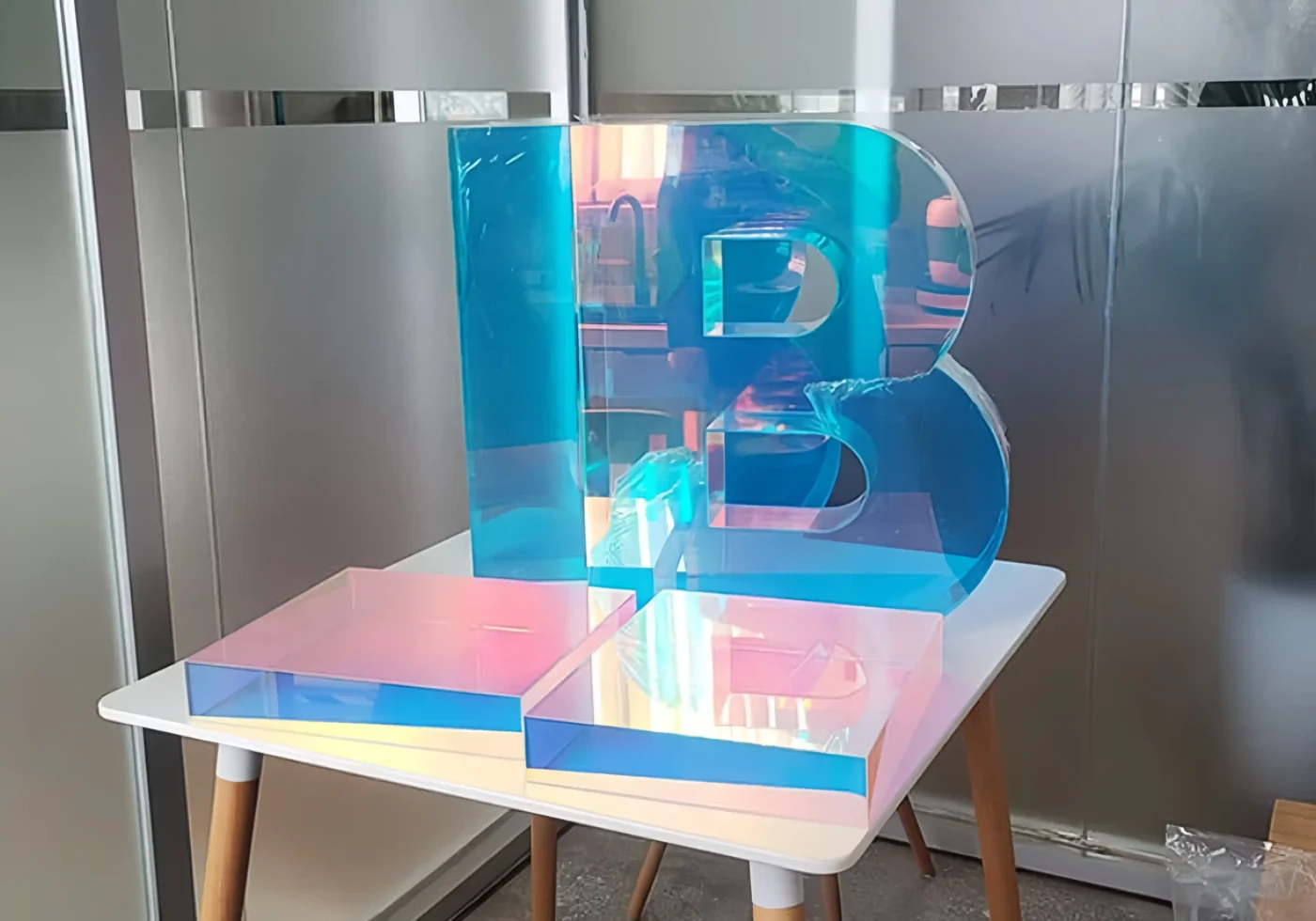
Acrylic — chemically, poly(methyl methacrylate), or PMMA — is the transparent workhorse of luxury retail display. Premium cast acrylic transmits around 93% of visible light, marginally more than standard glass, at roughly half the weight and without glass’s fragility. That combination is why it dominates light boxes, product risers, logo lettering, jewellery display stands and sculptural transparent props.
But “acrylic” on a quotation tells you almost nothing. Two props with identical drawings can differ threefold in cost depending on how the sheet was produced, which factory made the raw material, and how much discipline went into bonding and polishing. This guide explains the distinctions we work with every day as a manufacturer — so you can specify acrylic precisely and know what to check when the finished piece arrives.
Cast vs Extruded: The First Question That Matters
All acrylic sheet is produced one of two ways, and the difference runs through everything downstream.
Cast acrylic is made by pouring liquid monomer between glass plates and letting it cure slowly. The result is a sheet with excellent thickness consistency, high molecular weight and stable behaviour under heat. Cast sheet laser-cuts with clean, glossy edges, thermoforms without bubbling, and bonds predictably.
Extruded acrylic is produced by forcing heated material through a die. It is 30–40% cheaper, and for flat, simple, non-critical applications it can be acceptable. But extruded sheet has poorer thickness uniformity, tends to bubble and whiten when heat-bent, yellows sooner, and its laser-cut edges never quite match the clarity of cast.
For branded retail work we specify cast sheet as standard — the two types are covered by separate parts of the international standard for PMMA sheet (ISO 7823-1 for cast, 7823-2 for extruded), which is a useful reference to cite in your own specifications. The practical identification method on the factory floor is simpler: branded cast sheet carries the producer’s name and batch information printed on its protective film. Generic film with no markings is the first warning sign of a substitution.
Material Grades: Why “Acrylic” Is Not One Price
Within cast sheet itself, raw material quality varies widely. We group it into three tiers:
| Tier | Typical producers | Light transmission | Yellowing resistance |
|---|---|---|---|
| Imported premium | Mitsubishi (Japan), Lucite (UK), Evonik | 93%+ | 5–10 years without visible yellowing |
| Quality domestic | Established Chinese mills | 90%+ | 3–5 years |
| Generic domestic | Unbranded | 85–88% | Visible yellowing within 1–2 years |
The price gap between the top and bottom tiers can be two to three times — which is precisely why material substitution is the most common way an unsupervised factory recovers margin. A prop made from generic sheet looks acceptable at handover; the difference appears a year later, under store lighting, as a yellow cast that no cleaning will remove.
Our protection against this is procedural: we verify the brand markings on the protective film at goods-in, and we require the film to stay on the sheet until final inspection. If a supplier cannot show branded film, the material does not enter production.
How Acrylic Props Are Fabricated
A typical acrylic display piece passes through some combination of six processes:
Laser cutting shapes the sheet. A correctly tuned laser leaves a smooth, near-transparent edge; a frosted or rough edge means power or speed was set wrong and the edge will need rework.
CNC machining handles engraving, slotting and profiled shapes. Machined surfaces come off the tool matte and must be polished afterwards to restore transparency.
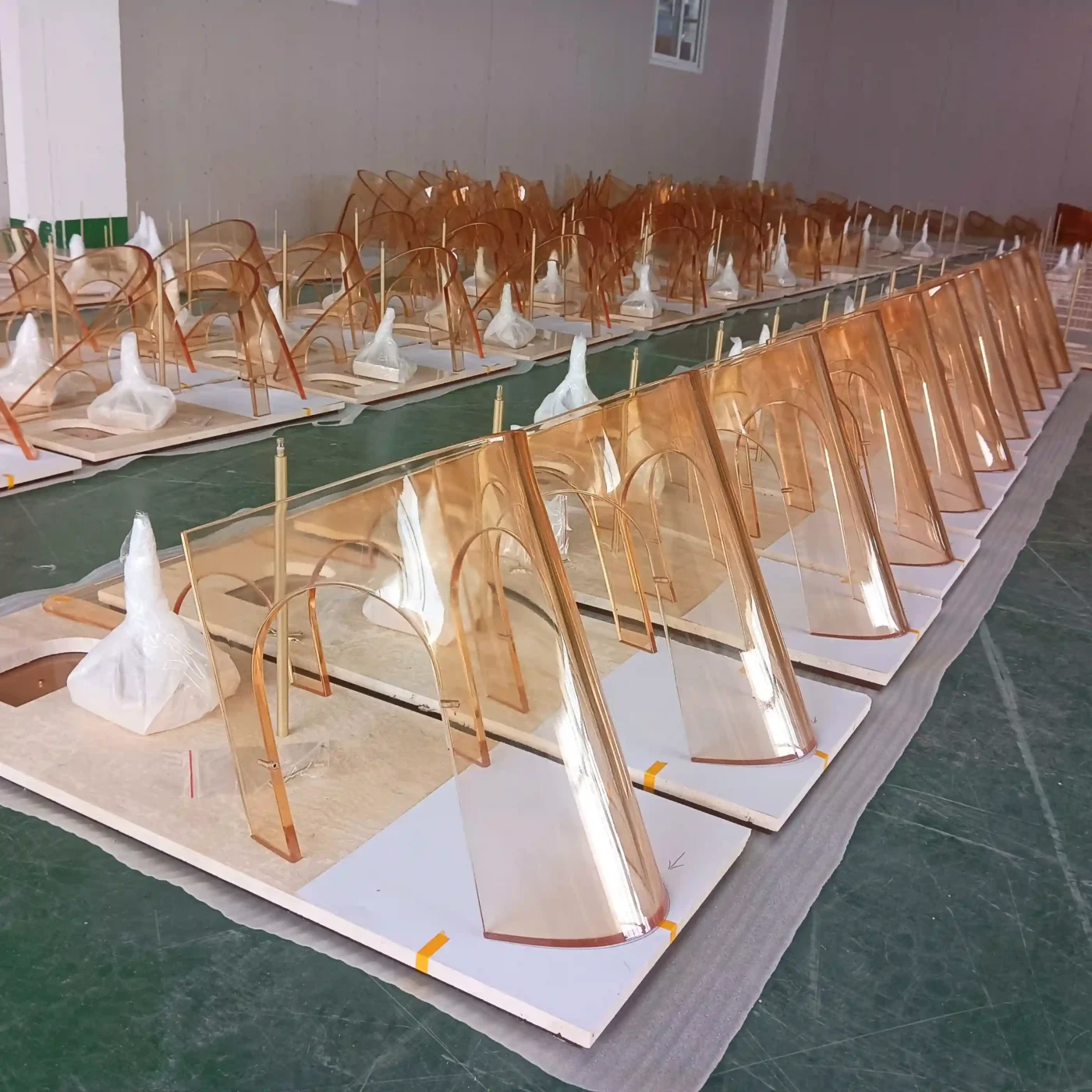
Thermoforming (heat bending) creates curves and folded angles. This is where cast vs extruded shows most clearly: the bend zone must be free of bubbles, whitening and micro-cracks, and the angle must hold to drawing.
Bonding joins components using solvent cement or UV-curing adhesive. This is the single most failure-prone step in acrylic work. A luxury-grade joint is optically clear — no trapped bubbles, no glue squeeze-out, no white haze. We inspect every joint by looking through it edge-on under side light, because a joint that looks fine face-on can reveal a line of bubbles from the side.
Diamond polishing machines cut edges back to glass-like clarity, free of tool marks.
Flame polishing is the fast alternative — a hand torch passed along the edge. It is quicker and cheaper, but less precise, and tends to leave a subtle waviness. For edges that will be seen up close on a luxury fixture, we specify diamond polishing.
Throughout all of this, the protective film stays on. Acrylic’s surface is relatively soft and scratches easily; film removed early is the most common cause of superficial damage. Our workshop rule is that film comes off only at final inspection — under a strong light source, handled with cotton gloves, because fingerprints on fresh acrylic are surprisingly stubborn — and the piece goes straight into re-filming or packaging afterwards.
Where Acrylic Quality Fails: Six Shortcuts We Inspect For
Drawn directly from our factory QC playbook, these are the corner-cuts we check for on every acrylic order:
- Domestic sheet passed off as imported. Verified via protective-film brand markings, retained until final inspection.
- Under-thickness sheet. A nominal 10mm board supplied at 8mm. Every board is measured with a digital caliper at goods-in.
- Extruded sheet substituted for cast. Again identified from film markings — and betrayed later by bubbling at heat bends.
- Poor bonding. Bubbles, squeeze-out or haze at joints. Inspected edge-on under side lighting.
- Incomplete polishing. Tool marks on machined faces, or wavy flame-polished edges. Checked close-up under raking light.
- Film removed too early. Leading to scratches that only show under store lighting. Film condition is checked at every stage visit.
For illuminated pieces, we add a powered test: the assembled prop is lit and checked for even light diffusion, because hotspots and shadows only appear with the LEDs on.
What Acrylic Can and Cannot Do
Acrylic pairs naturally with other materials — bonded to precision metal components for structure, or used as glazing panels within FRP sculptural forms.
One limitation worth knowing at the specification stage: acrylic cannot be vacuum metalized. The heat inside a vacuum chamber softens PMMA and distorts the part, which is why mirror-chrome effects on acrylic props are achieved differently — typically with mirrored acrylic sheet or applied films. We cover the substrate rules in detail in our guide to UV vacuum metalizing. Similarly, decorative metal parts that accompany acrylic assemblies are often finished with PVD coating rather than treating the acrylic itself.
Acrylic also scratches more easily than glass and has limited heat resistance — considerations for high-traffic fixtures and for props placed near hot lighting.
Lead Time Reference
Realistic production windows for acrylic work, excluding shipping:
| Project type | Typical lead time |
|---|---|
| Simple cut-and-polish components | 3–5 days |
| Pieces involving thermoforming and bonding | 7–12 days |
| Complex display stands (multi-layer bonding + integrated lighting) | 12–18 days |
Quotes promising complex bonded work in under a week usually mean a step is being skipped — most often polishing time or bonding cure time, which is exactly where quality fails.
Specifying Acrylic for Your Next Project
The specification points that protect you, in order of impact: require cast sheet; name the material tier (imported premium for anything customer-facing in a luxury environment); state nominal thickness with the expectation that it will be caliper-verified; specify diamond-polished edges where edges are visible; and require optically clear joints inspected under side light.
You can see how these standards translate into finished work on our acrylic visual merchandising page, or talk to our team about a specific project — we’re happy to advise on material tier and fabrication method against your budget before you commit to drawings.
Frequently Asked Questions
What is the difference between cast and extruded acrylic?
Cast acrylic is cured slowly between glass plates, giving better thickness consistency, cleaner laser-cut edges and reliable thermoforming. Extruded acrylic is 30–40% cheaper but bubbles when heat-bent, yellows sooner and has less uniform thickness. For branded retail display, cast sheet is the standard specification.
How can I tell if a factory used the acrylic grade I specified?
Branded cast sheet carries the producer’s name and batch information printed on its protective film. Require the film to remain on the material until final inspection, and verify the markings at goods-in. Unmarked film is the most common sign of substitution.
Why do glue joints matter so much in acrylic props?
Bonding is the most failure-prone step in acrylic fabrication. A poor joint shows trapped bubbles, glue squeeze-out or white haze — defects that are often invisible face-on but obvious when viewed edge-on under side lighting, which is how luxury-grade inspection is done.
Does acrylic yellow over time?
It depends on the grade. Imported premium cast sheet resists visible yellowing for 5–10 years; quality domestic sheet for around 3–5 years; generic sheet can yellow noticeably within 1–2 years under store lighting. The material tier is the deciding factor, not cleaning or care.
Can acrylic be vacuum metalized or PVD coated?
No. The heat involved in vacuum metalizing softens and distorts PMMA. Mirror and chrome effects on acrylic are instead achieved with mirrored acrylic sheet or applied films, while accompanying metal components can be PVD coated separately.
How long does custom acrylic fabrication take?
Simple cut-and-polish parts take 3–5 days; pieces involving thermoforming and bonding take 7–12 days; complex multi-layer display stands with integrated lighting take 12–18 days, excluding shipping.