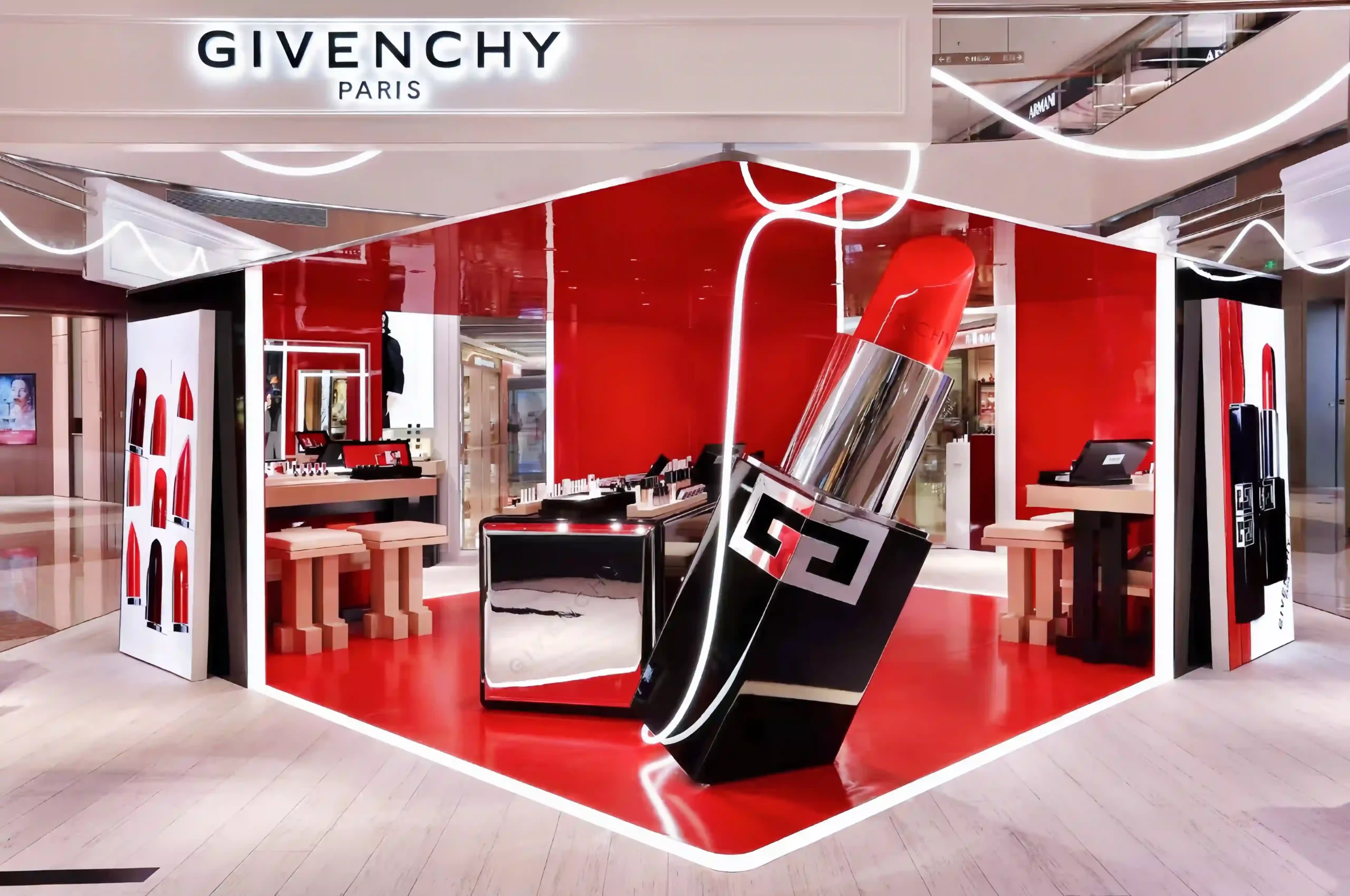
Acierta is often mentioned in the luxury retail and brand activation space for its work across pop-ups, retail environments, events and branded installations. Based on publicly available information from Acierta’s website, the company presents itself as a creative production partner for global brands, with projects that often involve temporary retail, fashion activations, product launches and immersive brand moments.
For VM teams, agencies and sourcing managers, Acierta’s public project language is useful because it shows how modern luxury retail has become more operationally complex. From our perspective as a custom display props manufacturer, these projects are not only about creative direction; they are also about materials, engineering, prototyping, packing and installation.
This article looks at what can be learned from Acierta-style retail projects — not as a review of their work, but as a manufacturing-side analysis of the production challenges these projects represent.
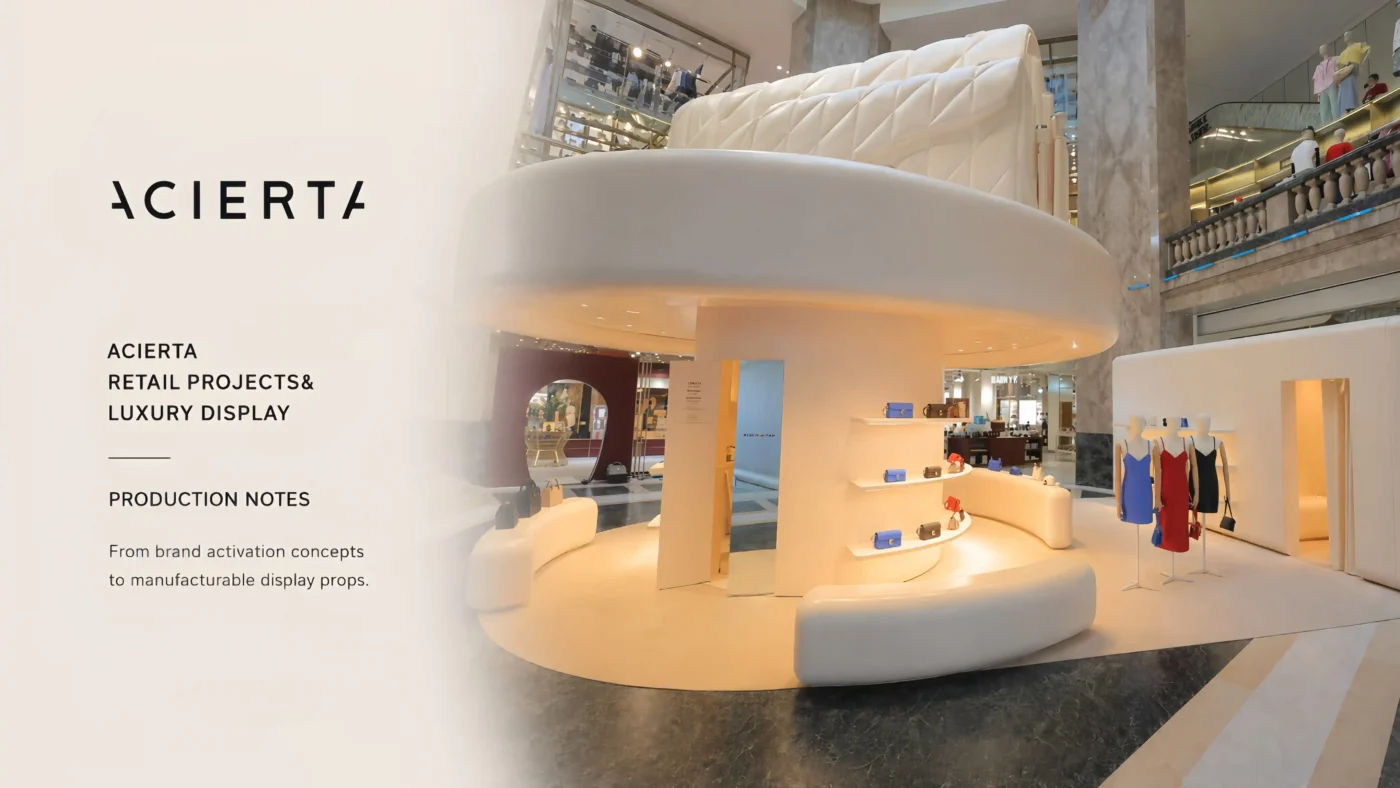
What Acierta-Style Projects Tell Us About Modern Retail Production
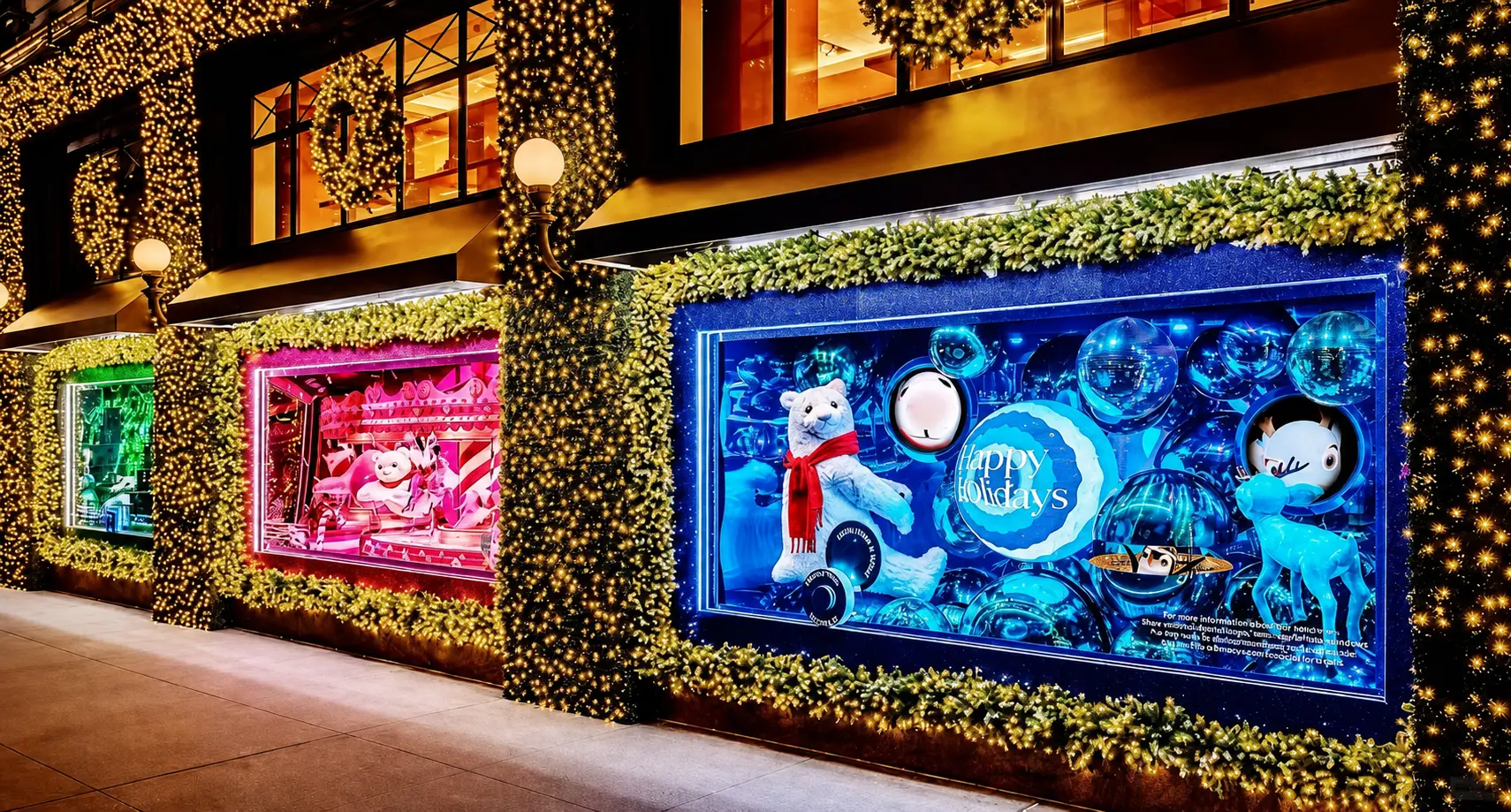
Acierta’s public work archive includes examples such as On Apparel pop-ups, The Wonder Room at Selfridges for Nike x Jacquemus, gifting trees for Bottega Veneta and Coach pop-up concepts. These examples show how retail projects increasingly combine fashion storytelling, architectural space, product display and social-media-ready moments.
For a manufacturer, the interesting question is not simply “who designed it?” but “how would similar display pieces be made, repeated, packed and installed?” That question matters when brands are planning custom visual merchandising services across multiple stores or markets.
Three Production Pressure Points in Pop-Up Projects
From our production side, pop-up projects usually create three pressure points. First, the display must look highly customized. Second, it must be installed quickly. Third, it must survive transport, handling and customer interaction.
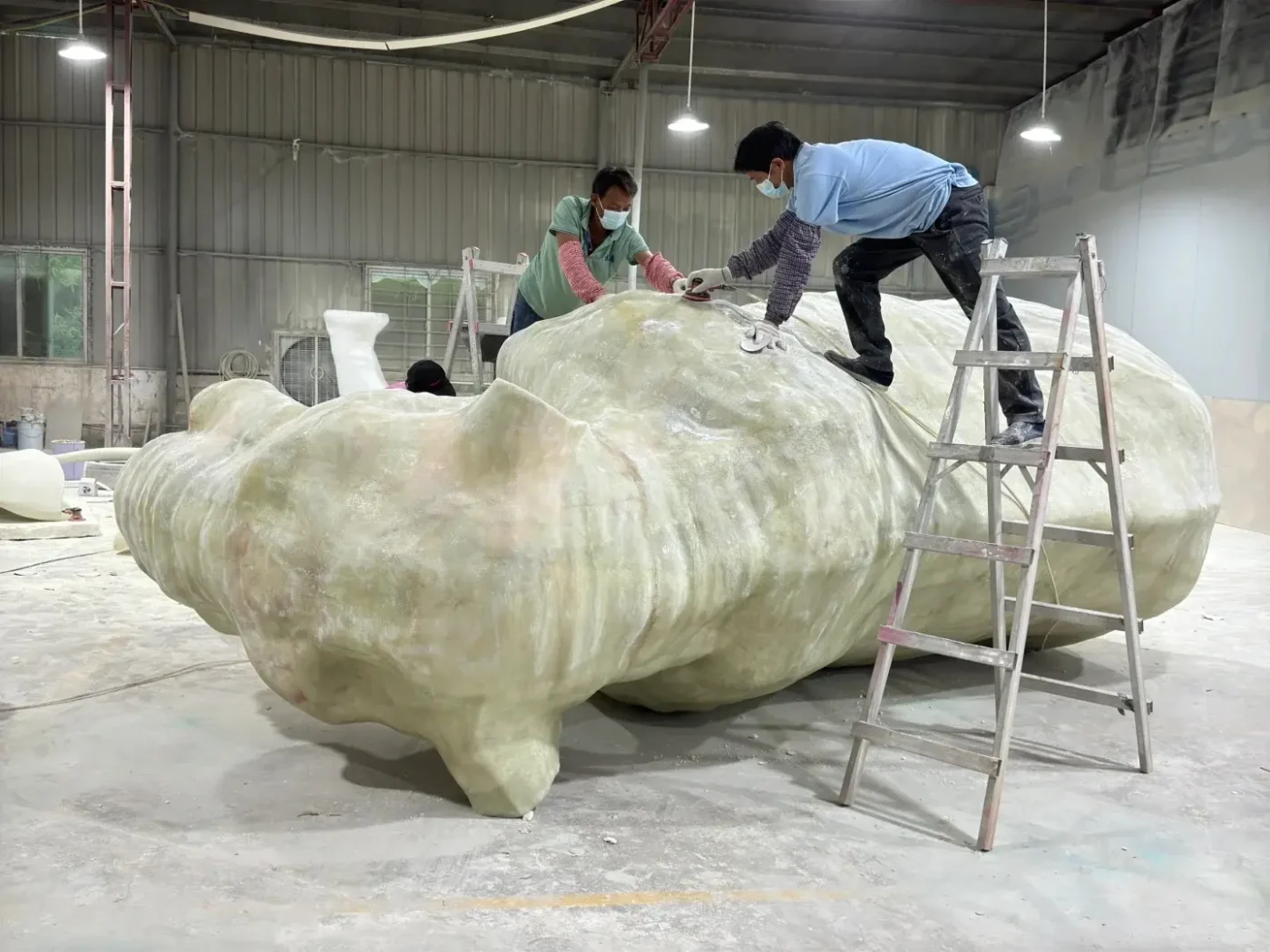
Many public retail activations look effortless, but behind the scenes there are drawings, sample tests, surface finish approvals, hardware decisions and packing instructions. This is why pop-up store display props should be planned with installation logic from the beginning, not treated as decoration at the end.
Acierta’s public work also reminds us that luxury retail projects often involve several parties: the brand team, the creative agency, the project manager, the installer, the manufacturer and sometimes the department store or shopping mall. Each party sees risk differently. The brand cares about image. The agency cares about design expression. The store cares about safety and speed. The manufacturer cares about feasibility, durability and repeatability.
In our own process, display props manufacturing starts by translating the visual idea into buildable sections, stable structures and surface treatments that can be reproduced.
A Material-Level Reading of Luxury Retail Displays
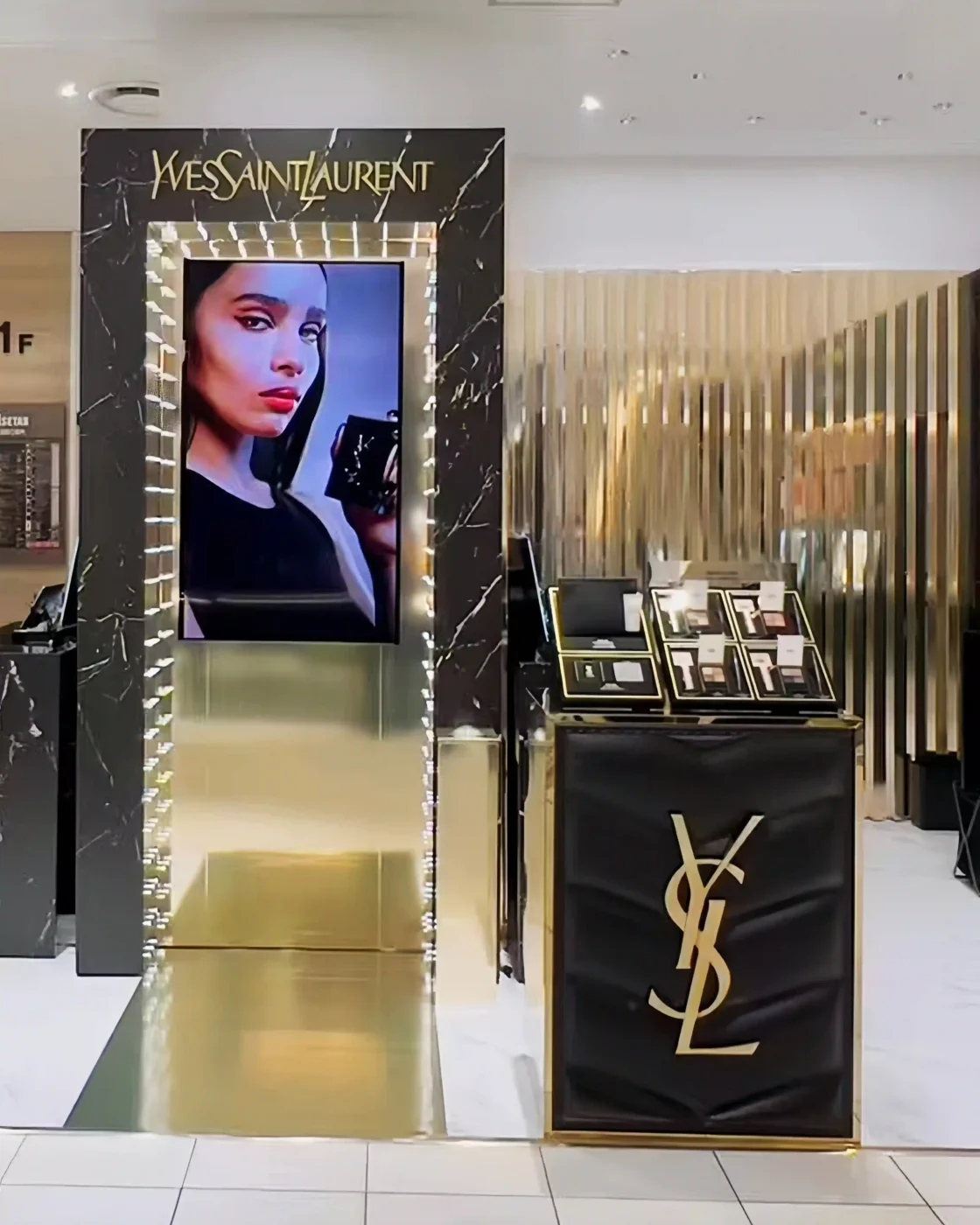
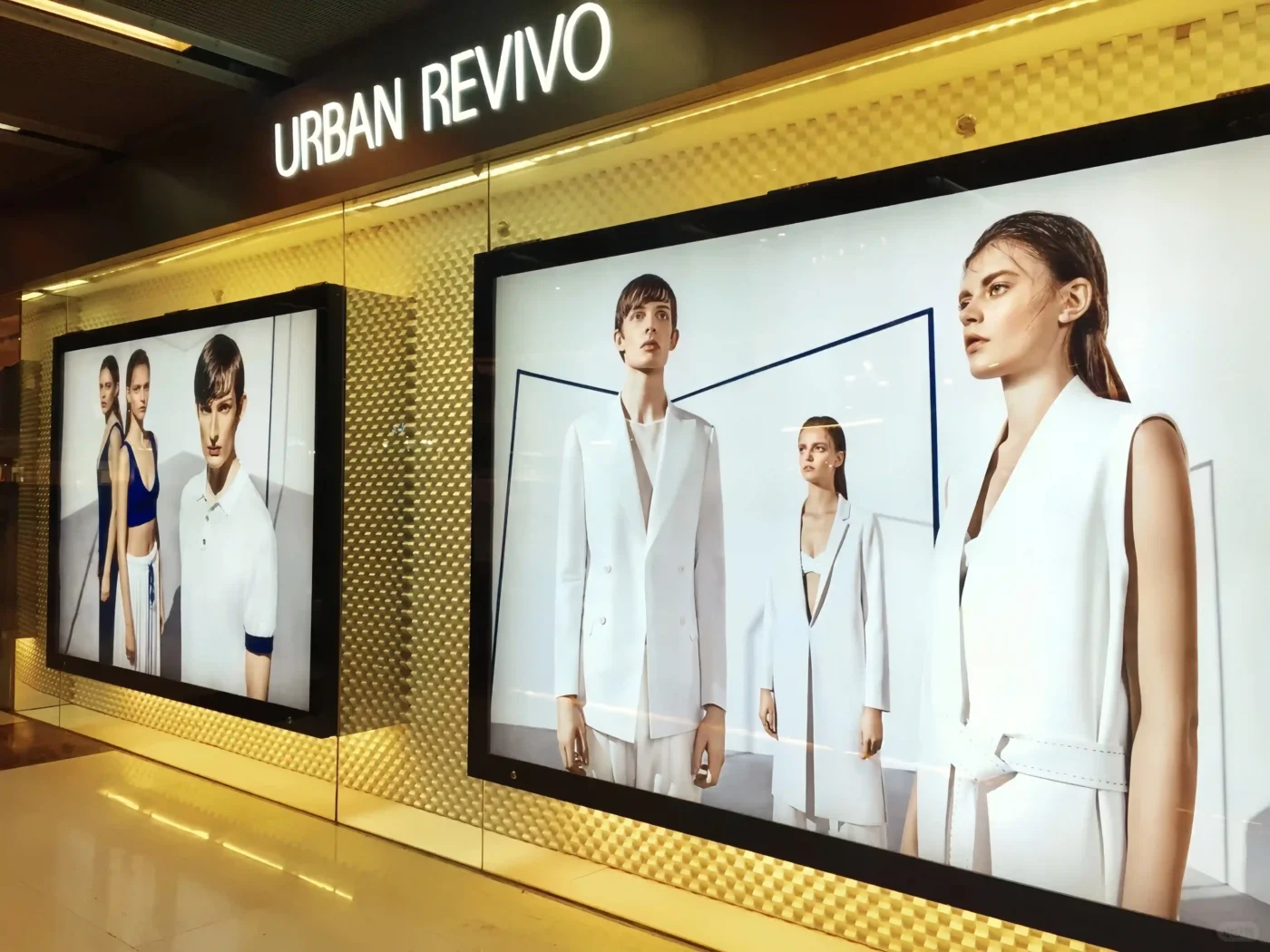
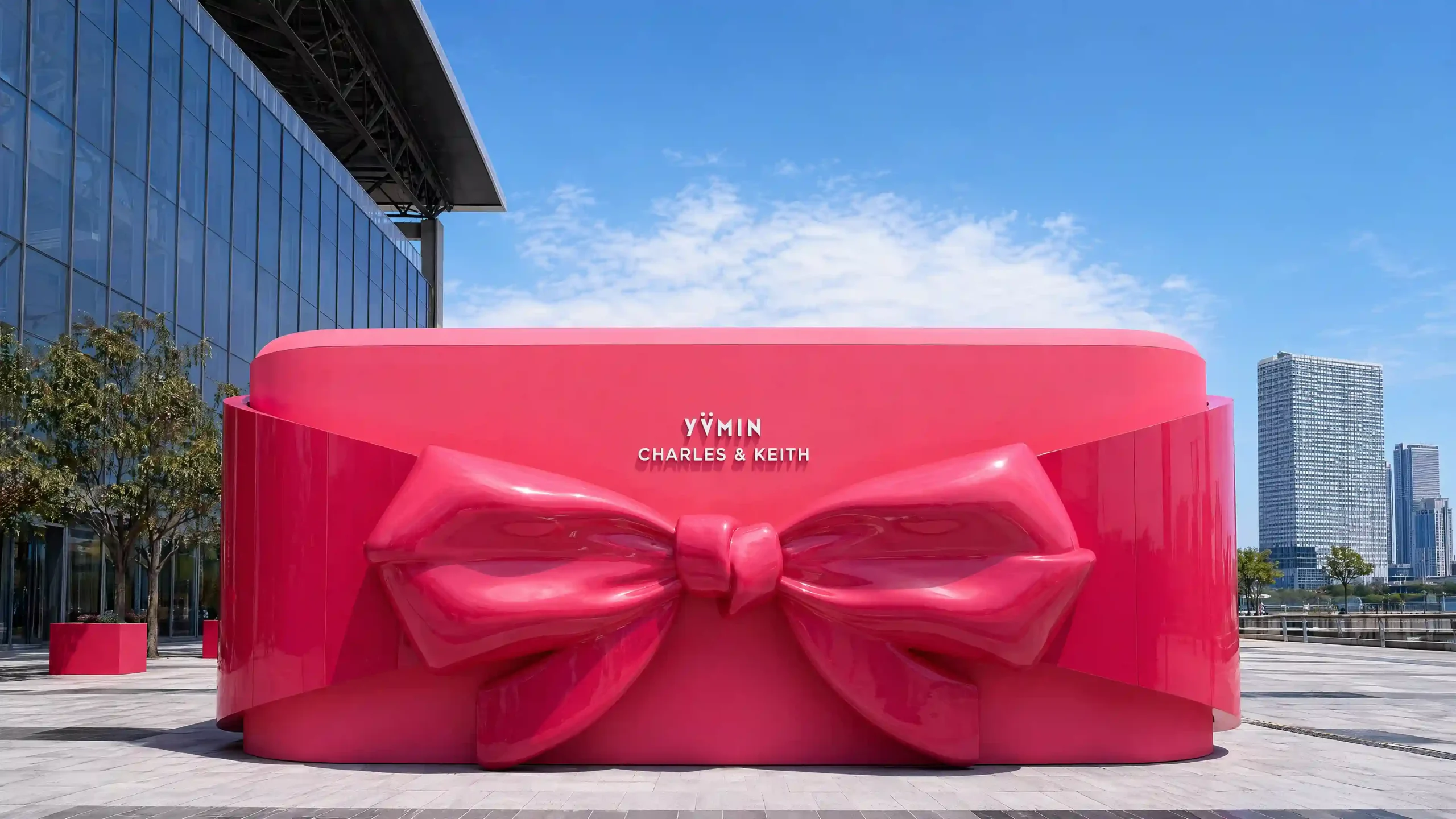
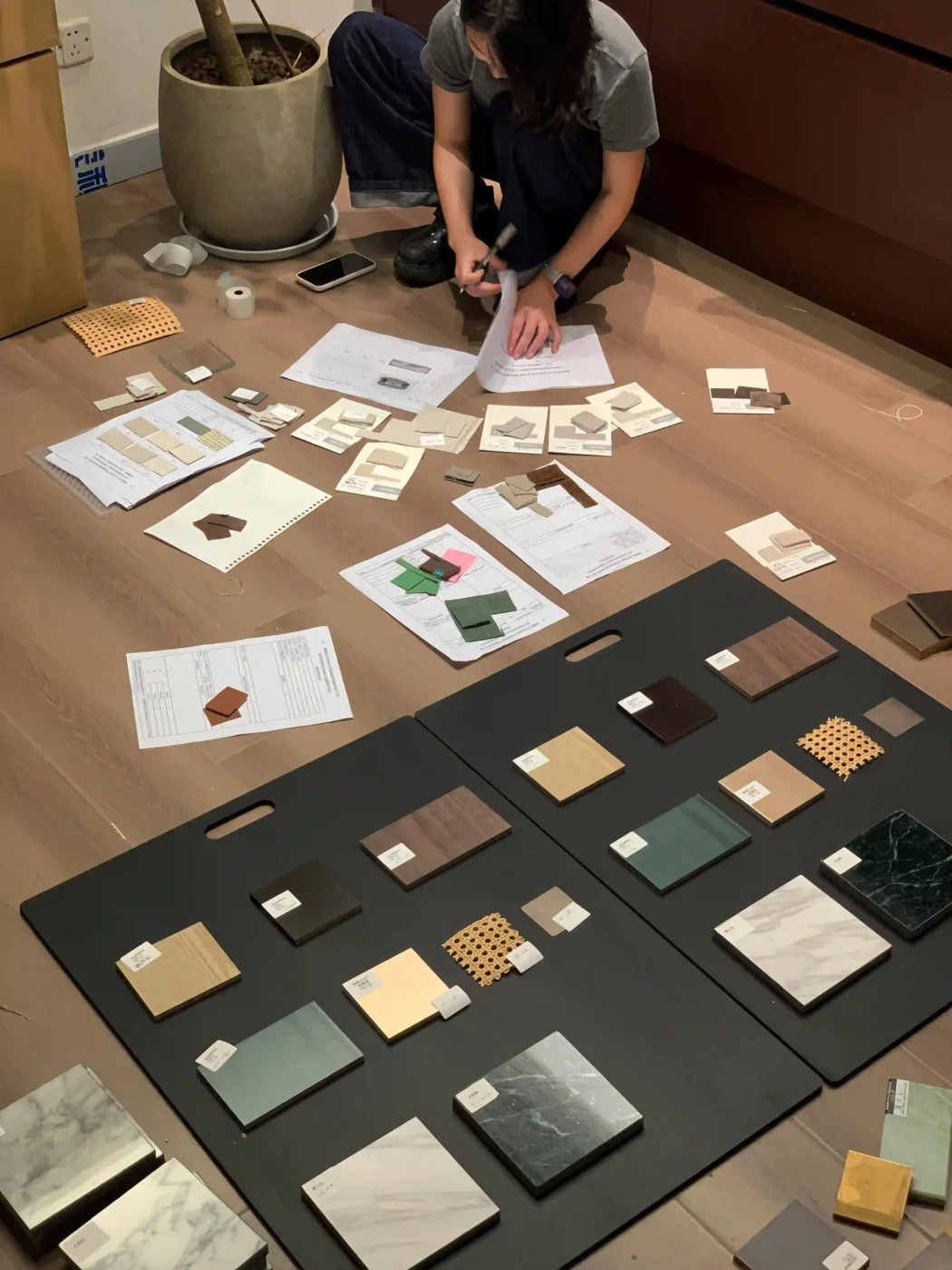
For luxury pop-ups, material choice is often the difference between a good render and a successful installation. Looking at the types of structures commonly seen in agency-led retail activations — arched portals, oversized sculptural props, illuminated signage, textured wall panels — each one implies a specific set of material and engineering decisions.
Arched structures and portals, for example, are a recurring motif in luxury retail environments. From a manufacturing standpoint, the key question is whether the arch is structural or decorative. A freestanding arch needs internal steel framing or aluminum sub-structure for stability, while the visible surface might be FRP (fiber-reinforced plastic) for a seamless, paintable finish, or CNC-cut MDF panels wrapped in veneer or laminate for a wood-grain effect. The choice depends on weight limits at the venue, whether the piece must be disassembled for shipping, and the required surface finish — matte lacquer, metallic paint, fabric wrap or stone-effect coating.
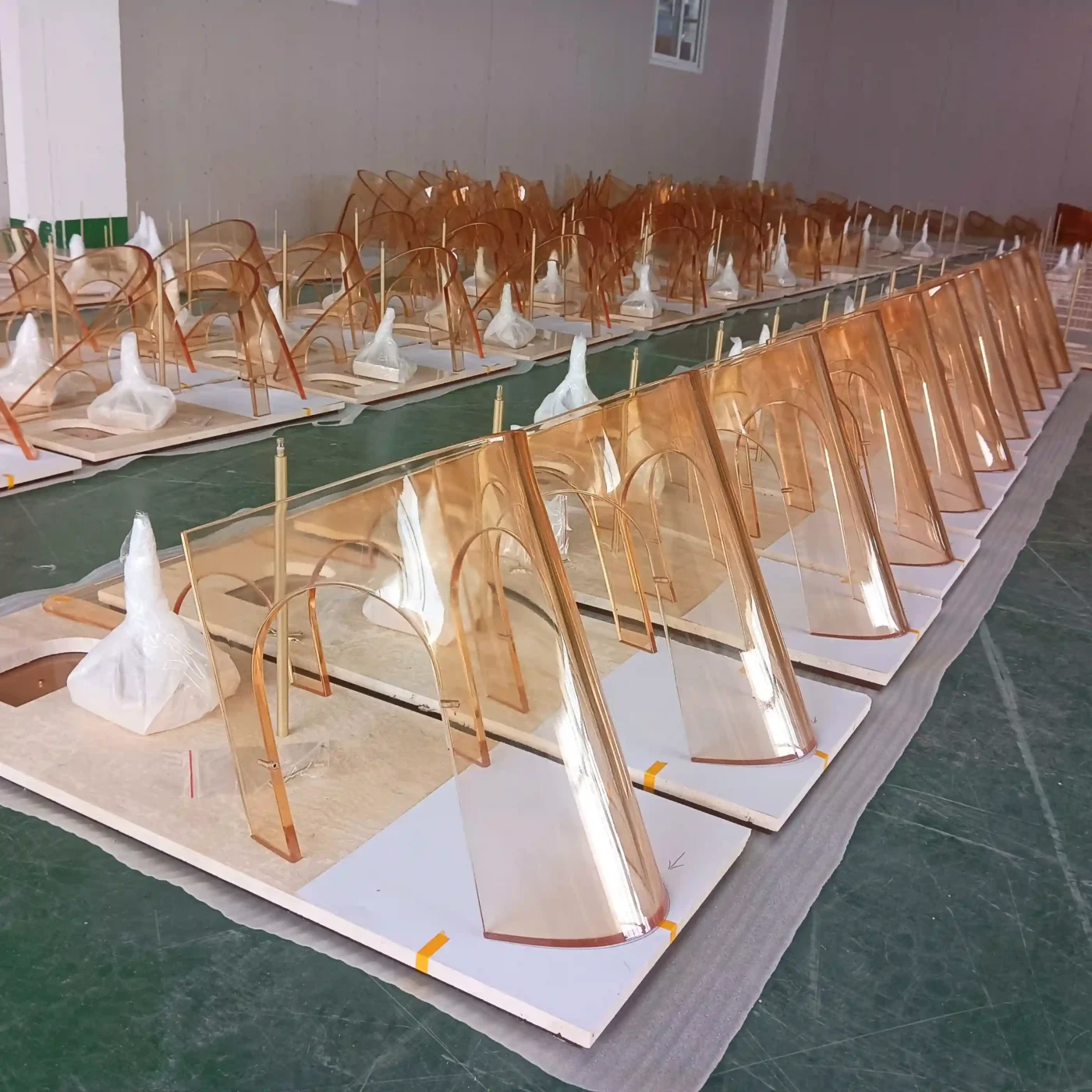
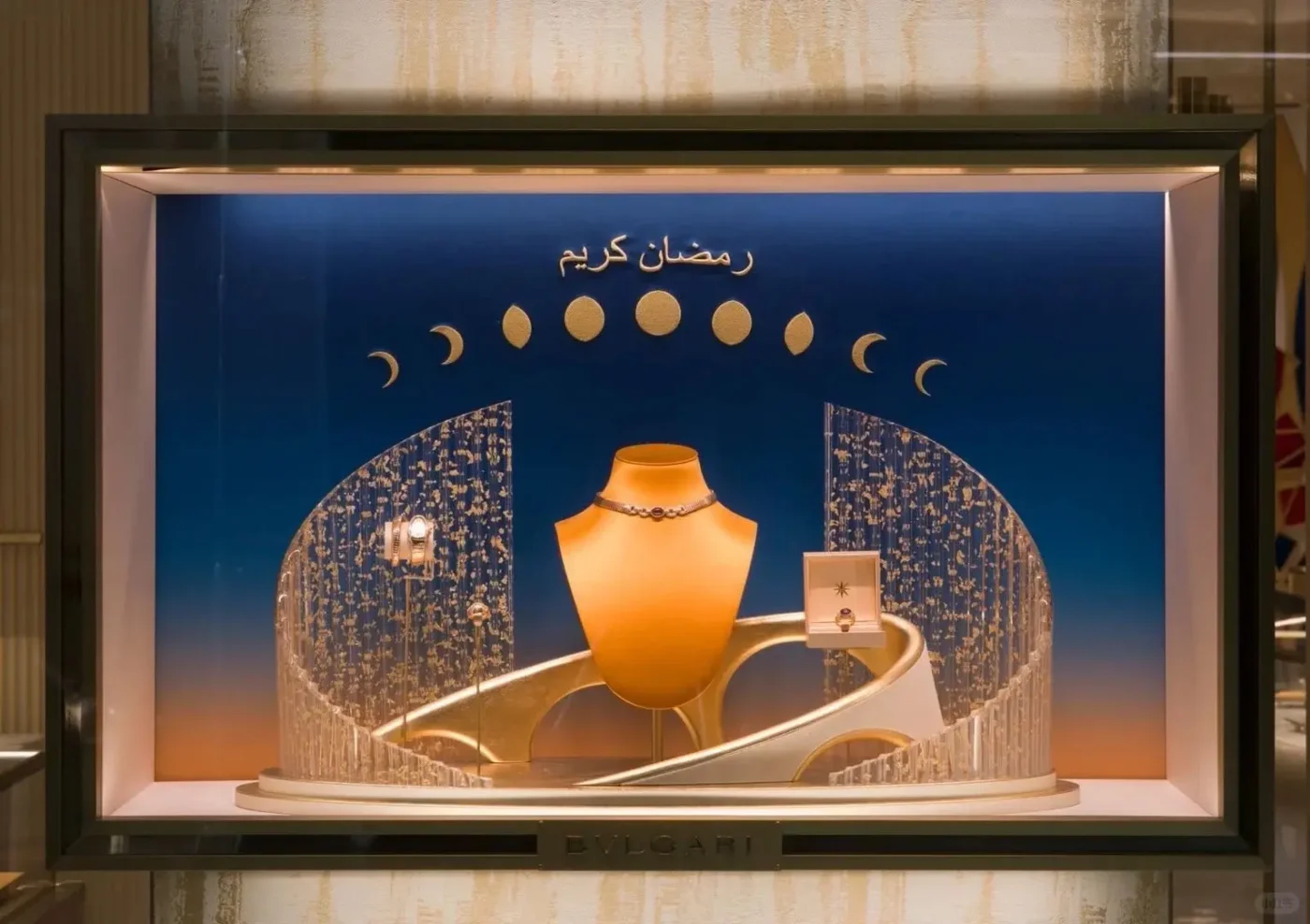
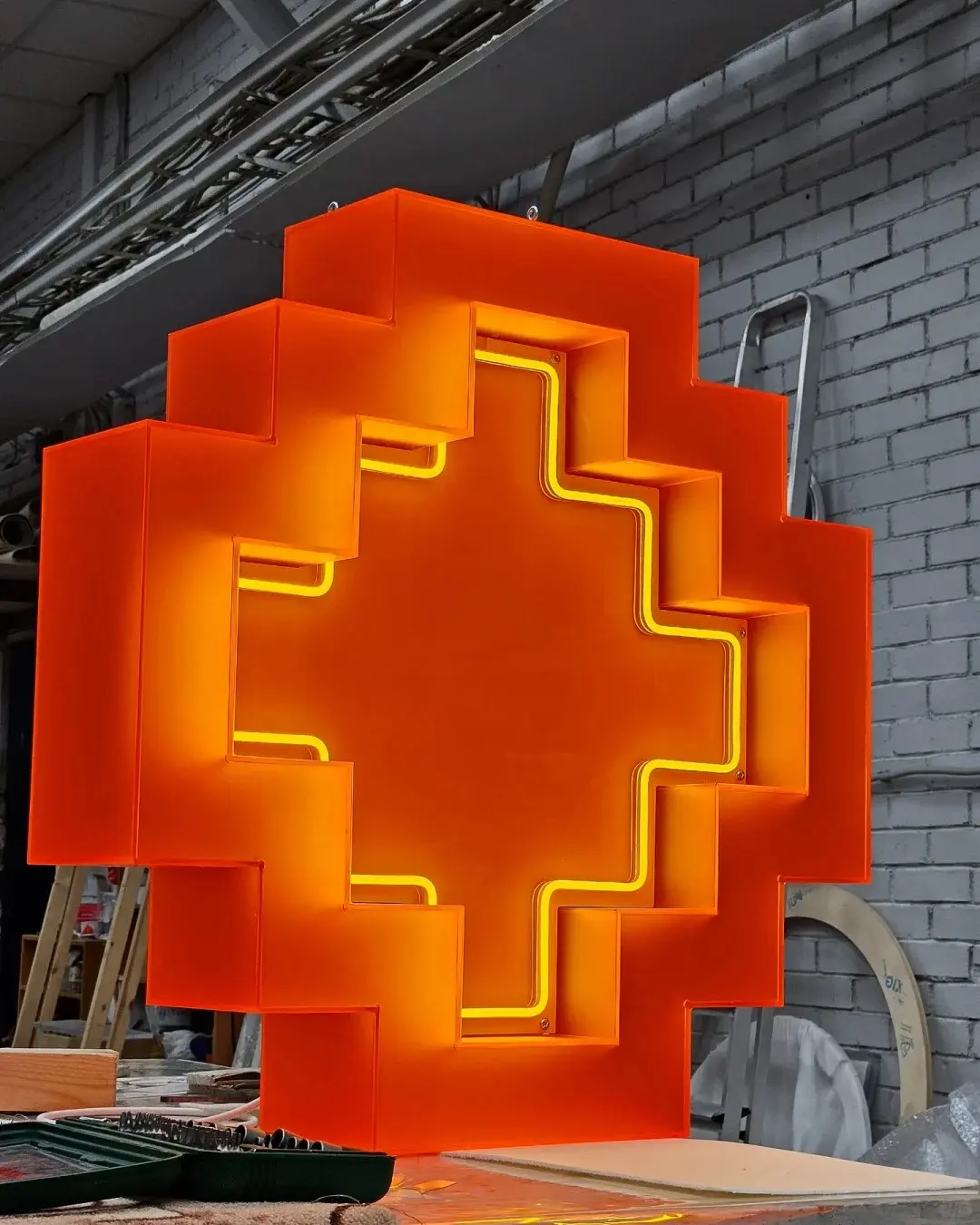
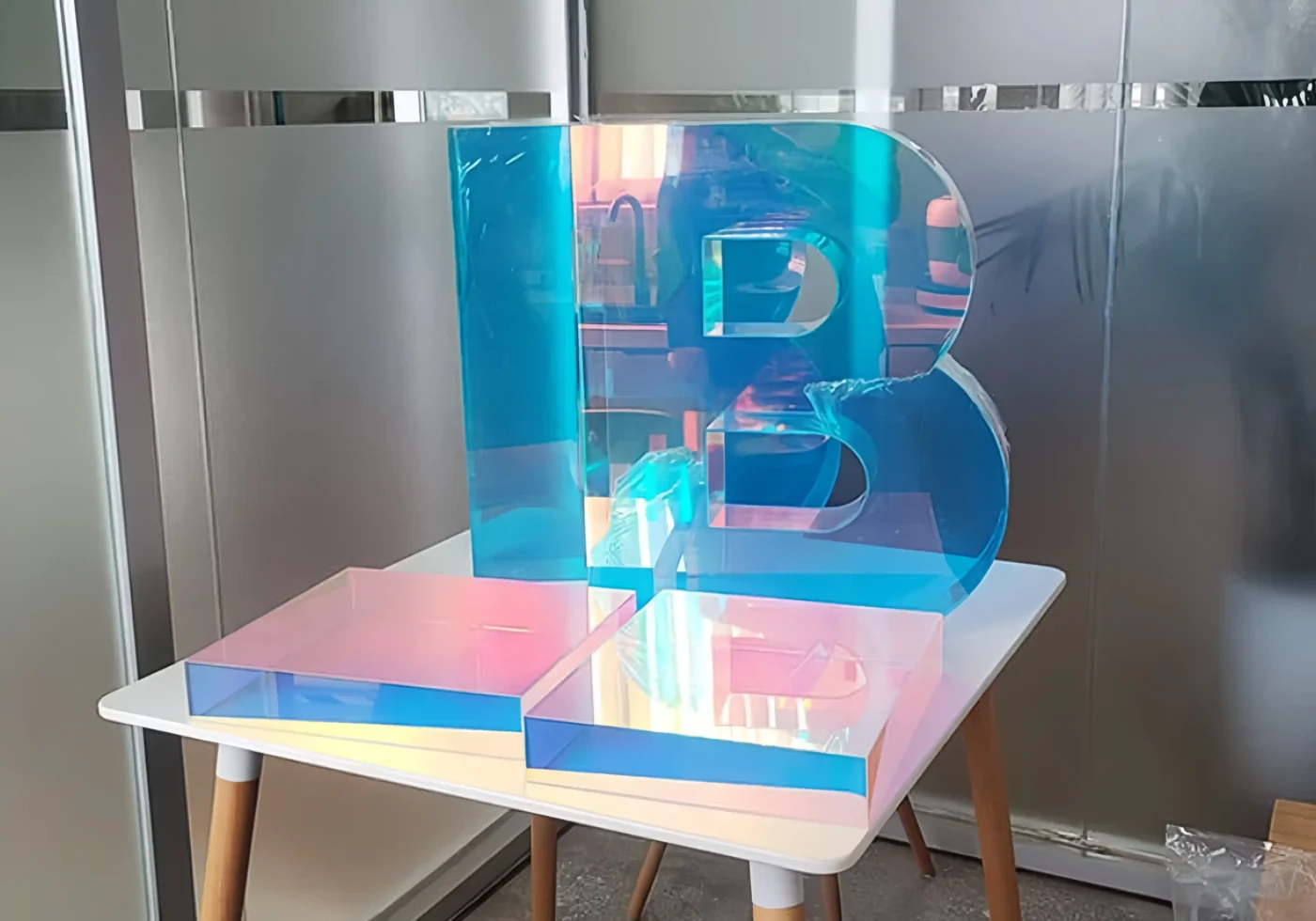
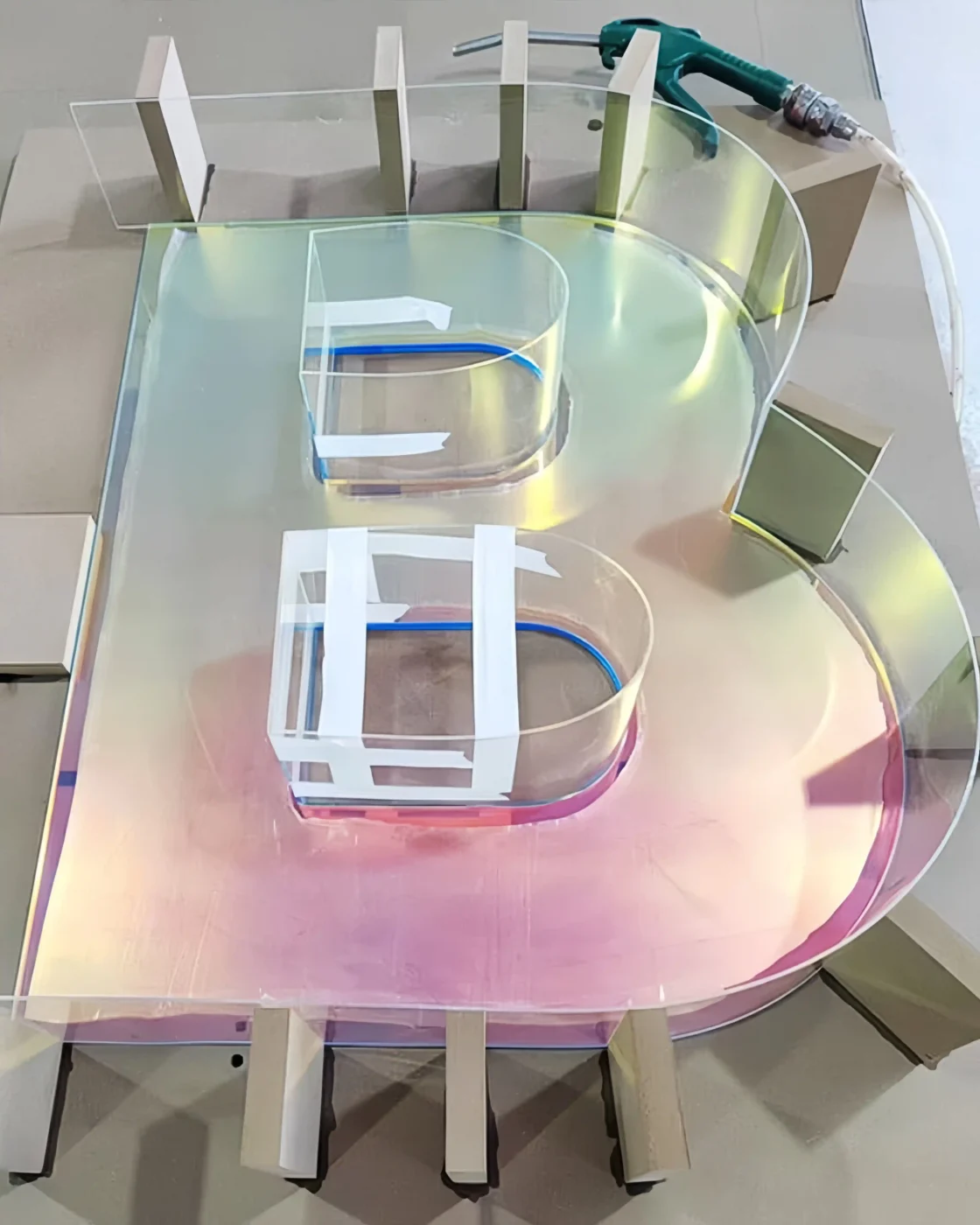
Acrylic can create transparency, gloss and illuminated details. It is often used in shelving units, product pedestals and backlit brand panels. The main production considerations are edge polishing quality, thermal bending precision and how to integrate LED modules without visible hardware.
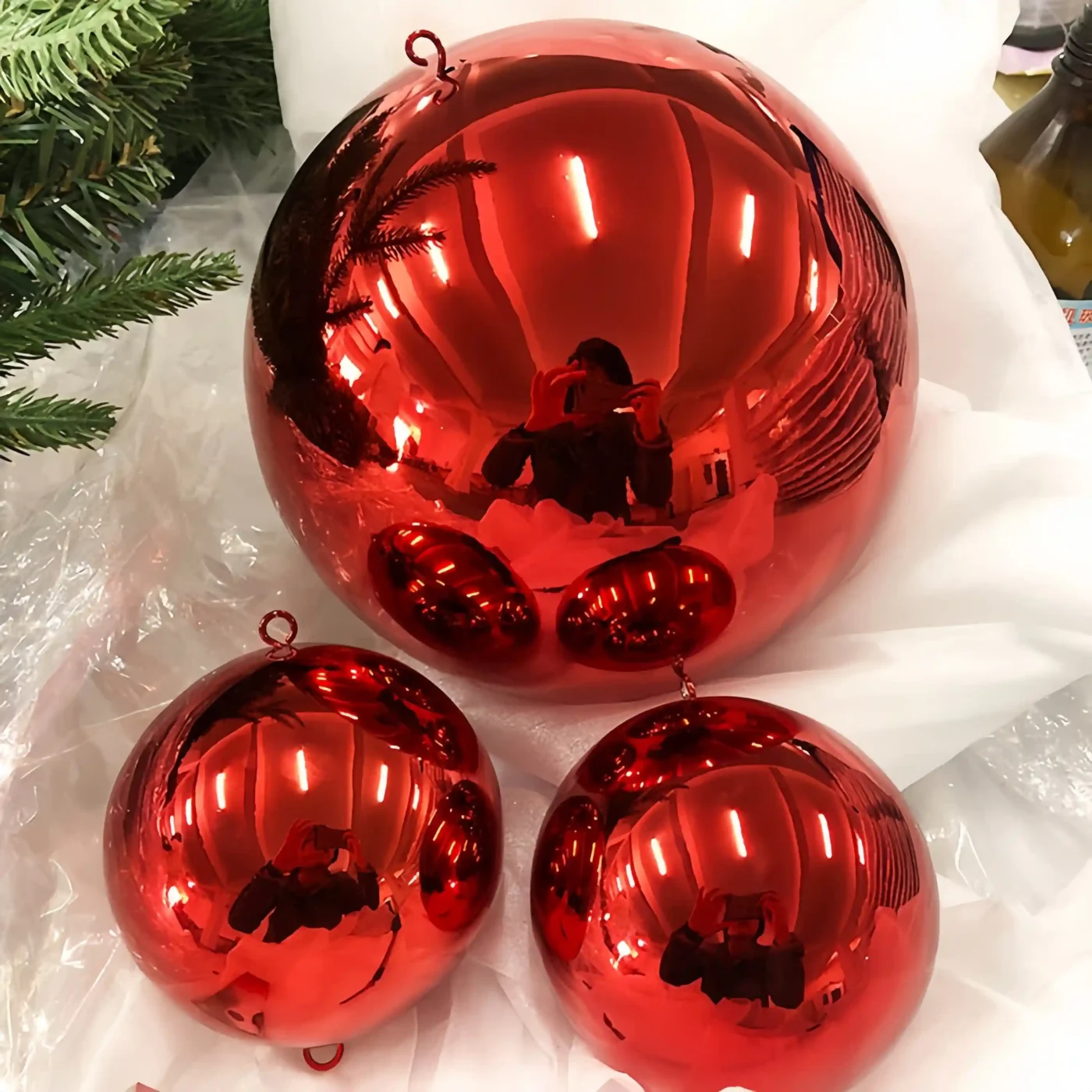
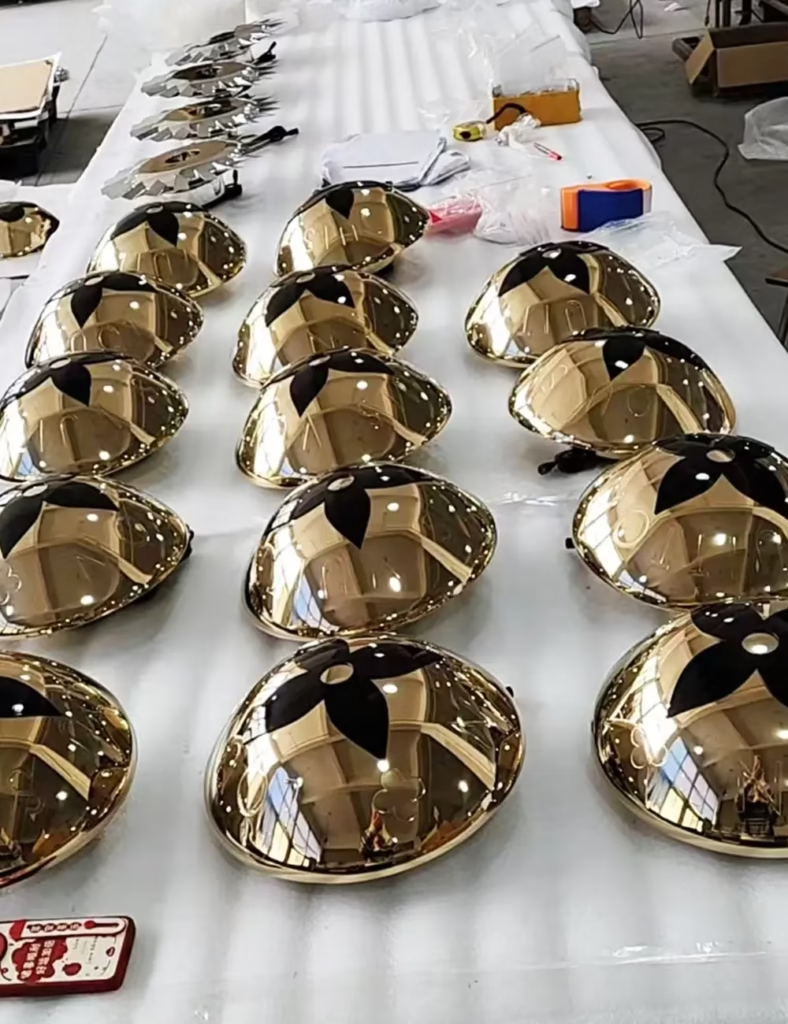
Metal can add structure and premium weight. Stainless steel and brass-effect finishes are common in luxury VM — but the real production question is whether to use solid metal, metal-clad surfaces over MDF cores, or electroplated finishes on lighter substrates. Each approach has different cost, weight and durability implications.
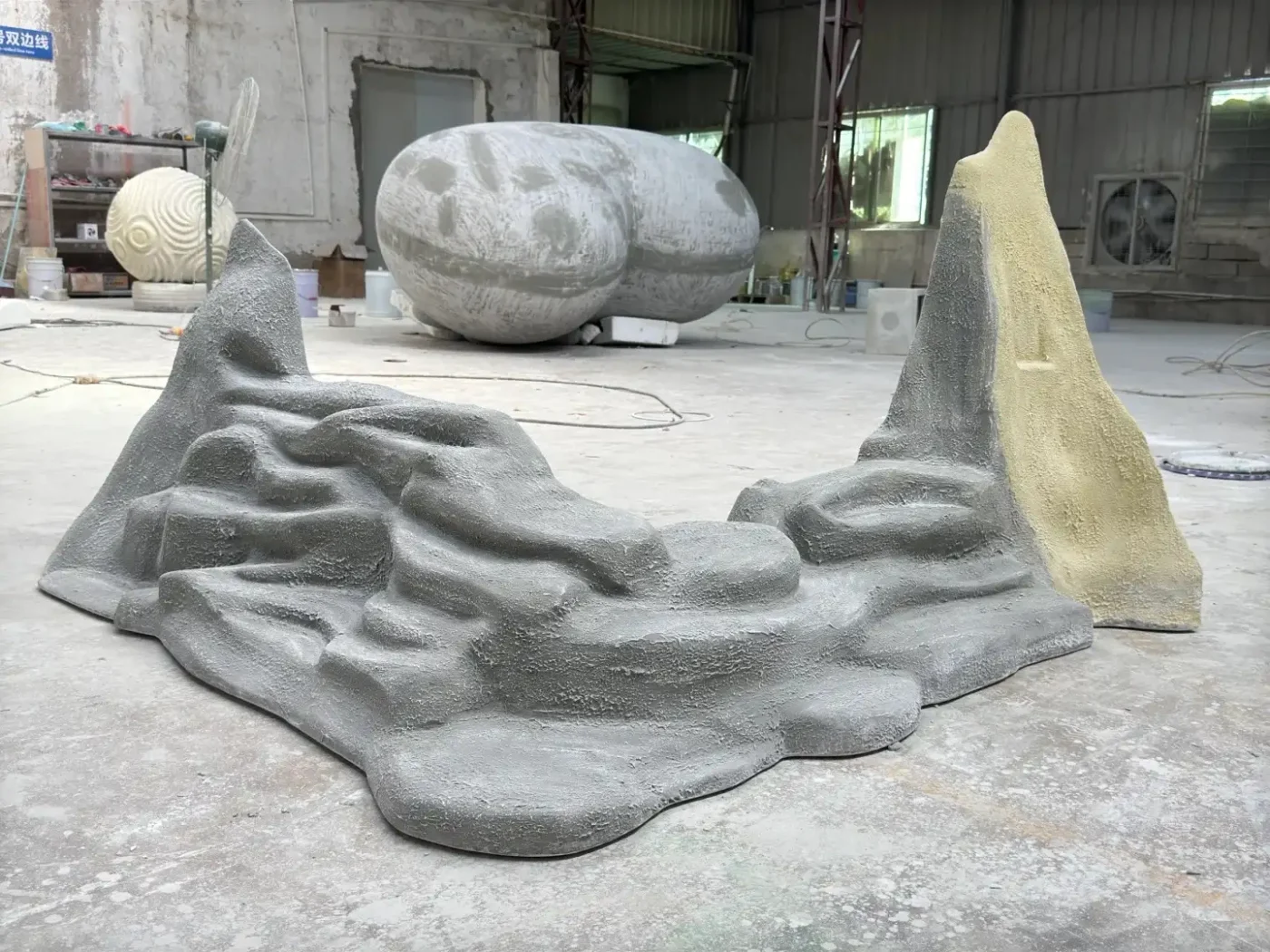
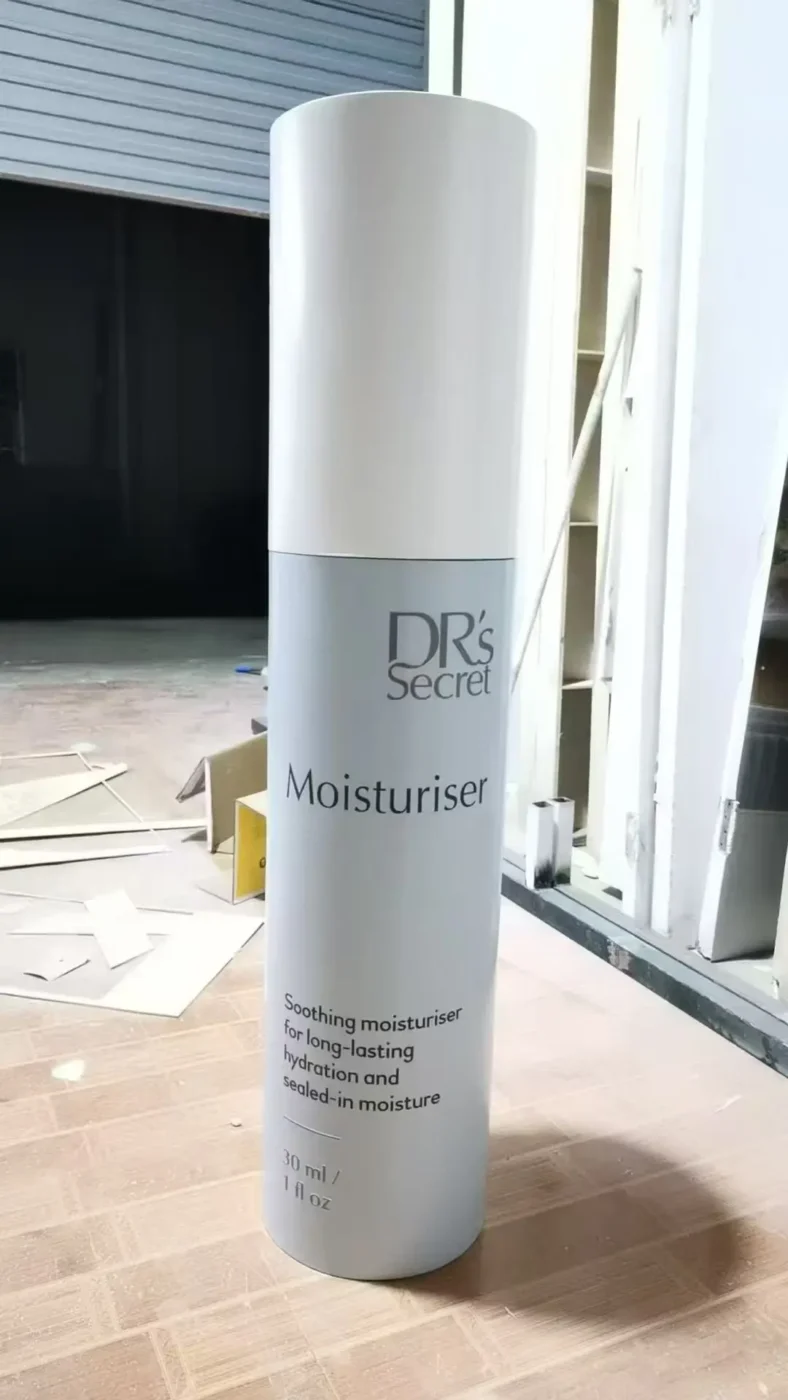
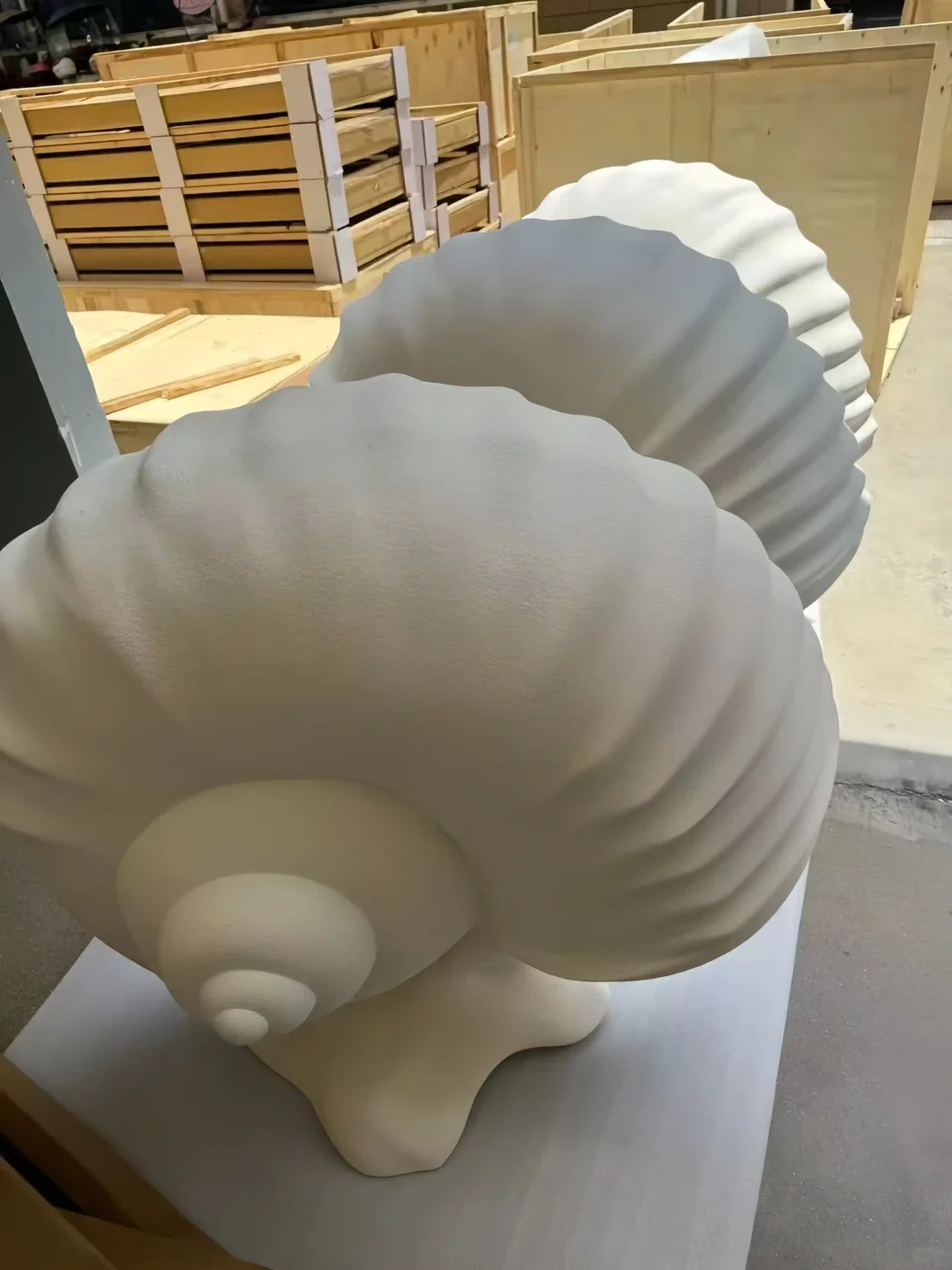
FRP can create sculptural forms without excessive load. For oversized props — large-scale brand icons, animal sculptures, abstract shapes — FRP allows complex geometry with manageable weight. The surface can be finished to look like stone, metal, ceramic or high-gloss lacquer.
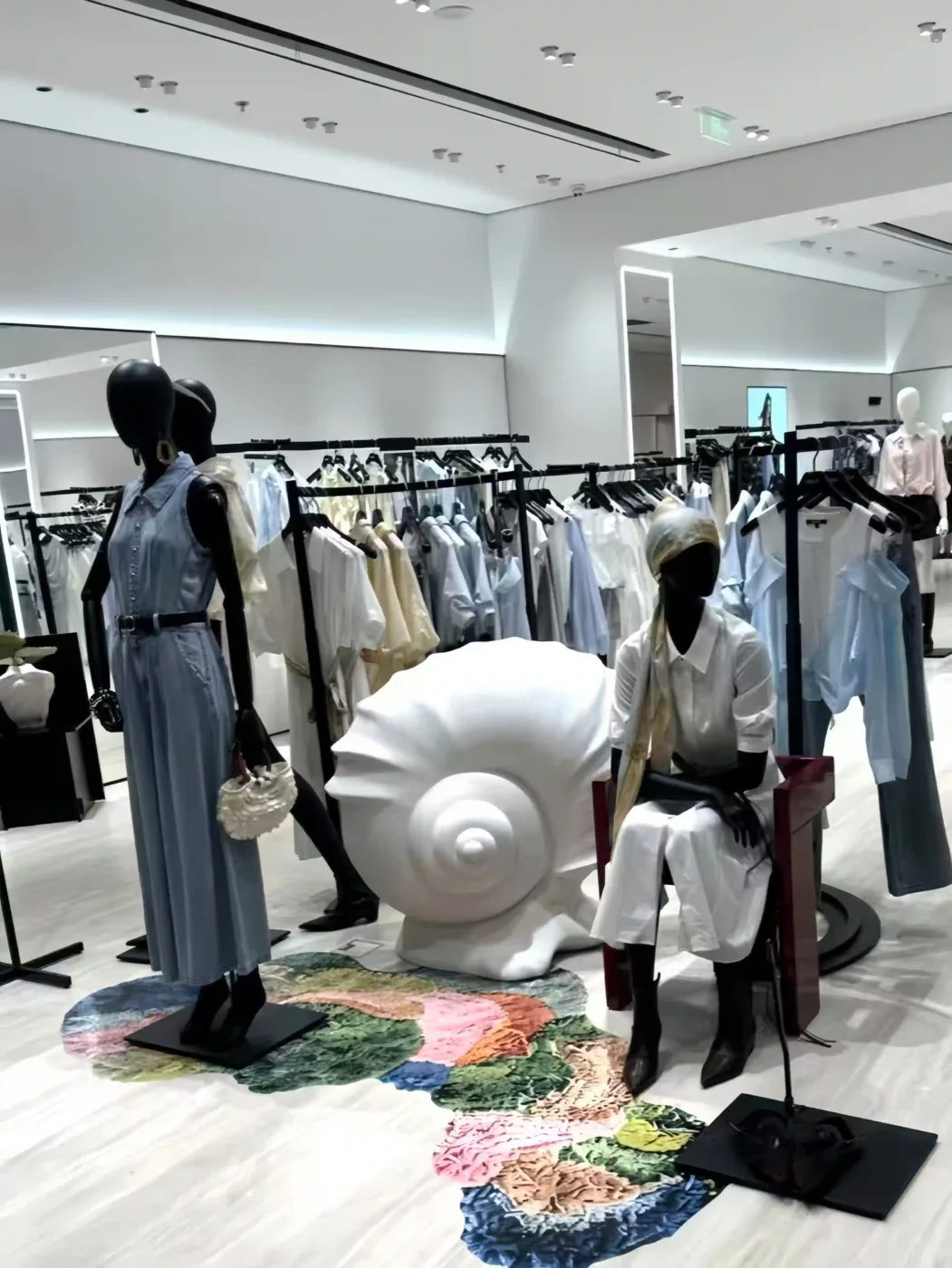
Wood can support architectural volumes and plinths. Solid timber is rarely used in temporary retail; instead, CNC-cut MDF or plywood with veneer wrapping provides the visual warmth at a fraction of the weight.
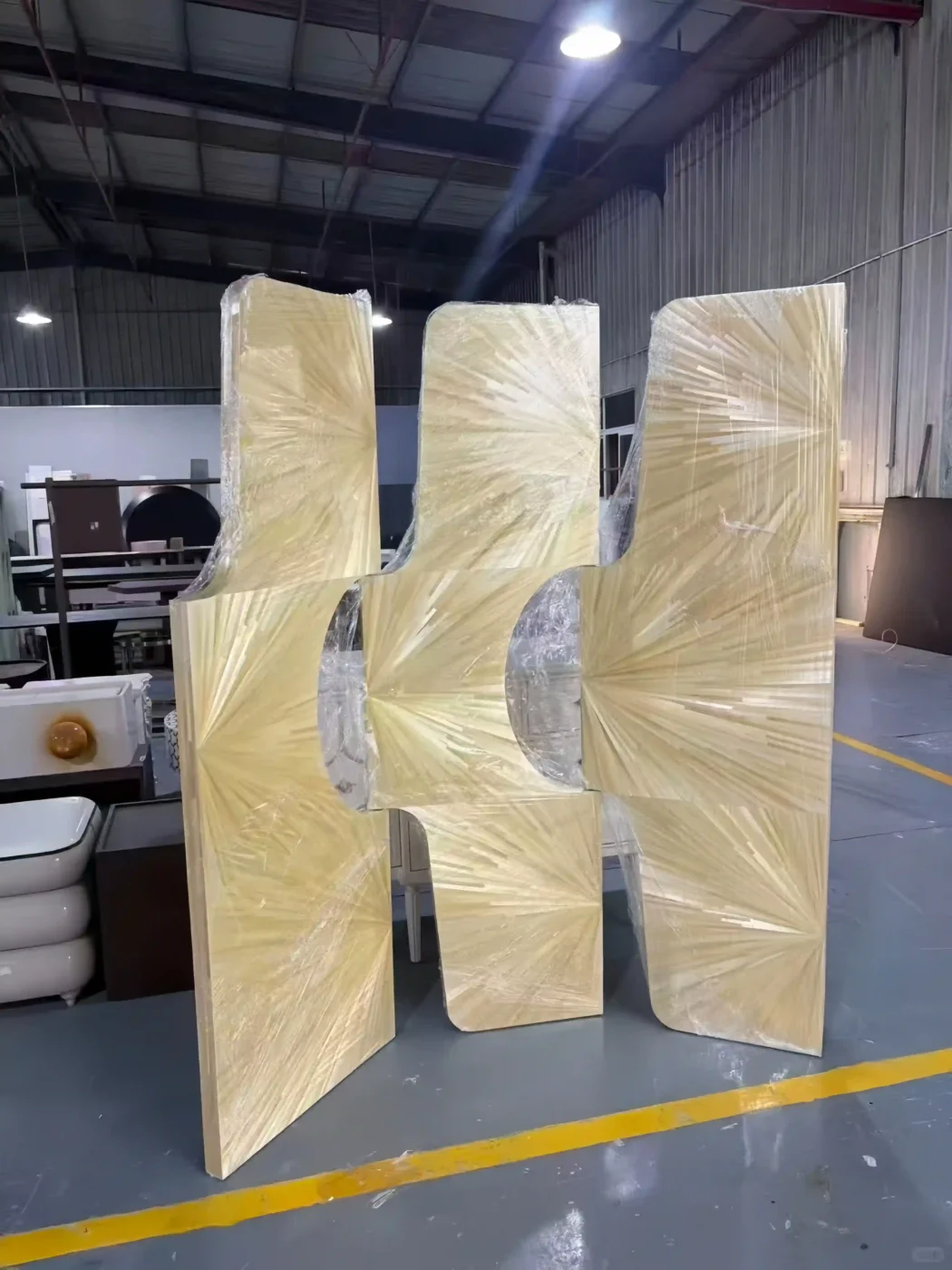
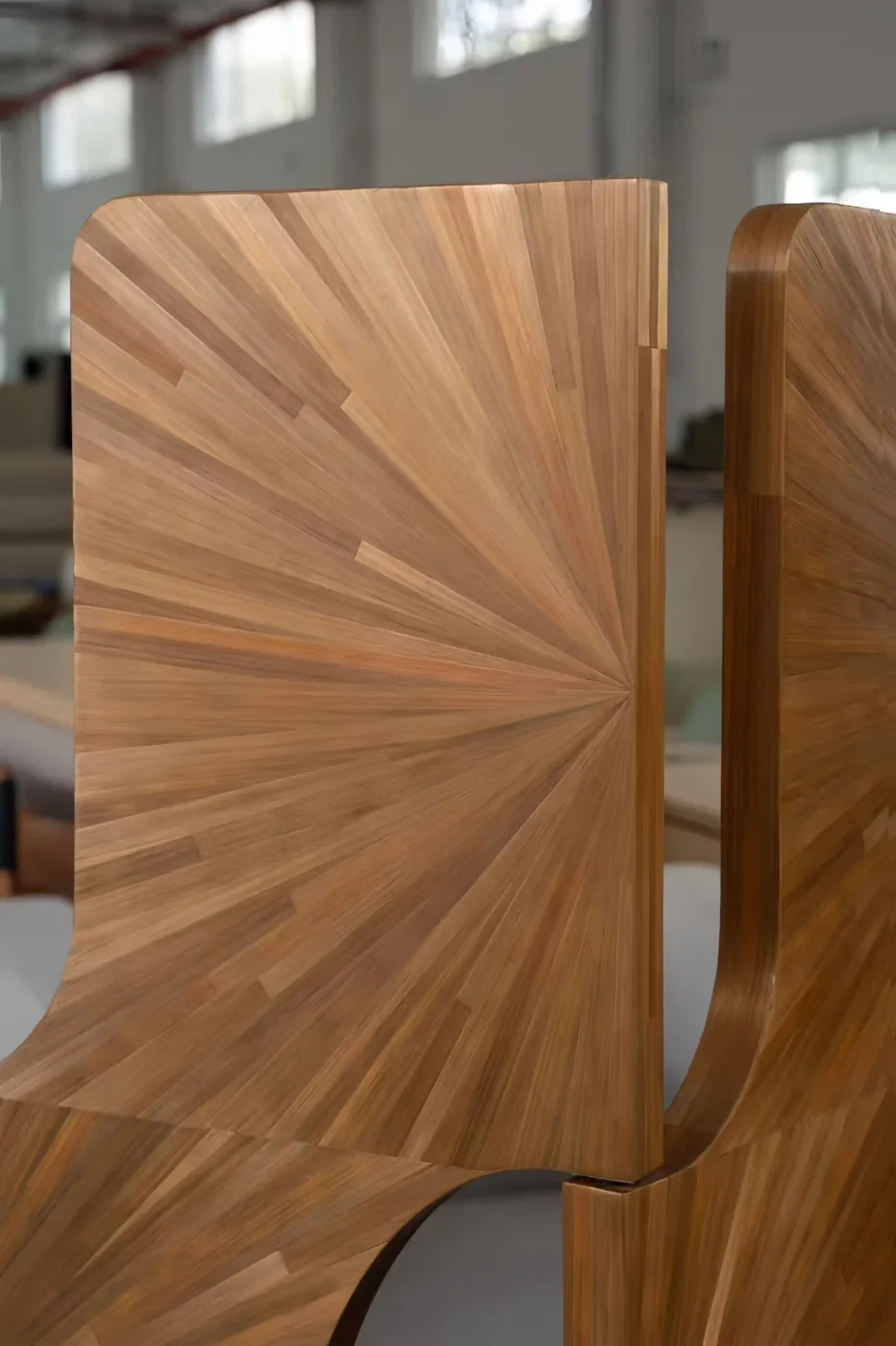
Fabric can soften the space or create seasonal emotion, but requires hidden tensioning systems and flame-retardant treatment for retail environments.
When we advise on custom retail display props, we usually start by asking where the prop will be used, how long it must last, who will install it, and whether it needs to travel.
Why Display Props Are No Longer Just Shelves
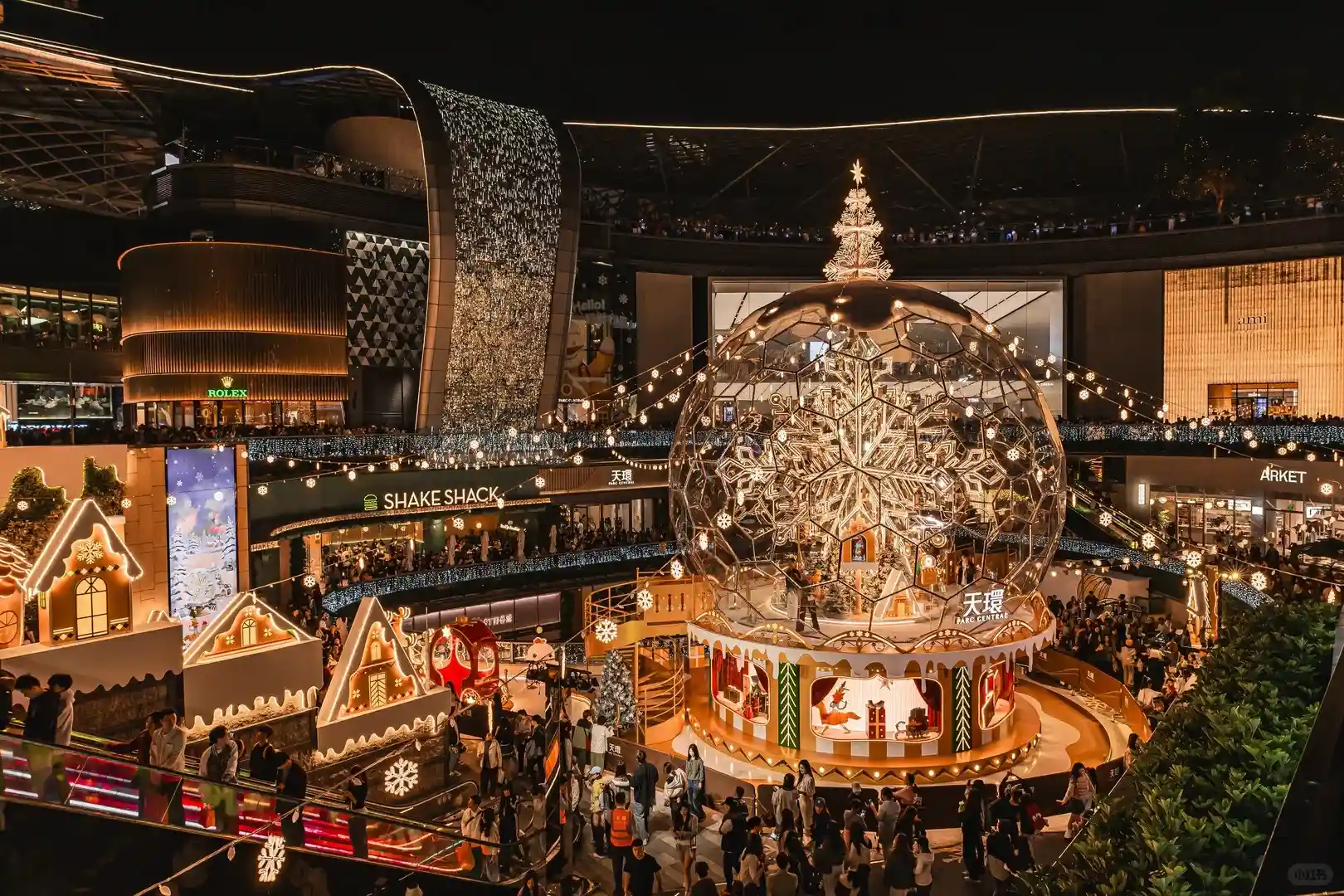
Acierta’s public projects are especially interesting because they often sit between physical retail and brand experience. This is the direction many luxury brands are moving toward. A display is no longer only a shelf or a backdrop; it may be a photo moment, a product stage, a guest journey and a logistics object at the same time.
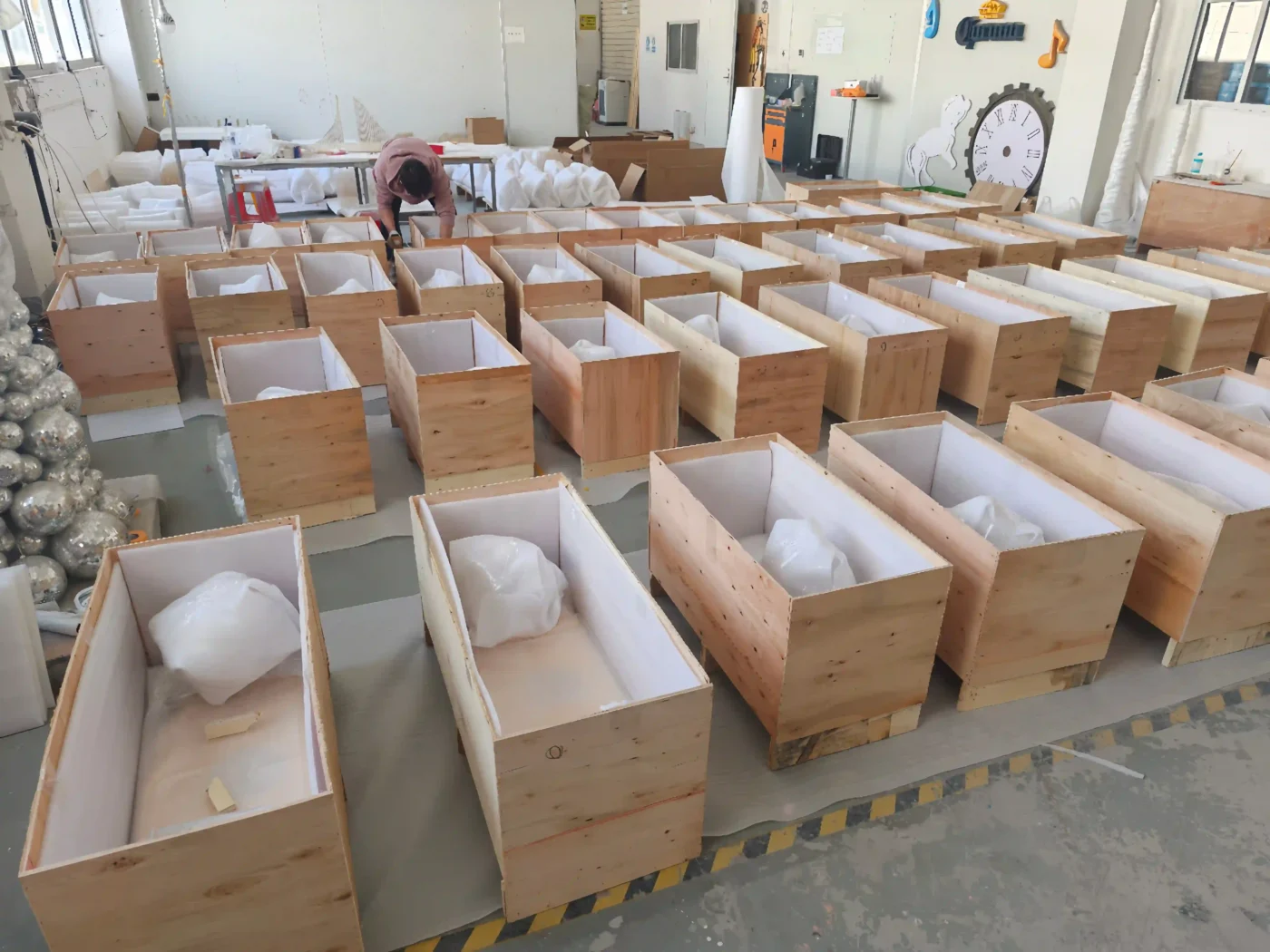
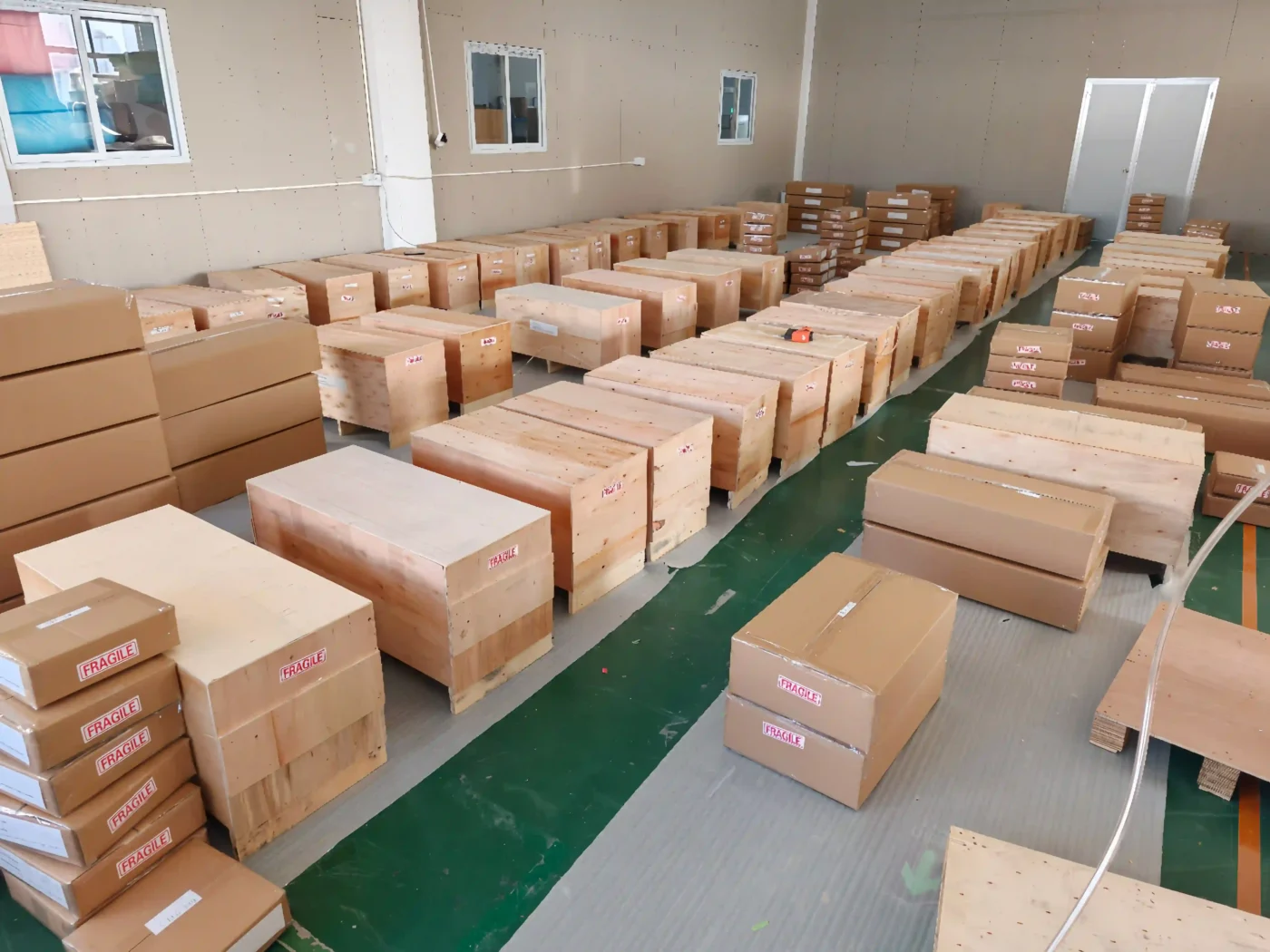
For manufacturers, this means retail display manufacturer work must connect aesthetics with practical details: hidden fasteners, reinforced joints, replaceable parts, stable bases, clean cable routing and export-safe packaging.
This also matches a wider industry shift. Vogue Business has discussed how winning retail strategies are increasingly built around experience, service and brand differentiation (source). For a manufacturer, that means the physical object must do more than look good in a render. It must support store traffic, customer interaction, photography and fast campaign changeovers.
Timing: The Hidden Variable in Luxury Retail Production
Another useful lesson from Acierta-style public projects is timing. Large retail activations often need early sampling, while smaller urgent projects may move quickly from concept to production. In both cases, the manufacturer needs enough information to prevent delays: dimensions, visual references, expected quantity, installation location, weight limits, finish requirements and delivery deadline.
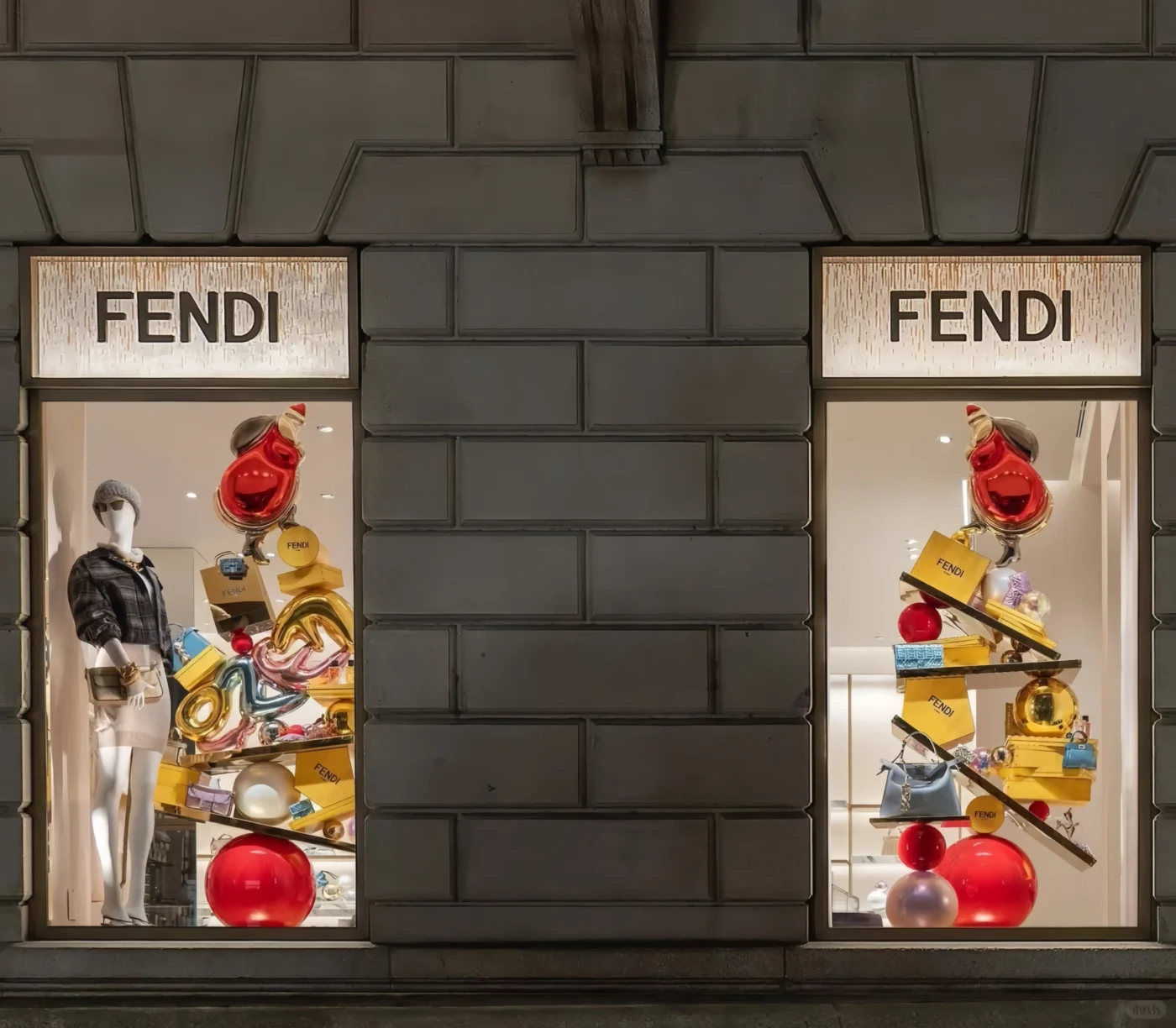
When clients contact us for custom window display props, the best briefs usually include both creative direction and practical constraints.
Architectural Digest’s retail design discussion also points to a similar direction: stores are becoming more intentional, sensory and experience-led (source). For brands and agencies, this makes early manufacturing input more valuable, because the final display has to balance visual storytelling with safety, durability, installation and logistics.
The Takeaway for Brands and Agencies
For brands and agencies, the key takeaway is simple: the earlier production thinking enters the process, the stronger the final display becomes. A beautiful concept can fail if it is too fragile, too heavy, too difficult to pack or too slow to assemble. A strong production partner helps protect the creative idea by making it physically reliable.
This is why we see value in studying public agency-led projects. They reveal how retail storytelling depends on a hidden chain of engineering, craft, coordination and quality control.
If your team is preparing a fashion pop-up, window campaign, branded retail activation or temporary store environment, the most useful next step is to bring manufacturing questions into the conversation before the design is fully locked. VM Display can help review materials, structure, finishes, sample feasibility and packing methods for luxury retail display production before a campaign enters mass production.
Disclaimer This article is based on publicly available project and industry information. VM Display is not claiming partnership, sponsorship, endorsement, or direct involvement with Acierta or any brands mentioned.
FAQ
What can manufacturers learn from Acierta-style retail projects?
They show how creative retail concepts need production planning, material testing, installation logic and packaging support before they become real store environments.
Can VM Display produce similar pop-up store display props?
Yes. VM Display can support custom pop-up props, window display props, FRP sculptures, acrylic fixtures, metal structures and packaging for retail rollout projects.
Why should production be involved early in a luxury retail project?
Early production input helps avoid fragile structures, unrealistic finishes, shipping problems and late-stage redesign.
What information is needed for a custom display props quote?
A reference image, dimensions, quantity, material preference, deadline, installation location and packaging requirements are the most useful starting points.
What materials are commonly used in luxury retail display props?
The most common materials include acrylic (for transparency and illumination), metal or electroplated finishes (for premium weight and structure), FRP (for sculptural forms), CNC-cut MDF or plywood (for architectural volumes), and fabric (for soft, seasonal elements). Material choice depends on venue requirements, installation method and campaign duration.