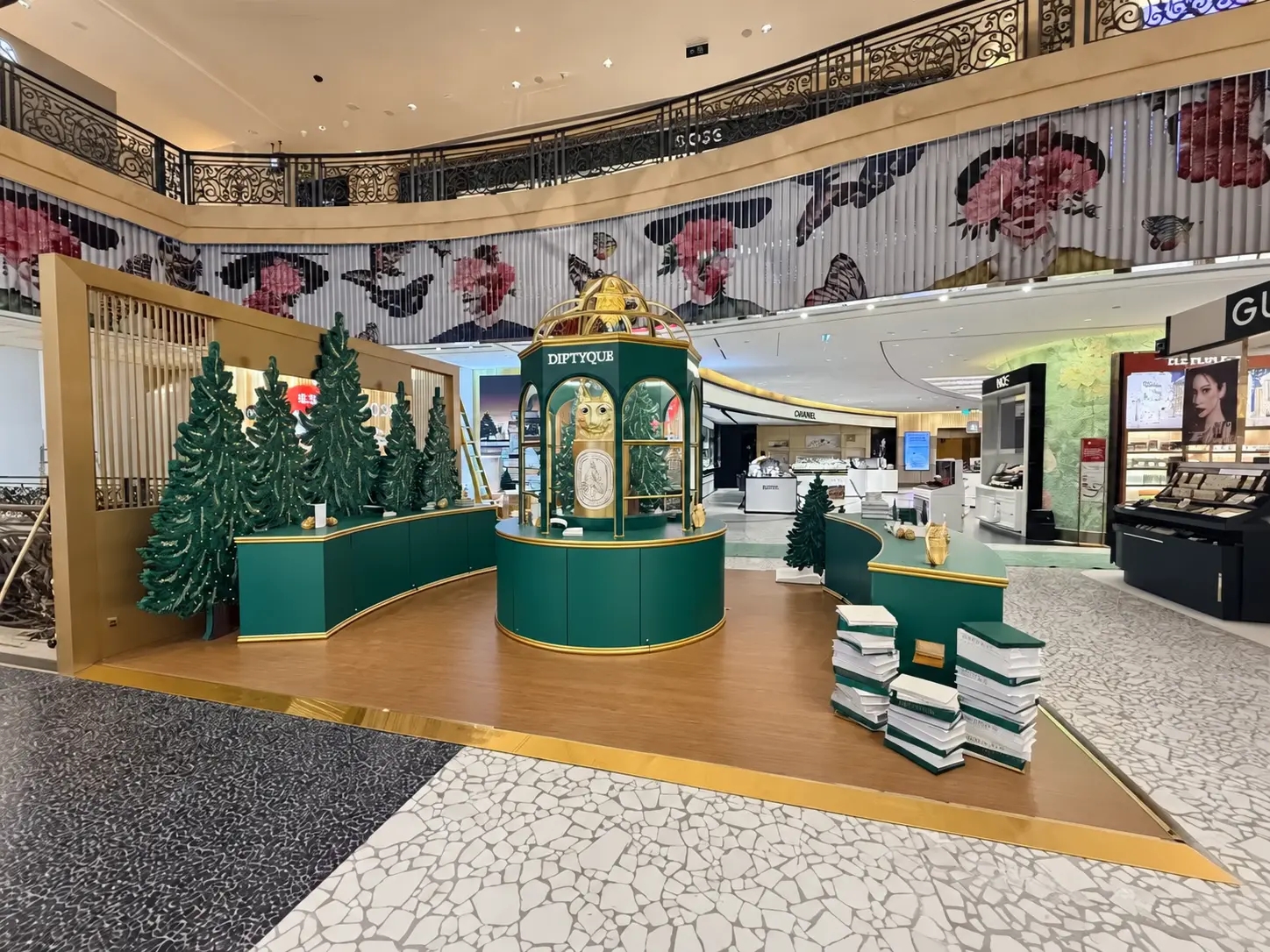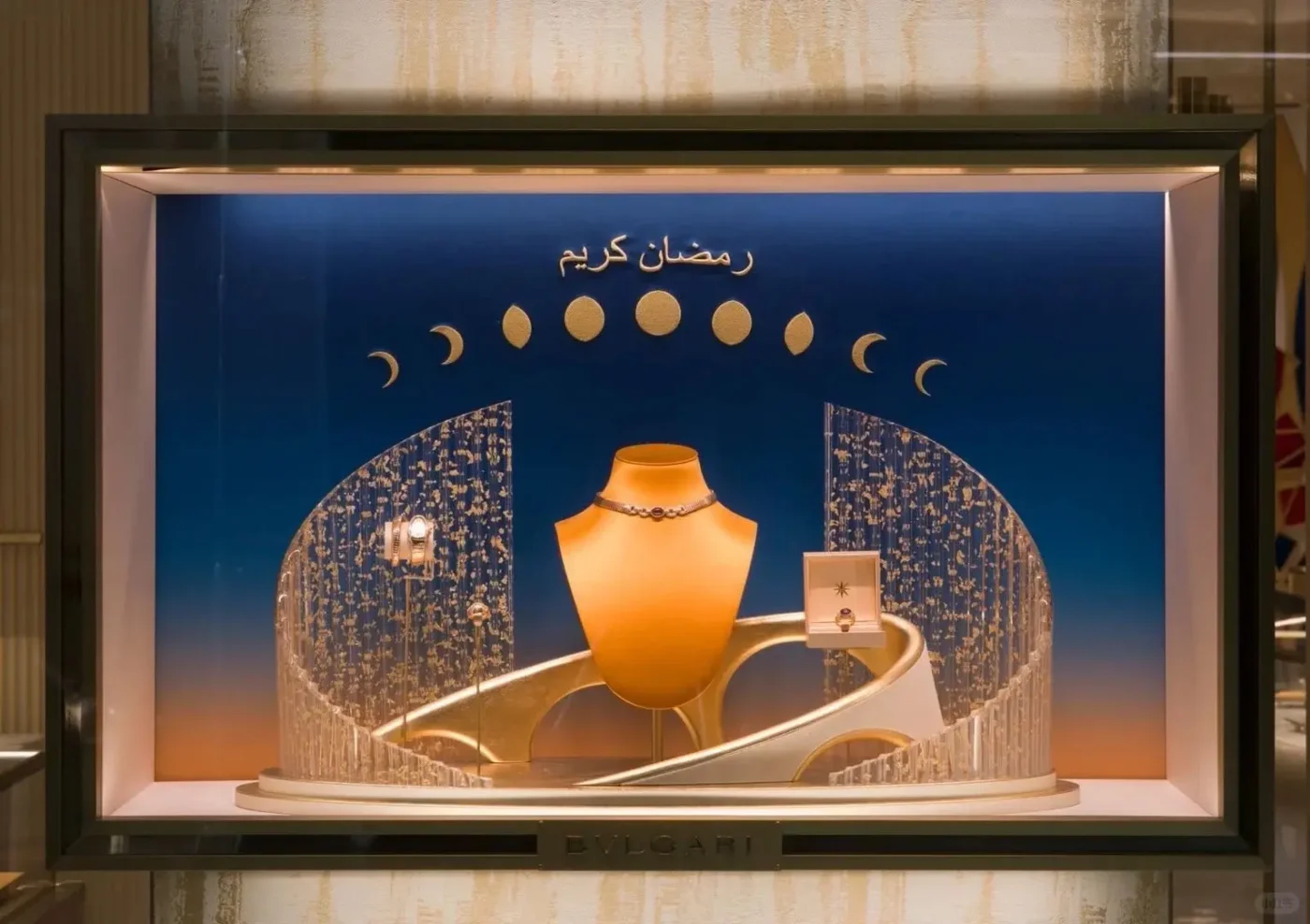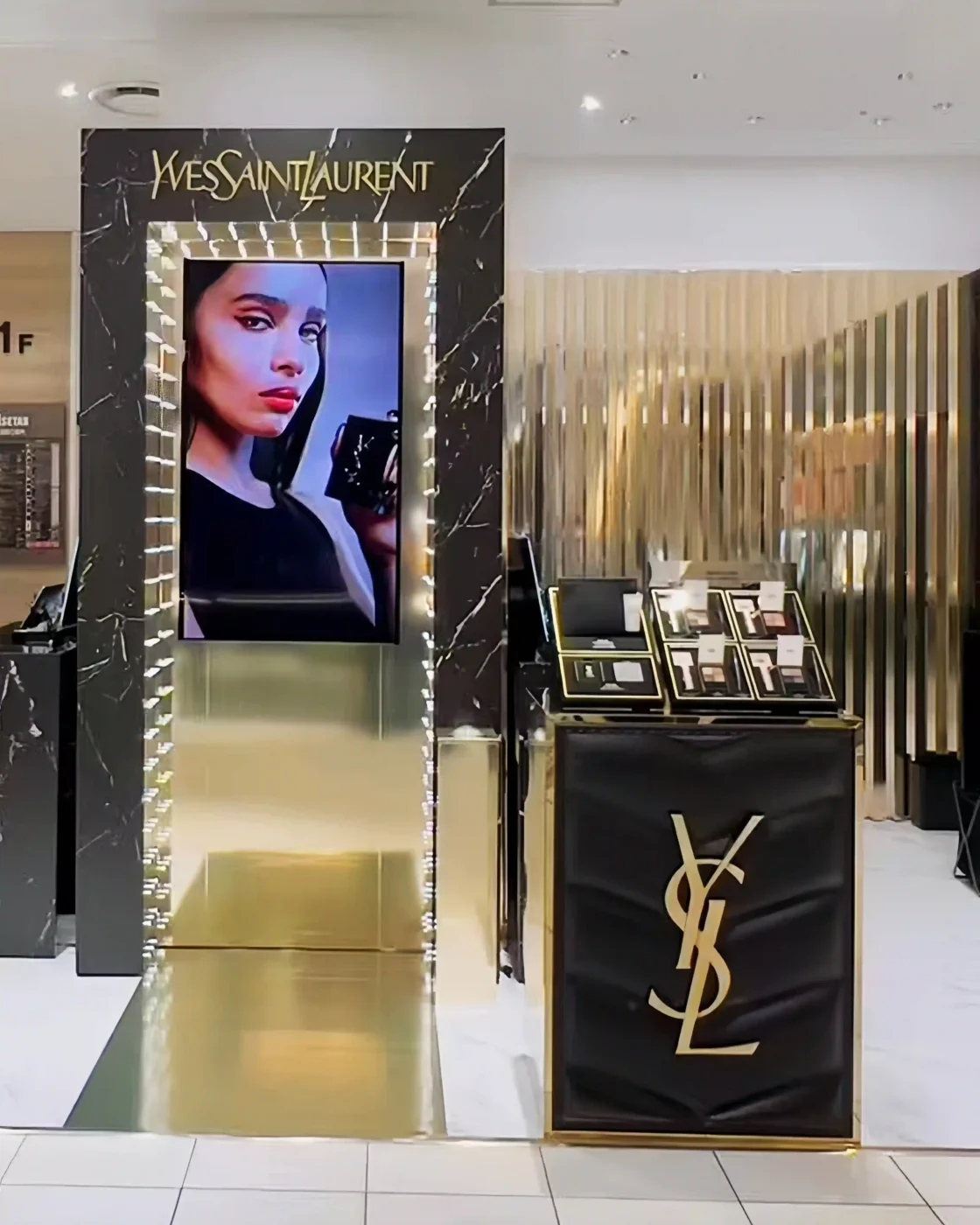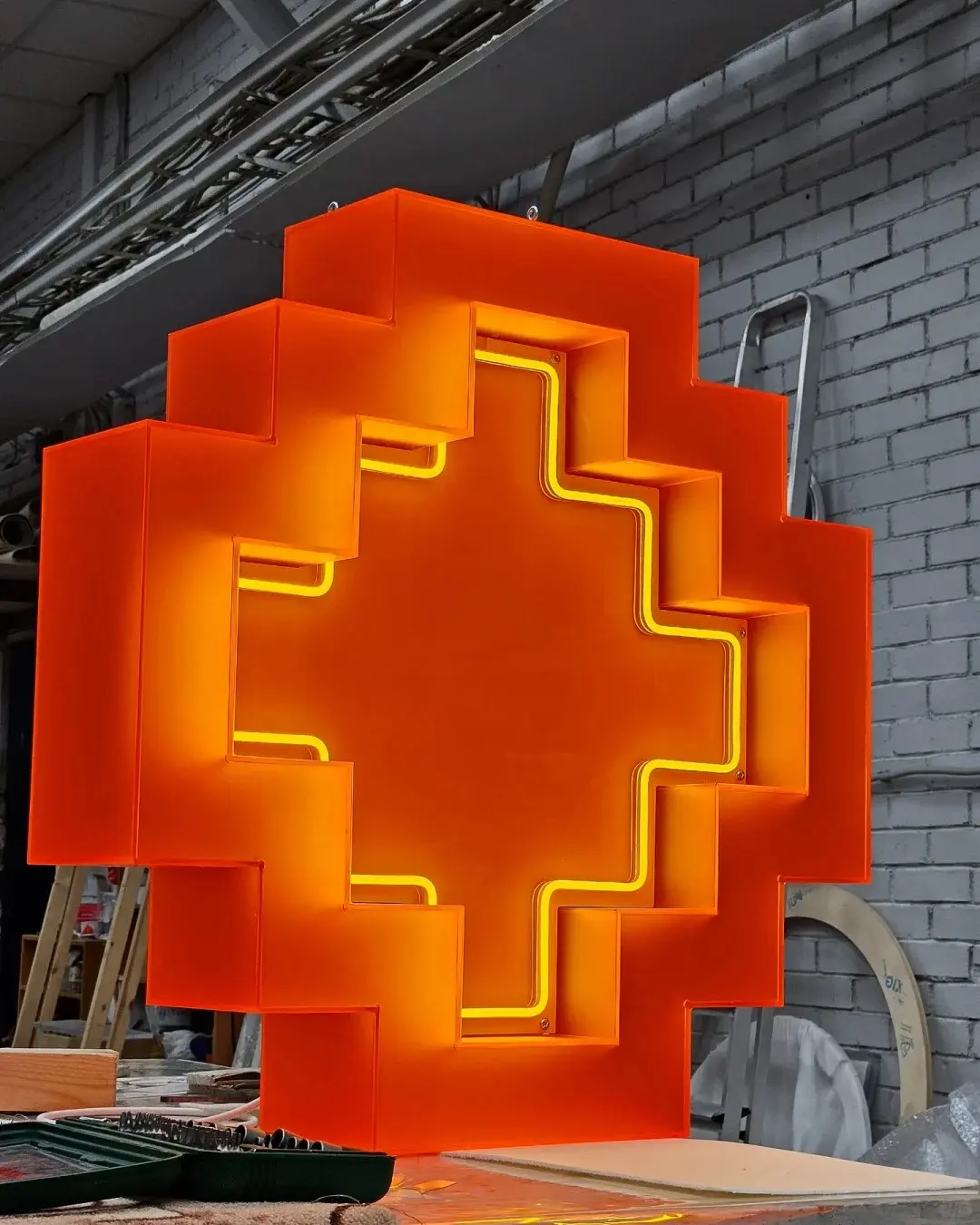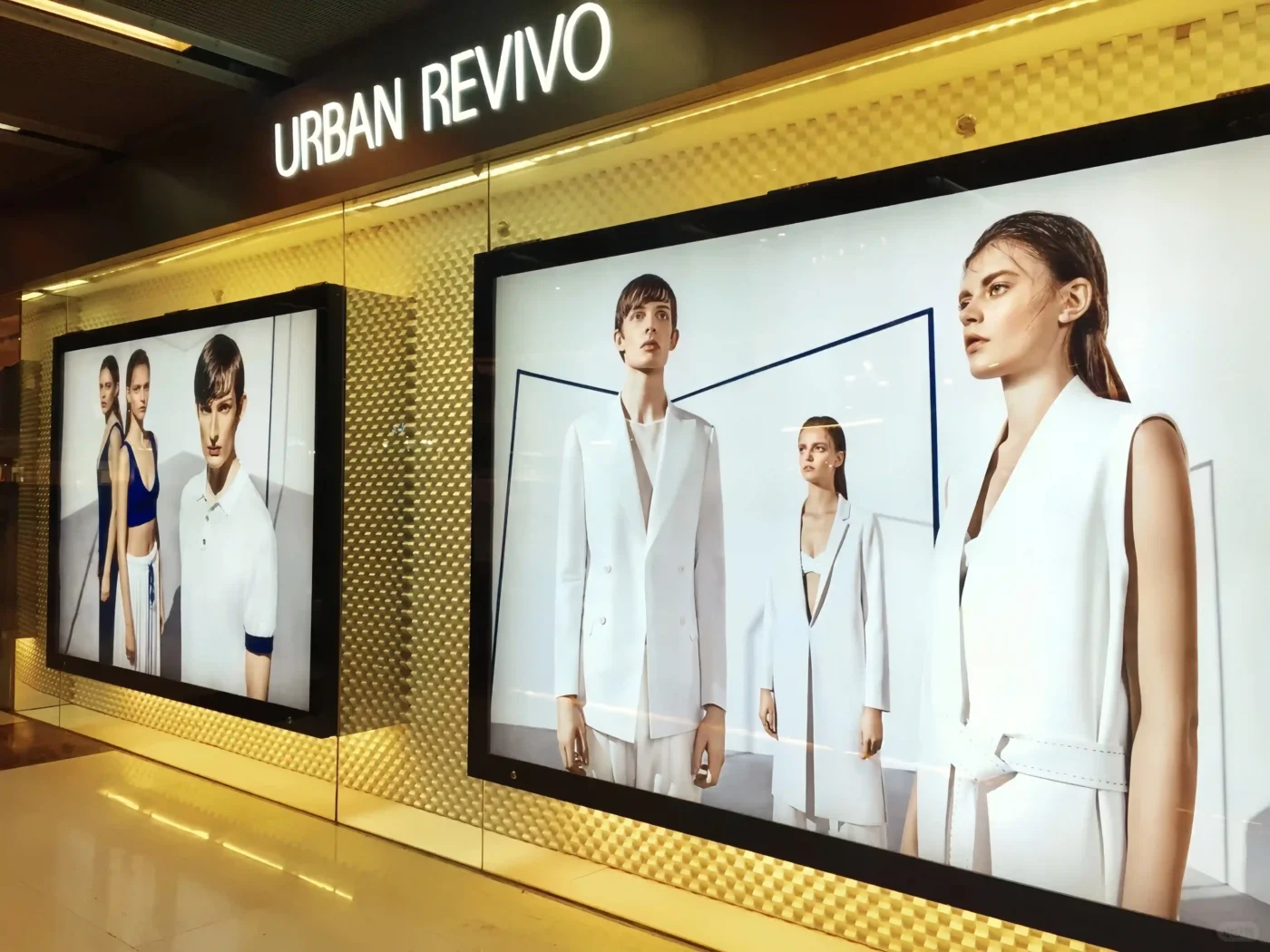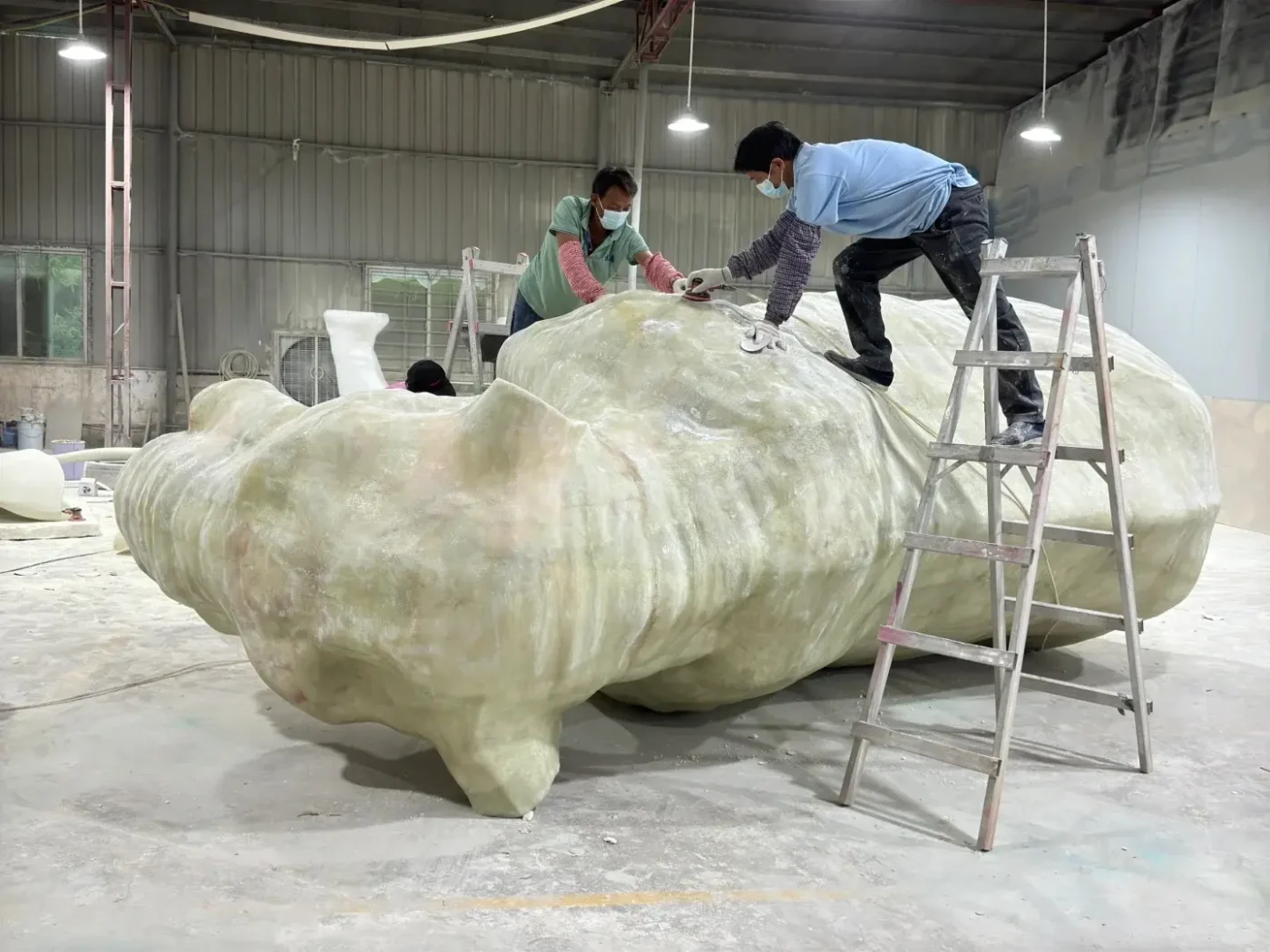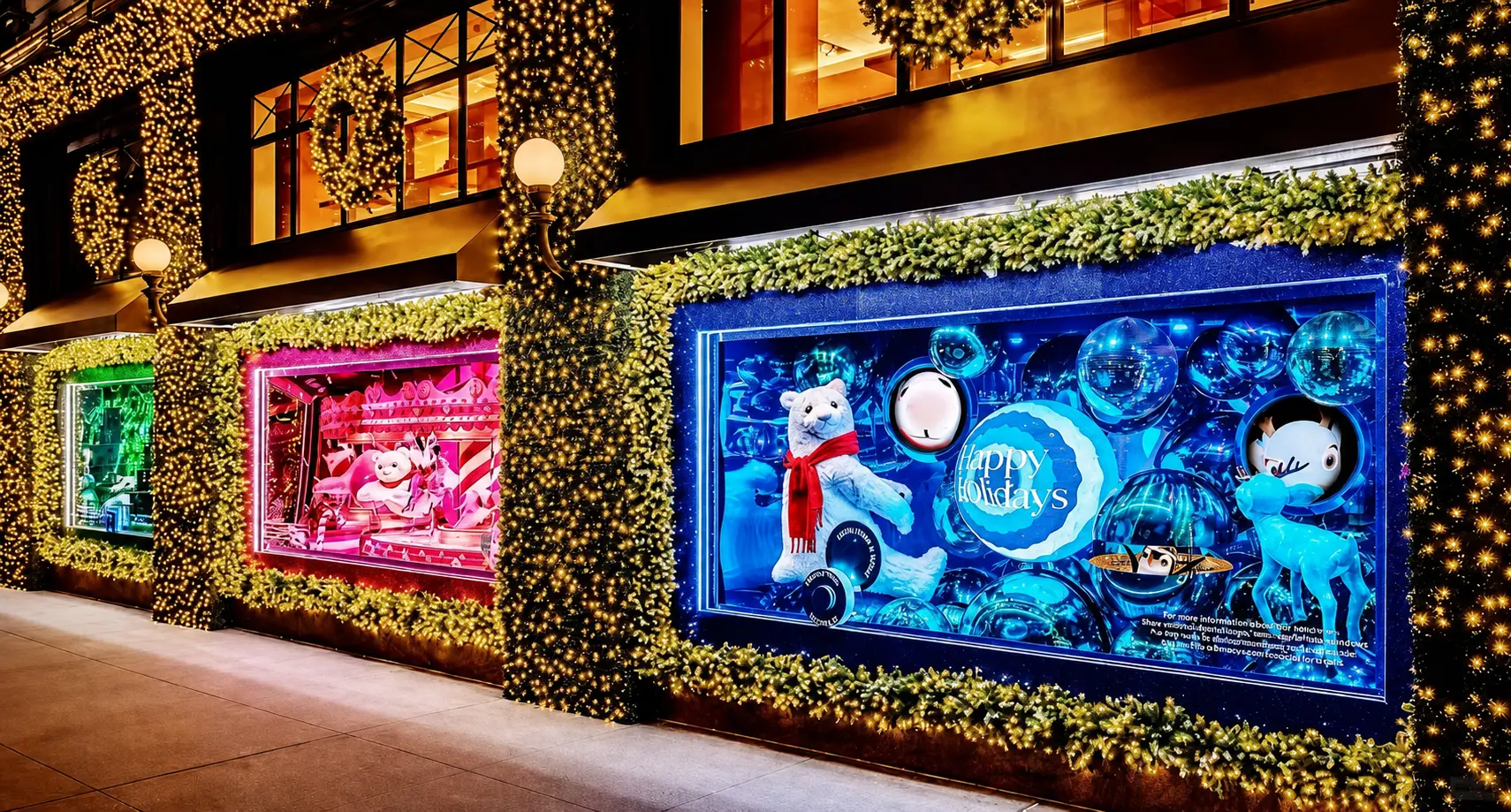
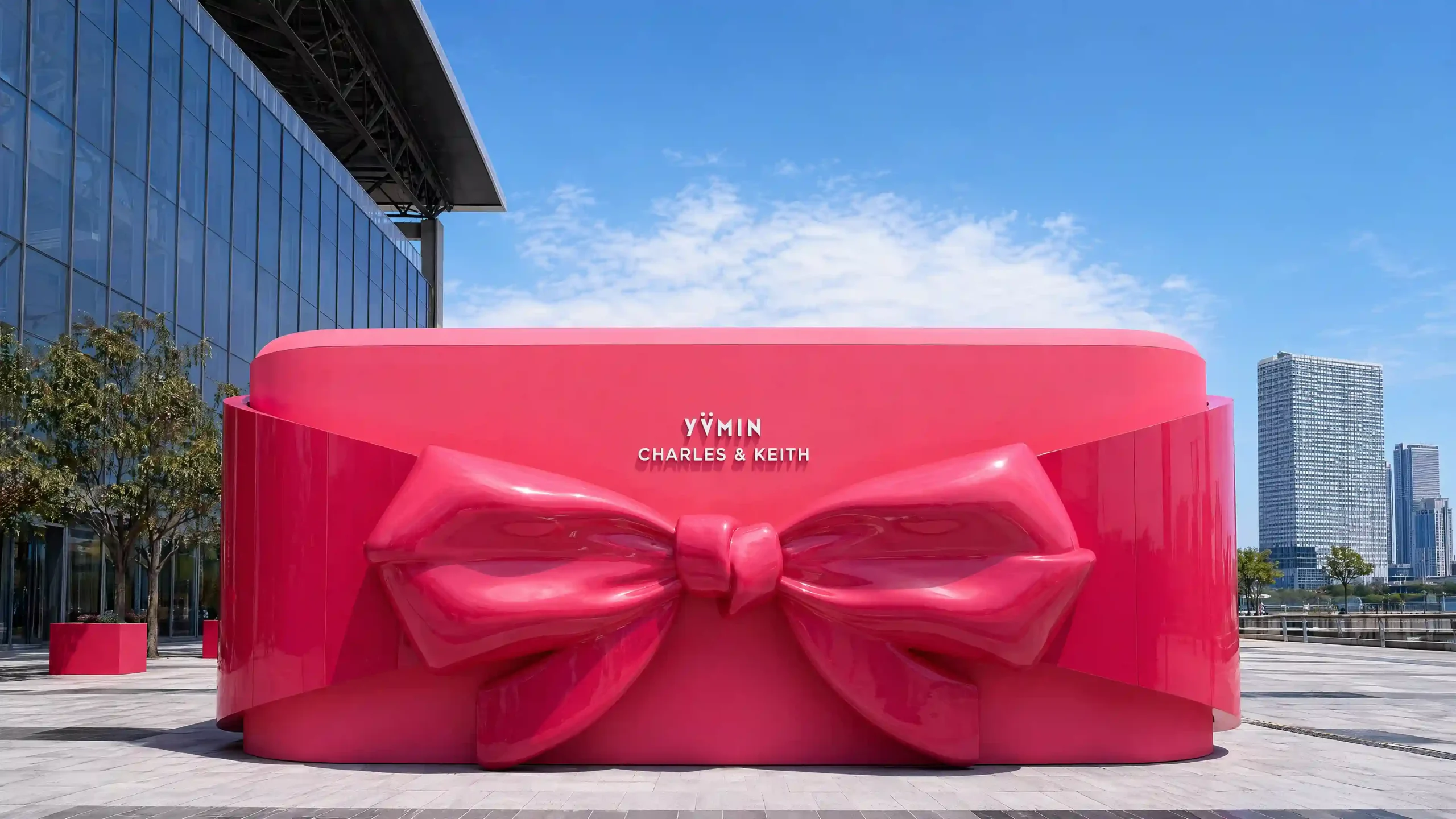
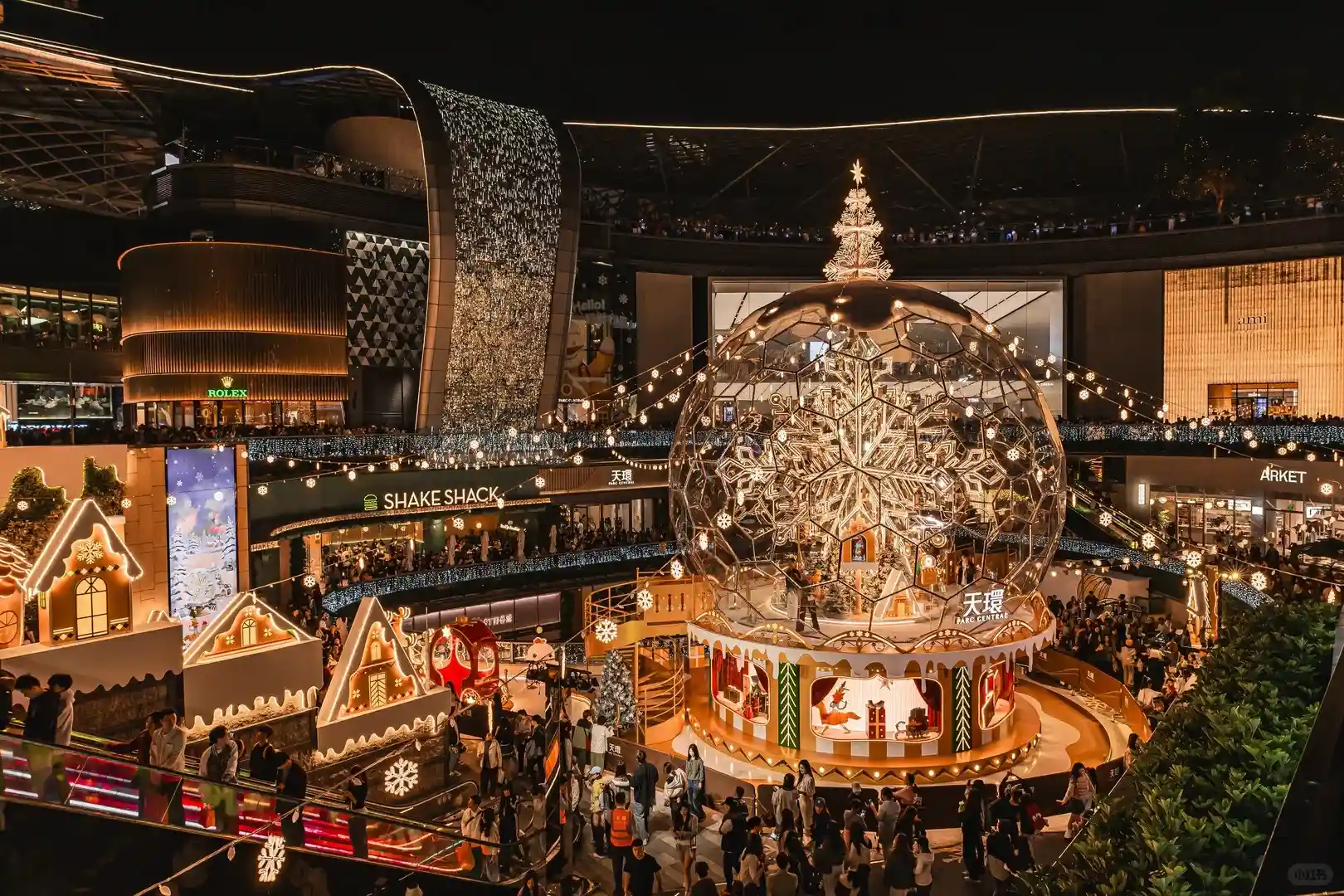
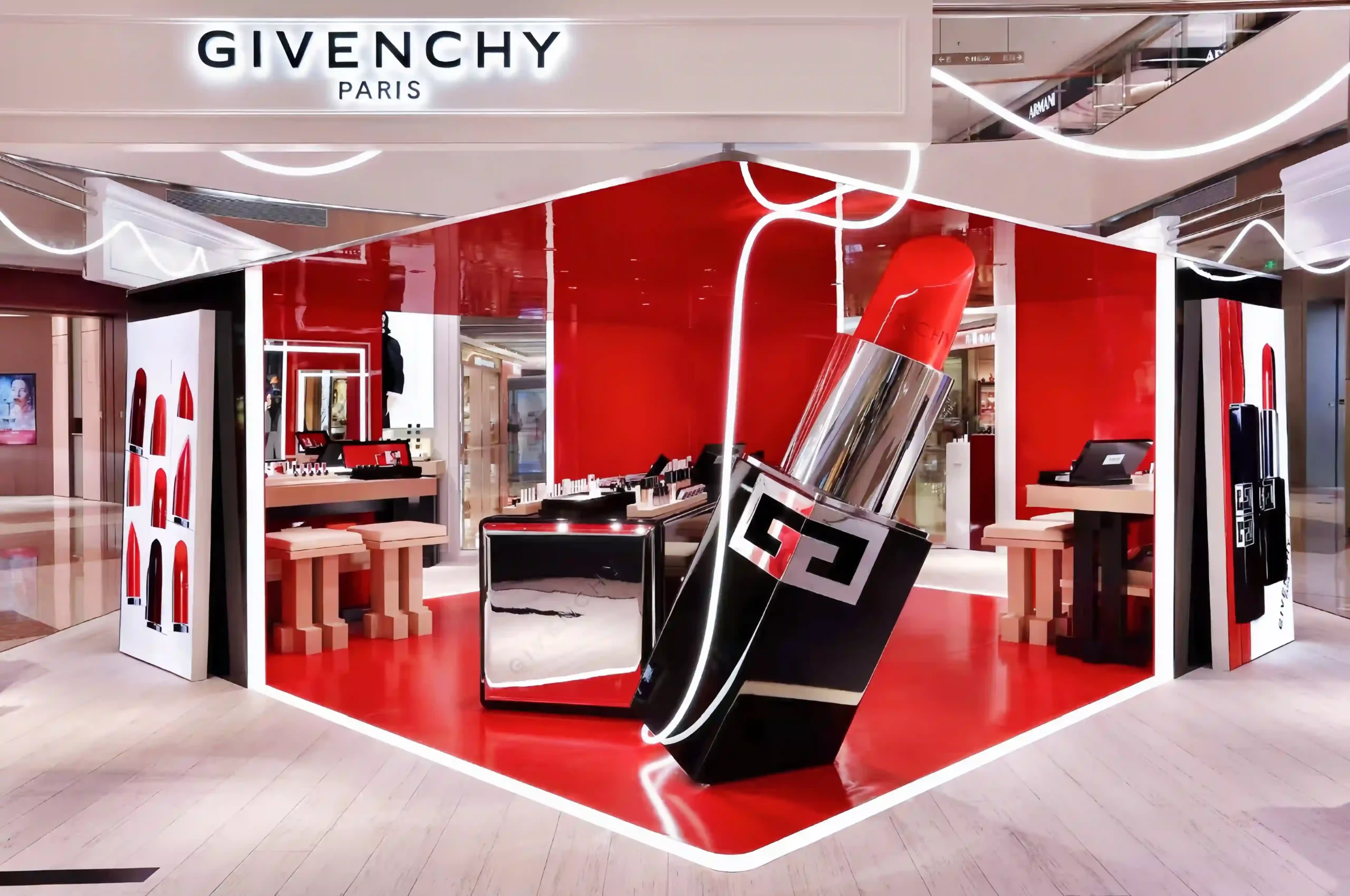
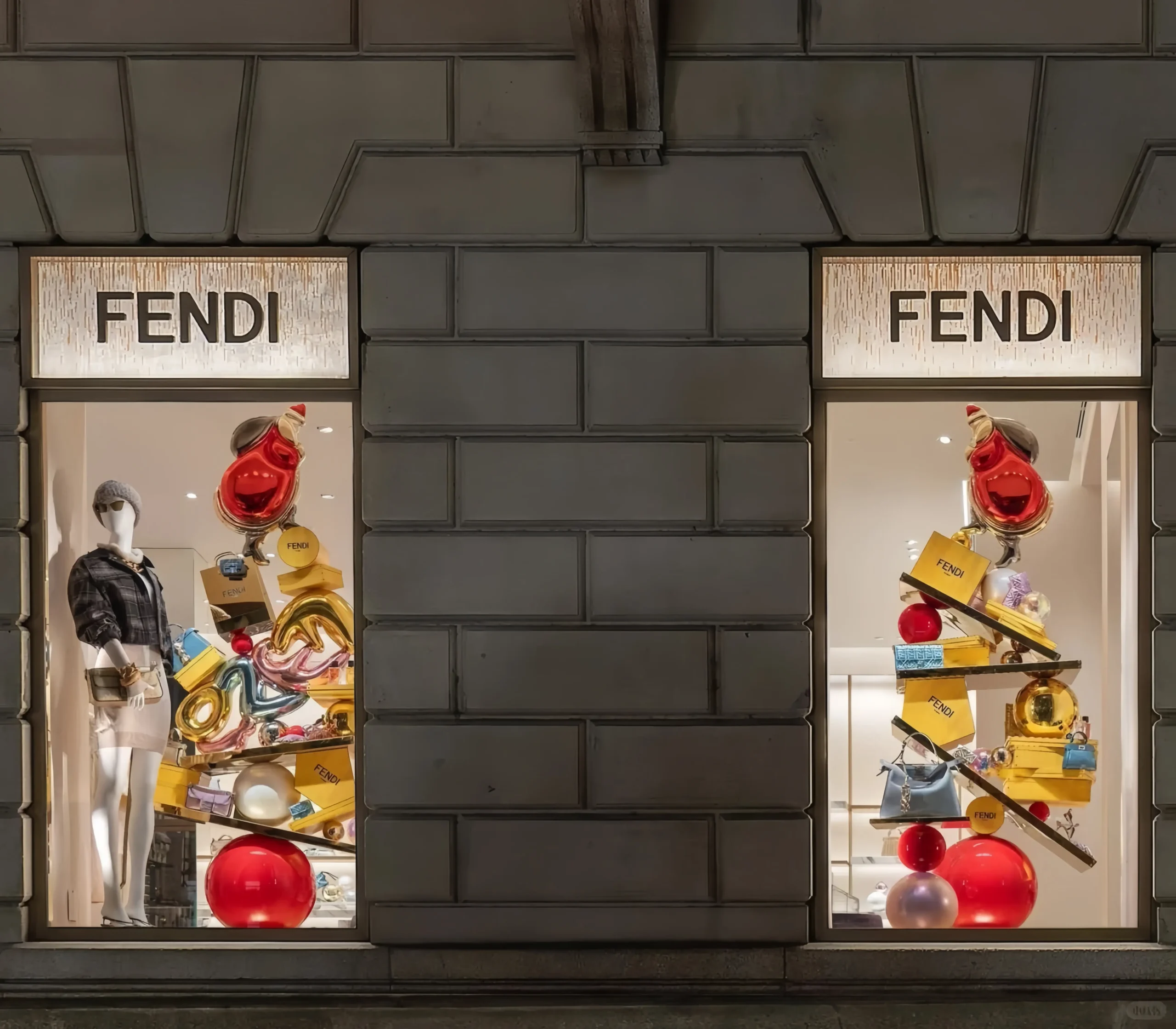
A retail Christmas window display is admired from the street and underestimated from the factory floor. The finished scene may look simple — oversized ornaments, candy canes, glowing props, a sculptural centrepiece — but behind it sits a harder question: can this same visual idea be produced, packed, shipped and installed across dozens of stores without losing its shape, colour or brand feeling?
For brands managing their own seasonal campaigns, that question is the real starting point. This article walks through how Christmas display props are actually produced for multi-store rollouts, from material decisions and sample approval through to packing logic and delivery timing. It is written from a manufacturer’s perspective, for VM teams and brand buyers who want to understand the production side before they brief a factory.
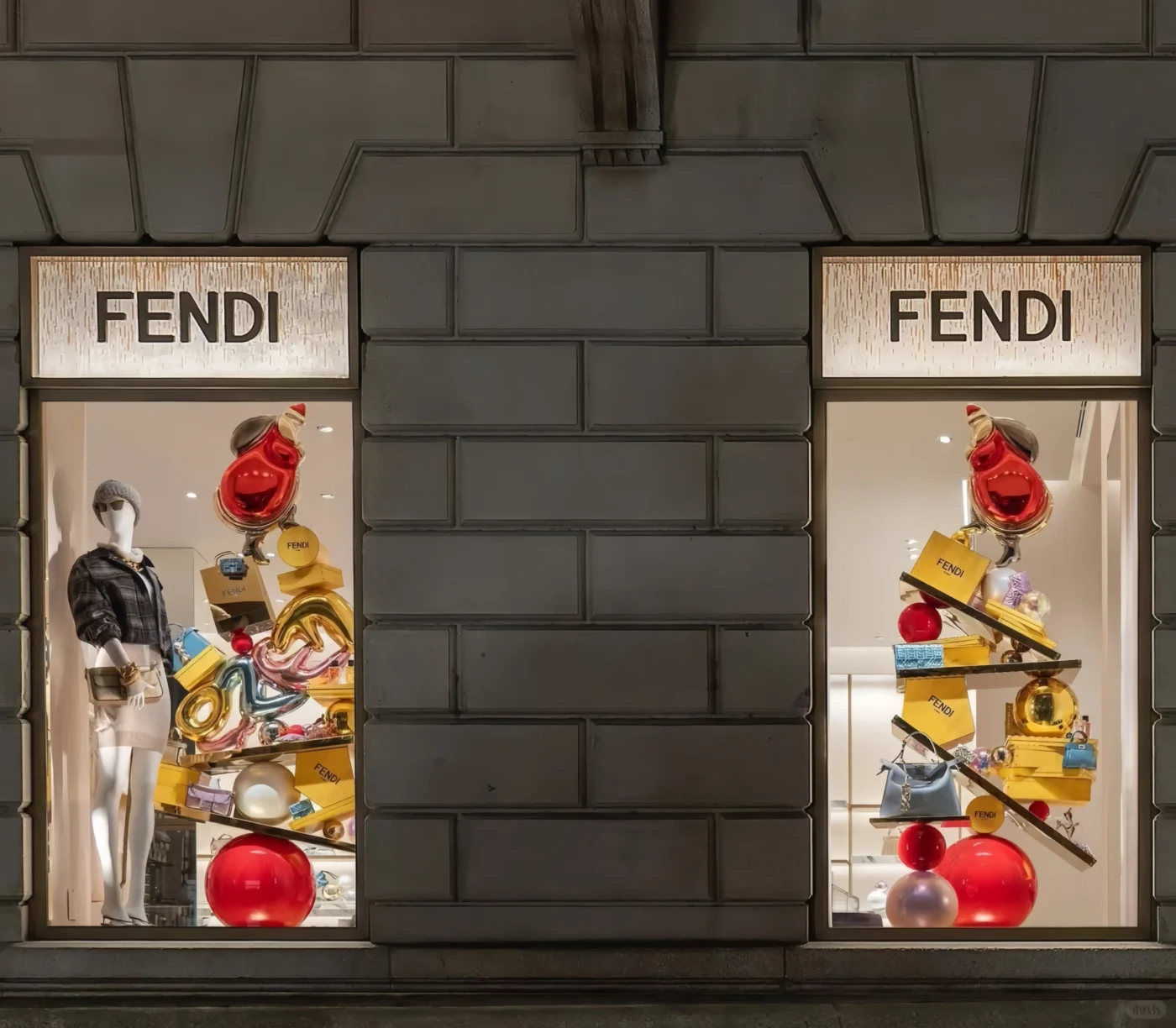
Why Christmas VM Is a Production Discipline, Not a Decoration Project
Christmas visual merchandising carries a specific emotional job. It has to feel warm, generous and instantly recognisable — often before the shopper has read a campaign headline or examined a product. That emotional role is why festive VM tends toward oversized forms: candy canes, baubles, gift boxes, stars, trees, bows, characters and illuminated scenic props. These shapes work because they communicate from a distance. They stop foot traffic.
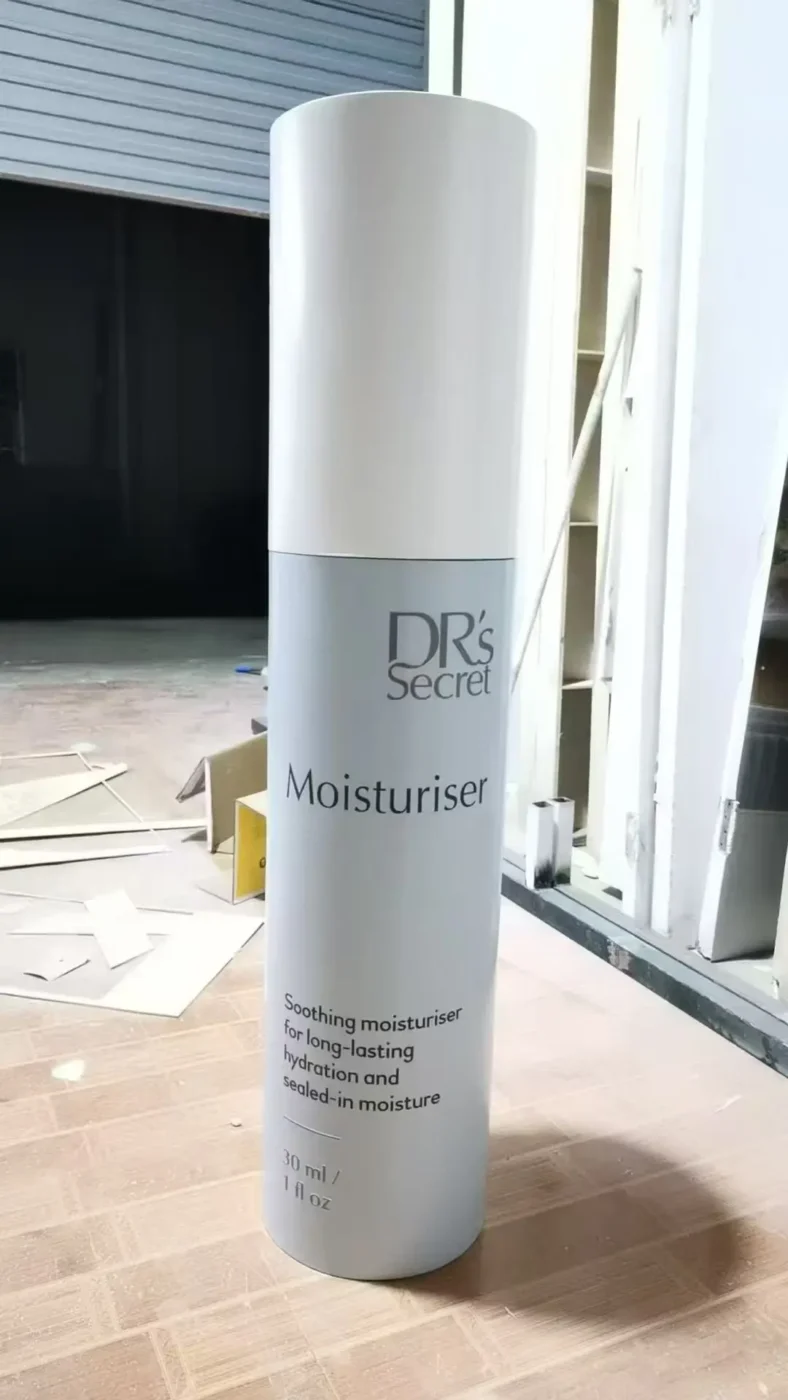
But from a manufacturer’s side, oversized festive props are exactly where production risk begins. A beautiful render does not explain weight distribution, internal reinforcement, modular splitting, surface durability, wiring access, packing method or installation sequence. When the same prop needs to arrive in 30 or 60 or 200 stores looking identical, those invisible details matter more than the visible design.
This is the gap that separates a decoration project from a production programme. A single flagship window allows hand adjustment and on-site problem-solving. A multi-store rollout needs repeatable manufacturing, consistent finishing, clear labelling and installation instructions that work for a local store team with no specialist tools.
For brands exploring festive concepts, reviewing real retail window display ideas and examples before production begins helps connect creative ambition with manufacturing reality.
How Early Should Brands Start Christmas Display Production?
Timing is the constraint that shapes every other decision in a Christmas display project. Brands that start planning in April or May have room to sample properly, test finishes, adjust proportions and ship by sea. Brands that start in June or July are already in a rush window — workable for urgent, low-quantity projects, but usually dependent on air freight, which raises the delivered cost significantly. By August, starting a new custom sampling programme for a November installation is, in most cases, too late.
A practical production timeline for a multi-store Christmas rollout typically works backward from the store installation date. If props need to be on the shop floor by mid-November, and sea freight to Europe or North America takes roughly 40 to 50 days, production needs to be complete by late September at the latest. Before that, allow 15 days for FRP sampling, another 15 days for batch production of sculptural props (or around 12 days for acrylic elements), plus time for sample approval, revisions and pre-production sign-off.
In practice, this means a brand ordering custom Christmas display props for a global rollout should be in conversation with a manufacturer no later than May, with sampling underway by June. Tender-based projects that involve multiple rounds of approval need to start even earlier.
NRF’s winter holiday research confirms that consumers begin browsing early, and retailers respond by preparing seasonal campaigns well ahead of the selling window. That same pressure flows directly into the production calendar: props must arrive before the commercial moment, not during it.
What Materials Work for Multi-Store Holiday Display Props?
Material choice is one of the biggest differences between a display idea that looks good in a rendering and one that survives production pressure, international shipping and real store installation. The right material depends on the prop’s size, form complexity, required finish, weight limit, installation method and the number of units being produced.
| Material | Best Used For | Strengths | Considerations |
|---|---|---|---|
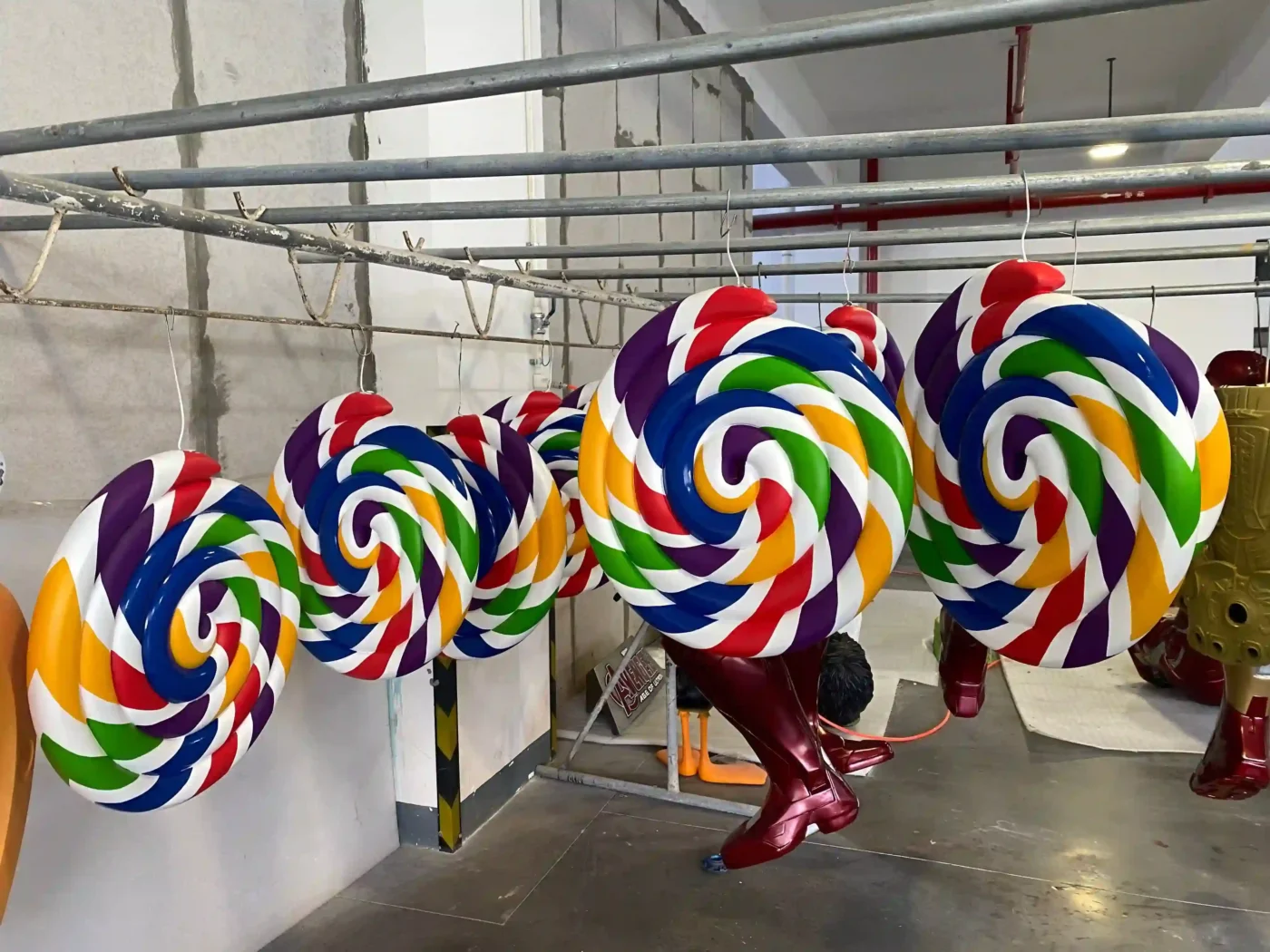
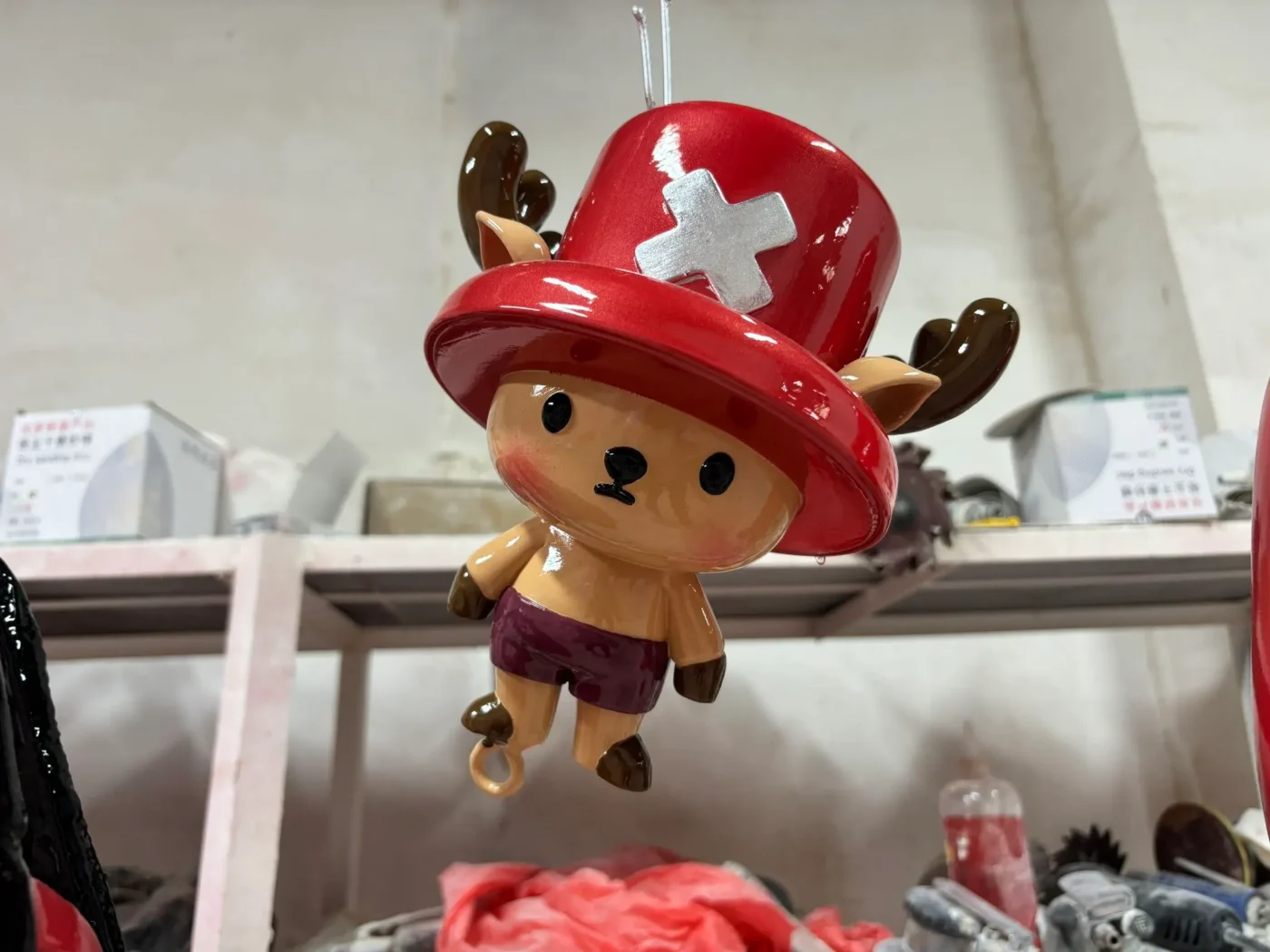
| FRP / Fiberglass | Large sculptural forms, characters, oversized ornaments, complex curved shapes | Lightweight relative to size, accepts many surface finishes (paint, flocking, electroplating, metalising), strong when properly reinforced | Requires mould investment; surface finish quality depends heavily on post-processing |
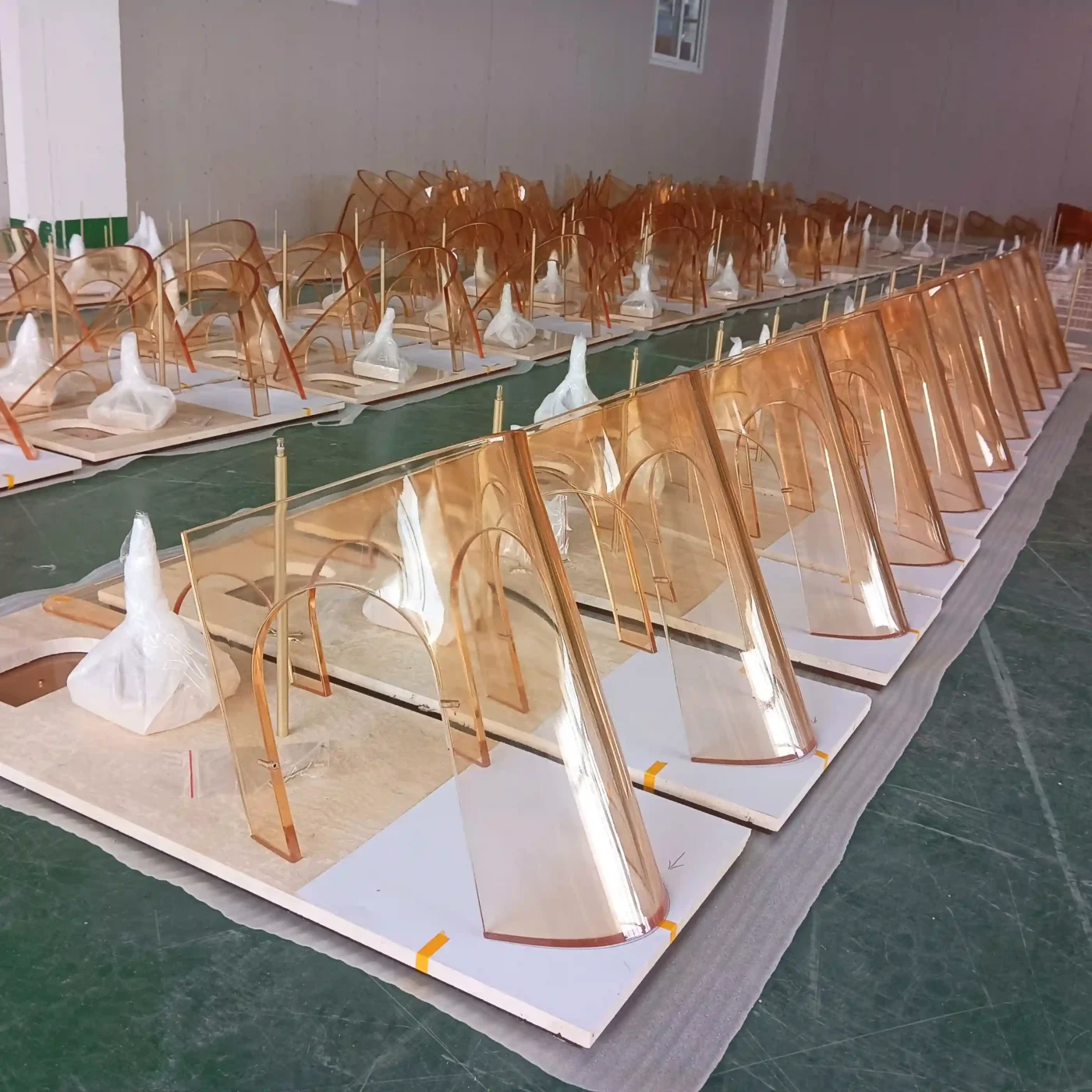
| Acrylic (PMMA) | Candy shapes, transparent elements, illuminated panels, logo signs, clean geometric forms | Bright optical clarity, compatible with LED backlighting, can be laser-cut or thermoformed | Scratches during transport if not properly protected; thicker sheets add weight |
| Metal (stainless steel, aluminium, iron) | Bases, hidden structural frames, hanging brackets, support rods, installation hardware | High structural strength, precise fabrication, durable | Heavier; usually hidden inside props rather than used as the visible surface |
| Wood / MDF | Plinths, platforms, backdrops, decorative frames, modular stage sets | Cost-effective, easy to modify, good dimensional stability | Requires sealing and finishing; heavier than FRP for equivalent volume |
A common approach for Christmas display props is to combine materials: an FRP shell for the visible sculptural form, a hidden metal frame for structural support, an MDF plinth for the base, and acrylic elements for any illuminated or transparent features.
The finish applied to the material surface is equally important. A red-and-white candy scheme, a champagne gold ornament palette and a matte white winter scene all start with the same base materials but require very different surface treatments — glossy spray paint, UV vacuum metalising, electrostatic flocking or hand-applied fabric wrap. The material and the finish should be discussed together, not separately.
For a deeper look at how these materials perform in custom display projects, reviewing the manufacturing process overview is a practical next step before finalising a design brief.
What Should a Prototype Prove Before Mass Production Begins?
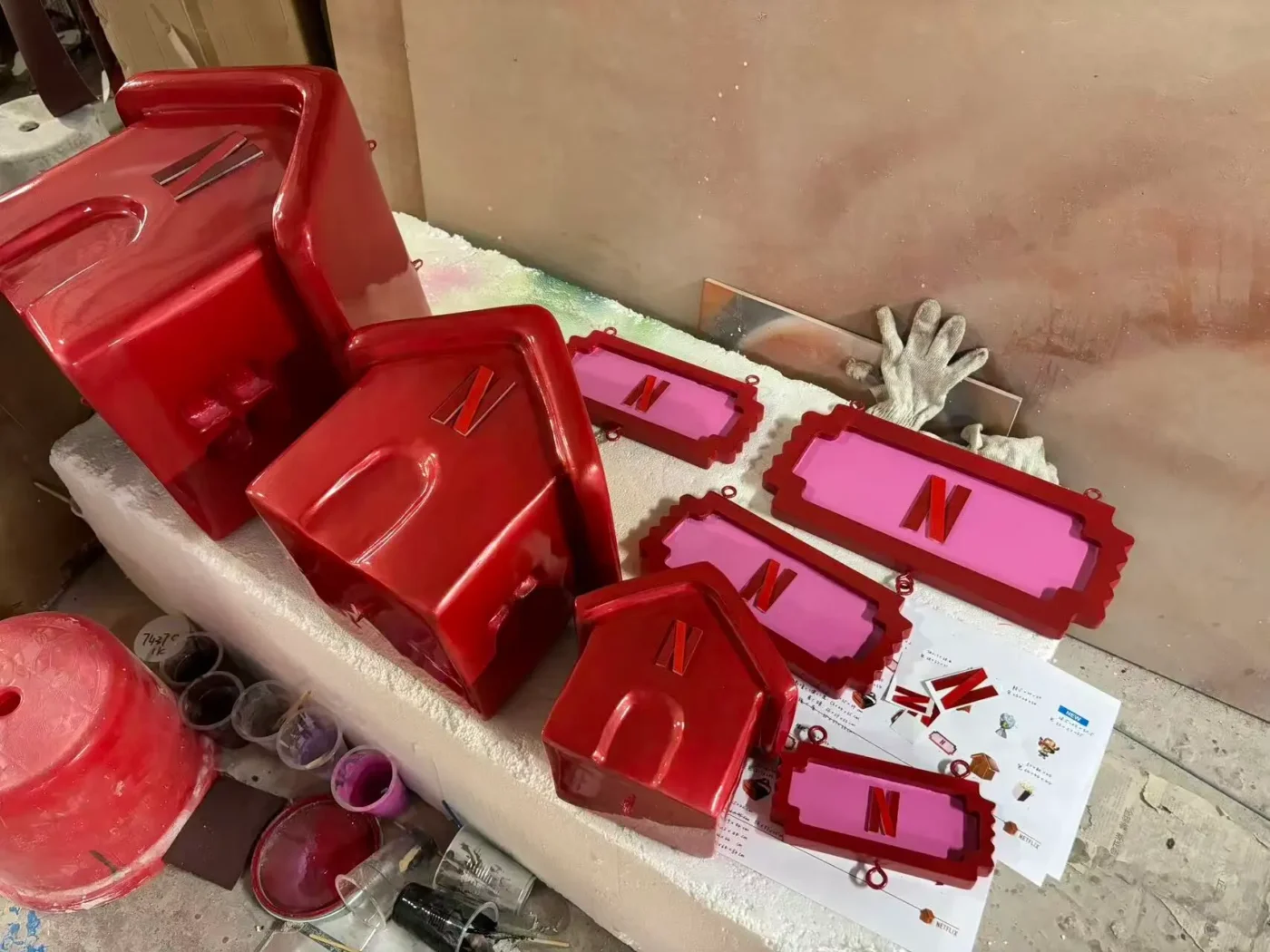
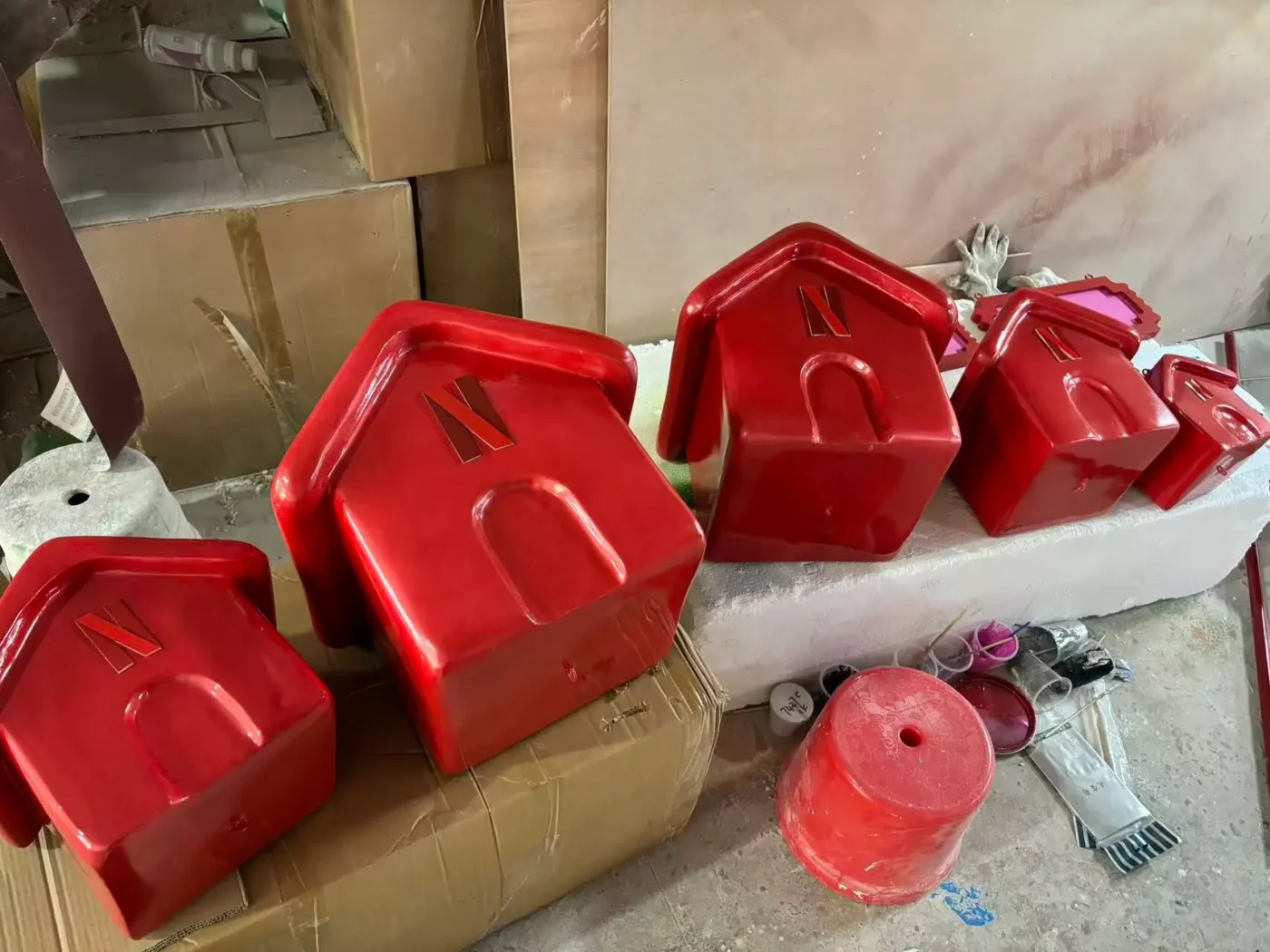
Christmas projects are emotional, colourful and urgent. That combination makes sampling more important, not less. A prototype is not only about checking whether the prop looks good. It should answer a set of practical questions that directly affect rollout quality.
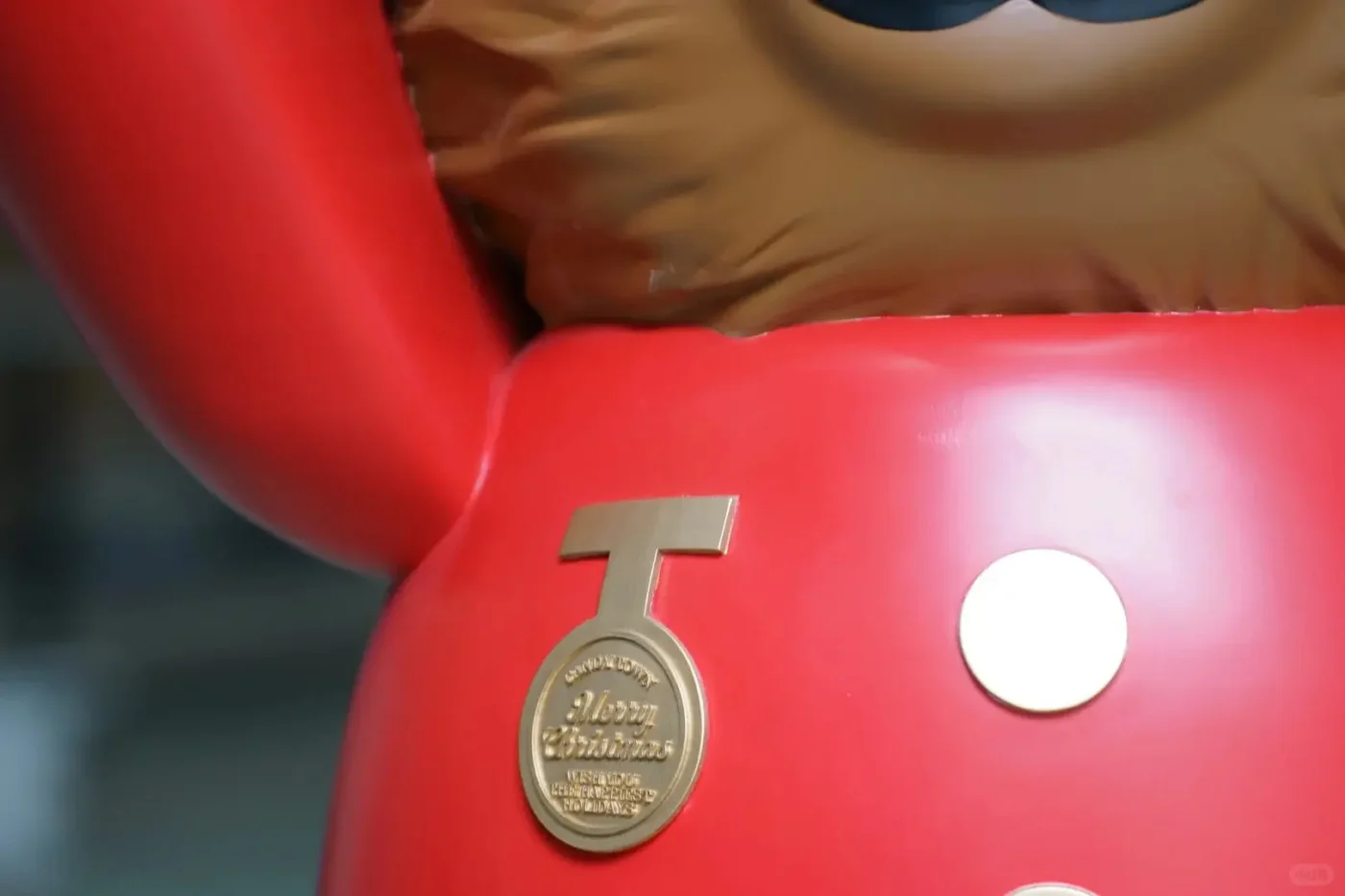
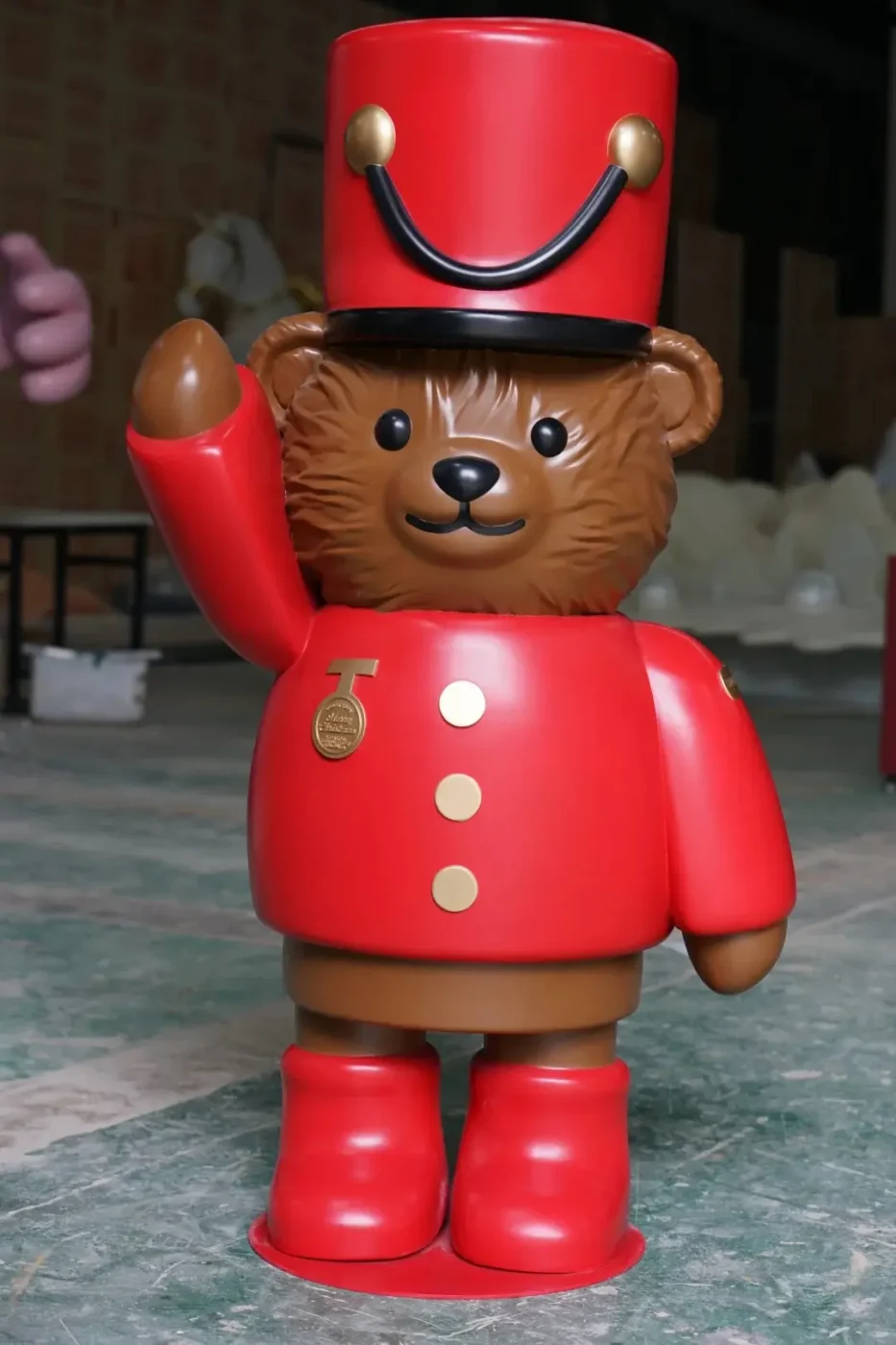
A well-managed sample approval should verify five things. First, colour accuracy — can the finish match the approved campaign palette under retail lighting, not just studio lighting? Pantone references, physical colour chips or approved benchmark samples are far more reliable than verbal descriptions like “gold” or “red.” Second, surface durability — will the finish survive handling by warehouse staff, store teams and shoppers brushing past it? Gloss level, flocking density, metallic reflection and printed logo sharpness all look different once they are physical objects rather than screen images. Third, structural stability — is the base weighted correctly, is the prop balanced, does it stand securely without additional support? Fourth, packability — can this object be protected, boxed and labelled without damage during transit? And fifth, installability — can a store team assemble or position it without specialist tools, drilling or structural modification to the store?
A render can sell an idea. A sample reveals the truth. For multi-store festive projects, approving production only from a rendering is a risk that usually costs more to fix later than it would have cost to sample properly upfront.
Early communication between VM teams and the factory during sampling also saves money. A small proportion adjustment, a surface treatment change or a base redesign during the prototype stage is routine. The same change after 200 units have been produced is painful and expensive.
Brands that need support across the full concept-to-production cycle can review custom visual merchandising services to understand how the process should flow from design interpretation through sample development, production updates and delivery planning.
How Should Packing and Labelling Work for a Multi-Store Rollout?
Many Christmas display projects fail quietly during packing and distribution. The prop may be beautiful, but if the carton is confusing, the labels are unclear or the installation sequence is not obvious, the store team loses time. During a holiday season, lost time is not a soft cost. It affects opening dates, campaign windows and the shopper’s first impression.
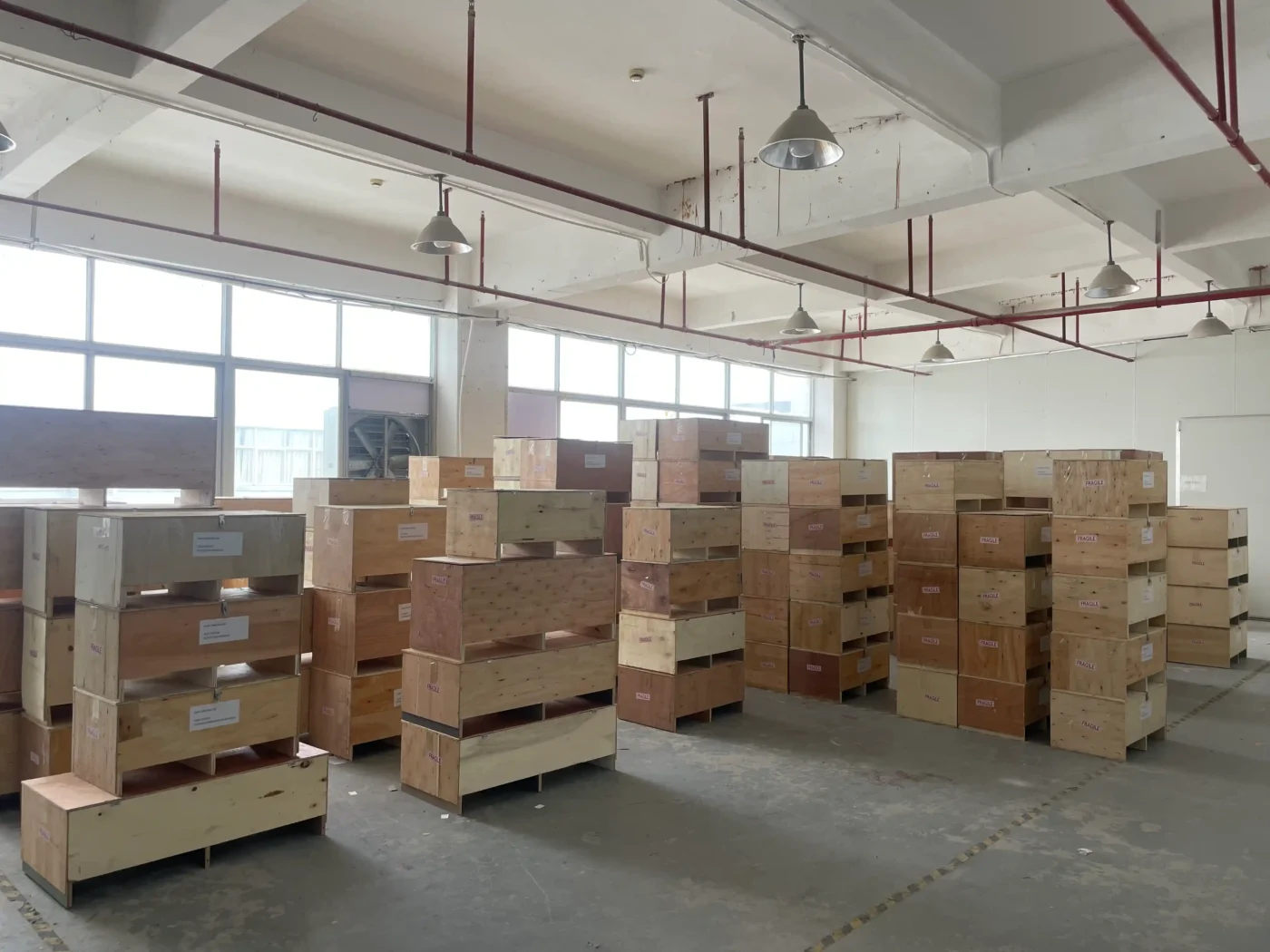
For a multi-store rollout, each carton should be labelled by store name or number, prop type, installation zone and assembly sequence. Fragile finishes need inner protective layers — foam lining for glossy acrylic, tissue wrap for metallic or flocked surfaces, corner guards for sharp edges. Large sculptural props may need wooden crates or reinforced cartons rather than standard corrugated boxes. Hanging ornaments should be packed to avoid compression. Components that assemble together should ship together.
The more stores involved, the more important standardisation becomes. A rollout should not rely on each store team figuring it out independently. It needs numbered parts, clear assembly diagrams and a packing method that keeps related components together.
Packing specification should be discussed during quotation, not after production. If the buyer only asks about unit price and ignores packing requirements, the final delivered cost — and the installation experience — can be significantly worse than expected.
NRF’s holiday preparation data is a useful reminder that the retail calendar moves faster than many production calendars. Props must clear customs, reach distribution centres and arrive at individual stores before the selling window opens.
What Should Brands Include When Requesting a Christmas Display Props Quote?
From a manufacturer’s side, the best Christmas display briefs share five characteristics.
First, store count. A single flagship window is a fundamentally different project from 60 identical store sets. The manufacturing method, tooling investment, quality control rhythm, packing plan and approval process all change with scale.
Second, a deadline defined by warehouse arrival, not campaign launch. If the campaign opens in mid-November, the props typically need to arrive at the distribution centre weeks earlier to allow for sorting, store-level allocation and installation scheduling.
Third, a finish standard with physical references. Descriptions like “gold,” “champagne” or “festive red” are starting points, not specifications. A Pantone number, a physical swatch, a reference image with lighting context or an approved sample from a previous project gives the factory something to match against.
Fourth, installation method. Standing props, hanging props, wall-mounted props and window-fixed props all require different internal structures, hardware and weight calculations. A standing candy cane and a hanging star of similar visual size may have completely different engineering requirements.
Fifth, replacement planning. Holiday displays are often installed quickly by local teams in compressed timeframes. Preparing spare small parts, touch-up paint or replacement components for high-risk items — particularly delicate finishes or protruding elements — reduces the chance of an incomplete display staying that way through the entire season.
When these details are clear from the beginning, Christmas display props become a managed production programme. When they are unclear, the factory spends time interpreting, and interpretation is not a reliable manufacturing method.
For reference on how different materials and display formats perform in real retail environments, browsing completed custom window display projects provides practical context.
A related product reference is Christmas candy window display props, which illustrates a common holiday challenge: the prop must look playful and festive, but still be light enough, stable enough and consistent enough for production at scale.
Final Thought
Retail Christmas window displays are not only about being festive. They are about building a temporary world that feels effortless to the shopper and controlled to the brand team.
The best displays hide their engineering. You do not see the reinforcement, the packing plan, the installation notes or the sample revisions. You only see the final scene. But from a production perspective, those invisible decisions are exactly what make the scene work.
For brands managing their own seasonal campaigns — particularly mid-sized brands working directly with a manufacturer rather than through an intermediary — the useful question is not only “what should it look like?” It is also “how will this be made, repeated, shipped and installed without losing the feeling?”
That is the question behind every serious Christmas VM production project.
For new festive campaigns, you can request a Christmas display props quote with reference images, target dimensions, quantity, material direction, finish references, installation method, delivery deadline and shipping destination.
FAQ
How early should brands start production for Christmas display props?
For multi-store rollouts with sea freight delivery, brands should ideally begin conversations with a manufacturer by April or May and have sampling underway by June. Projects starting in July are still workable but often require air freight, which raises costs. By August, launching a new custom sampling programme for a November installation is generally too late.
What materials are most commonly used for custom Christmas display props?
FRP and fiberglass are most common for large sculptural forms. Acrylic works well for candy shapes, illuminated elements and transparent features. Metal provides hidden structural support. Wood and MDF are used for plinths, platforms and backdrops. Most multi-store projects combine several materials in a single prop.
Can Christmas window display props be customised to match brand colours?
Yes. Colours, finishes, logos, lighting integration, dimensions and installation methods can all be customised. For accurate colour matching, brands should provide Pantone references, physical finish samples or approved visual guidelines rather than relying on verbal colour descriptions alone.
What should I include when requesting a quote for Christmas display props?
A complete brief typically includes reference images, prop dimensions, quantity, store count, target materials, surface finish specification with physical references, installation method, packing requirements, warehouse arrival deadline and shipping destination. The more complete the brief, the more accurate the quotation.
Are Christmas display props reusable across seasons?
Some props can be reused if they are designed with durable materials, modular construction, protective packing and careful storage. However, highly campaign-specific graphics, seasonal colour schemes or trend-driven themes may limit practical reuse to one or two seasons.
How does packing work for international Christmas display rollouts?
Each carton should be labelled by store, prop type, installation zone and assembly sequence. Large or fragile props may require wooden crates, foam inserts or reinforced cartons. Glossy, metallic and flocked surfaces need scratch protection. Packing specifications should be confirmed during quotation, not after production is complete.