Most seasonal display guides are written from the design side. This one is written from the production schedule.
A custom spring retail window display typically takes four to five months from first quotation to installed window. For a campaign going live in early May, that means the quotation is issued in December — while the Christmas windows are still standing.
That is not a scheduling preference. It is arithmetic. FRP floral sampling runs around 15 days from mould to electroplated sample. Production to ex-factory runs 20 to 45 working days. Sea freight to Europe or North America runs 40 to 50 days. Add design development, sample revisions, customs clearance and store-level distribution, and the calendar closes faster than most seasonal briefs assume.
What follows is that timeline broken down, with one worked example from a project we produced last year.
The Spring Timeline at a Glance
Working backwards from the day the window goes live:
| Stage | Duration | Notes |
|---|---|---|
| Quotation and material route agreed | 1–2 weeks | Faster when the RFQ includes dimensions and quantity |
| 3D modelling, design development, sign-off | 2–4 weeks | Sculptural floral forms sit at the longer end |
| Sampling — FRP floral, mould to electroplated sample | 15 days | Excludes client review and revision rounds |
| Sample approval and revisions | 1–2 weeks | Colour matching on pastels often adds a round |
| Production to ex-factory | 20–45 working days | Depends on complexity, finish and quantity |
| Sea freight to Europe or North America | 40–50 days | Port-to-port; excludes inland transit |
| Customs clearance and store distribution | 2–3 weeks | Multi-store rollouts need longer |
| Installation | 3–7 days | Per store, depending on complexity |
| Concept to installed window | 4–5 months |
Sampling and tooling overlap with production on multi-item sets, so the total is shorter than the sum of the stages. But the compression has limits, and sea freight has none.
A Worked Example: TOUS Jewelry, Mother’s Day
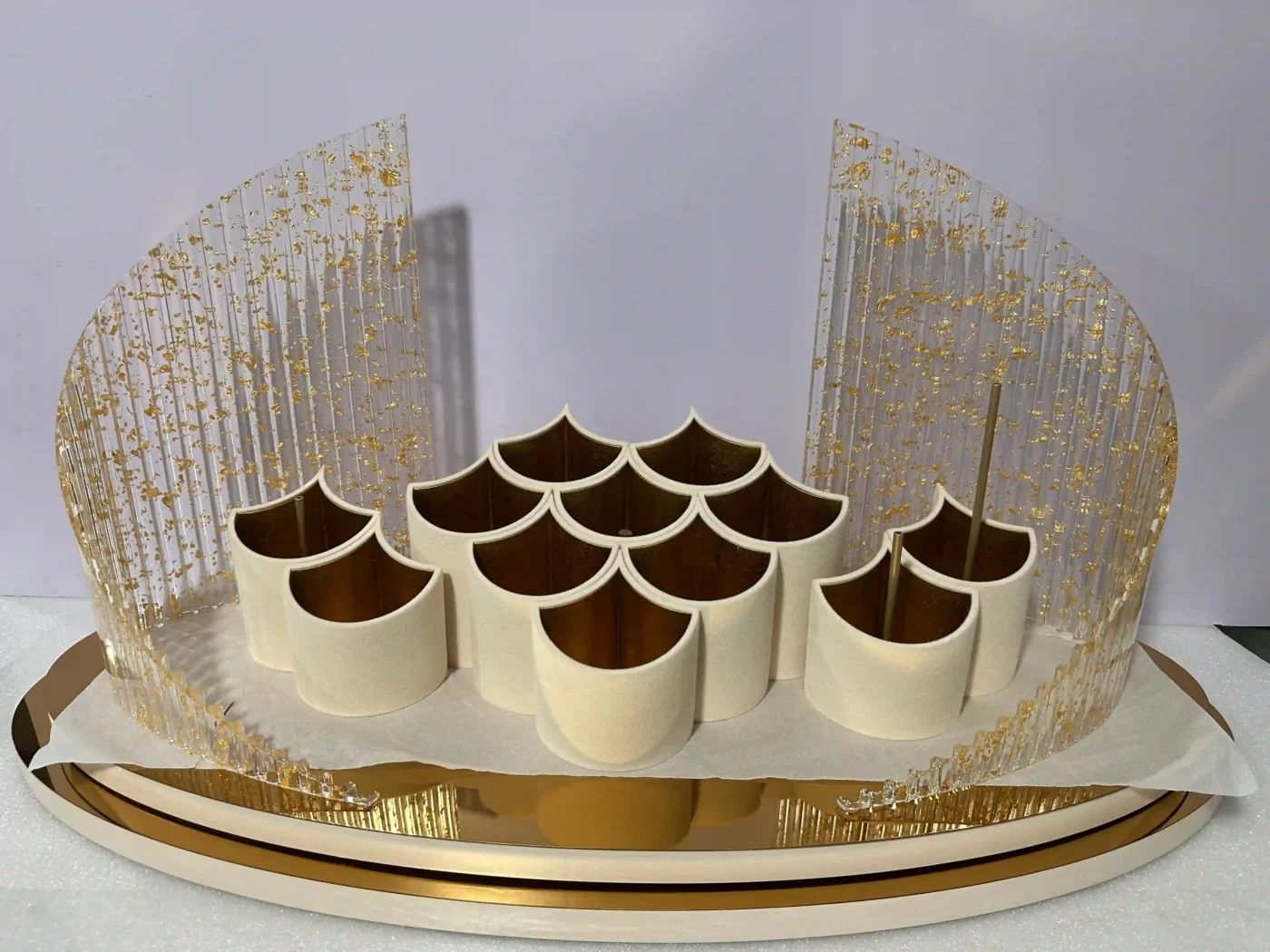
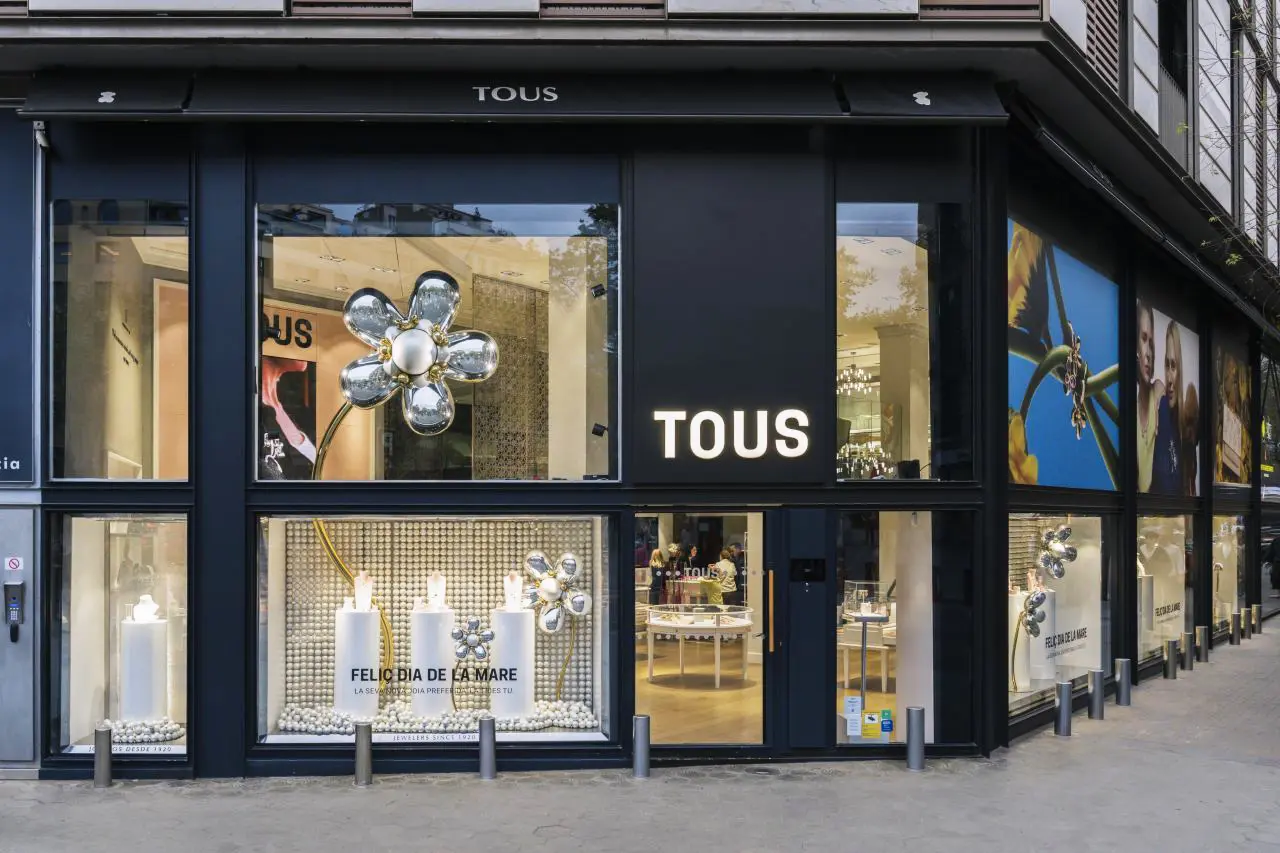
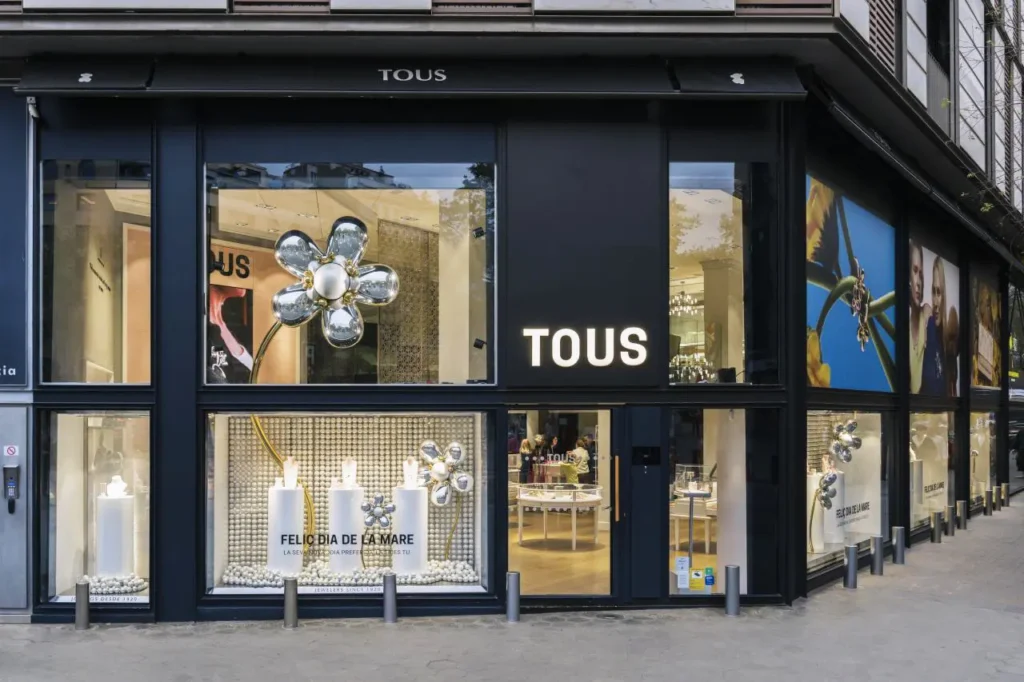
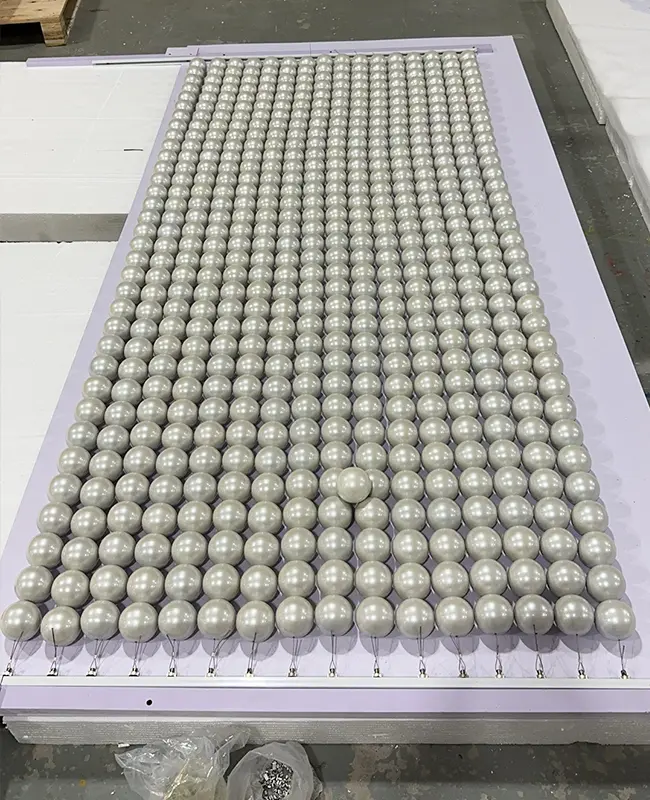
We produced the window display props for TOUS Jewelry’s Mother’s Day campaign, deployed across the brand’s Spanish flagships and key store locations globally. The build used FRP sculptural forms finished with UV vacuum metallizing.
The schedule ran as follows:
- December — quotation issued, production planning begins. At this point the brand’s Christmas windows were still installed.
- January — sampling and sample approval.
- Mid-February — ex-factory.
- Mid-February to late March — sea freight to Europe.
- April — customs, distribution, store installation.
- Early May — campaign live.
Five months, start to finish, for a campaign that occupies the window for roughly four weeks.
The full build is documented in the TOUS Jewelry Mother’s Day window display case study →.
Sea Freight Sets the Deadline
Of every stage above, sea freight is the only one that cannot be negotiated, compressed or resourced. Forty to fifty days is forty to fifty days.
This has a practical consequence that seasonal briefs consistently underestimate: the ex-factory date is not the deadline. It is the deadline minus roughly ten weeks. For a European or North American campaign, props leaving the factory in April will not be in the window for May.
Air freight exists as a fallback, and we have used it. But it changes the economics of a project substantially, and for FRP sculptural work — which is voluminous rather than heavy — the volumetric weight penalty is severe. Air freight is a recovery tool, not a plan.
The practical takeaway for agencies and brand VM teams: when a spring concept is still moving through internal approvals in February, the conversation to have with the manufacturer is not “can you produce faster” but “what can we redesign to ship smaller, flat-packed, or by air without the cost becoming unreasonable.” Those are different questions, and only the second one has good answers.
What 15 Days of Sampling Actually Covers
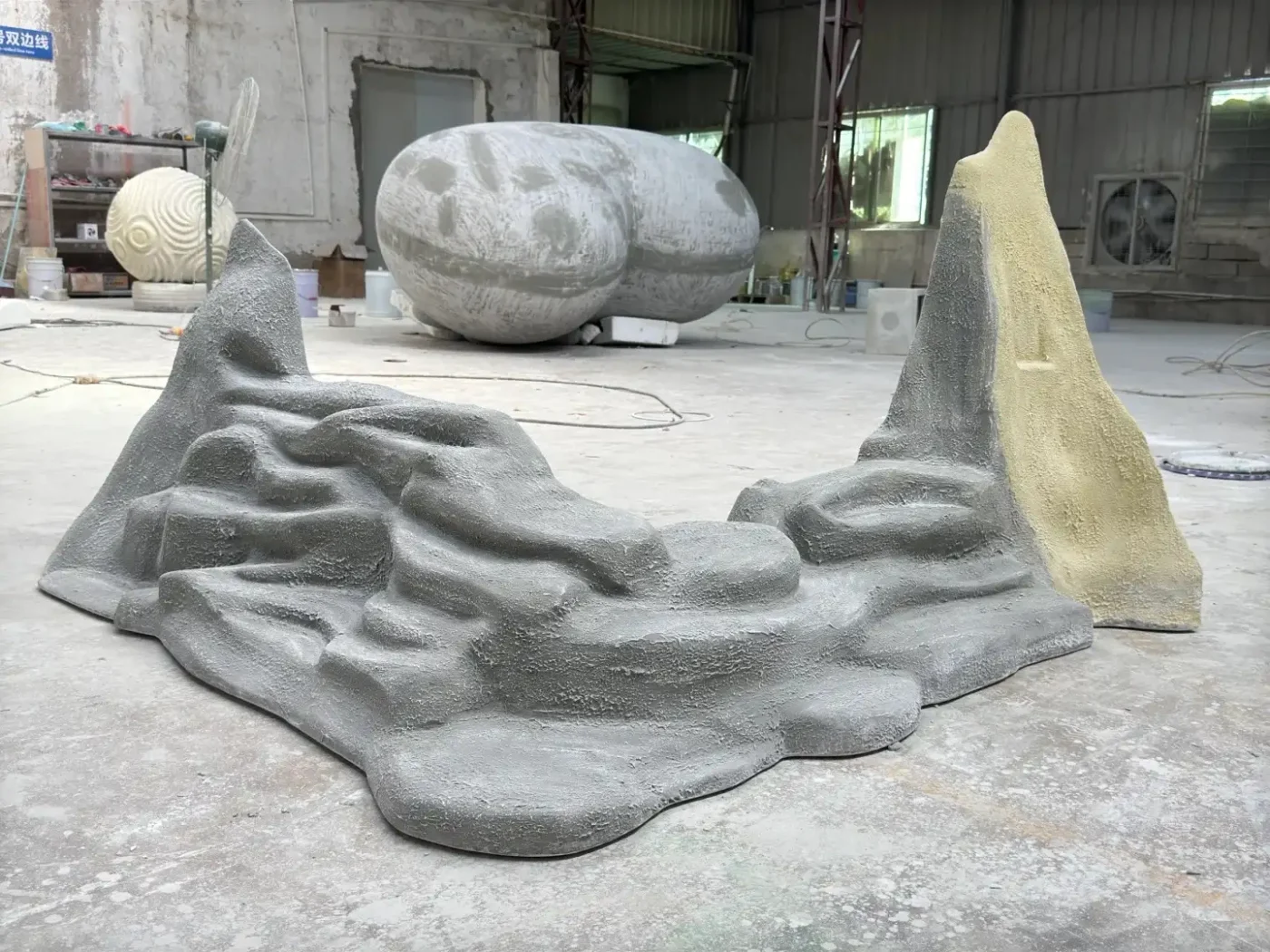
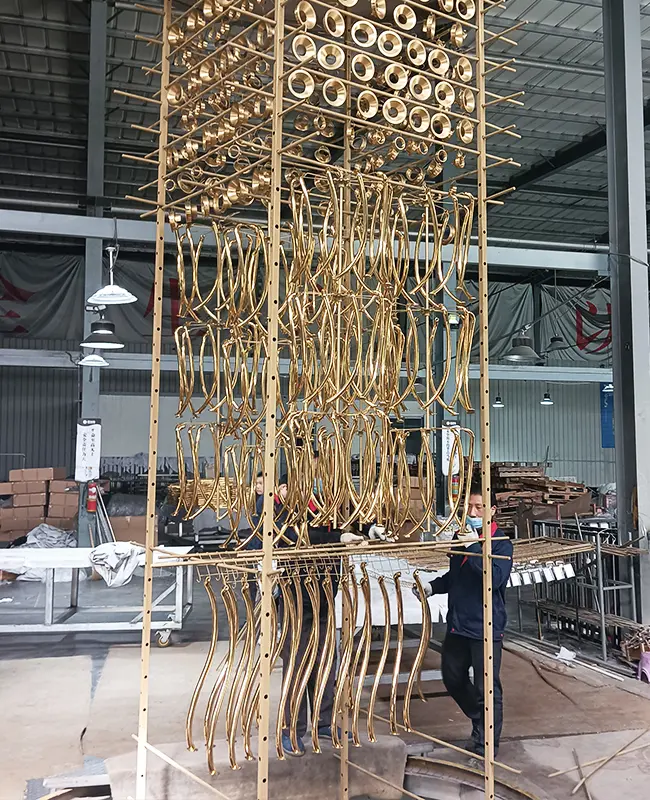
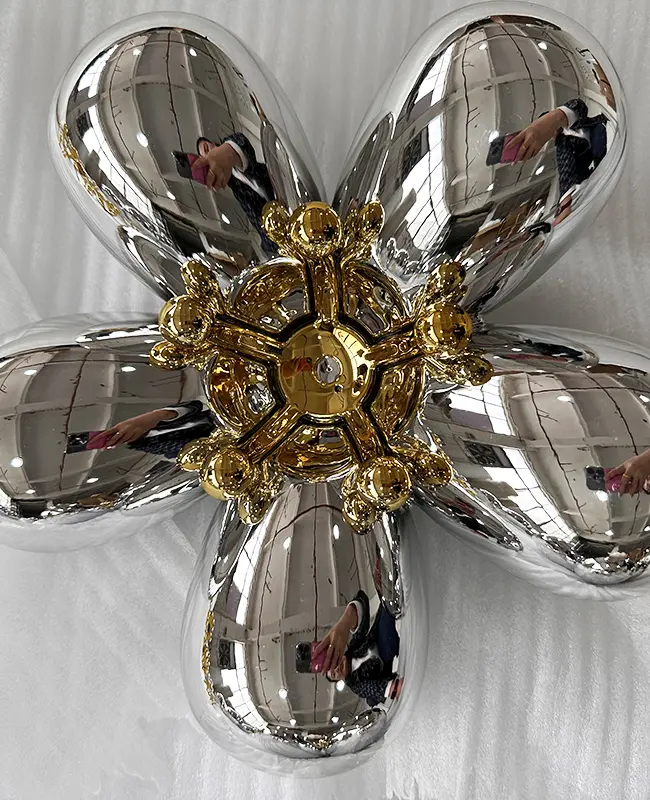
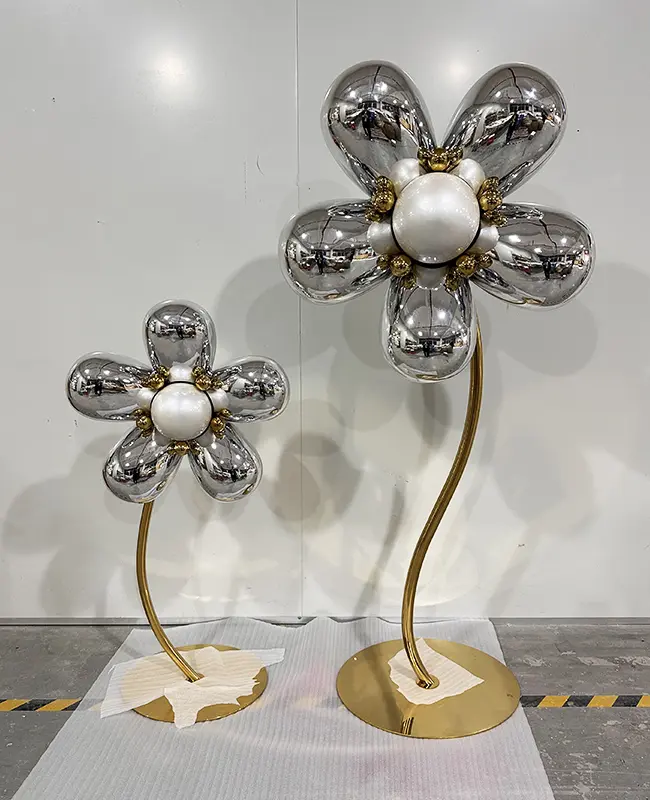
For a sculptural FRP flower — the most common spring prop request we receive — the 15-day sampling window covers the full route from mould to finished, electroplated sample:
- Mould making from the approved 3D model
- FRP layup and demoulding
- Surface preparation, filling and sanding
- Primer and base coat
- UV vacuum metallizing or PVD electroplating, where the finish calls for it
- Final inspection and photography for client review
What it does not cover is the client’s review time, or the revision rounds that follow. In practice, pastel and gradient finishes generate more revision cycles than any other spring finish category, because soft colour is unforgiving: a pastel that reads as elegant in the workshop can read as chalky under store lighting, and the correction happens at the sample stage or it happens on the shop floor.
Building two review rounds into the schedule is realistic. Building none is how spring projects slip.
Why Spring Props Are Harder to Build Than Christmas Props
Spring displays look gentler than Christmas displays. They are not easier to manufacture. They are harder.
A Christmas prop can carry a degree of theatrical exaggeration and still work — density, saturation and scale cover a multitude of finishing sins. A spring prop has nowhere to hide. If a petal edge is rough, the street sees it. If an acrylic panel is cloudy, the street sees it. If a pastel surface is uneven, the street sees it from further away than most people expect.
The elements that consume the most workshop attention on spring builds:
- Petal thickness and edge softness — the difference between a sculptural flower and a plastic one is almost entirely in the edge treatment
- Stem stability and hidden ballast — tall floral forms on small footprints need internal armature and concealed weight
- Colour consistency across batches — critical on multi-store rollouts, where two stores hanging different shades of the same blush is a visible failure
- Surface behaviour under store lighting — a finish is approved under workshop light and lives under spotlights
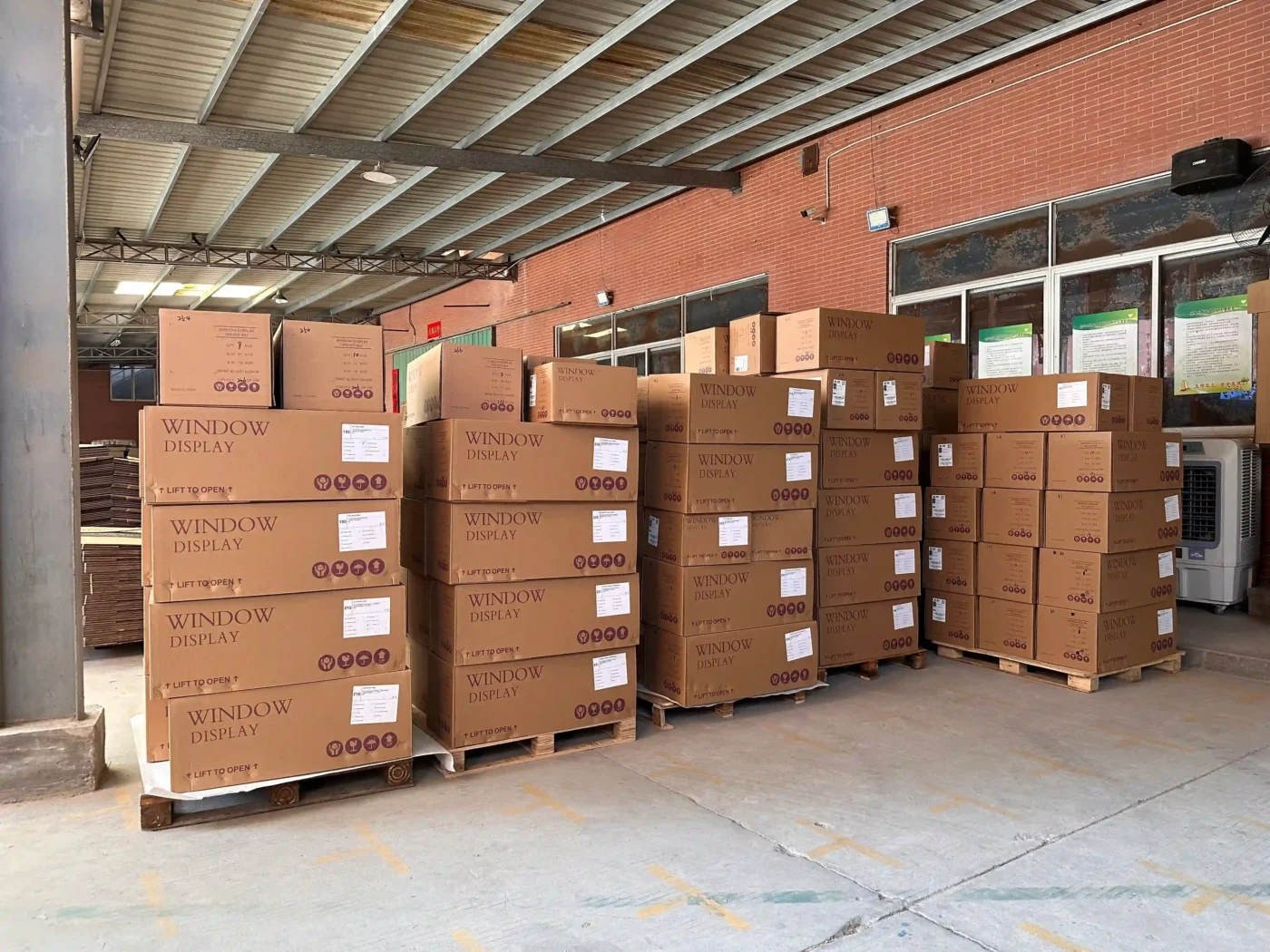
- Packing protection for curved and fragile forms — spring props are geometrically awkward to crate, and crating decisions affect both freight cost and arrival condition
The general rule: the softer the visual language, the more precise the manufacturing has to be.
Spring Directions That Manufacture Well
Not every spring window needs flowers. But a few directions recur because they hold up commercially and produce well:
Floral scale. Oversized petals, stems, vines and garden forms read from across the street and create instant seasonal recognition. For beauty, jewelry and fashion, they soften the window without weakening the product focus.
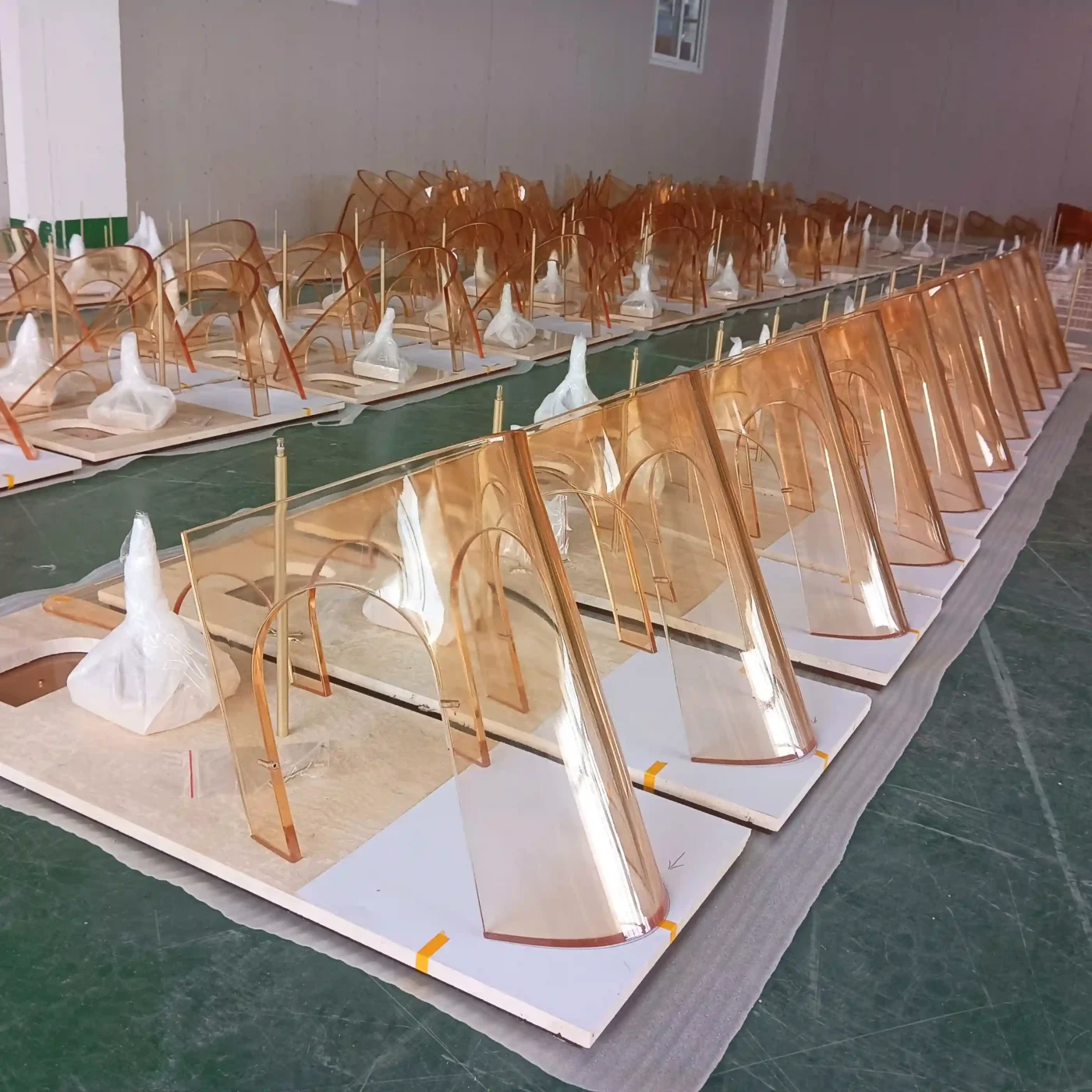
Transparency. Clear and tinted acrylic, light boxes, floating plinths. After a dense festive season, transparency is the fastest way to make a window feel lighter.
Controlled colour. Blush, ivory, sage, soft yellow, lavender. Effective, but only with disciplined finishing — a poorly executed pastel reads as cheap almost immediately.
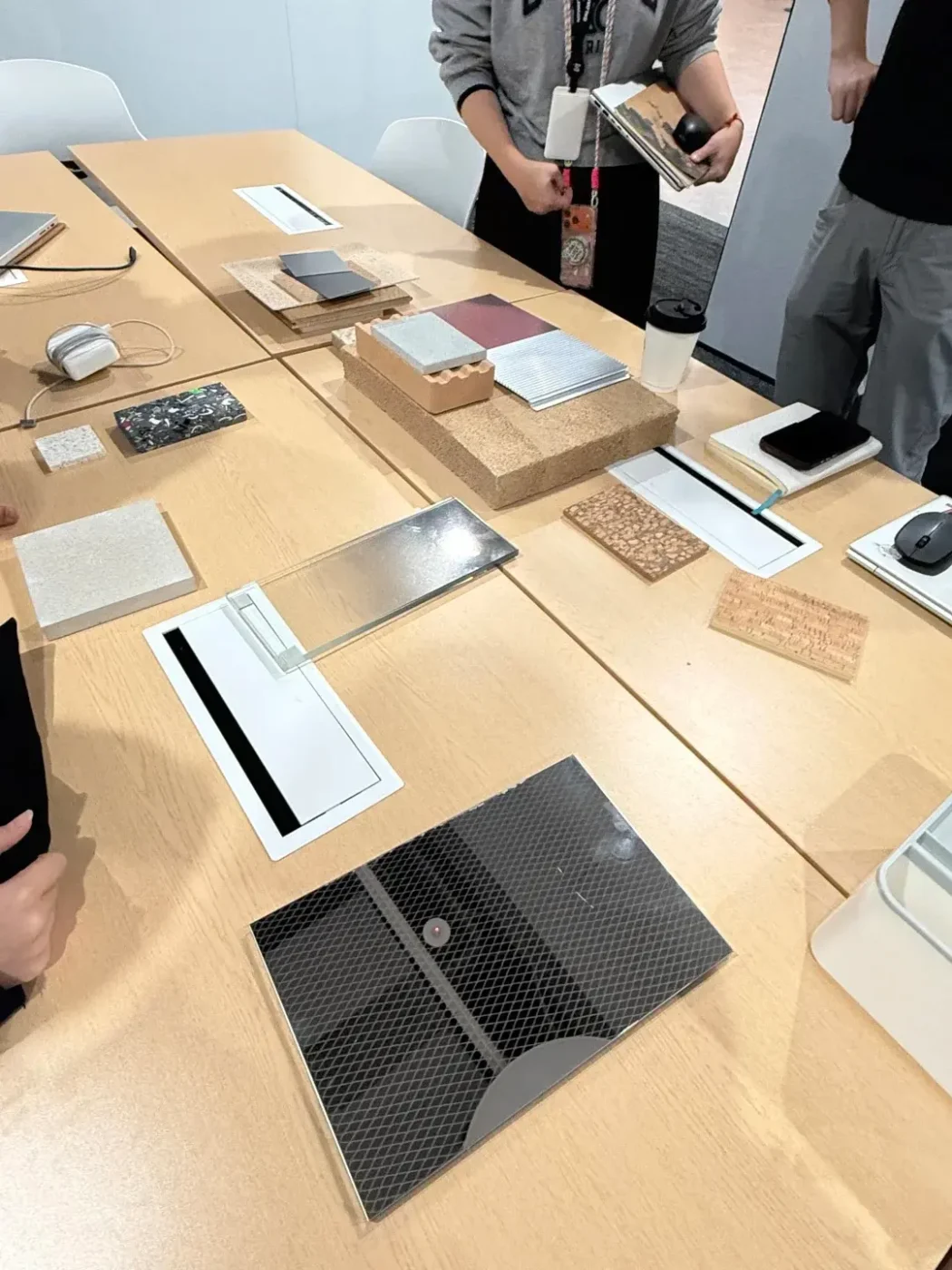
Natural material language. Timber, woven surfaces, fabric wraps, matte finishes. Makes a spring window feel crafted rather than manufactured.
Lightness and motion. Suspended petals, layered backdrops, slow rotation. Adds life without adding visual weight.
Which of these is right for a given window depends heavily on the format it sits in — a prop built for a closed flagship window behaves differently in an open department-store window. We covered that in the six types of window displays →.
Material route is the other half of the decision, and it is worth settling early because it drives both tooling cost and freight volume. Our guide to choosing between FRP, acrylic, metal, resin and wood → covers the trade-offs.
How Spring Display Quotes Are Structured
Custom display prop pricing has two components, and understanding the split answers most budget questions before they are asked.
Non-recurring engineering (NRE) covers 3D modelling, mould and tooling development, and sampling. It is charged once, regardless of how many units are produced.
Unit price covers the per-piece cost of materials, fabrication, finishing and packing.
The consequence is straightforward: NRE is fixed, so it dominates the total on small quantities and becomes negligible at scale. A design produced across 40 doors carries the same tooling cost as the same design produced for one flagship — spread across 40 units instead of one.
Can a brand with one to three stores order fully custom props? Yes. We produce single-flagship commissions regularly. But the tooling cost sits on a very small denominator, so the per-window figure is higher than a multi-store buyer would expect. That is a real constraint, not a policy — and there are three practical ways around it:
- Simplify the geometry. A form that can be pulled from a single-part mould costs meaningfully less to tool than one requiring a multi-part mould with undercuts.
- Choose a route without heavy tooling. Acrylic fabrication, metal fabrication and CNC-machined timber avoid mould costs entirely. For low quantities this frequently produces a better total than FRP, even when FRP would be the natural choice at volume.
- Design for reuse from the start. If the structure, finish and packing are planned for a second season, the tooling amortizes across two campaigns rather than one. Reuse has to be specified before production, not discovered after it — it changes reinforcement, finish durability and crate design.
We set out the material and tooling logic in more detail on our manufacturing capability page →.
What to Send for a Spring Display Quote
The completeness of the brief is the single largest variable in how fast a quotation comes back. A useful spring enquiry includes:
- Reference images or design intent
- Window dimensions, or at minimum overall prop scale
- Product category
- Quantity, and number of store locations
- Material or finish direction, if decided
- Colour direction
- Whether integrated lighting is required
- Indoor or outdoor placement
- Hanging or freestanding
- Campaign live date
- Destination country and delivery terms (DDP, FOB or EXW)
A full technical drawing is helpful but not required at first stage. And if the material is genuinely undecided, saying so is better than guessing — “we want this feeling, we are open on material” gives the manufacturer room to propose a better route than forcing a concept into the wrong process. An oversized flower that looks like it should be acrylic is often better in FRP. A transparent logo panel that looks like glass is usually safer and lighter in acrylic.
If you are working through a spring campaign now and want a production-side read on timing, material and freight before the design is locked, tell us about the project →. We come back with a material approach and an indicative schedule within two working days.
FAQ
How long does it take to produce a spring window display? Four to five months from first quotation to installed window for a custom project shipping to Europe or North America. The main components are 15 days of FRP sampling, 20 to 45 working days of production, and 40 to 50 days of sea freight, plus design development, sample revisions and customs clearance.
When should spring window displays be quoted? For a May campaign, December. Our TOUS Jewelry Mother’s Day project was quoted in December, went ex-factory in mid-February, and shipped by sea to Europe for a May installation. Simpler single-store displays with no sampling requirement can start later, but not by much — sea freight alone consumes six to seven weeks.
How long does FRP floral prop sampling take? Around 15 days from mould to electroplated finished sample. That covers mould making, FRP layup, surface finishing and metallizing or electroplating. It does not include client review or revision rounds, which are worth budgeting an additional one to two weeks for.
How long is sea freight for display props to Europe or North America? Approximately 40 to 50 days port to port, excluding inland transit and customs. Air freight is available but carries a significant volumetric weight penalty on sculptural FRP work, and is better treated as a recovery option than a planned route.
Can a brand with only one to three stores order custom display props? Yes. Tooling and sampling costs are charged once regardless of quantity, so the per-window cost is higher at low volumes than a multi-store buyer would expect. Simplifying the geometry, choosing a fabrication route without mould costs, or designing the props for reuse across two seasons all reduce that gap.
Can spring display props be reused? Yes, if reuse is specified before production. It affects material choice, structural reinforcement, finish durability and crate design — retrofitting reuse after a set has been built rarely works well.
Disclaimer
This article is published by VM Display Solution as a production note for retail brands, visual merchandising agencies and display project teams. Lead times quoted are typical ranges based on our own production data and vary by project complexity, material route and destination. Project details are published with client permission where a case study exists; unless separately stated in an official VM Display case study, no mention of any brand, agency or platform implies cooperation, endorsement or project involvement.