A factory tour can be impressive without being useful.
A clean showroom, a few machines and a wall of brand logos say little about whether a supplier can turn an approved window concept into 80 consistent store sets, protect a mirror finish across an ocean, or send the right fixings to every location.
A useful audit asks one question: can this supplier control the full path from approved design to installed window?
This checklist assumes you already have a shortlist. If you are still defining what kind of partner your project needs, start with [how to choose a window display manufacturer](内链:How to Choose a Window Display Manufacturer). An audit has a narrower job: to confirm that what a supplier said during quoting is backed by evidence.
Quick Answer: What Should a Window Display Factory Audit Check?
A window display factory audit should verify nine areas: manufacturing scope and outsourcing control, engineering, material traceability, sample and change control, color and finish approval, in-process quality checks, full assembly and packing, design confidentiality, and certificate validity. For each one, ask to see a record, a sample or a production area. A confident verbal answer is not evidence.
The Factory Audit Checklist
| Audit area | What to verify | Evidence to request |
|---|---|---|
| Manufacturing scope | Which processes are done on site and which by partner workshops | Production walkthrough, process map, incoming inspection records |
| Engineering | Renders are converted into buildable production drawings | Structural and exploded drawings from a past project |
| Materials | Approved materials are traceable to the order | Material labels, specifications, storage for sensitive surfaces |
| Samples and changes | The approved sample becomes the production reference | Retained master sample, signed approval, revision log |
| Color and finish | Finishes are approved under realistic lighting | Color chips, spray-out panels, gloss references |
| In-process QC | Quality is checked before final inspection | Inspection sheets, non-conformance records |
| Assembly and packing | Complete sets are test-assembled and packed by store | Mock-up photos, packing drawings, set labels |
| Confidentiality | Unreleased designs are protected | File access rules, photo policy, secure storage |
| Certificates | Documents match the actual site and scope | Issuer, scope, address and expiry on each certificate |
| Project ownership | One named person owns the project after deposit | Project manager contact, reporting format |
| Comparable work | Proof of similar material, scale and finish | Workshop, mock-up and installation photos |
1. Who Actually Makes Each Part of the Project?
Ask which processes will be completed on the site you are visiting and which by partner workshops.
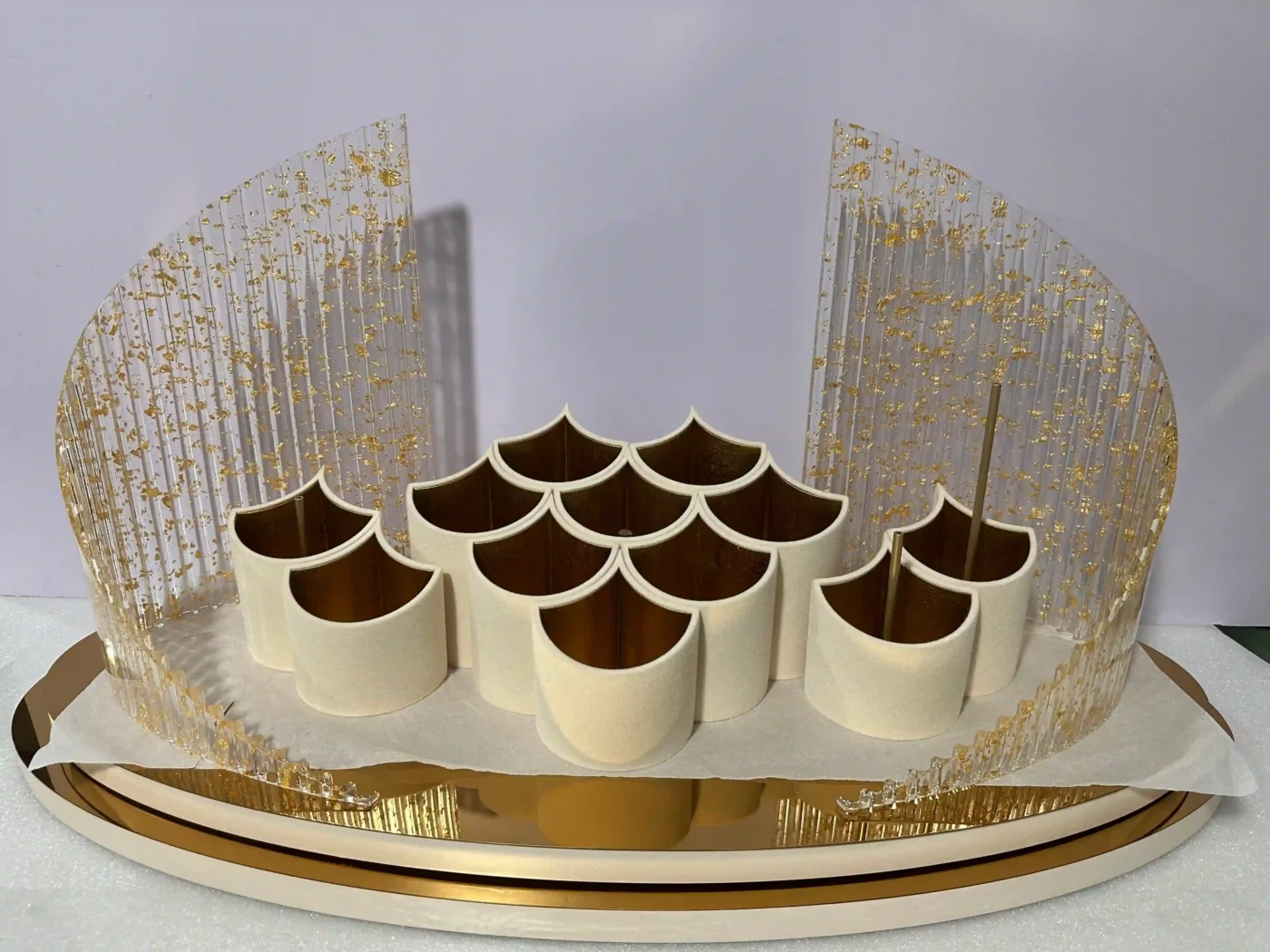
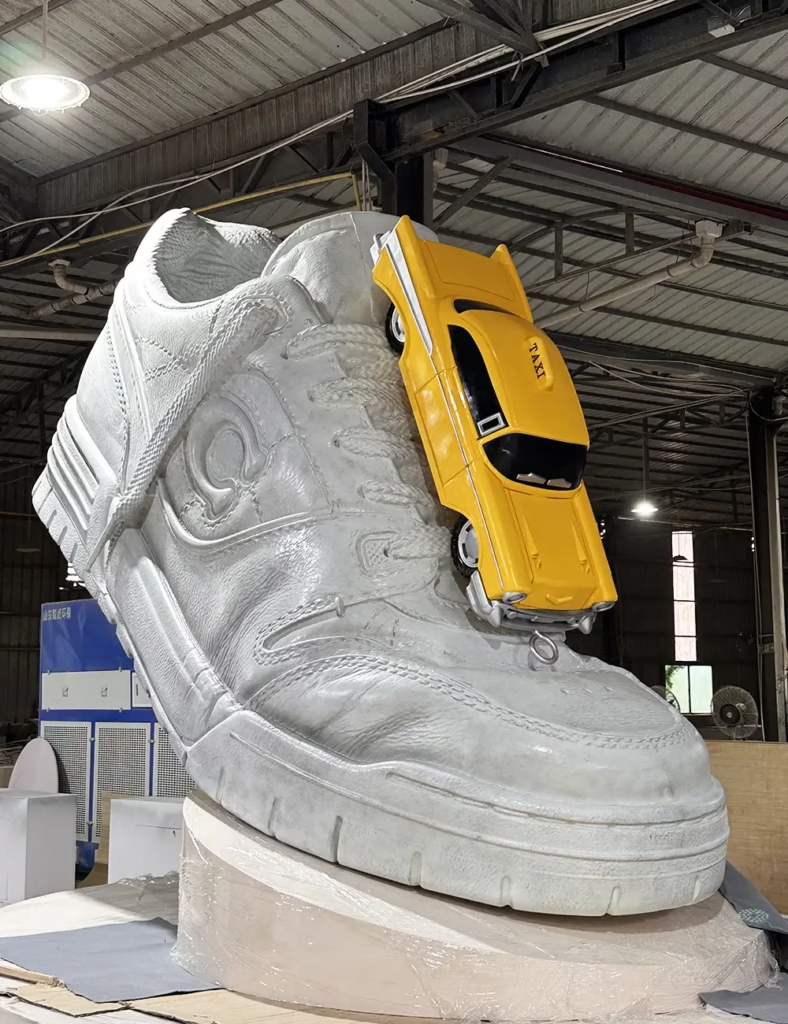
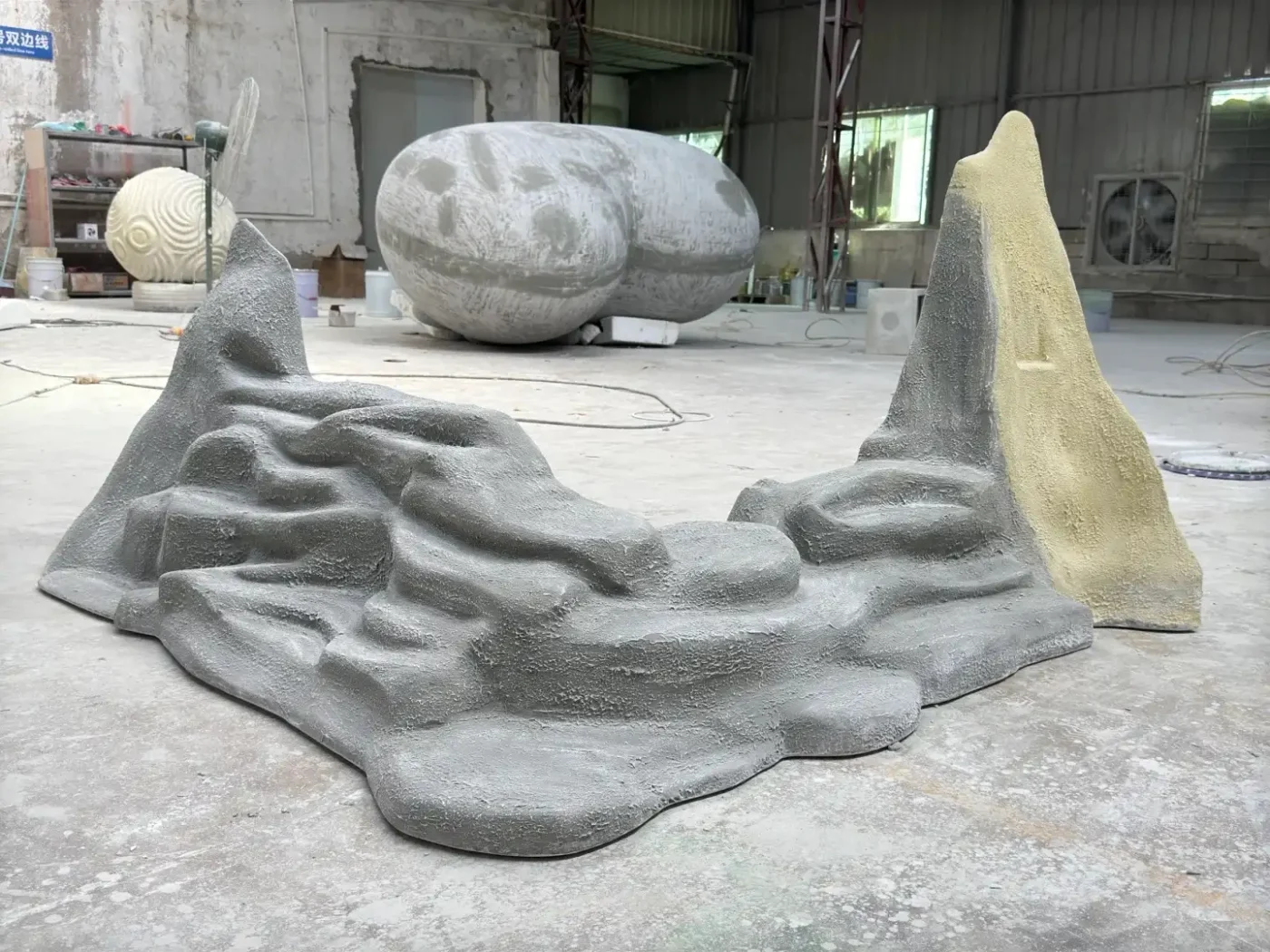
Partnered production is normal in this category. One window can combine FRP, metal, acrylic, lacquered wood, lighting and specialist coatings, and few sites do all of them well. The size of the building tells you little. What matters is whether one team holds every process to the same standard.
The supplier should be able to explain how drawings and color references reach each workshop, who inspects partner components before assembly, and who owns the correction when one fails. Partnered production without a named owner is where most batch problems start.
Evidence to request: a walkthrough of active production for your materials, a process map, incoming inspection records for partner components.
Red flag: a process happens “nearby,” but nobody can name who performs it, how it is checked or who fixes it.
2. Can the Team Turn a Render into Production Drawings?
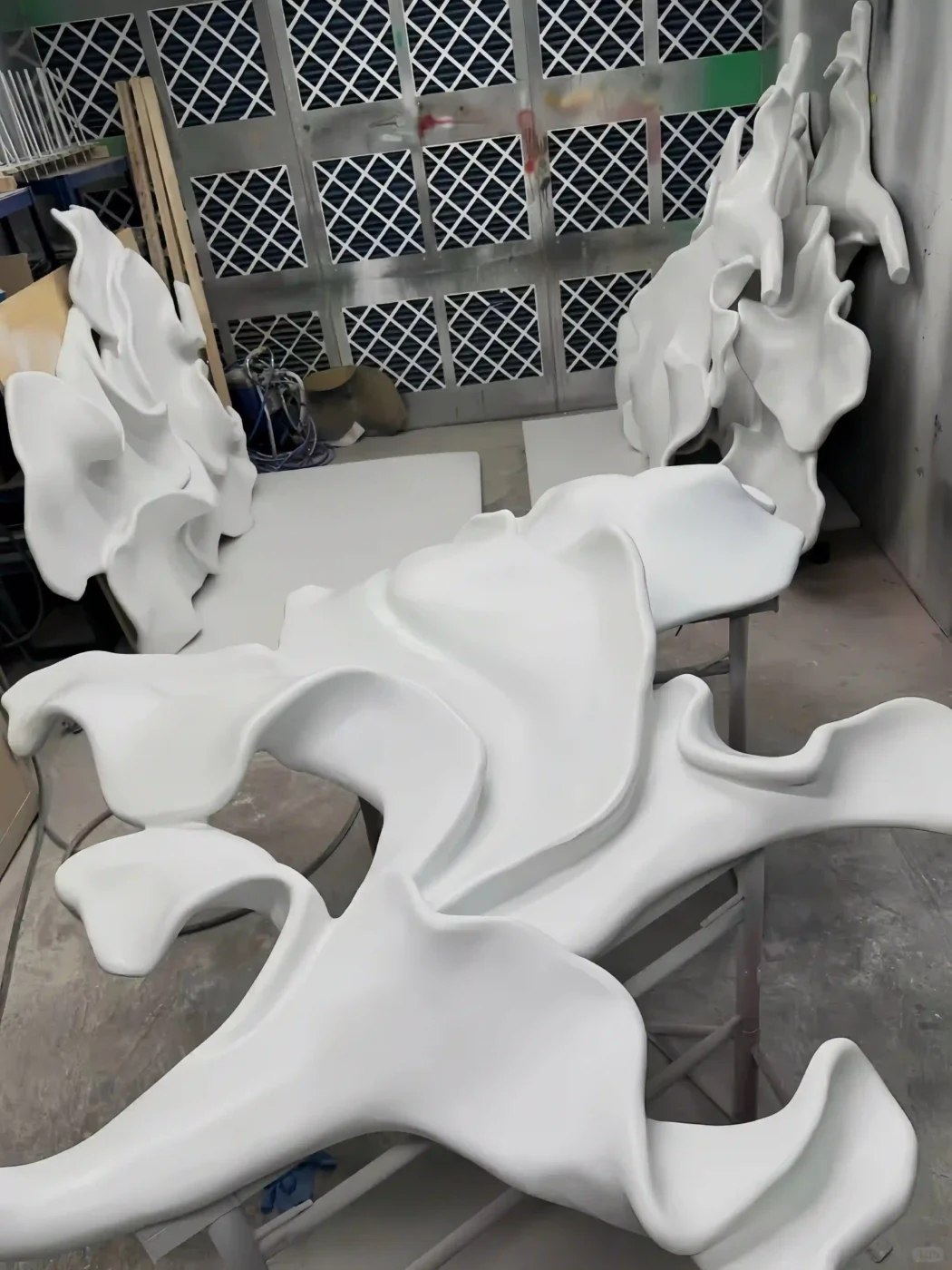
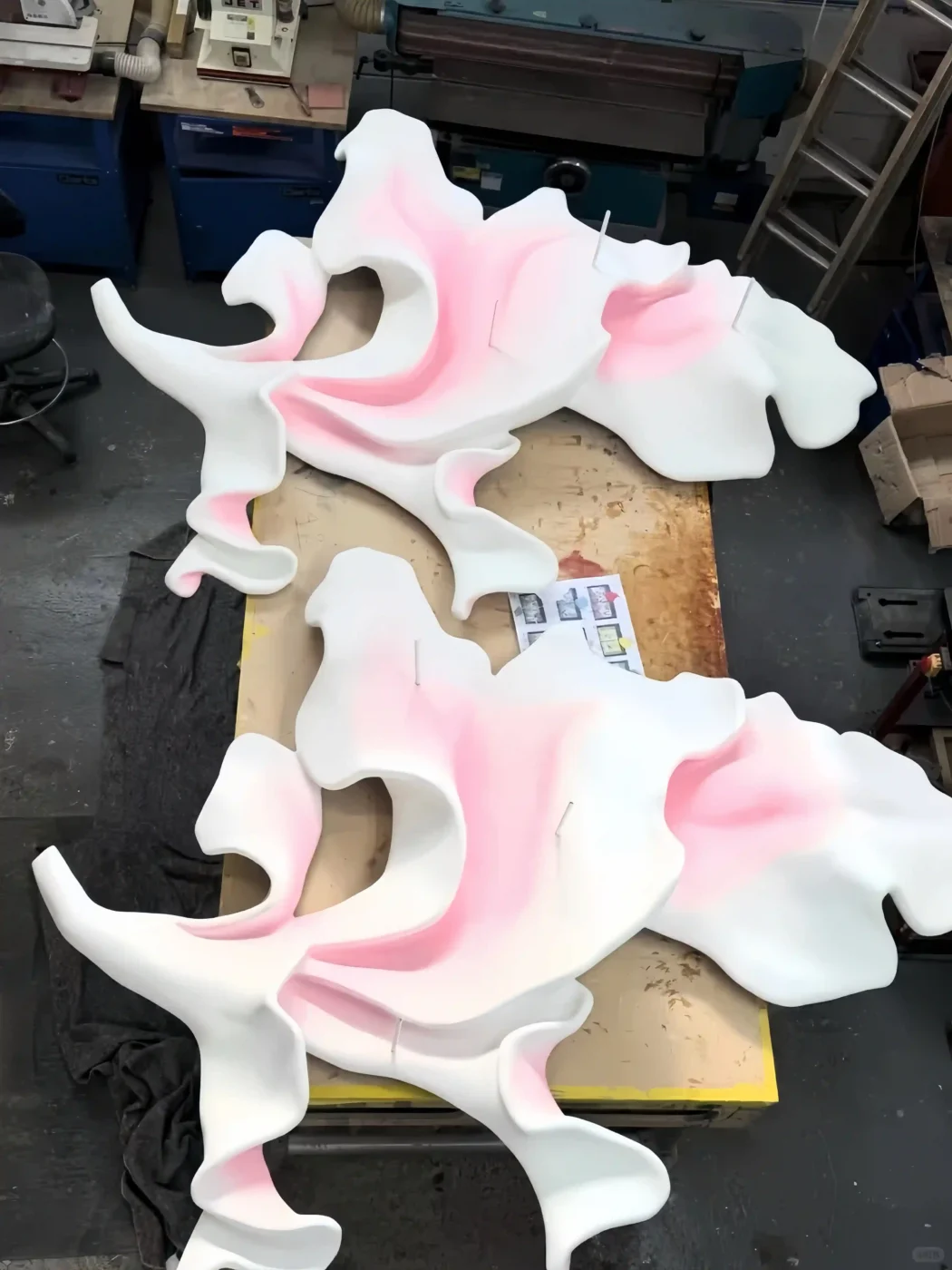
A render shows appearance. It does not define wall thickness, internal structure, joints, cable routes, fixing methods or how a piece splits for shipping.
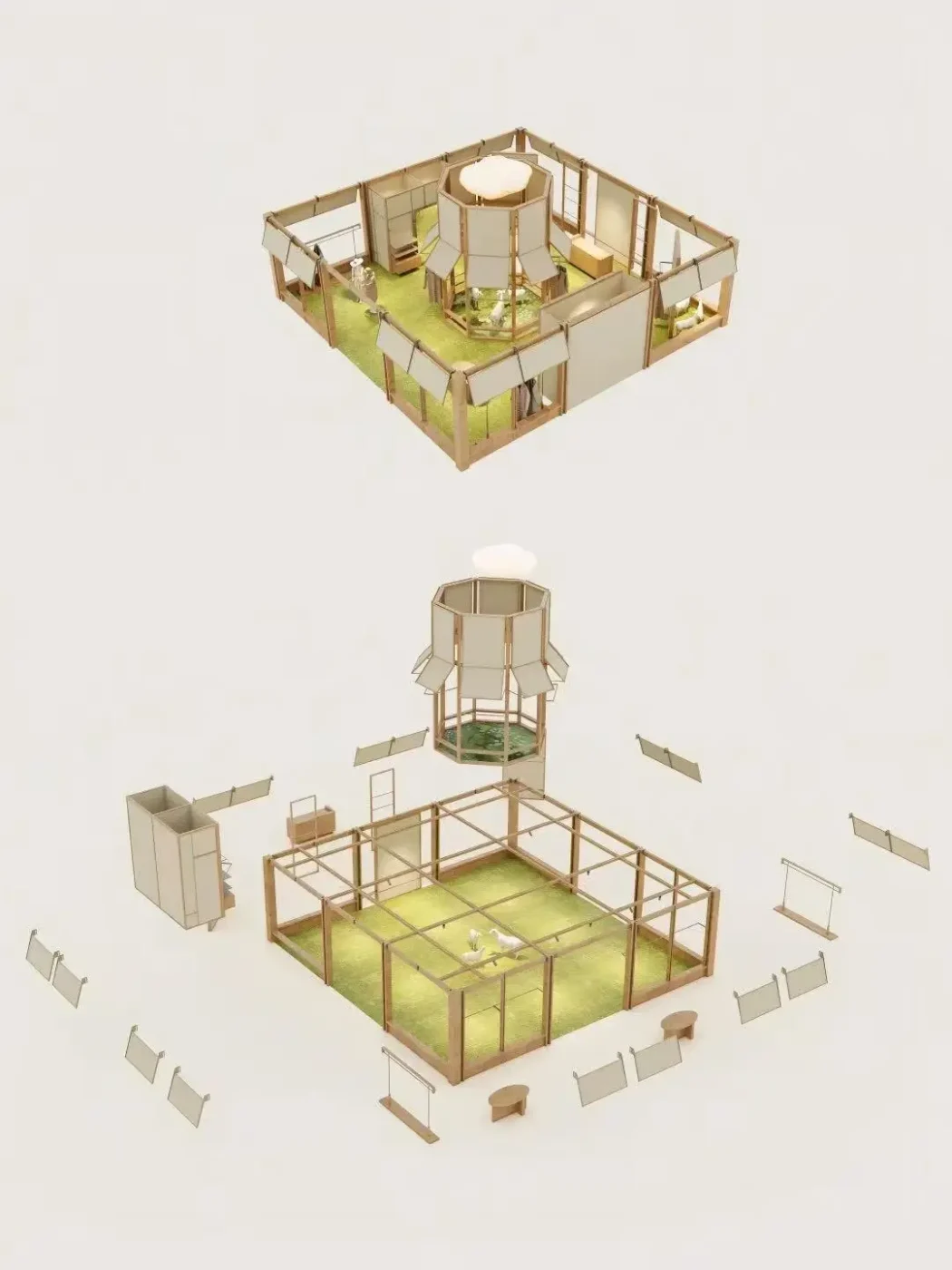
Ask to see how a past project moved from a design deck to production drawings. A strong team flags structural, finish and installation risks before material is cut. An oversized flower, for example, needs decisions on petal material, hidden steel, split lines and concealed fixings long before it looks like a flower. Our guide to 3D drafting for display props covers this step in more depth.
Evidence to request: exploded assembly drawings, structural drawings, wiring layouts, a disassembly or packing proposal.
Red flag: the quote arrived from a reference image, and nobody asked about dimensions, quantity, viewing distance or destination.
3. Follow One Material Across the Floor
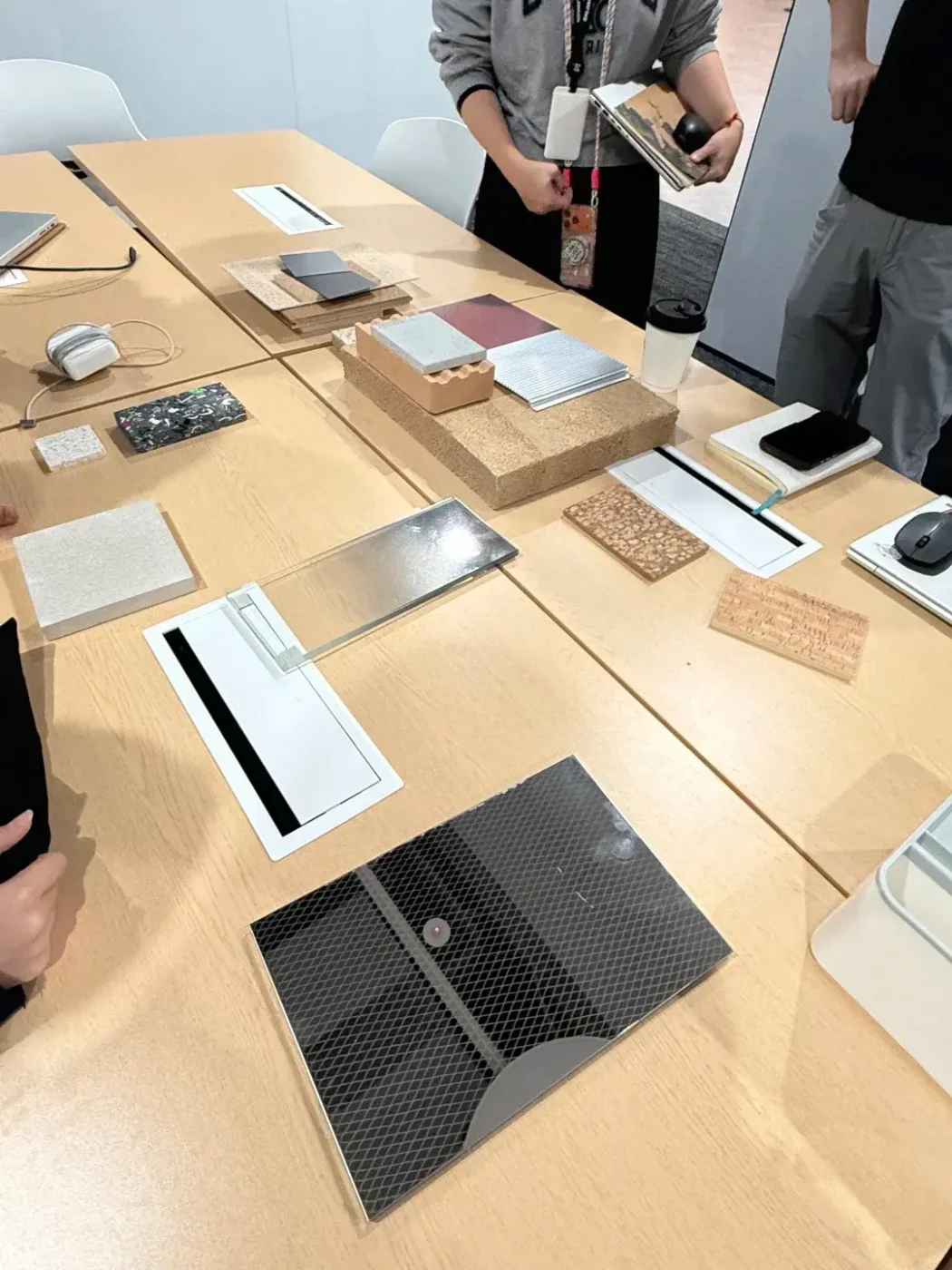
Material samples on a meeting table are easy to show. Control on the production floor is harder to fake.
Pick one material that matters in your window, such as cast acrylic for an illuminated logo or stainless steel for a mirror structure, and follow it from storage to a finished part. Ask how it is labeled, stored and matched to the approved specification. If materials are still open, our window display props guide explains how form, finish, weight and campaign length shape the choice.
Red flag: the supplier cannot tell the quoted material from a cheaper look-alike.
4. Is the Approved Sample the Production Standard?
An approved sample protects you only if the factory keeps it and builds to it.
Ask to see a retained master sample from a recent project, with its signed approval, date, drawing revision and finish references. Then ask how late changes are handled. A logo moved 20 mm or a satin finish switched to gloss can affect drawings, molds and packing. There should be a revision log and a clear way for outdated drawings to leave the floor.
For windows with several elements, one approved piece is not enough. See what to approve on a full-size window display prototpe before releasing production.
Red flag: mass production starts from photos because the physical sample has already shipped, or changes live only in chat threads.
5. Check Color and Finish Under Retail Lighting
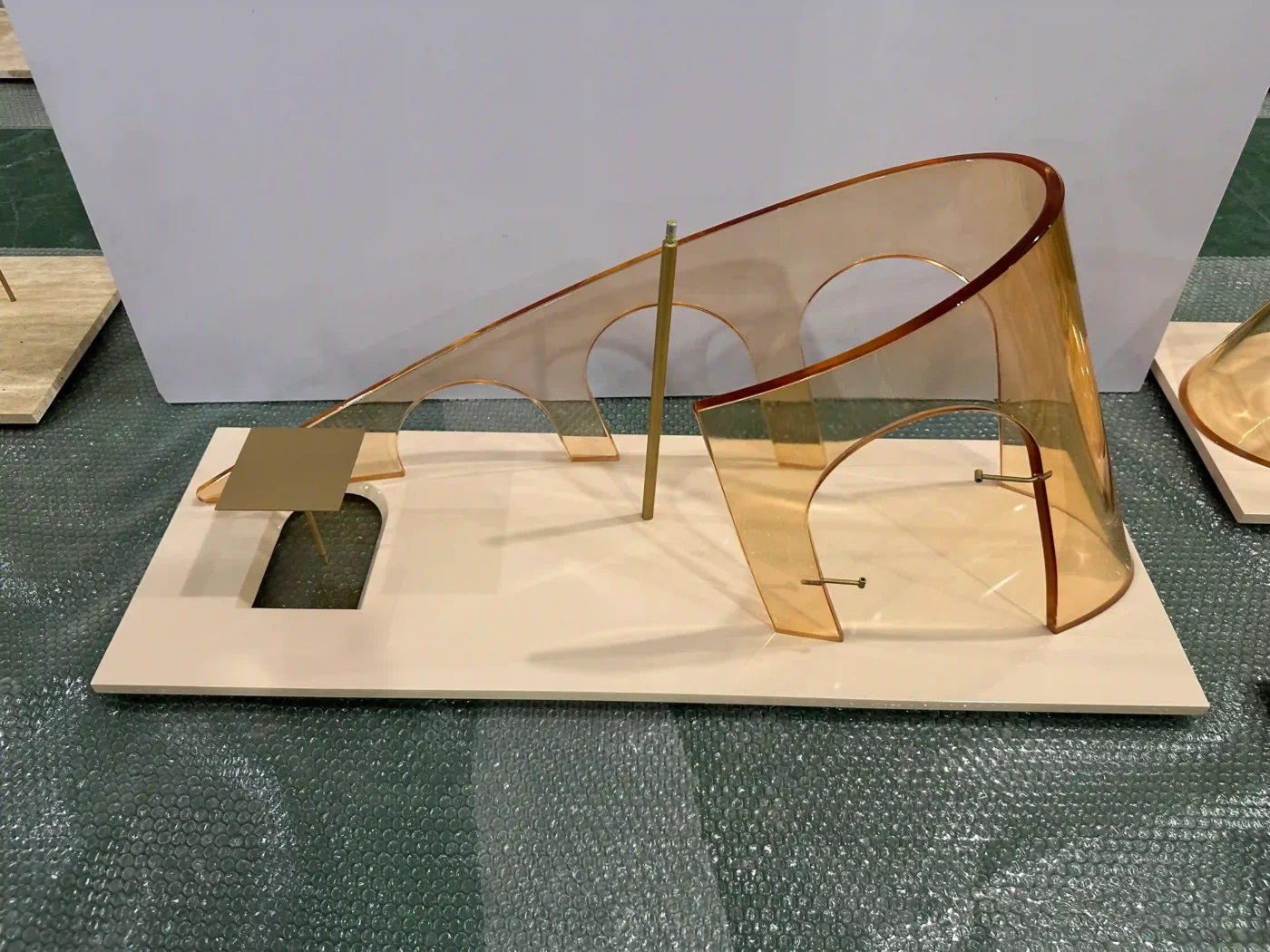
Window props sit behind glass under strong directional light, close enough for shoppers to notice sanding marks, glue lines and color drift.
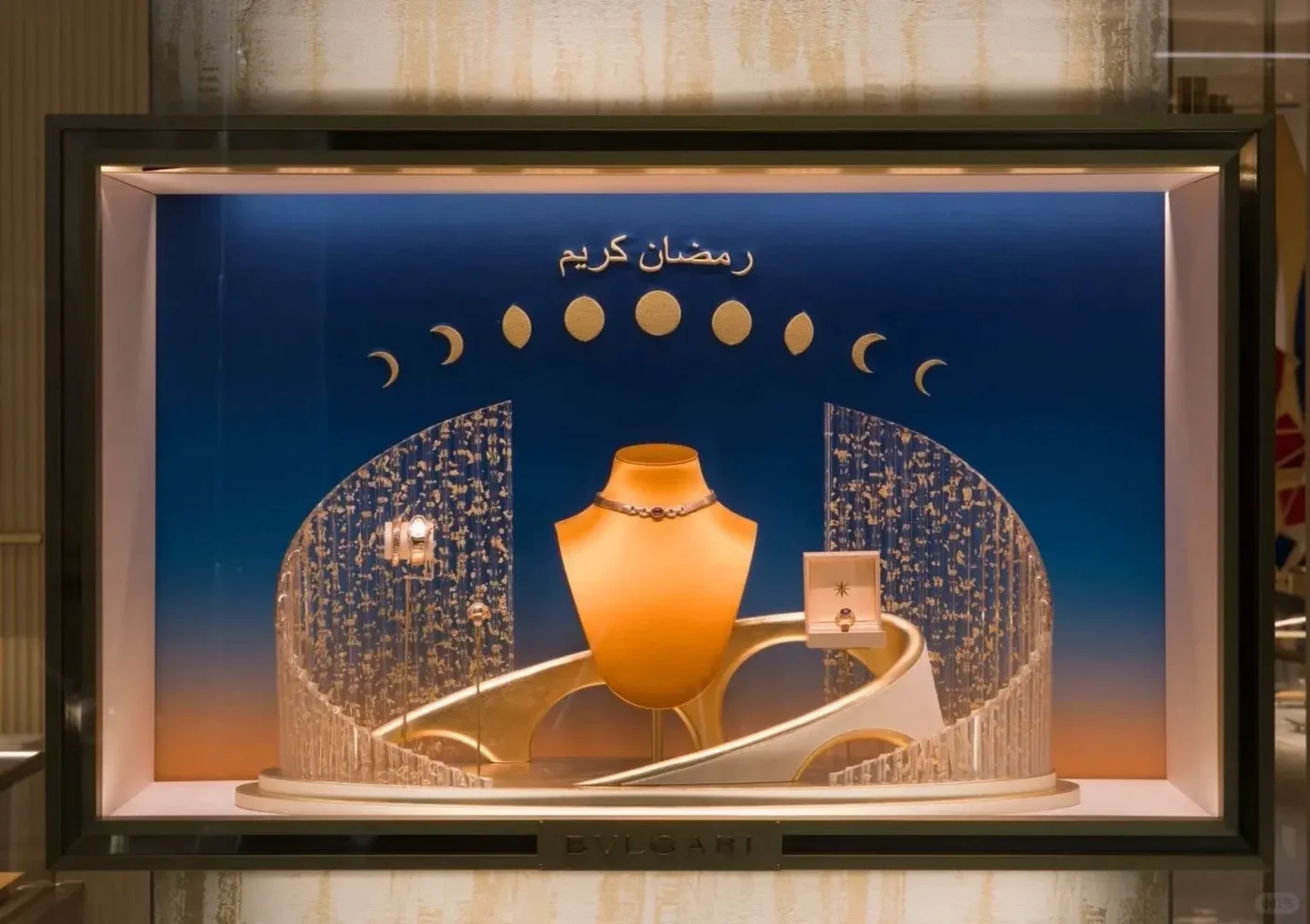
Ask where finishes are approved and under what light. Mirror surfaces should be checked with side lighting, acrylic diffusers while illuminated, and dark lacquers on a curved test piece rather than a small flat chip. The Michael Kors mirrored stainless steel display shows why finish-sensitive work needs evidence from both the workshop and the installed window.
Evidence to request: approved color chips, spray-out panels, gloss references, batch comparisons against the master sample.
Red flag: color was approved from a phone photo.
6. Where Is Quality Checked Before the End?
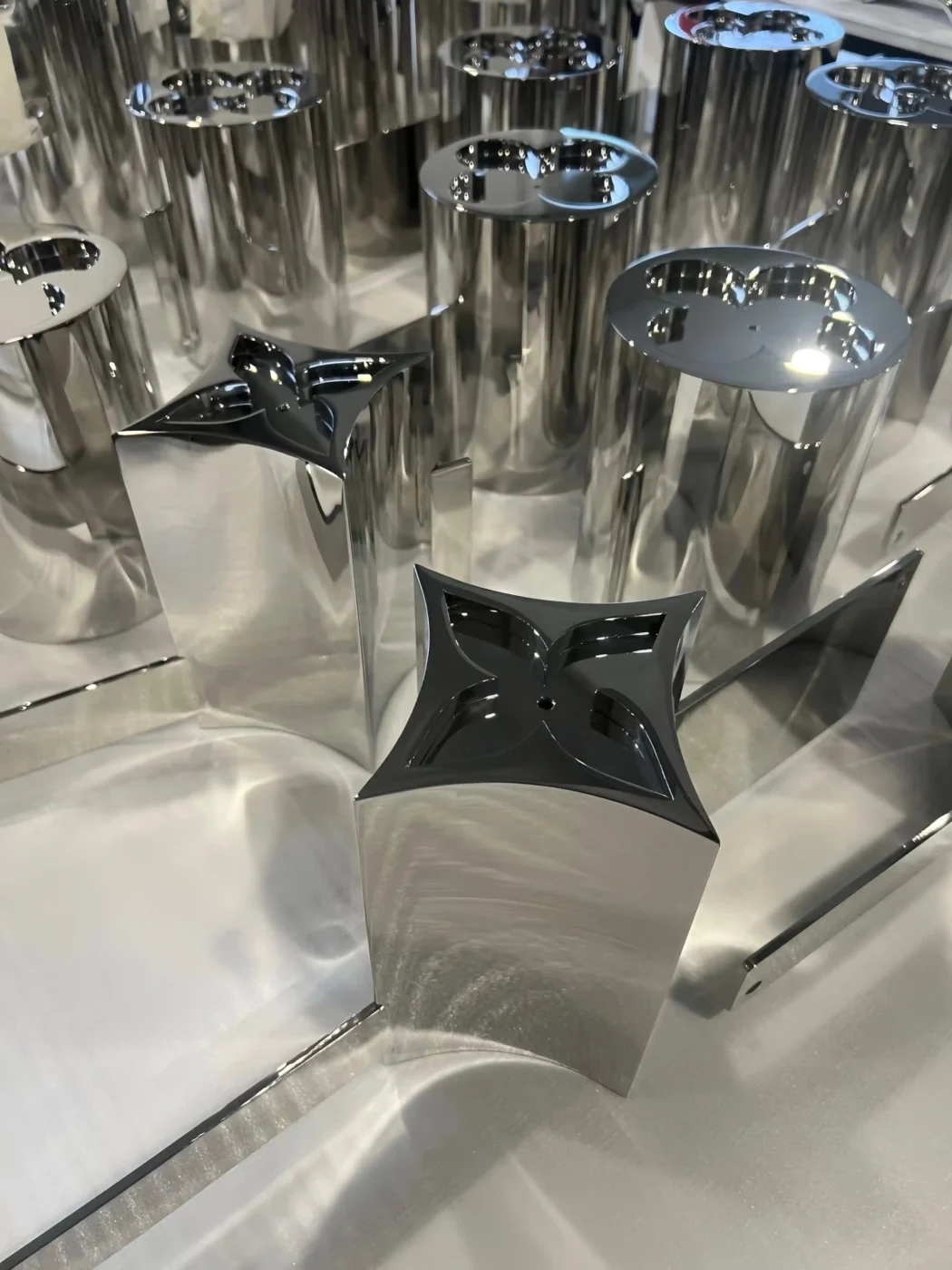
Final inspection cannot fix a weak FRP layup hidden under paint or a welded frame already out of square.
Ask where quality is checked during production: frame dimensions, raw fabrication, surface preparation before coating, electrical function, then final appearance. Each check should leave a record.
Evidence to request: in-process inspection sheets with names and dates, non-conformance records, one example of a corrective action.
Red flag: the entire QC process is “our manager checks everything before shipping.”
7. Full Assembly and Packing Before Shipment
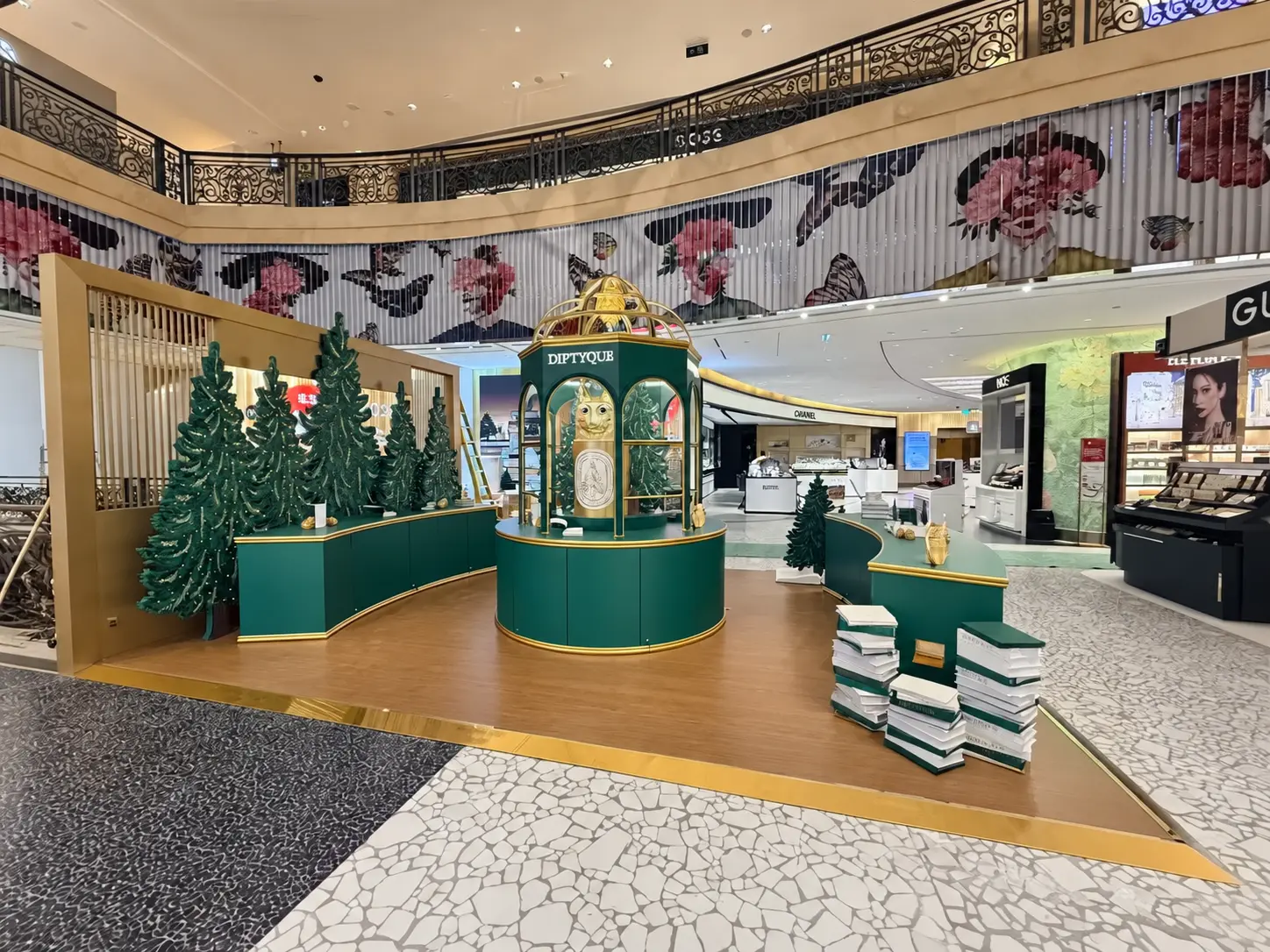
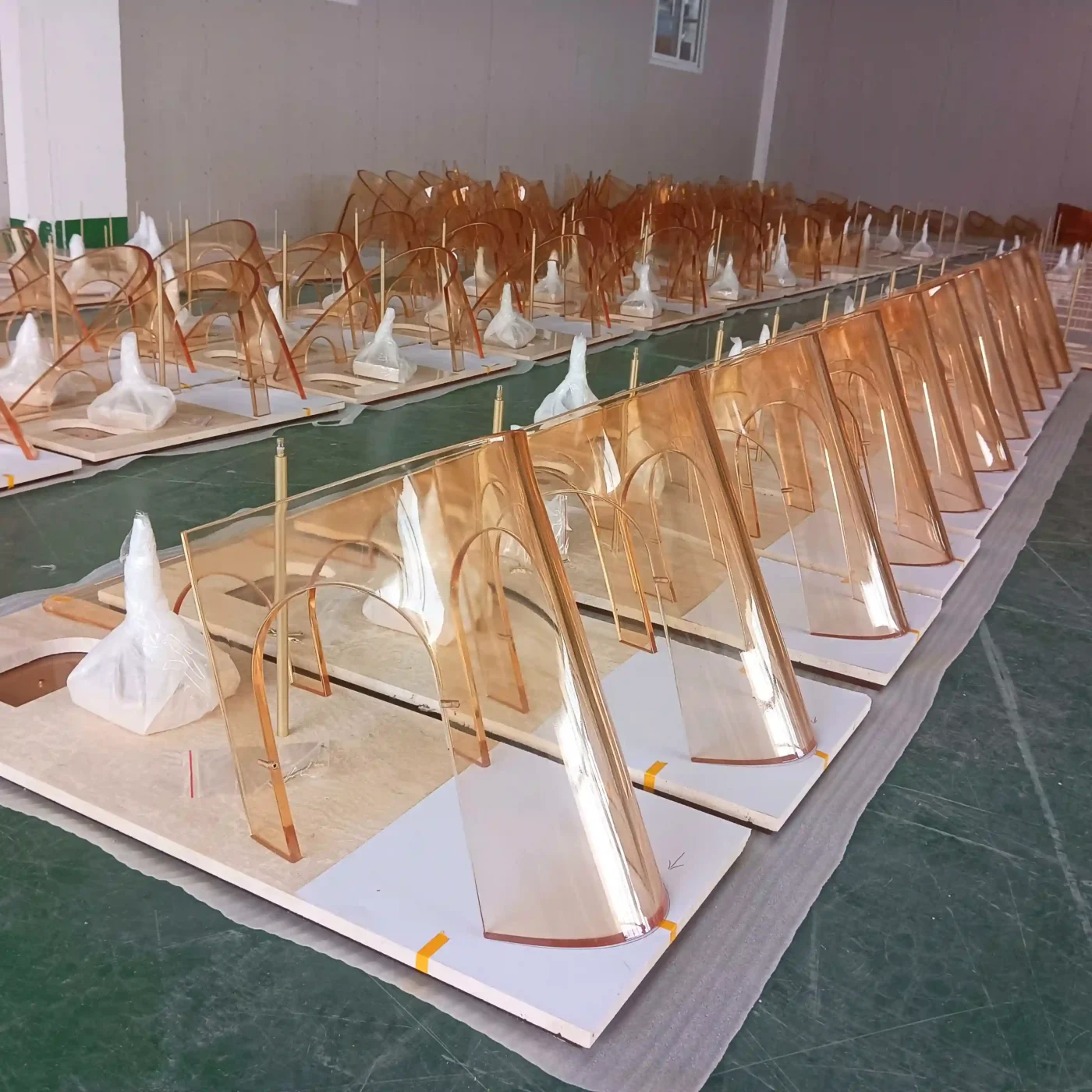
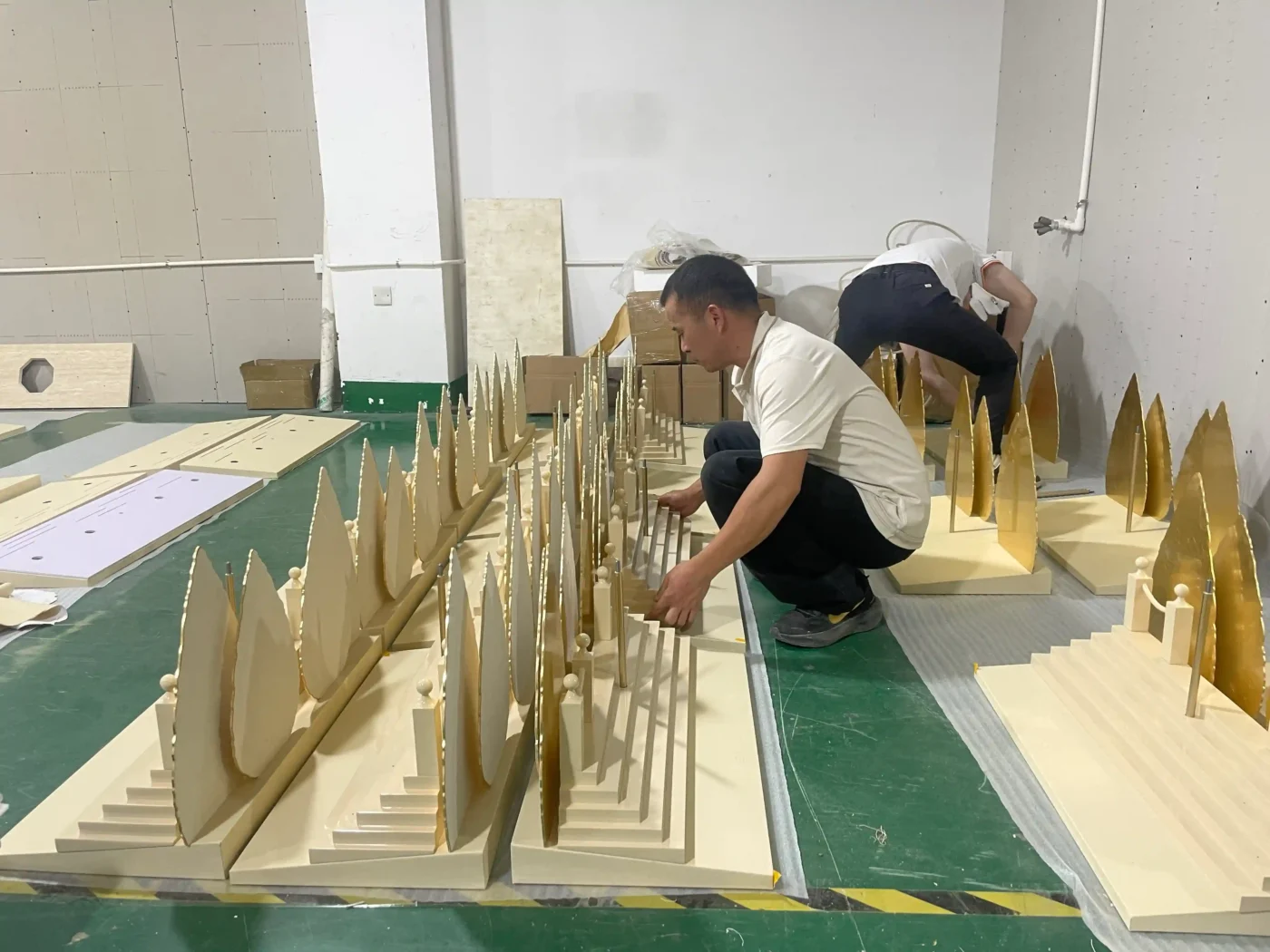
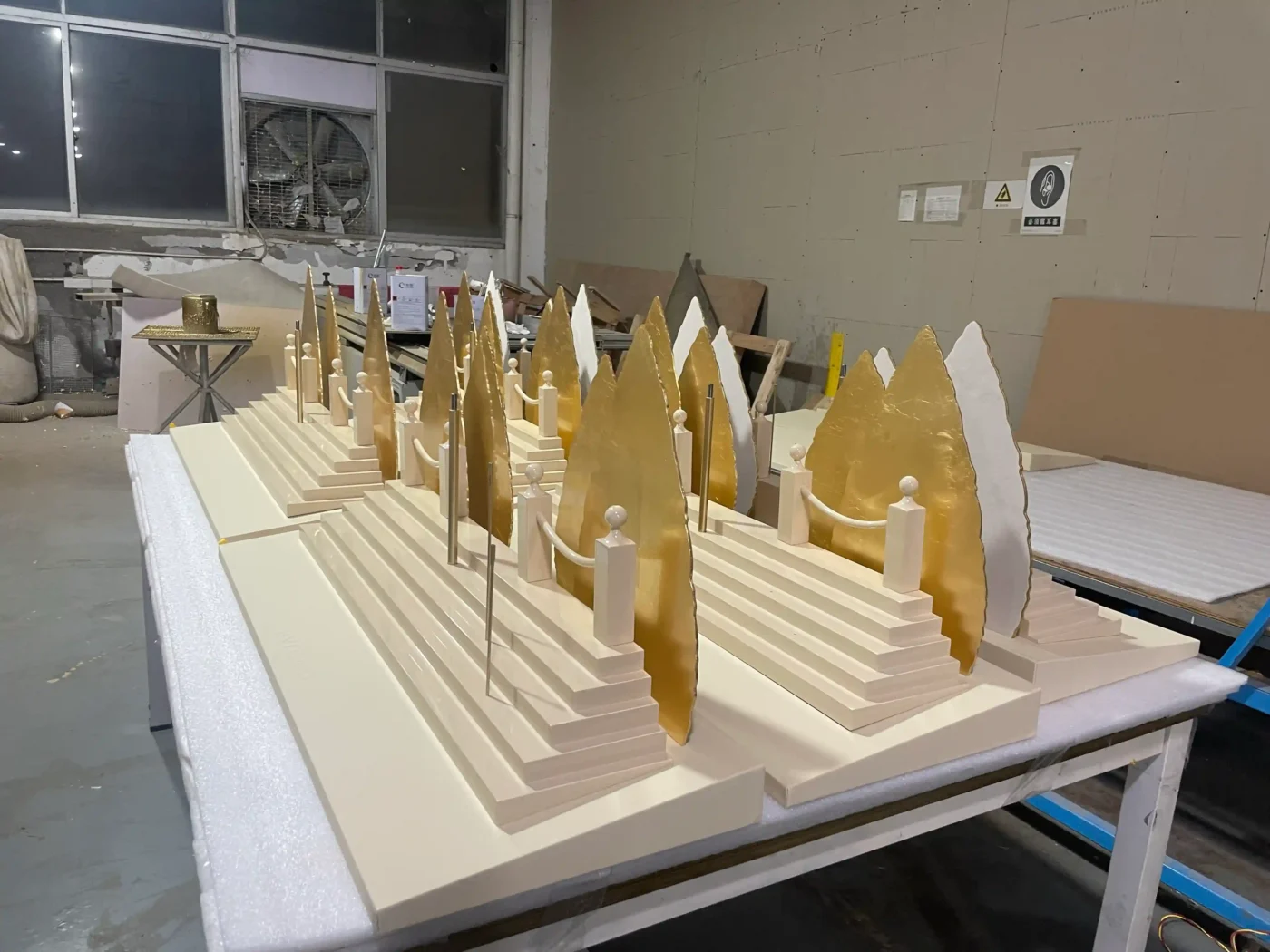
Parts that look right individually can still fail as a window. Ask whether the supplier assembles a complete set before packing, including every component of one door set for a rollout, and checks fit, stability, cable access and whether the instructions match the real parts.
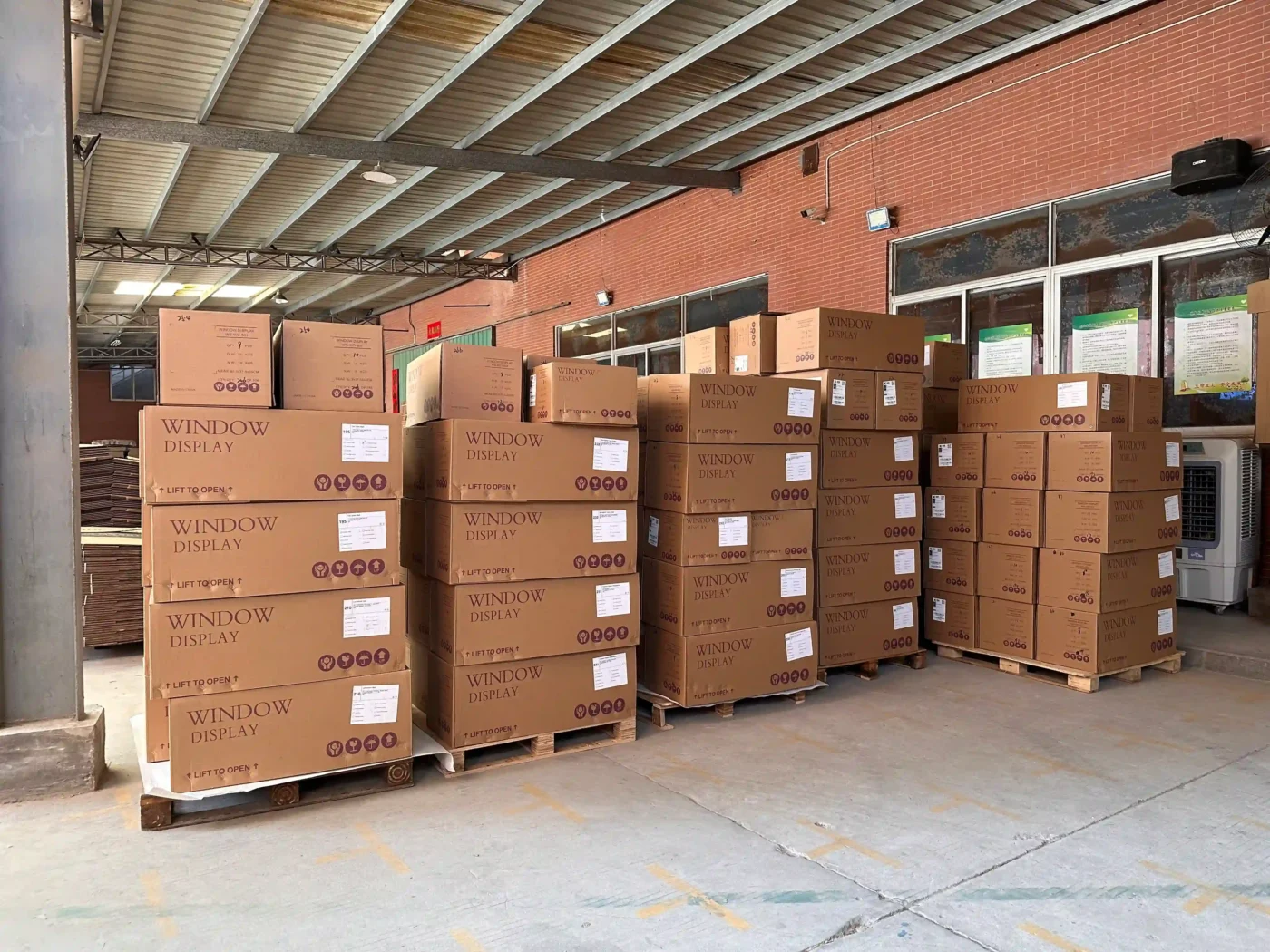
Packing belongs in the same conversation: split points, non-abrasive protection for mirror and acrylic surfaces, crate supports placed on structure rather than decorative faces, and store-coded sets. Our window display rollouts guide covers store-by-store packing in more detail. If raw-wood crates are used, confirm they meet ISPM 15 wood packaging requirements as well as the destination’s import rules.
Red flag: the first full assembly will happen in your store, or packing is decided after production ends.

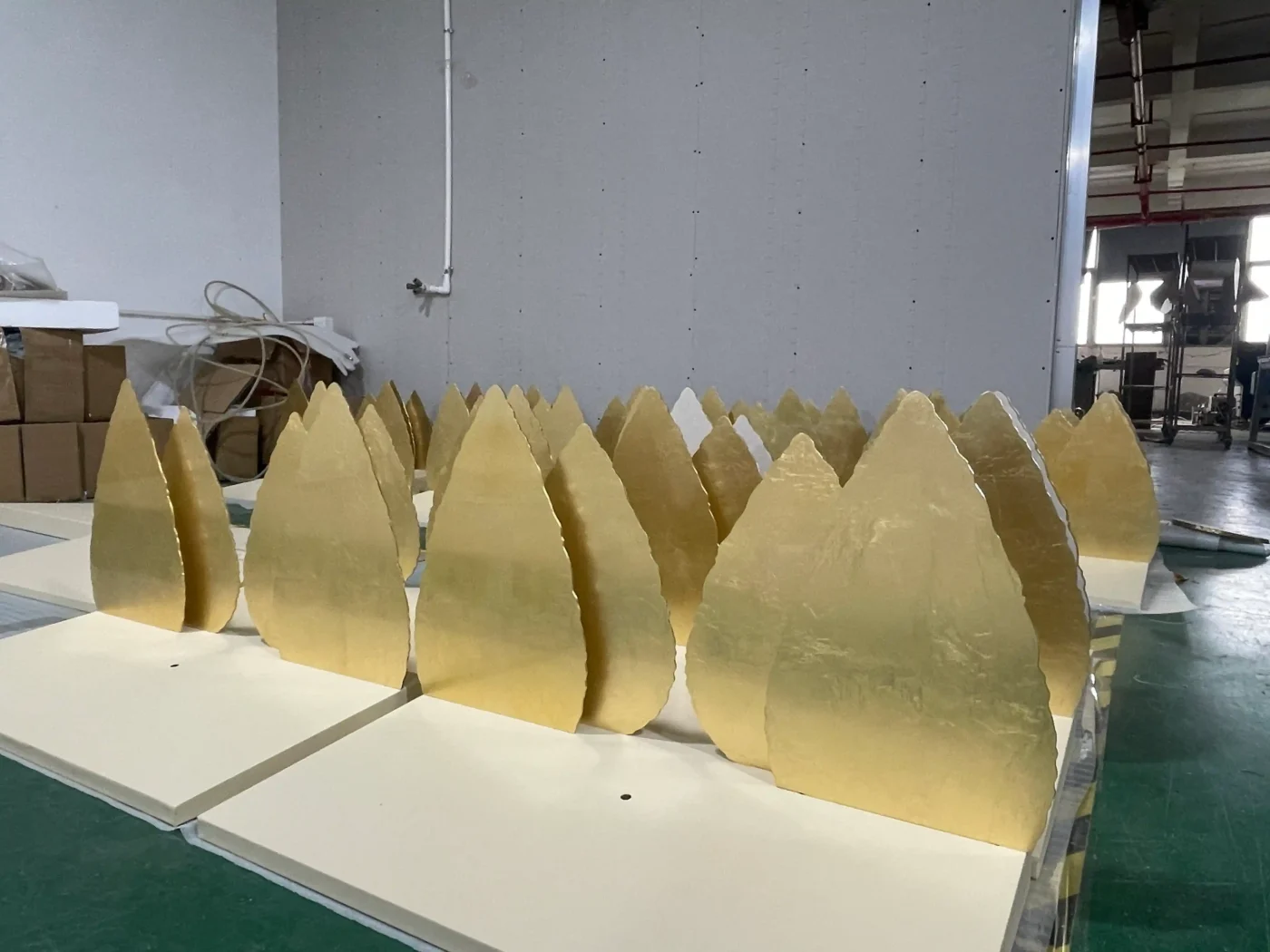
8. How Are Unreleased Designs Protected?
A seasonal window is often confidential until launch day. A supplier handling unreleased work for several brands needs practical controls, not only a signed NDA.
Ask who can open drawing files, whether photography is restricted on the floor, where finished pieces are stored before shipment, and how rejected parts carrying brand elements are disposed of.
Red flag: during your visit, you are shown another brand’s unreleased campaign. Expect your own work to be treated the same way.
9. Certificates: Read the Scope, Not the Logo
Certificates support an audit. They do not replace one.
ISO 9001 sets requirements for a quality management system, but ISO does not certify companies itself; certificates are issued by independent certification bodies. Check the legal company name, site address, scope, issuer and expiry date against the supplier quoting your project.
Many brands also require a social compliance audit, such as SMETA or amfori BSCI, during supplier onboarding. Confirm which site was audited and whether corrective actions remain open.
Red flag: the name, address or scope on the certificate does not match the supplier in front of you.
Running a Remote Factory Audit
If you cannot travel, ask for a live video audit rather than a recorded tour. Request to see:
- The building exterior and company signage
- Active production for your materials
- Material storage and the engineering desk
- Sample approval records and the QC station
- Assembly and packing areas
- One machine or work-in-progress item you choose during the call
Confidential client work can be blurred or skipped. The aim is to see a working system, not someone else’s design.
How to Score What You Saw
| Score | Meaning |
|---|---|
| 0 | No evidence provided |
| 1 | Verbal explanation only |
| 2 | Partial physical or documented evidence |
| 3 | Clear, project-relevant evidence |
Treat a zero in engineering, sample control, structural quality, electrical safety, assembly or packing as more serious than a high total. One gap in the wrong place can outweigh a strong overall score.
Audit the Path, Not the Building
A large building, a long client list and a certificate each prove less than they suggest. The supplier worth trusting is the one that can show a controlled path:
Brief → engineering → approved sample → controlled production → set-level inspection → protected packing → installation-ready delivery
If your team is preparing to audit suppliers for a new campaign, share the render, dimensions, quantity, delivery markets and installation date. A capable manufacturer should come back with questions about structure, finish, packing and installation before making confident promises.
FAQ
What is a window display factory audit?
A window display factory audit is a site visit or live video review of a shortlisted supplier before sampling or production. It checks whether the supplier can control engineering, materials, sample approval, finishes, quality checks, assembly and packing with evidence, not only verbal assurances.
What evidence should I request during a display manufacturer audit?
Ask for production drawings from a past project, a retained master sample with its signed approval, a drawing revision log, in-process inspection sheets, color and gloss references, packing drawings, and certificates showing the correct company name, site and scope.
Is outsourcing a red flag when auditing a display supplier?
Not by itself. Window displays often combine FRP, metal, acrylic, wood, lighting and coatings, so partnered production is common. The red flag is a lack of control: no named owner for each process, no incoming inspection, or no clear responsibility when a partner component fails.
Can a factory audit be done remotely?
Yes. A live video audit can cover active production, material storage, sample approval records, the QC station, assembly and packing areas. Ask to see one item you choose during the call, rather than accepting a pre-recorded tour.
Is an ISO 9001 certificate enough to approve a supplier?
No. ISO 9001 shows that a quality management system was assessed, but it does not prove the supplier can produce your specific window. Check the certificate’s issuer, scope, site and expiry, then verify the project-relevant processes directly.