What Is UV Vacuum Metalizing
UV vacuum metalizing — sometimes called vacuum aluminium metalizing or simply “vacuum plating” — is a surface finishing process that deposits a micro-thin layer of evaporated metal onto a substrate inside a vacuum chamber, then protects it with a UV-cured clear coat. The result is a bright, mirror-like metallic surface that can be applied to materials traditional electroplating cannot easily handle: FRP sculptures, resin castings and ABS plastic parts.
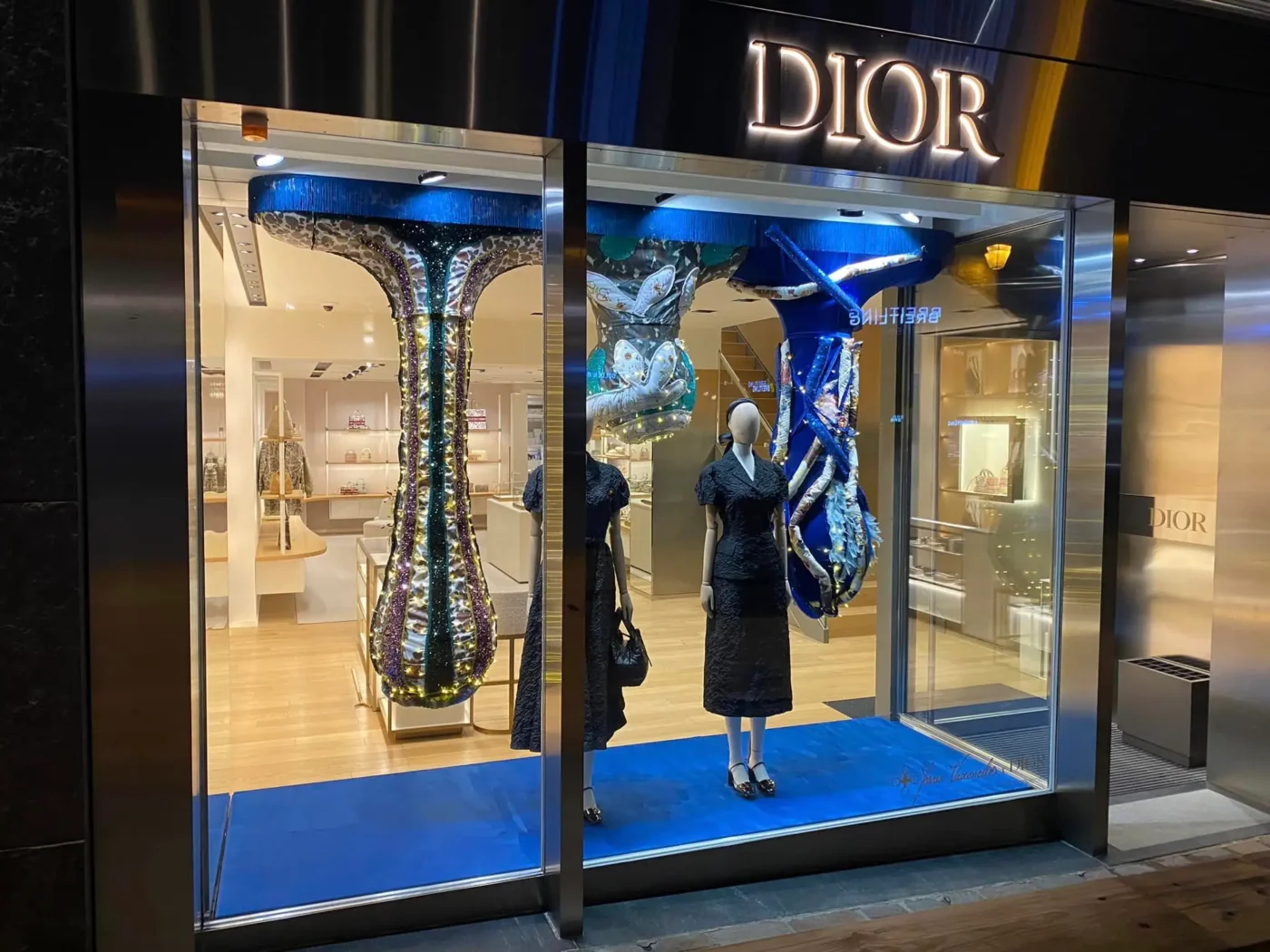
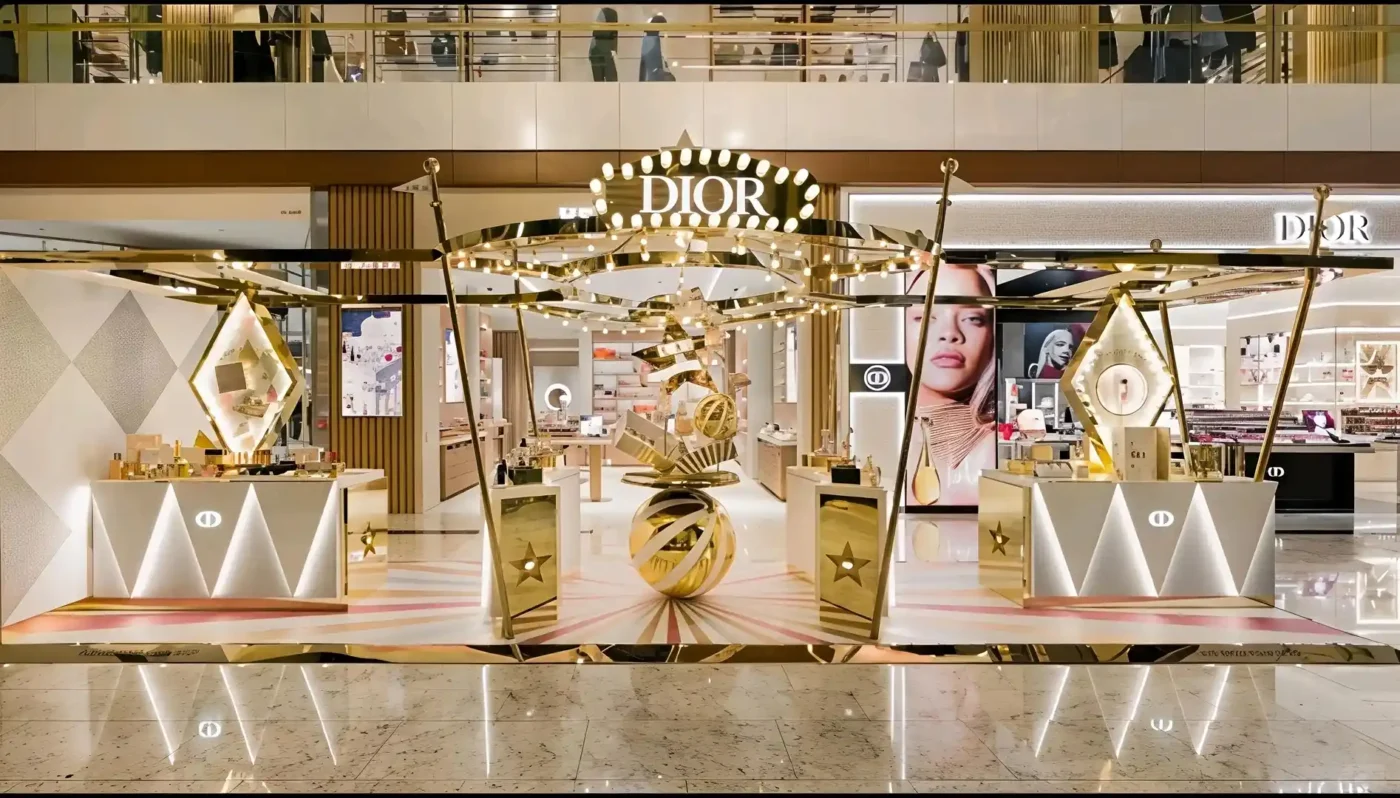
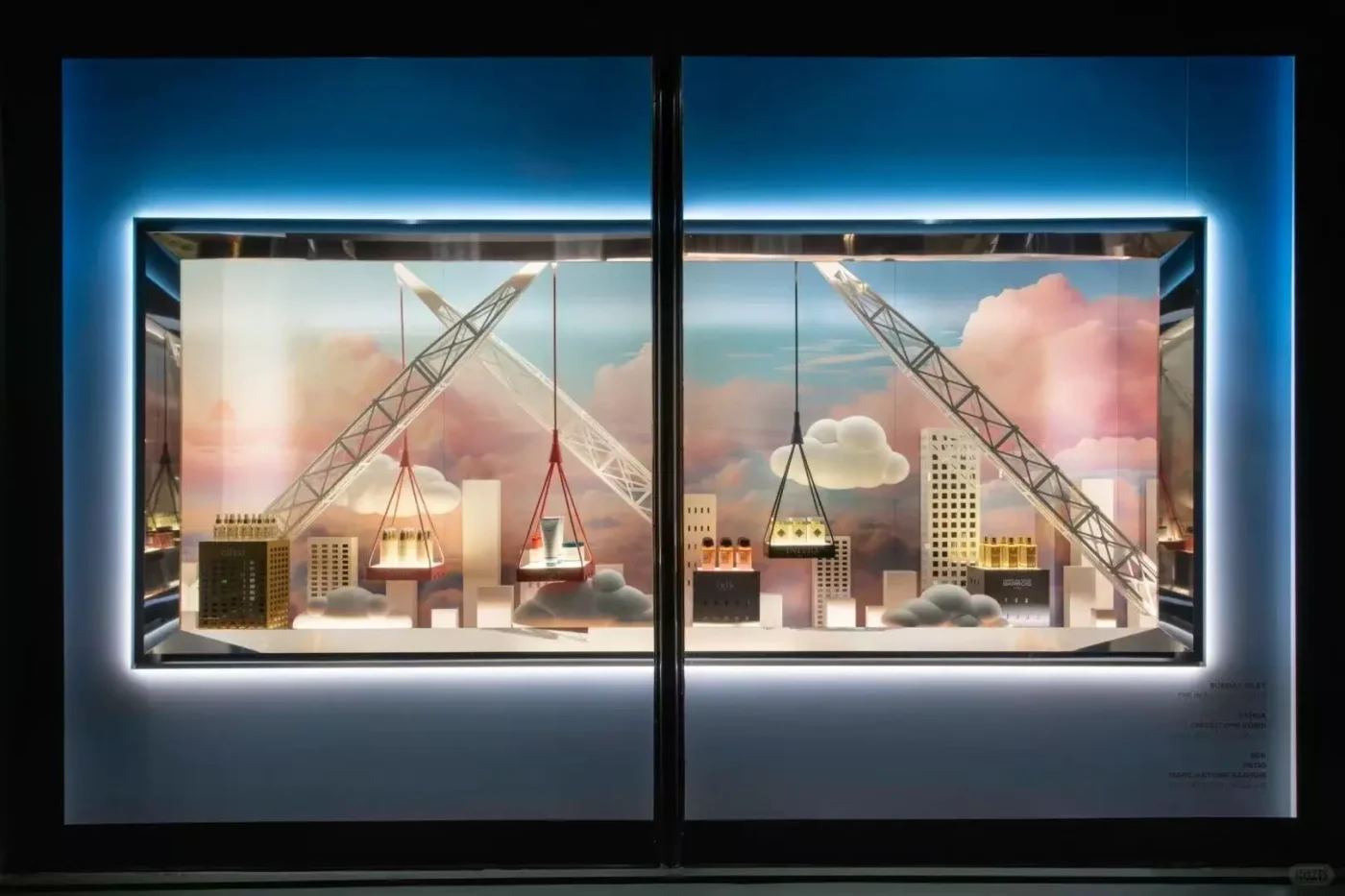
In retail visual merchandising, vacuum metalizing is one of the most frequently specified finishes for large-format display props and window installations. It gives designers chrome, gold, rose-gold or custom-colour metallic effects on complex sculptural forms at a fraction of the cost — and without the size constraints — of conventional electroplating. From our production floor, we estimate that roughly a third of all FRP display projects we manufacture for luxury brands involve at least one vacuum-metalized component.
It is important not to confuse vacuum metalizing with PVD (Physical Vapour Deposition). Although both take place in a vacuum, they differ fundamentally in coating hardness, thickness and intended use. We cover the comparison in detail further below.
How the Process Works
Vacuum metalizing follows a tightly sequenced workflow. Each step affects the final finish, so understanding the sequence helps when specifying quality requirements or reviewing production samples.
Base-coat application. The substrate is first sprayed with a specially formulated base coat — typically a two-component polyurethane — and oven-cured. This layer serves two purposes: it smooths out any remaining surface imperfections, and it provides a chemically compatible bonding surface for the metal layer. On FRP and resin parts, we usually apply two to three coats of base paint with intermediate sanding at 600-grit or finer. The quality of this base coat is the single biggest factor in the final finish — a rough or under-cured base coat will produce a hazy, orange-peel metallic surface that no amount of topcoat can rescue.
Vacuum chamber loading. Prepared parts are mounted on rotating jigs inside the vacuum chamber. The chamber is then pumped down to a high vacuum, typically in the range of 10⁻² to 10⁻³ Pa (10⁻⁴ to 10⁻⁵ torr).
Metal evaporation. Aluminium wire — by far the most common source material — is resistance-heated on tungsten filaments until it evaporates. The aluminium vapour travels in straight lines through the vacuum and condenses on every exposed surface of the rotating parts, forming an extremely thin metallic film typically between 0.02 µm and 0.1 µm thick. Because the coating is line-of-sight, the rotating jigs ensure even coverage on three-dimensional forms.
UV topcoat application. Immediately after the parts leave the vacuum chamber, they receive one or more layers of UV-curable protective lacquer. This is the step that gives the process its full name. The topcoat is cured in seconds under high-intensity UV lamps, producing a hard, scratch-resistant protective shell over the delicate aluminium layer. Without this topcoat, the metallic film is so thin that ordinary handling — even a fingertip rubbed across the surface a few times — would wear it away.
Colour tinting (optional). Tinted UV topcoats allow a wide range of metallic colour effects: gold, champagne, rose gold, bronze, gunmetal, and custom-matched colours. Because the colour comes from the topcoat rather than the metal itself, designers have far more flexibility than with traditional plating.
UV Vacuum Metalizing vs PVD Coating
Both processes are performed in a vacuum and both produce metallic surface effects, which is why they are frequently confused in project briefs. In practice, they serve different purposes.
| Factor | UV Vacuum Metalizing | PVD Coating |
|---|---|---|
| Coating thickness | 0.02–0.1 µm (extremely thin) | 0.5–5 µm (significantly thicker) |
| Substrate range | Non-metallic parts: FRP, resin, ABS and engineering plastics | Primarily metals: stainless steel, brass, zinc alloy |
| Part size | Very large parts feasible (chamber size is the only limit) | Limited by chamber size; typically smaller hardware and fittings |
| Colour range | Wide — any tint achievable through coloured topcoat | Standard metallic tones: gold, rose gold, black titanium, chrome |
| Durability without topcoat | None — film wears off immediately | Good — stands alone without additional protection |
| Cost | Lower | Higher |
In our experience manufacturing custom display props for luxury brands, the decision usually comes down to substrate and scale. When a project calls for metallic-finish FRP sculptures, oversized resin props or ABS plastic components, vacuum metalizing is the natural choice. When the brief specifies stainless-steel hardware, logo letters or metal fittings that will be touched and handled daily, PVD is the more durable option.
Suitable Substrates and Limitations
Vacuum metalizing is widely used precisely because it works on substrates that conventional electroplating cannot handle. However, it is not a universal process — the evaporation source radiates significant heat during deposition, and the vacuum environment itself creates constraints that rule out certain materials.
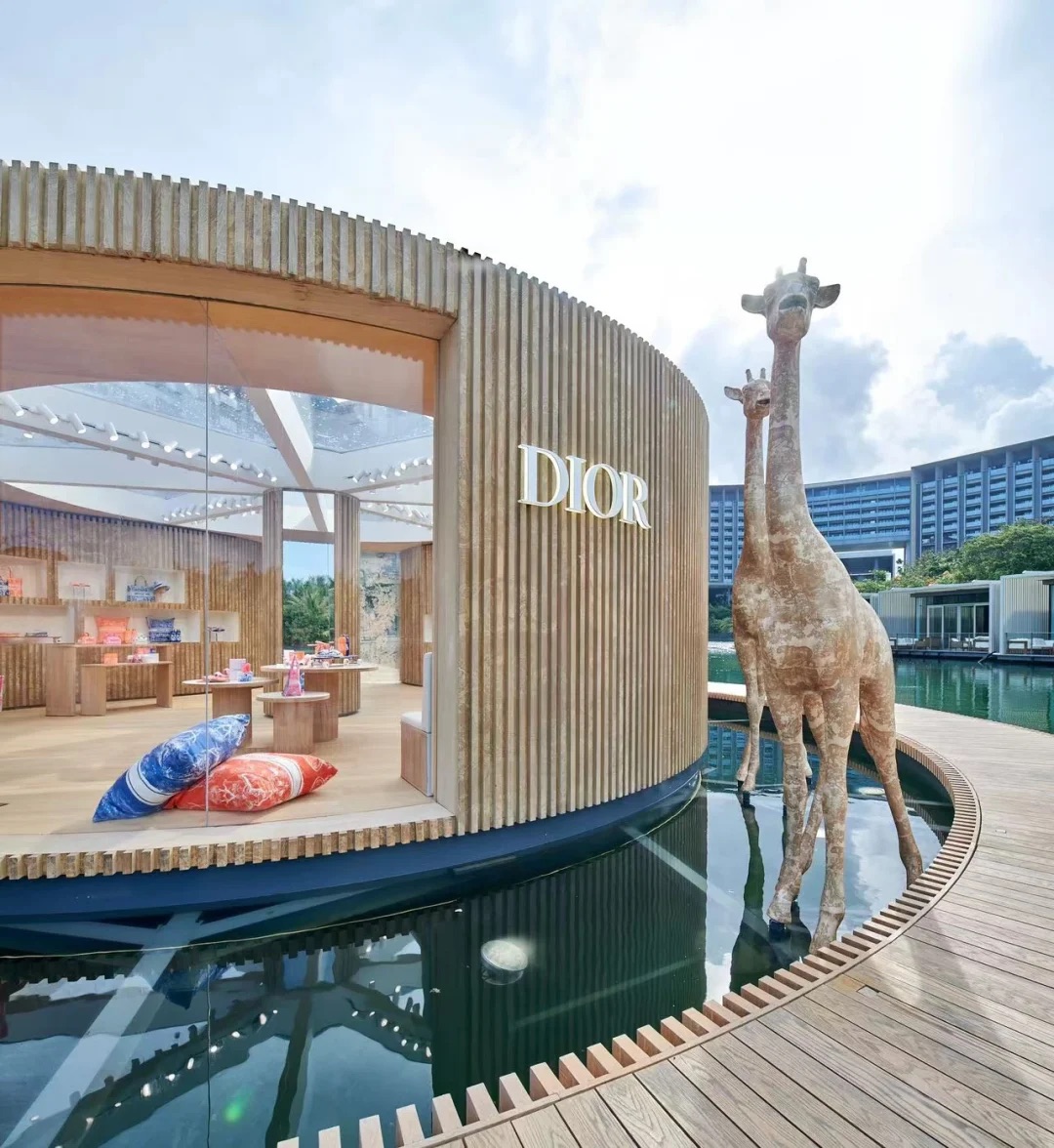
FRP and resin sculptures. Large-format window display pieces — animals, abstract forms, brand icons — are typically FRP shells finished with vacuum metalizing to achieve full chrome or gold effects. FRP tolerates the radiant heat well and does not outgas under vacuum, making it the ideal substrate for this process. Because the metallic layer adds virtually no weight, these pieces remain lightweight enough for easy installation and repositioning.
ABS and engineering plastics. Smaller display elements, trays, fixtures and logo blocks moulded in ABS or other engineering plastics are frequently vacuum-metalized rather than plated, especially when the geometry is complex or the budget does not justify water electroplating. ABS has a heat deflection temperature well above the 80–100 °C range that substrates typically reach during the metalizing cycle, so it maintains dimensional stability throughout the process.
Materials that are NOT suitable. Not all materials can survive inside the vacuum chamber. The evaporation source heats aluminium to approximately 1,500 °C, and although the substrates themselves stay far cooler, radiant heat still raises part temperatures to 80–100 °C during the cycle. Acrylic (PMMA), with a glass transition temperature around 105 °C, sits dangerously close to this threshold — large or thick acrylic display pieces will soften and lose dimensional accuracy, making it impractical for the retail display props we manufacture. Wood and MDF are also incompatible: their internal moisture content (typically 5–10 %) causes rapid outgassing under vacuum, which contaminates the chamber and produces a defective, cloudy coating. For these substrates, painted or spray-chrome finishing techniques are more appropriate alternatives.
For metallic substrates such as stainless steel or brass — or for any component that will endure heavy daily contact — we generally recommend PVD or conventional electroplating instead, since the vacuum-metalized layer is too thin to withstand sustained abrasion on its own.
Quality Control: What Separates a Good Finish from a Poor One
Over years of managing vacuum-metalizing production for luxury retail clients, we have learned that most quality failures trace back to the same handful of causes. Knowing what to look for — and what to specify upfront — makes the difference between a showroom-grade finish and one that deteriorates within weeks.
Base-coat surface quality. This is where the majority of defects originate. Because the aluminium layer is measured in fractions of a micrometre, it does not conceal imperfections — it amplifies them. Any dust particle trapped in the base coat, any sanding scratch left unresolved, any area of uneven film thickness will show through as a visible flaw in the finished metallic surface. We require our base coats to pass a side-light inspection at a 15-degree angle before parts are approved for the vacuum chamber.
UV topcoat coverage and cure. An insufficiently thick or under-cured topcoat is the most common cause of premature finish failure. A reliable field test is to rub a fingertip firmly across the same spot twenty times — properly protected vacuum-metalized surfaces should show no colour transfer or dulling. We apply a minimum of two UV topcoat passes on all production parts.
Jig marks. Parts must be supported on jigs or clips during the vacuum process, and contact points will not receive metal deposition. After metalizing, these jig marks need careful touch-up with colour-matched paint. On visible surfaces, poorly handled jig marks are immediately noticeable — particularly on mirror-chrome finishes. We position jig points on concealed faces wherever the part geometry allows.
Batch consistency. When a project involves multiple parts finished across separate vacuum runs, colour variation between batches is a known risk — especially with tinted gold or rose-gold topcoats. Retaining a sealed reference sample from the first approved batch and comparing every subsequent run against it is essential practice.
Adhesion testing. Cross-hatch adhesion testing (ASTM D3359) using a cross-cut blade and pressure-sensitive tape is the standard verification method. After scribing a grid pattern into the coating and pressing tape firmly over it, the tape is pulled away at a consistent angle. Any flaking or lifting indicates inadequate adhesion between layers — usually a base-coat preparation or topcoat cure issue.
When to Choose UV Vacuum Metalizing for Retail Displays
Vacuum metalizing occupies a specific — and very useful — niche in the retail display manufacturing toolkit. It is the right choice when the project needs:
A high-impact metallic finish on a non-metallic substrate, particularly FRP or resin sculptures at scales too large for electroplating tanks. Cost efficiency across large surface areas, since the process is faster and less material-intensive than water electroplating. Creative colour flexibility, including custom-matched metallics, gradients or selective masking effects that conventional plating cannot achieve. Lightweight construction, since the coating adds negligible mass — critical for ceiling-hung installations or props that staff need to reposition frequently.
It is not the right choice when durability under daily physical contact is the primary requirement, when the substrate is already a high-grade metal better served by PVD, or when the display environment is outdoor and long-term (where PVD’s harder, thicker coating offers better UV and weather resistance).
Understanding these trade-offs early in the design process avoids costly mid-production finish changes — something we discuss in detail with clients during the project planning stage.
Frequently Asked Questions
What is the difference between UV vacuum metalizing and chrome plating?
Chrome plating is a water-based electrochemical process that deposits a thick, hard chromium layer directly onto metal substrates. UV vacuum metalizing evaporates aluminium in a vacuum chamber and seals it with a UV-cured topcoat. The key practical differences are substrate compatibility — vacuum metalizing works on FRP and resin while chrome plating requires a conductive metal surface — and durability, where chrome plating produces a harder, more abrasion-resistant finish.
Can vacuum metalizing be applied to FRP sculptures?
Yes. FRP is one of the most common substrates for vacuum metalizing in retail display manufacturing. The FRP surface must first be primed and sanded to a smooth, defect-free finish, since the ultra-thin metallic layer will amplify any underlying imperfection. With proper base-coat preparation, vacuum-metalized FRP can achieve a convincing mirror-chrome or gold effect indistinguishable from solid metal at viewing distance.
How durable is a vacuum-metalized finish?
Durability depends almost entirely on the UV topcoat. Without a topcoat, the aluminium film will wear away with ordinary handling. With a properly applied and fully cured UV topcoat, the finish can last several years in an indoor retail environment with minimal physical contact. For components that are touched or handled frequently, PVD coating or conventional electroplating offers better long-term wear resistance.
Can acrylic or wood be vacuum-metalized?
These materials are generally not suitable for vacuum metalizing in display manufacturing. Acrylic (PMMA) has a glass transition temperature of approximately 105 °C, which is dangerously close to the 80–100 °C substrate temperatures reached during the metalizing cycle — large acrylic parts will soften and lose their shape. Wood and MDF contain internal moisture that outgasses rapidly under vacuum, contaminating the chamber and producing a defective coating. For these substrates, spray-chrome or painted metallic finishes are more practical alternatives.
How do you prevent colour variation between batches?
Colour consistency across multiple vacuum runs requires strict process control: consistent base-coat thickness, identical aluminium charge weight, matched topcoat tint batches, and fixed curing parameters. Retaining a sealed reference sample from the first approved production run and comparing each subsequent batch against it under standardised lighting is the most reliable practical safeguard.
Is vacuum metalizing environmentally friendly?
Compared to conventional water electroplating, vacuum metalizing has a significantly smaller environmental footprint. The process generates no heavy-metal wastewater, uses no hazardous plating solutions, and produces minimal chemical waste. This is one reason it has become increasingly preferred in regions where electroplating facilities face strict environmental regulations.