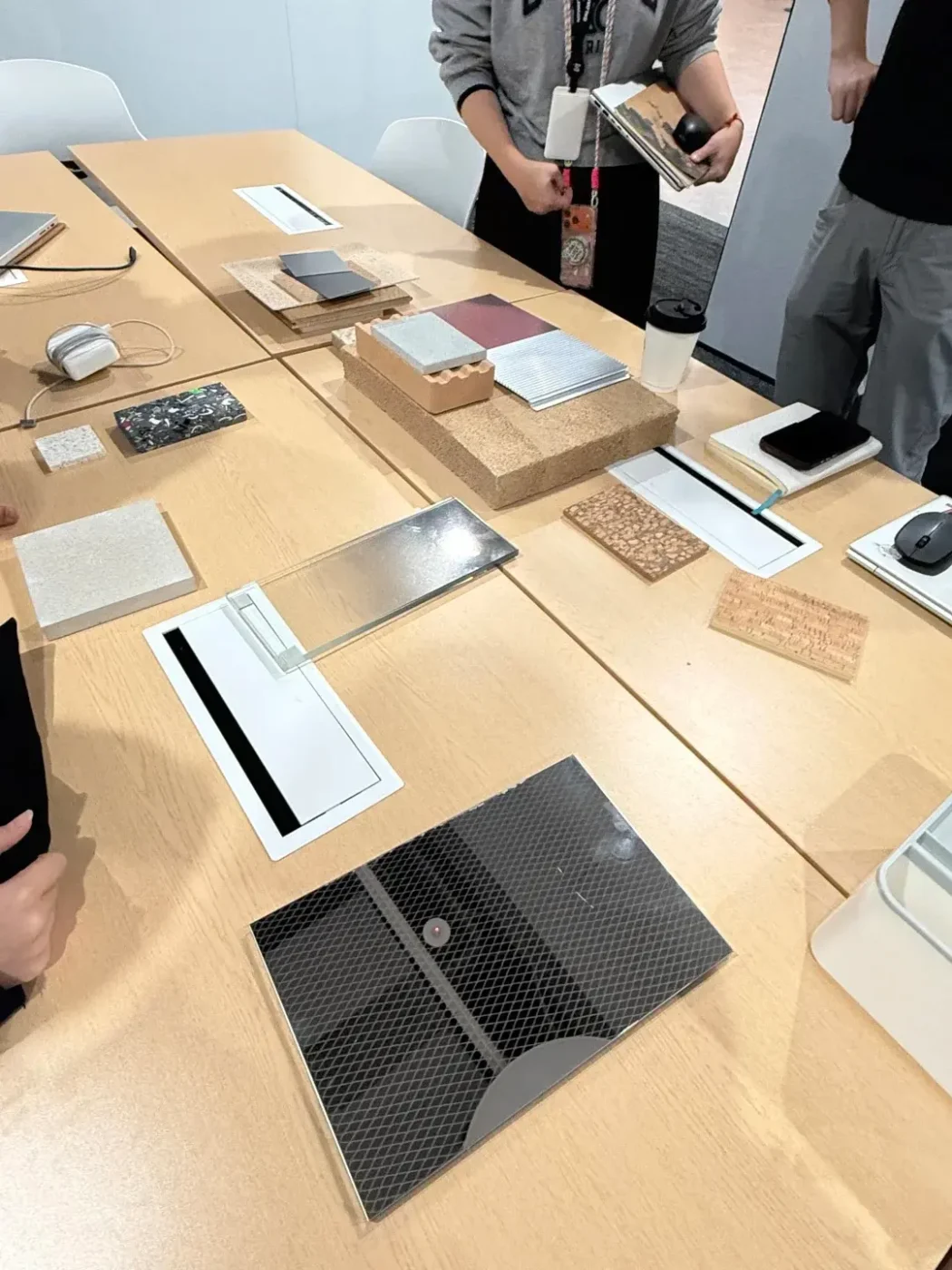
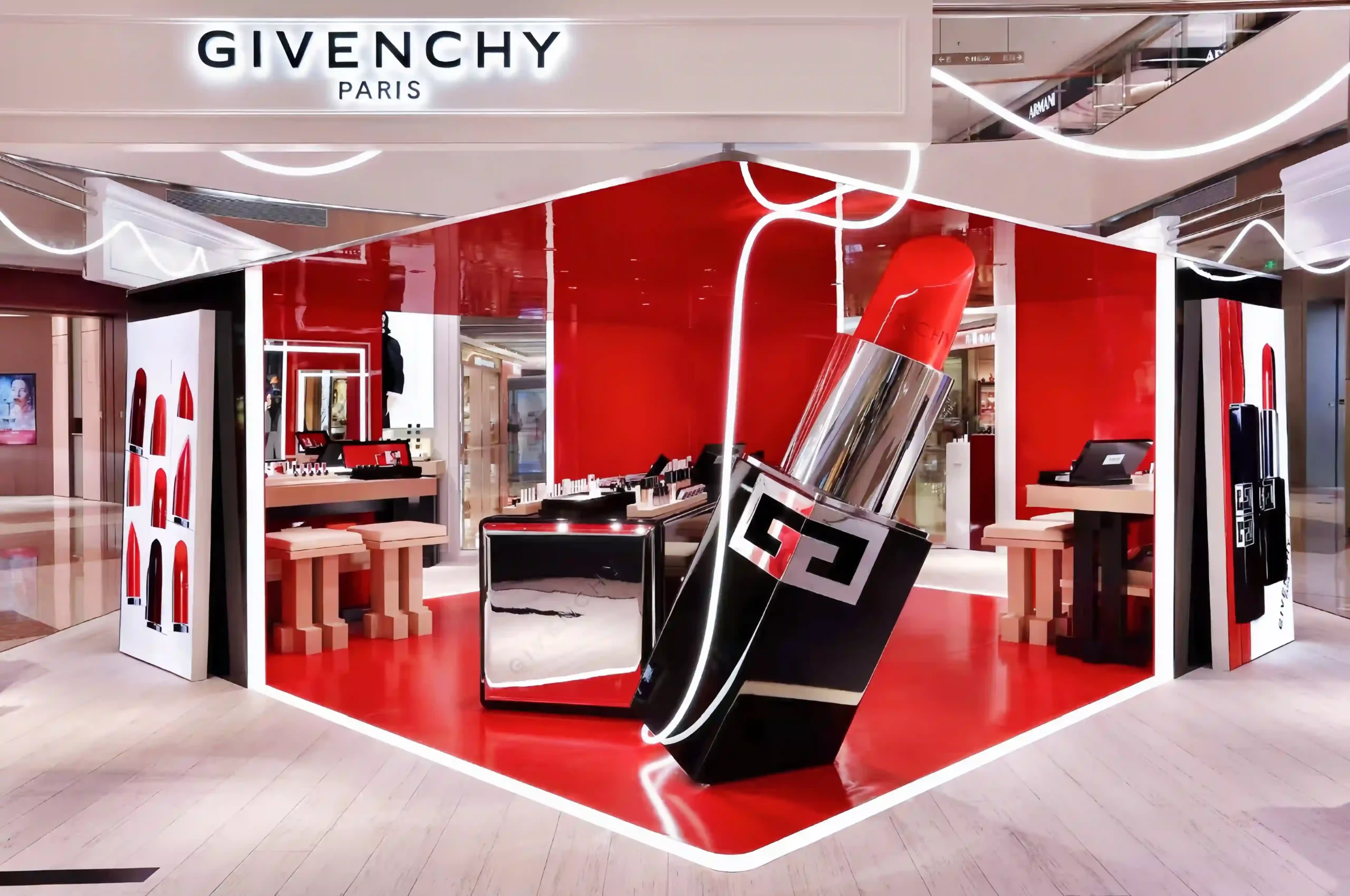
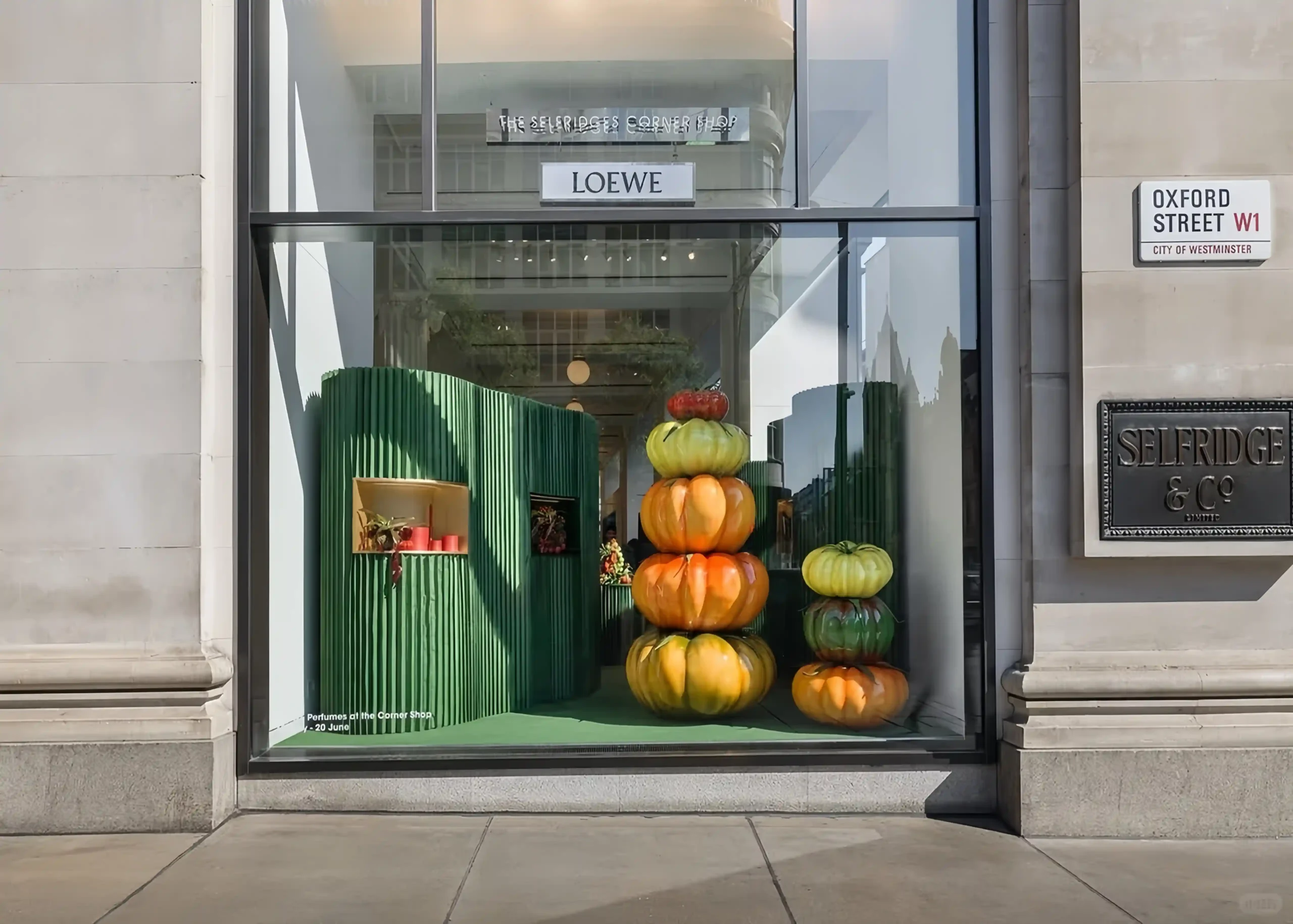
Material selection is the single decision that determines whether a display concept survives contact with reality. The renders look identical on screen; the budgets, lead times, and finished surfaces do not. The right material for a display prop depends on five factors: form complexity, size, surface finish, light behavior, and installation duration — and the choice is rarely made well by a designer or a manufacturer alone. It is made in the conversation between them.
We manufacture visual merchandising props for luxury retail brands — window sculptures, podiums, product risers, full seasonal installations — and a significant share of the briefs we receive arrive with a material already specified. Roughly a third of the time, that specification changes once we review the design together. Not because the original choice was wrong in theory, but because material behavior at production scale is something you only learn by producing.
This guide covers the five materials that account for nearly every display prop we build — FRP, acrylic, metal, resin, and wood — with the honest limitations of each, and a decision matrix at the end you can apply to your own brief.
FRP (Fibreglass-Reinforced Polymer): The Sculptor’s Material
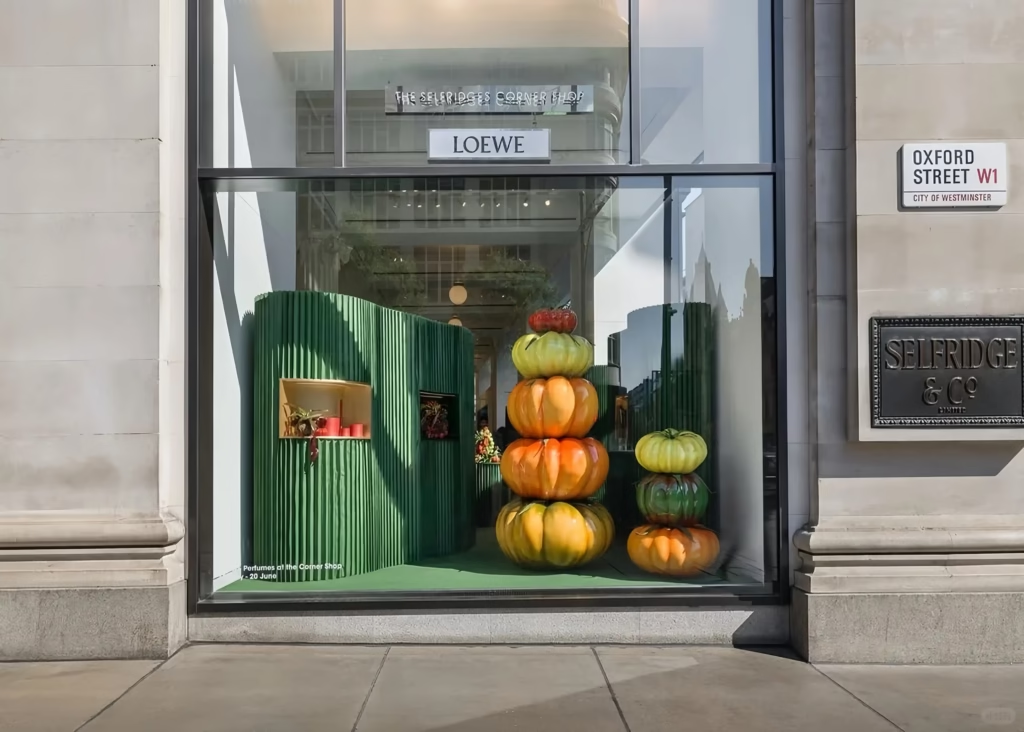
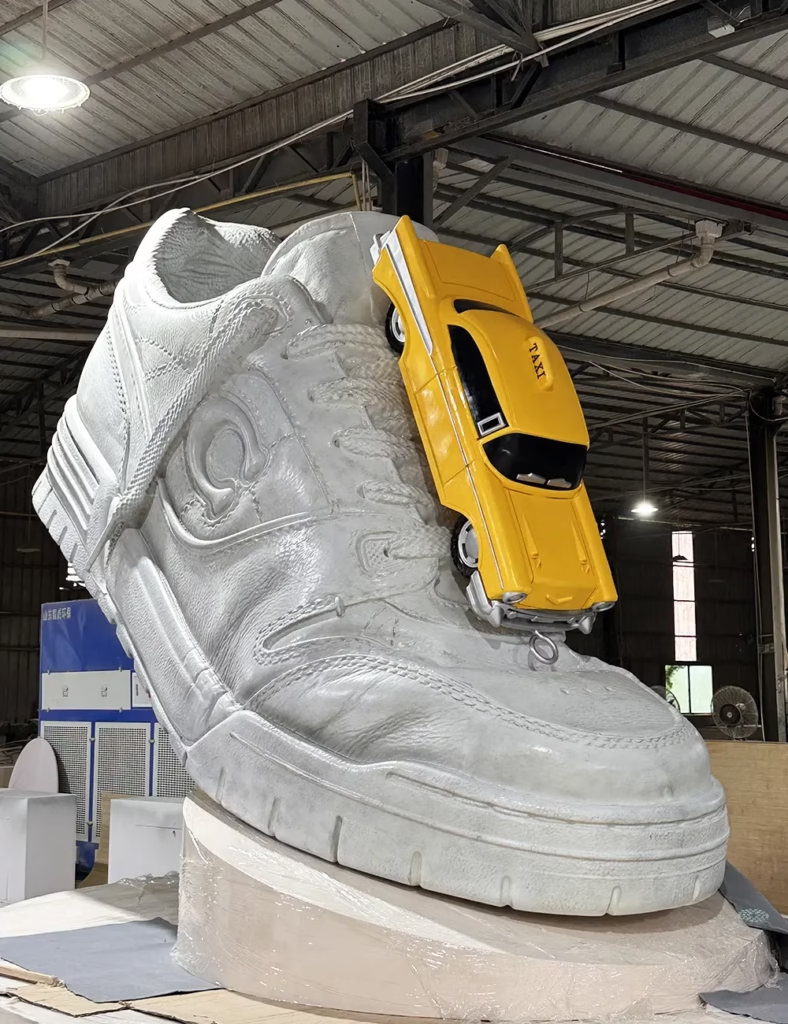
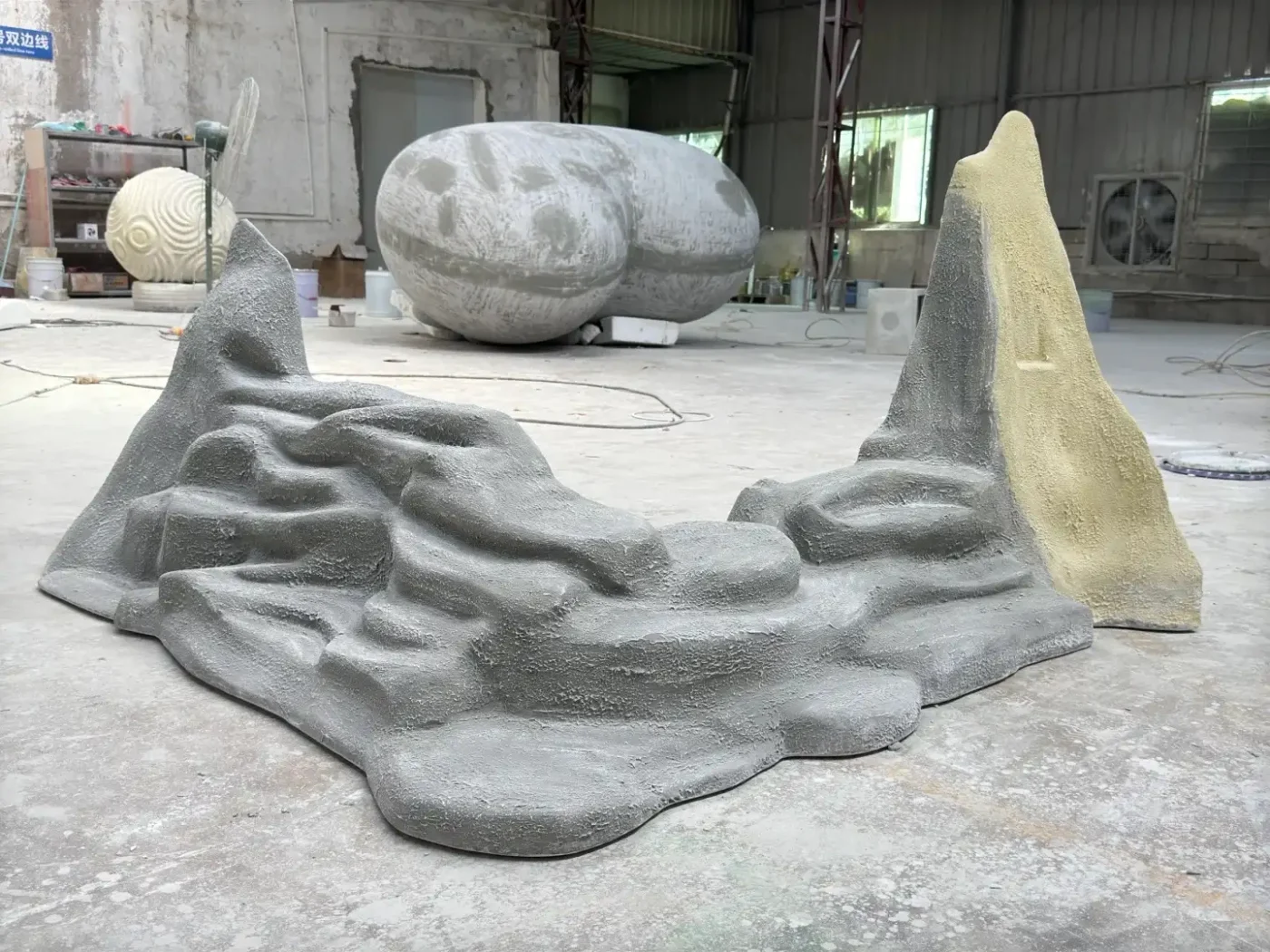
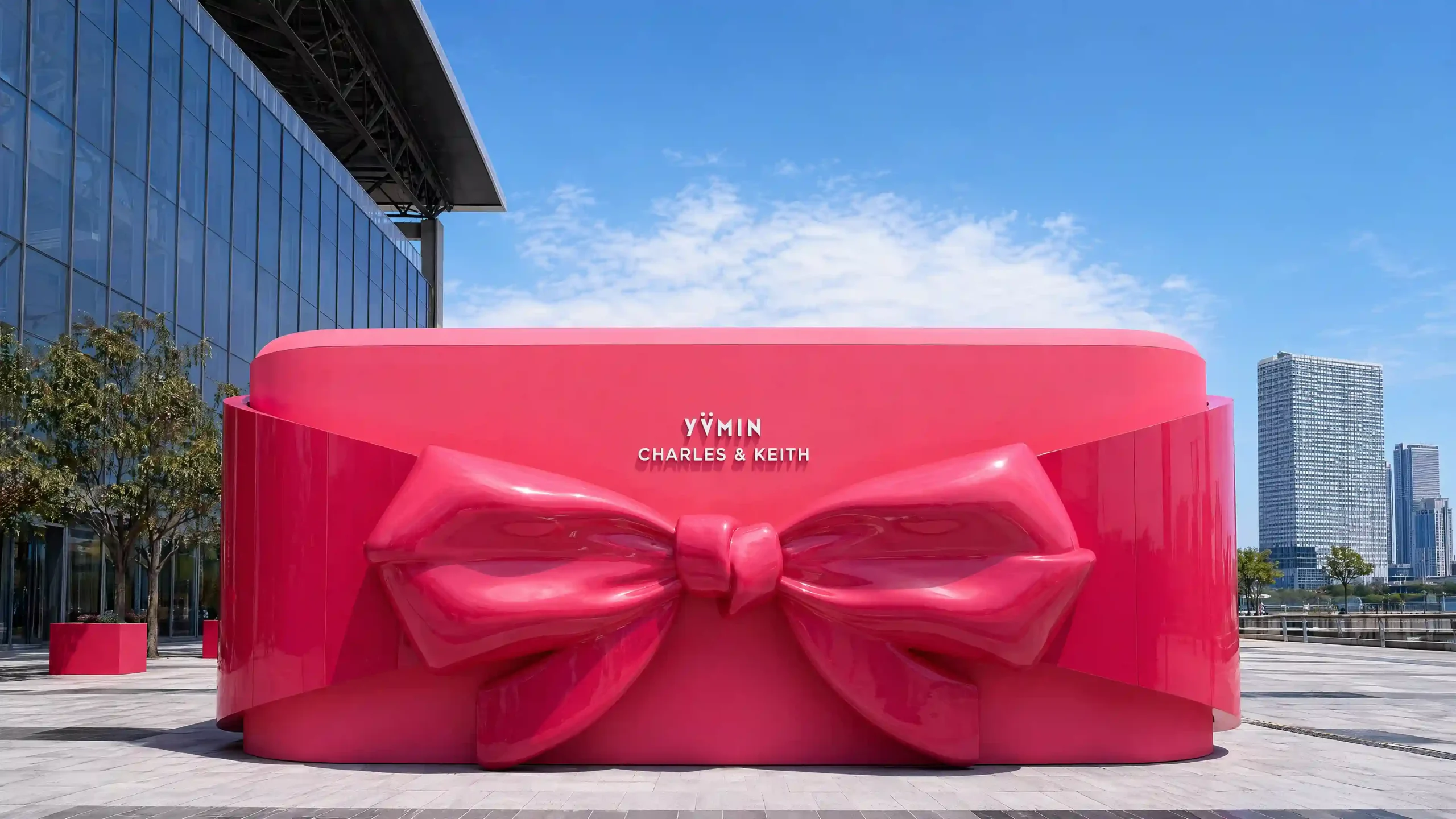
FRP is the default choice for large sculptural props. It is a composite of glass fibre and resin laid into a mould, which means it can take virtually any organic form — and at a fraction of the weight of solid alternatives. A 2-metre FRP sculpture typically weighs 15–30 kg; the same form in solid resin would exceed 100 kg and in metal would require structural engineering before it could be hung in a window.
Strengths
- Total freedom of form. Because FRP is moulded, complexity of shape adds tooling time but not material constraint. Compound curves, undercuts, oversized organic forms — all achievable.
- Lightweight at scale. Critical for window installations, suspended props, and anything store staff will move between seasons.
- Paintable in any finish. FRP accepts automotive-grade spray finishes: high gloss, matte, candy colors, pearlescent, and — with the right primer system — flocking and UV vacuum plating for metallic effects.
How FRP props are actually made
The production route explains both FRP’s strengths and its cost structure. A digital model becomes a full-scale master — 3D printed for smaller, detail-heavy forms, or carved from foam for large ones — which is then surfaced, primed, and used to cast a silicone mould. The FRP shell is laminated inside that mould: a gelcoat surface layer, then alternating layers of resin and glass fibre cloth, typically three to four plies for display-grade strength.
Two practical consequences follow. First, the master’s surface quality transfers one-to-one into every casting — 3D print layer lines or seam marks that aren’t sanded out of the prototype will appear on every finished prop, which is why prototype finishing is where the real labor sits in FRP production. Second, a well-made silicone mould yields 15–25 consistent castings, which is exactly what makes FRP economical for multi-store programs and front-loaded in cost for one-offs.
(3D printing also occasionally serves as a direct production method: small, complex one-off pieces can be SLA-printed, internally reinforced, and finished to the same paint standard as FRP when quantities don’t justify a mould.)
Limitations
- Not suited to ultra-fine surface detail. Mould resolution and the layup process mean crisp edges below ~2 mm and engraved micro-textures are better served by resin casting or CNC-machined acrylic.
- Mould cost is front-loaded. A one-off prop carries the full mould cost; the economics improve sharply for multi-store rollouts.
Where it wins
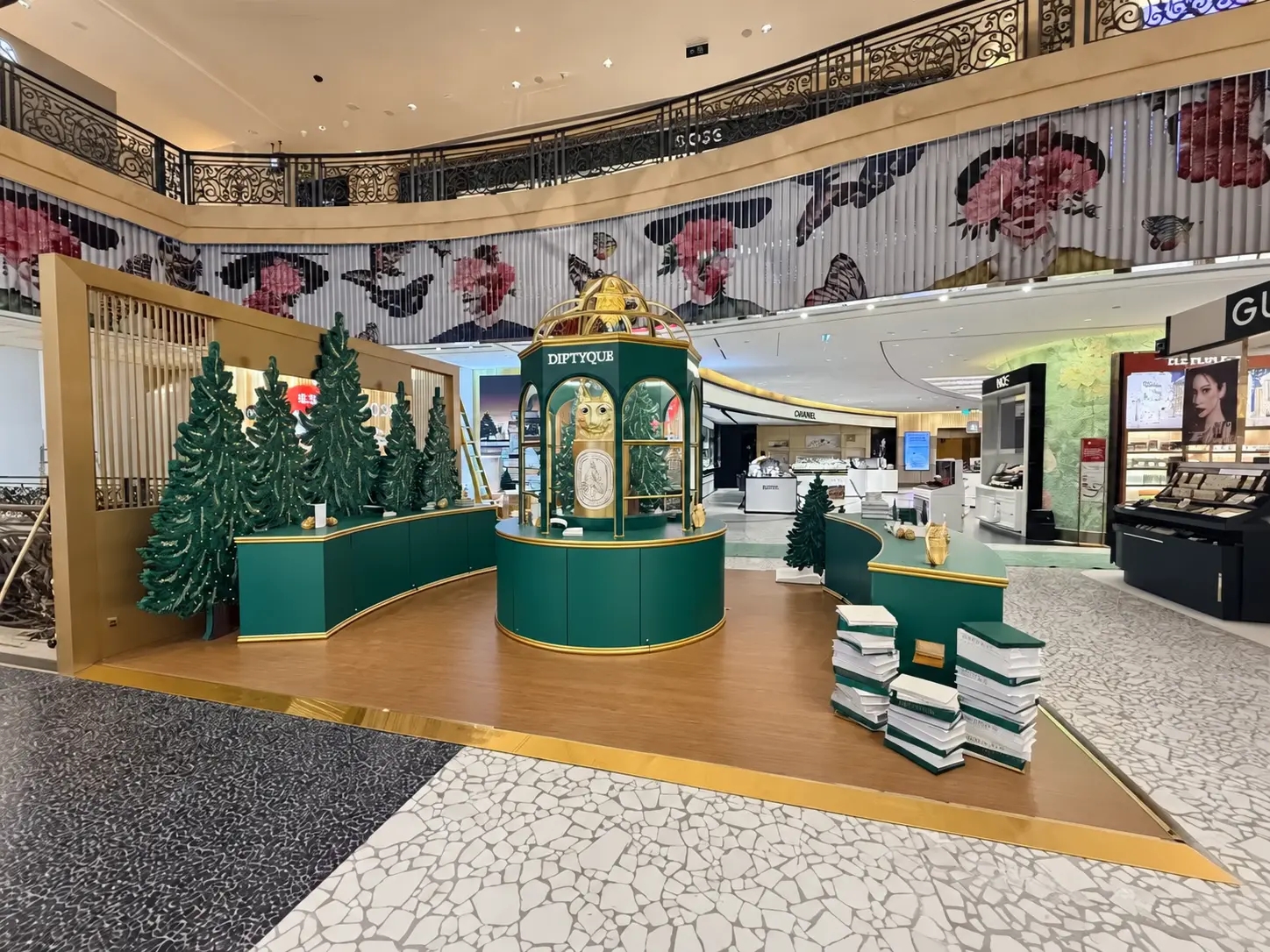
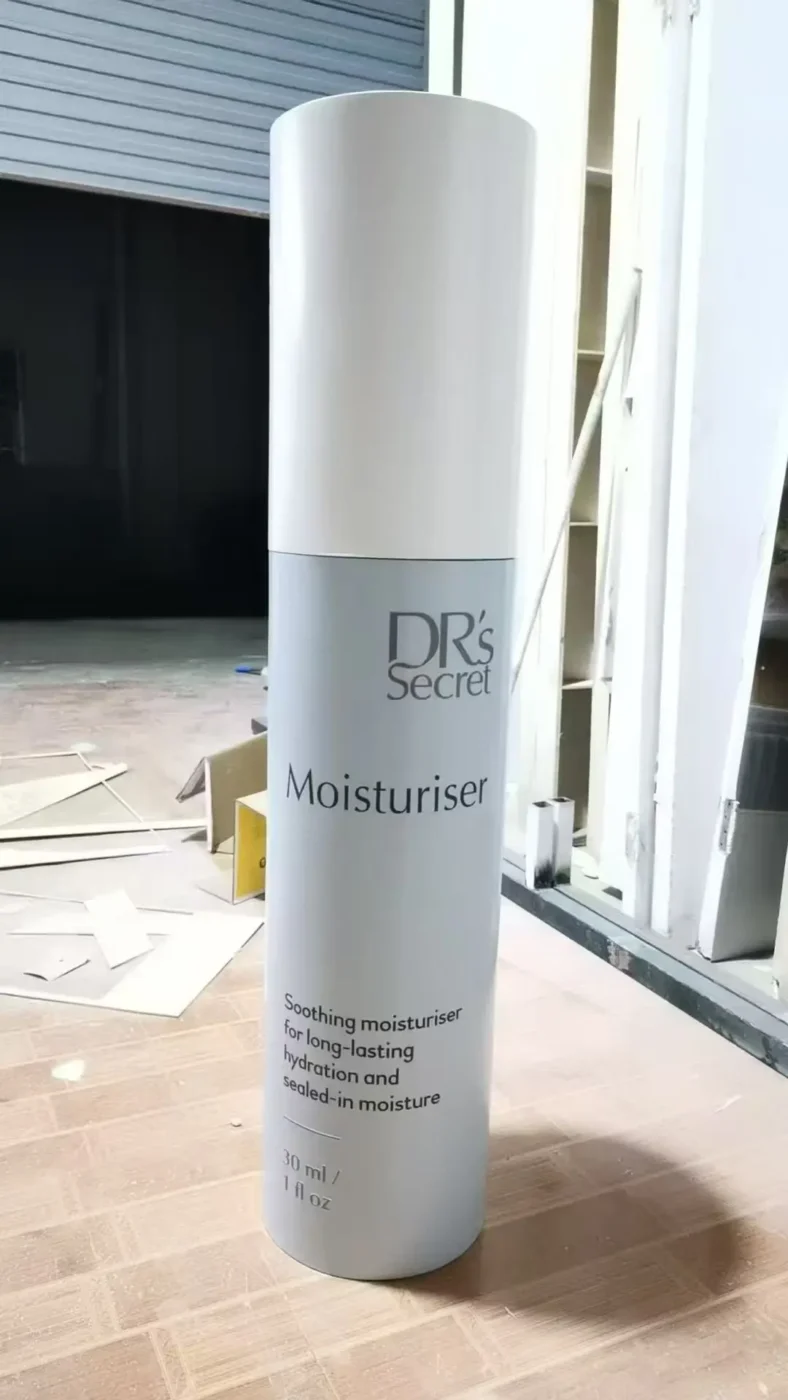
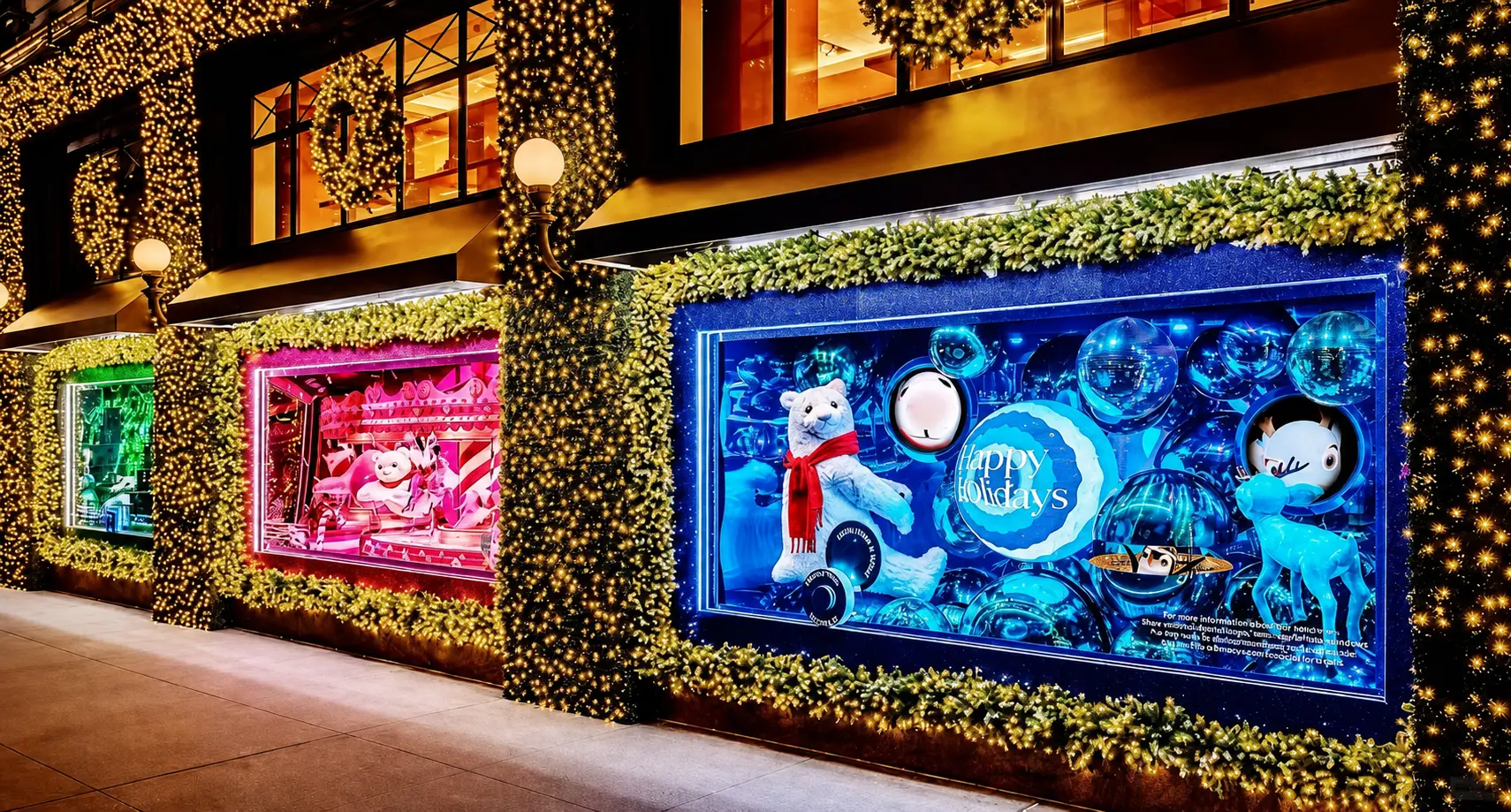
Large sculptural props and oversized product replicas — think a 1:8-scale FRP sneaker for a Tokyo flagship window, or flocked sculptural forms repeated across a 60-store Christmas rollout, where the mould cost amortizes over quantity.
Rule of thumb: if the prop is over 1 metre, sculptural, and painted — start with FRP.
Acrylic: The Material That Works With Light
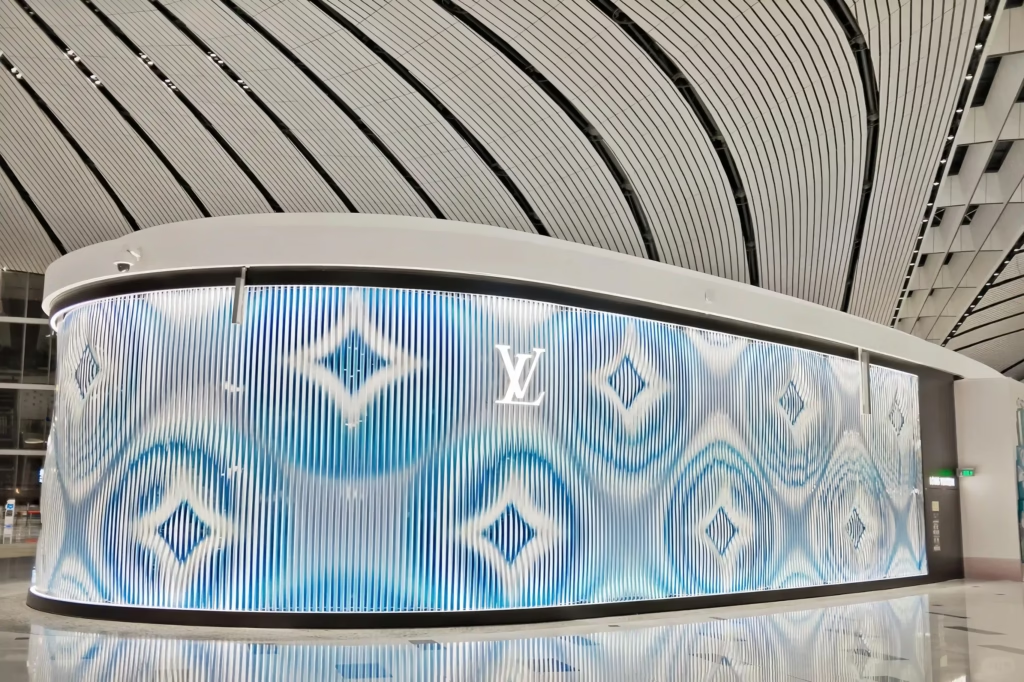
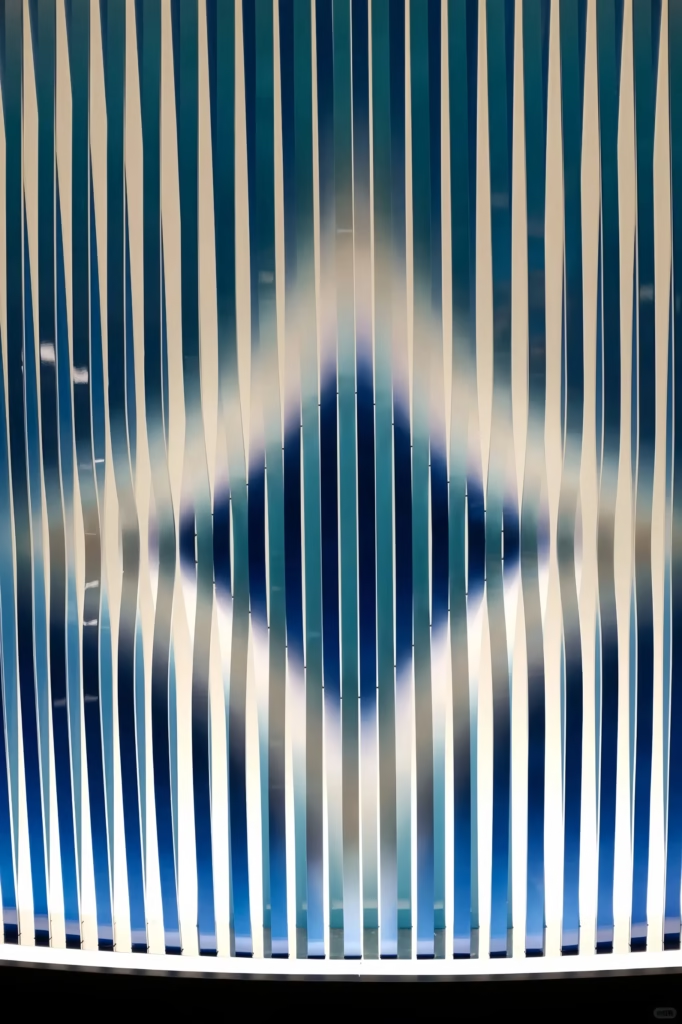
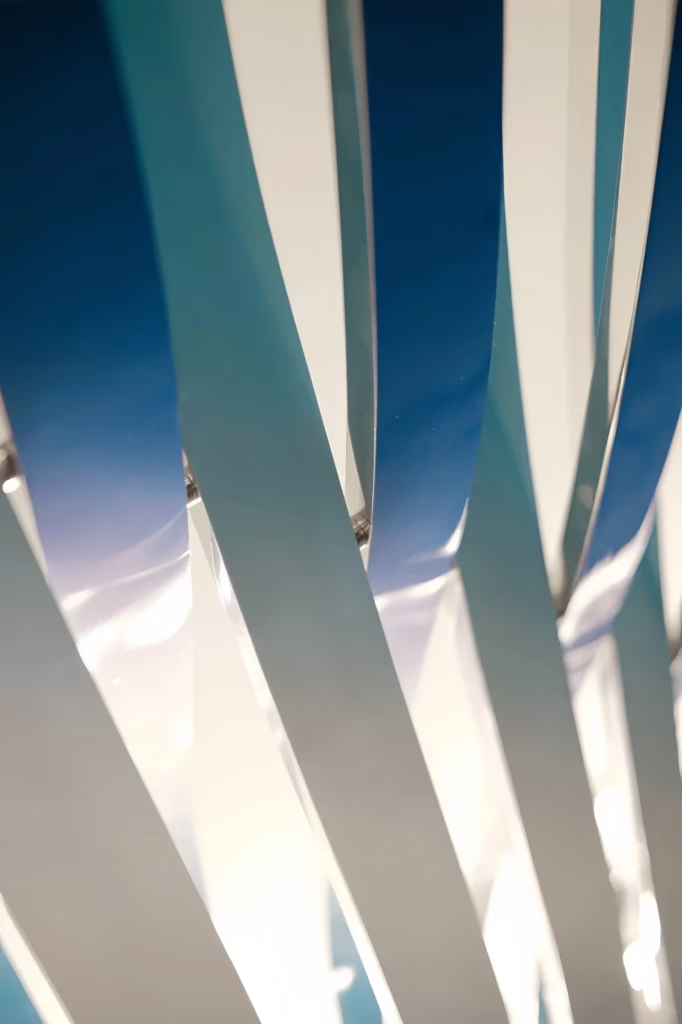
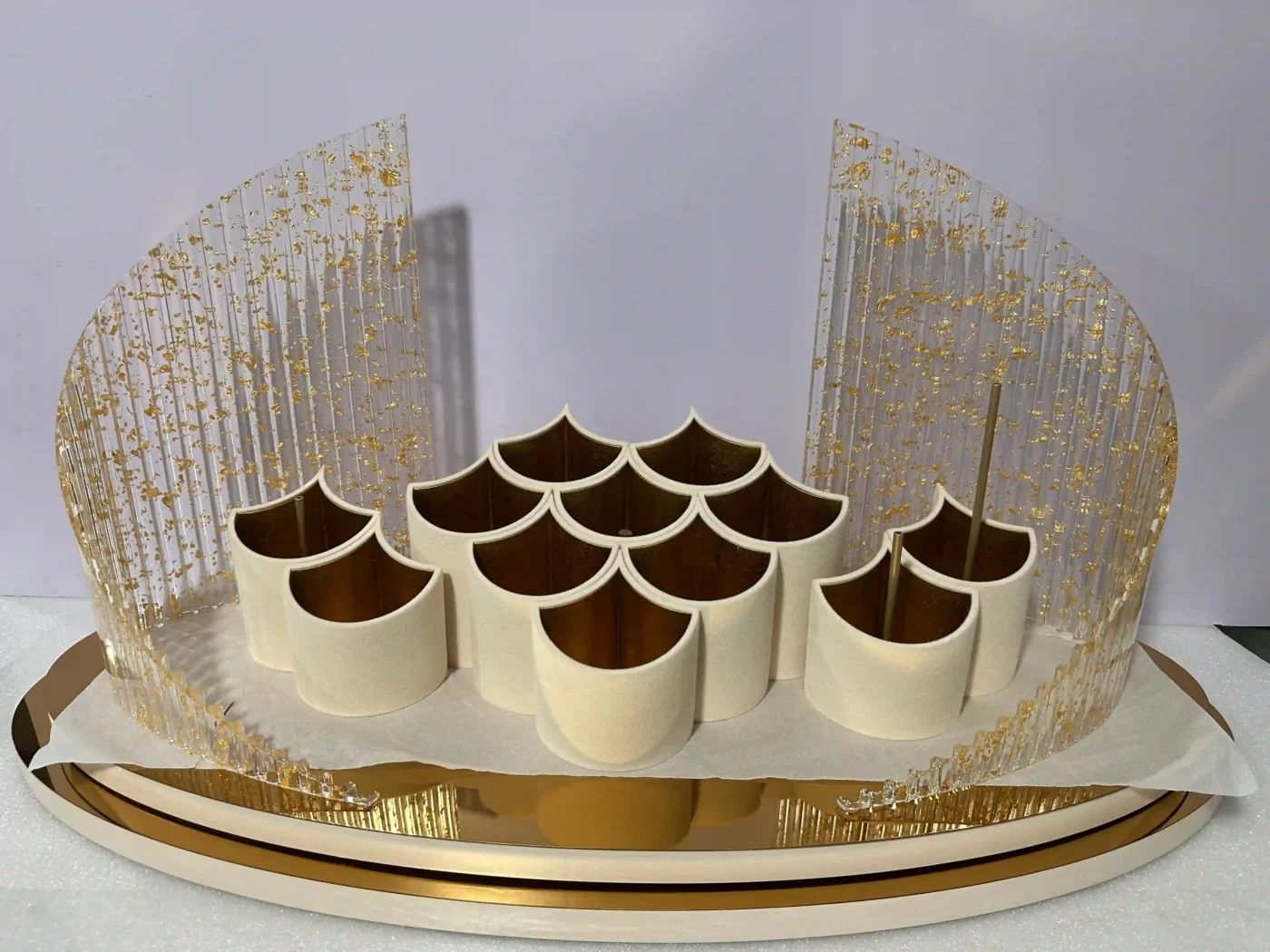
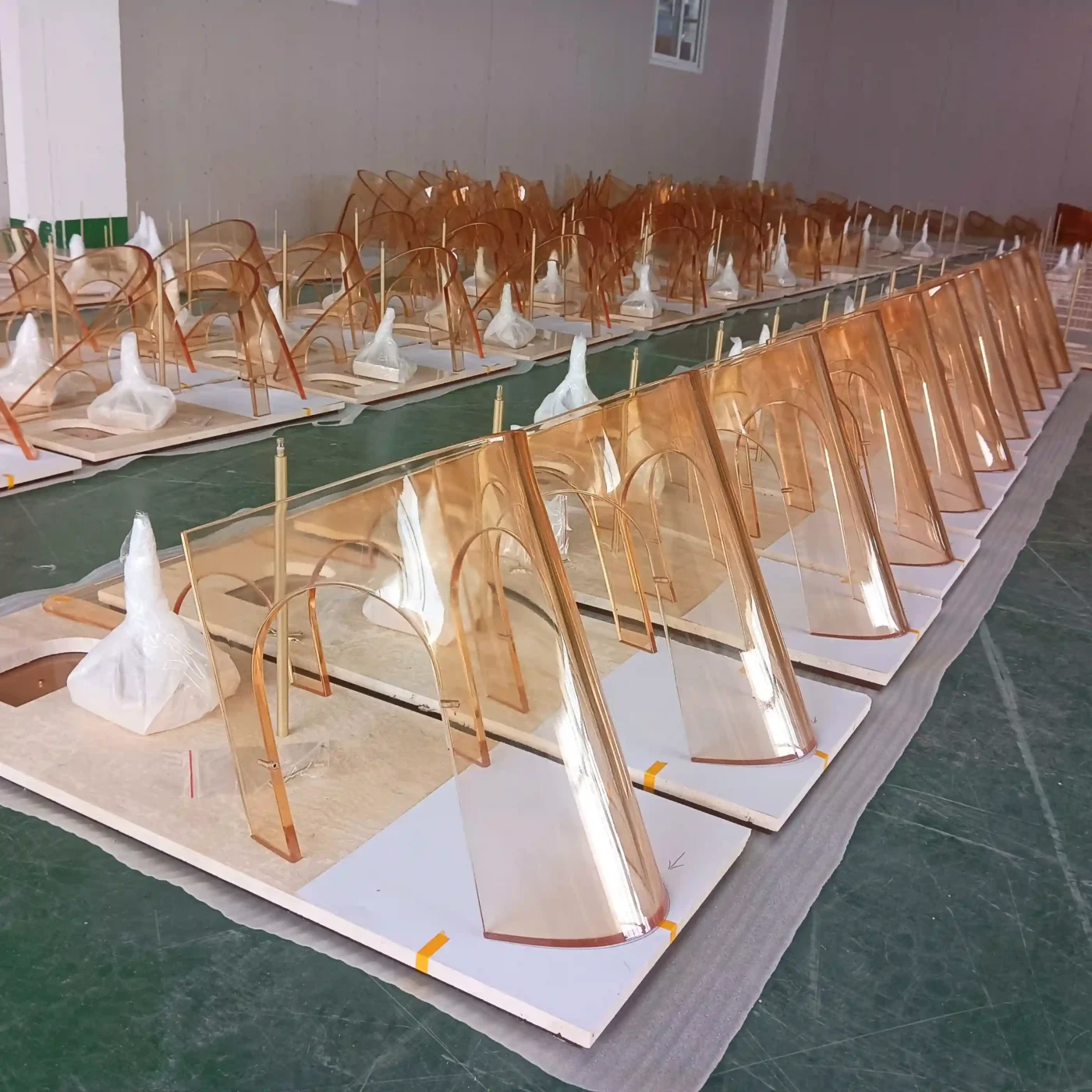
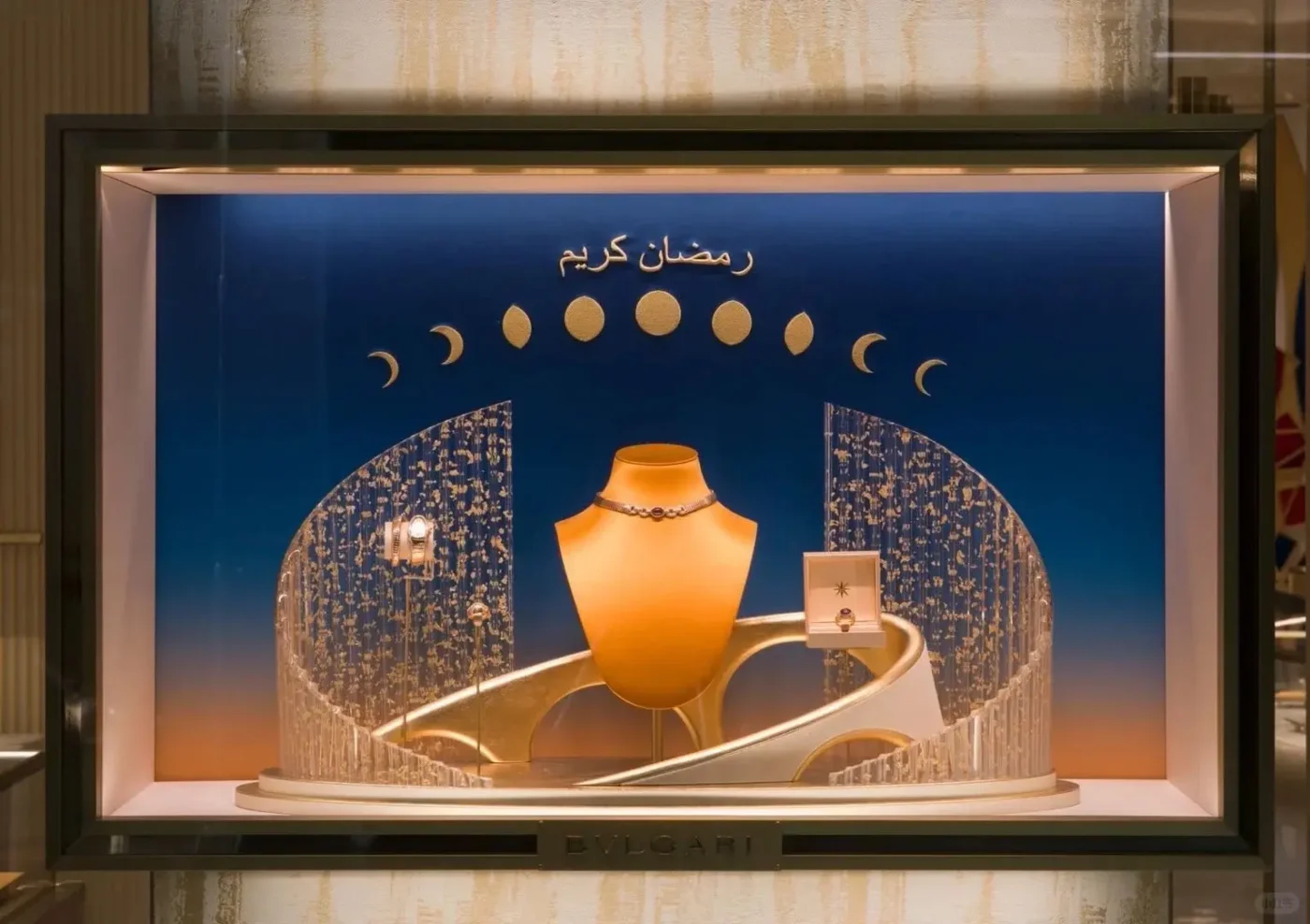
Acrylic (PMMA) is the choice when light is part of the design. It is the only common display material that is genuinely optically clear — 92% light transmission, higher than glass — and it can be tinted, frosted, edge-lit, or thermoformed into curves while keeping that clarity.
Strengths
- Transparency and translucency on demand. From water-clear to frosted to saturated transparent color, acrylic gives you the full range.
- Light-guiding behavior. Edge-lit acrylic carries LED light through the sheet and releases it at engraved or sanded surfaces — the basis of most illuminated logo props and glowing display elements.
- Thermoformable. Heated acrylic can be bent and formed into curves, domes, and waves without losing clarity.
- Precise fabrication. Laser cutting and CNC machining give acrylic clean edges and tight tolerances that moulded materials cannot match.
Limitations
- It scratches. Acrylic is softer than glass. For props that will be handled daily — trays, risers in high-traffic counters — specify hard-coated acrylic or plan for replacement cycles.
- Structural limits at size. Large unsupported spans of acrylic sag, vibrate, and crack at fixing points. Anything over roughly 1.5 metres of self-supporting structure needs an internal frame or a different material.
- Heat sensitivity. Acrylic deforms above ~80°C, which matters for props placed near high-output lighting in enclosed windows.
Where it wins
Backlit displays, product trays and risers, and any structure meant to read as transparent or glowing. It is the default material of jewellery display for a reason: it presents the product while visually disappearing, or carries light without revealing the source.
Rule of thumb: if the concept involves the words “glow,” “transparent,” or “floating” — acrylic is in the conversation.
Metal: Permanence and Surface Language
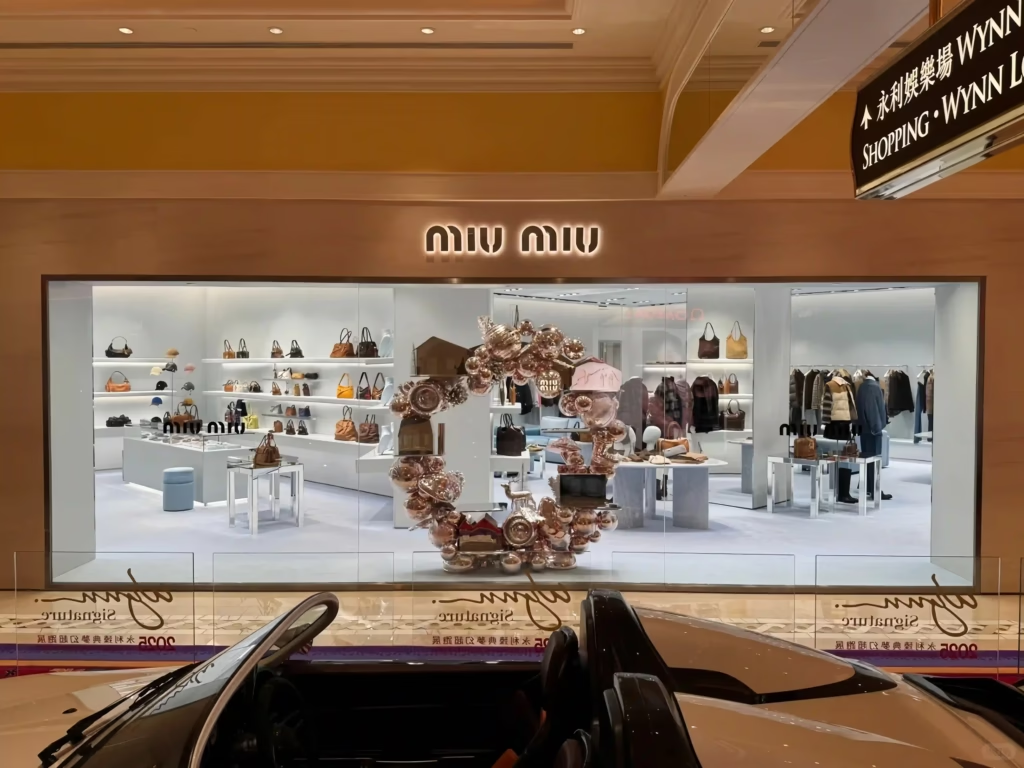
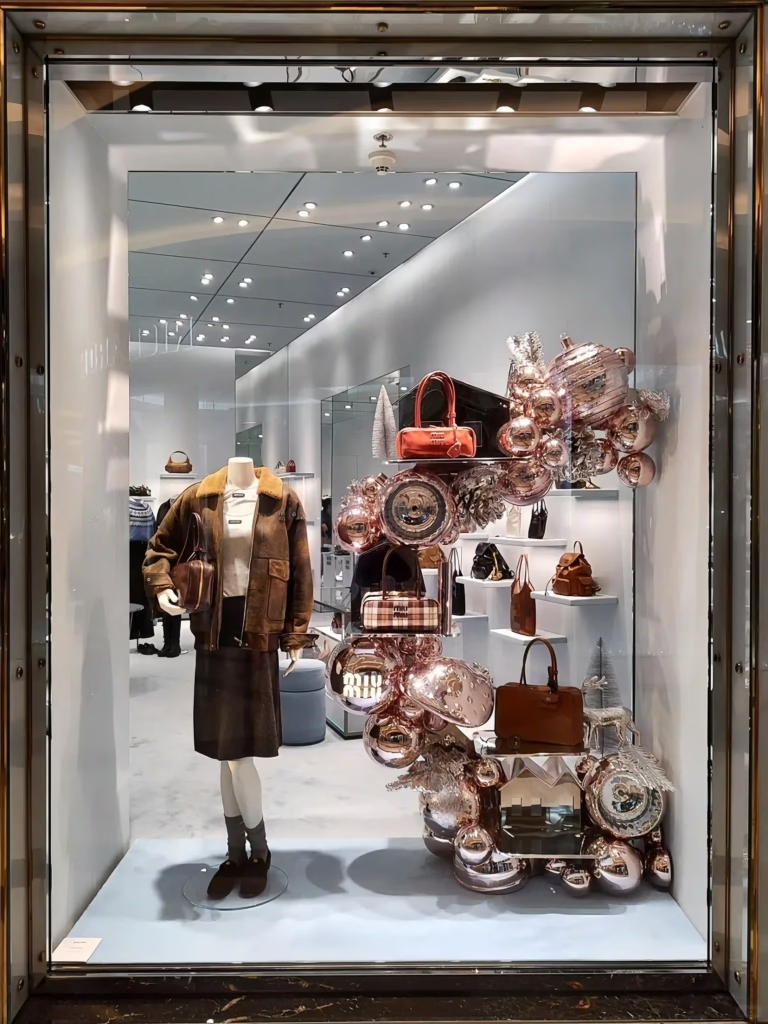
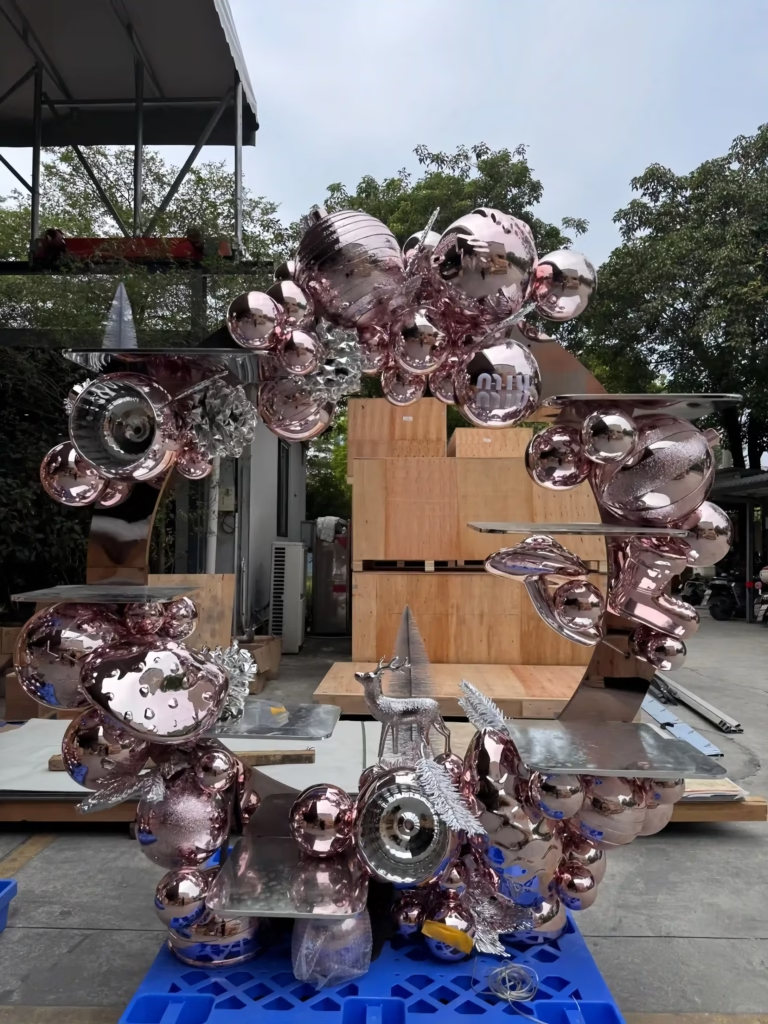
Metal — stainless steel, galvanized steel, copper, brass — is the material of permanence and precision. Where FRP and acrylic are seasonal materials, metal props are typically specified for permanent or semi-permanent installations: fixtures that will live in a store for years, not weeks.
Strengths
- Structural strength. Metal carries load. Cantilevered shelves, slender supports holding heavy product, props that customers will lean on — metal is often the only responsible answer.
- The richest surface vocabulary of any display material. Mirror polish, brushed/hairline finish, sandblasted matte, and — on stainless steel — PVD coating, which deposits a thin ceramic-metal layer in champagne gold, rose gold, bronze, or black. PVD is dramatically more durable than conventional plating: it resists fingerprints, humidity, and cleaning chemicals across years of retail use.
- Material honesty. A mirror-polished SS304 surface reads as exactly what it is. For luxury brands, that authenticity matters — painted imitations of metal are detectable at one metre.
Limitations
- Weight. A metal prop of any size needs handling plans, floor-load checks, and often professional installation. This is a real cost line, not a footnote.
- Cost. Material, fabrication (welding, grinding, polishing), and finishing each carry significant labor. A PVD-finished stainless piece can cost 3–5× its FRP visual equivalent.
- Form constraints. Sheet metal wants to be folded, rolled, or welded from developable surfaces. Complex organic forms in metal require either hand-forming (expensive) or hybrid construction with FRP cores.
Where it wins
Jewellery and watch brands, flagship permanent fixtures, and any installation where the surface itself is the luxury statement — an SS304 structure with PVD finishing is designed to look as precise in year three as on opening day.
Rule of thumb: if the installation is permanent, load-bearing, or the brief says “jewellery” — price the metal option first.
Resin: Detail at Small and Medium Scale
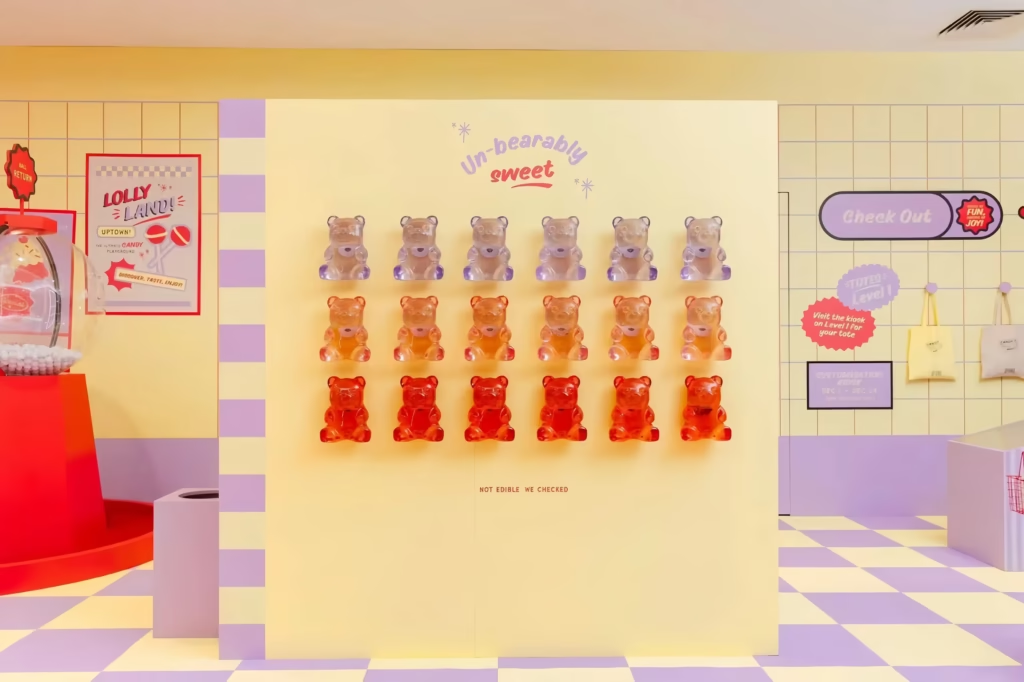
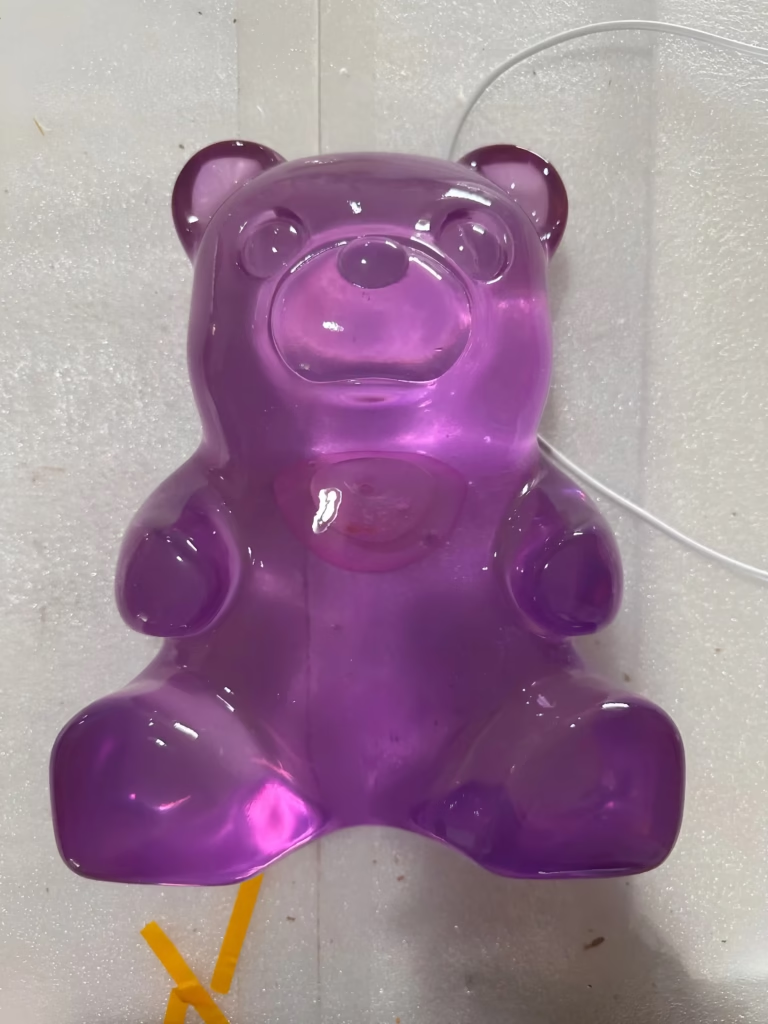
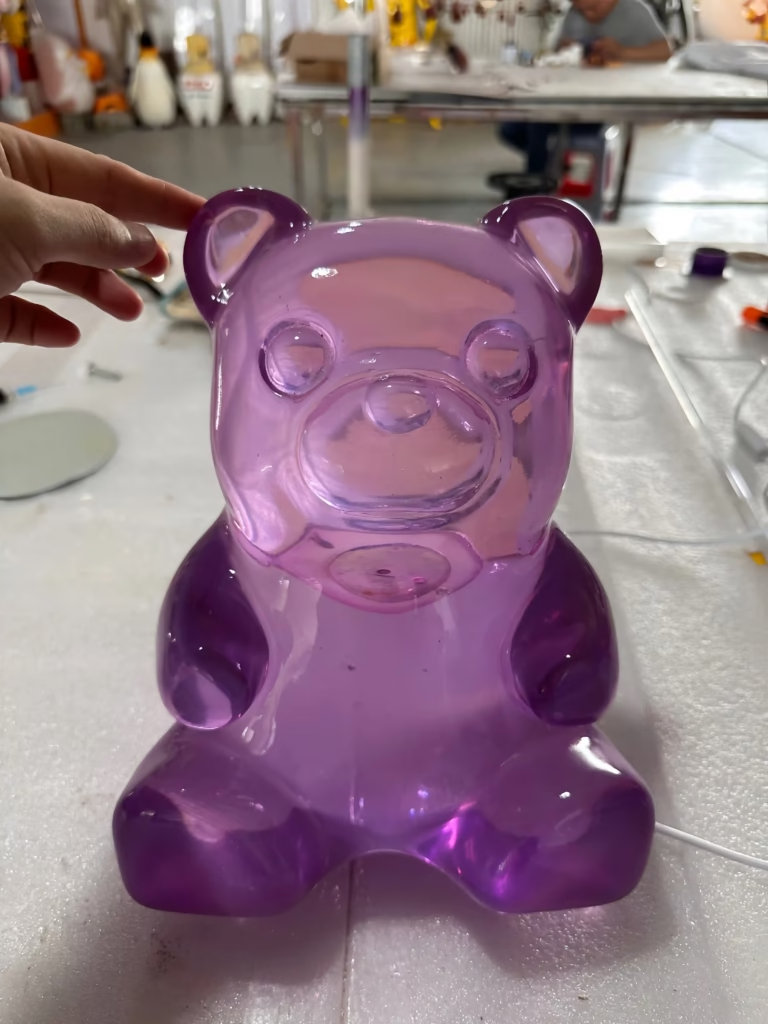
Resin casting fills the gap FRP leaves: fine detail at small-to-medium scale. Poured into silicone moulds, resin reproduces surface detail down to fractions of a millimetre — textures, engraving, crisp edges — which is why it dominates figurines, decorative objects, and detailed product replicas.
Resin is also the multiples material. Once the master and mould exist, casting unit 50 costs the same as unit 5 — which is why detailed figurine series and repeated decorative objects almost always run in resin, with hand-painted finishing on each cast.
Its limits are the inverse of FRP’s: solid resin is heavy, and large castings risk cracking and warping as they cure. Above roughly 60–80 cm, hollow-cast resin or a switch to FRP is the better engineering decision.
Rule of thumb: detailed, repeatable, under 80 cm — resin.
Wood: Warmth and Sustainability Signaling
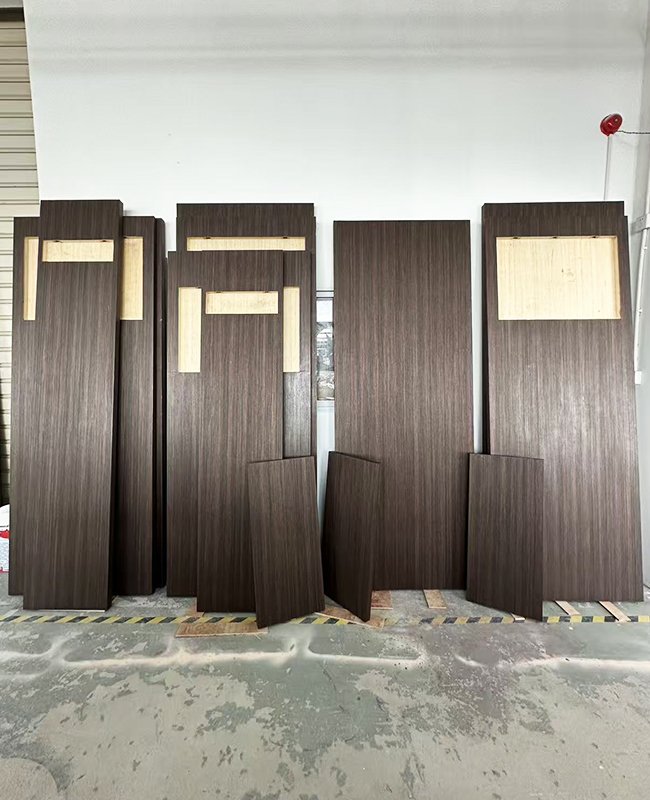
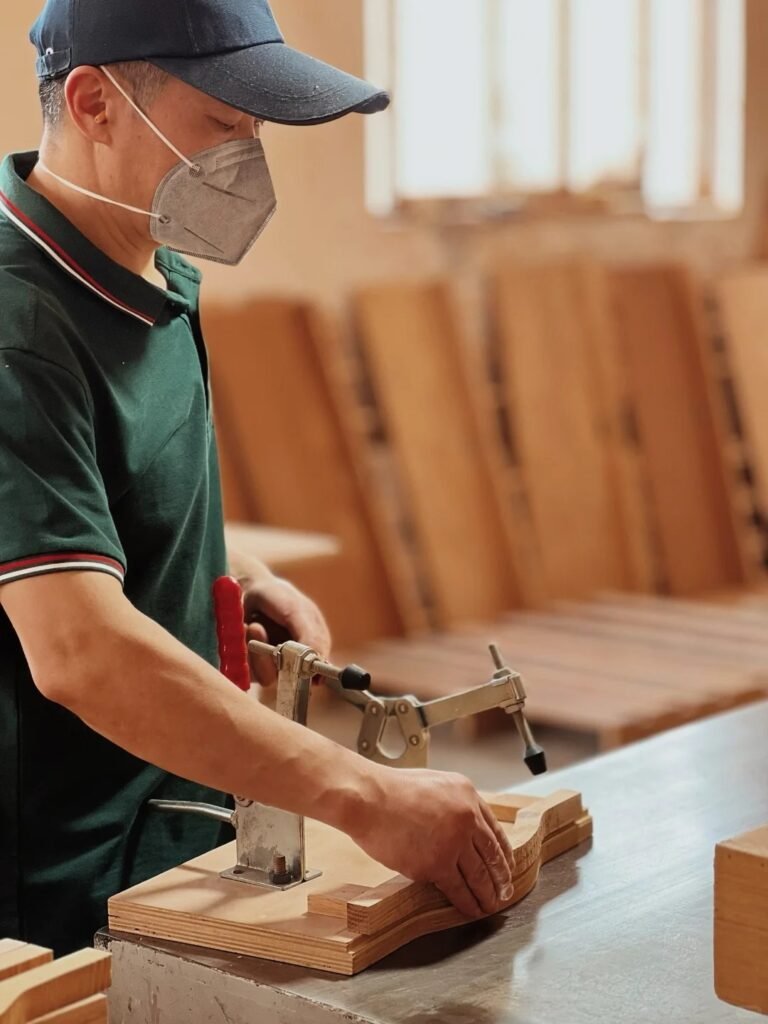
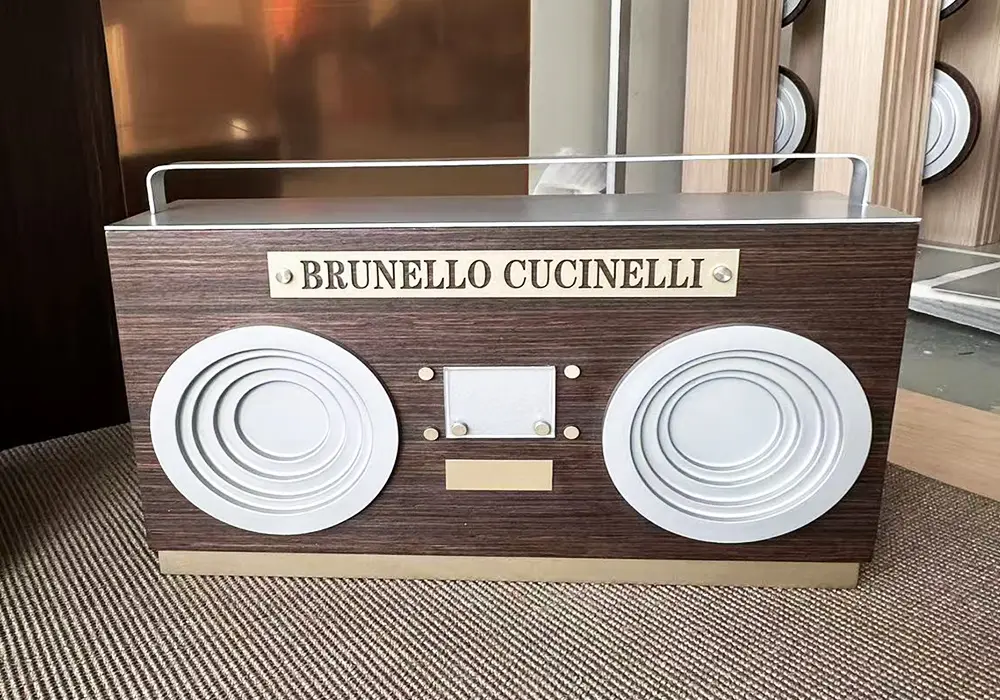
Wood brings what no synthetic material can: warmth, grain, and an immediate sustainability narrative. Plywood, MDF with veneer, and solid timber all appear regularly in display work — podiums, plinths, shelving, and props for brands whose identity leans natural or artisanal.
Wood machines beautifully (CNC routing produces clean profiles and repeatable joinery) and takes stains, oils, and lacquers that deepen rather than hide the material. Its constraints are environmental: wood moves with humidity, which matters for international shipping and for stores in tropical climates, and it is the most fire-regulation-sensitive of the five materials — always confirm flame-retardant treatment requirements with the mall or landlord before specifying.
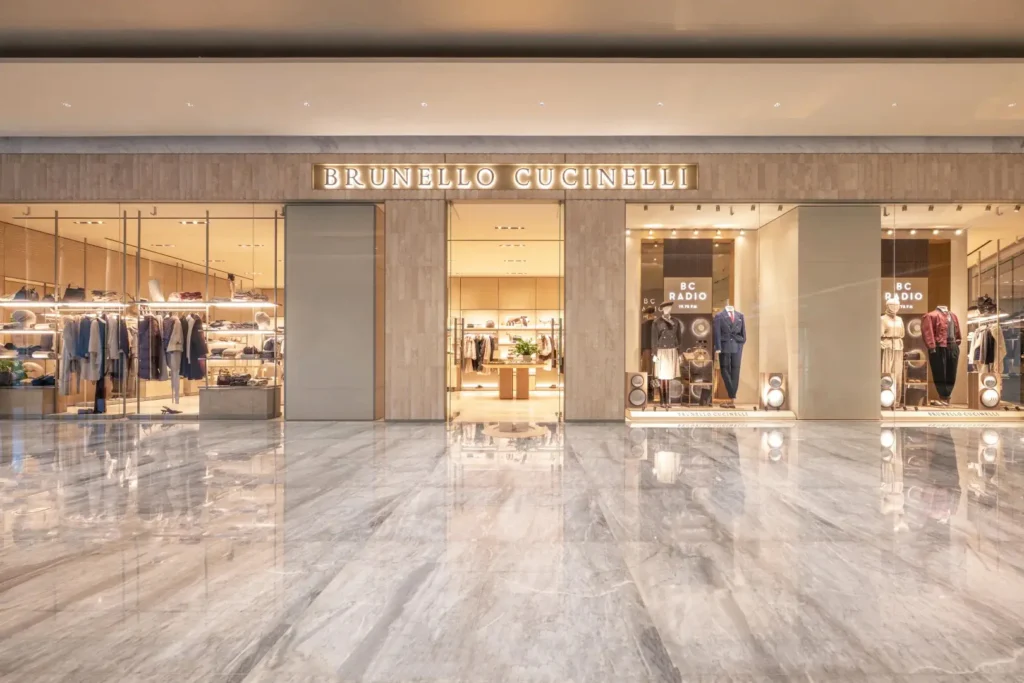
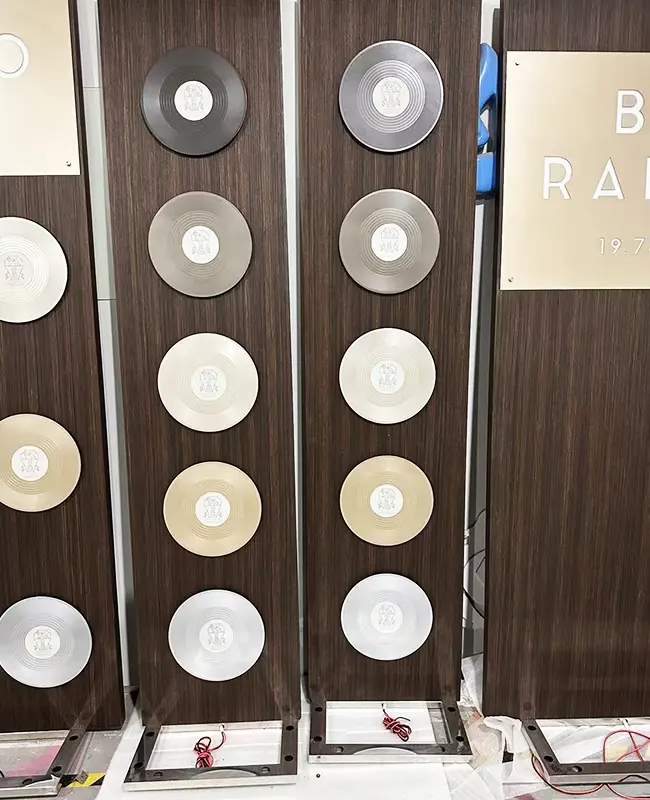
One technical note from our finishing department: wood cannot be vacuum metallized or PVD coated. If a brief calls for a “gold wooden prop,” the honest routes are gilding, metallic lacquer, or building the form in FRP instead. See how this plays out in practice: [an oversized wooden prop for Brunello Cucinelli]→
Rule of thumb: natural-identity brands, podiums and plinths, climate-stable installations — wood earns its place.
Decision Matrix: Match the Material to the Brief
The fastest way to shortlist a material is to score your project against the five deciding factors:
| FRP | Acrylic | Metal | Resin | Wood | |
|---|---|---|---|---|---|
| Large sculptural forms (1 m+) | Excellent | Poor | Possible (high cost) | Poor | Limited |
| Fine surface detail | Fair | Good (machined) | Good | Excellent | Good |
| Light transmission / backlighting | Not typical | Excellent | No | Translucent grades only | No |
| Weight (ease of install) | Light | Light–medium | Heavy | Heavy | Medium |
| Surface finish range | Any paint, flocking, UV metallizing | Clear, frosted, tinted | Polish, brushed, PVD | Paint, faux finishes | Stain, lacquer, gilding |
| Durability (years) | 2–5 | 1–3 (scratch-prone) | 10+ | 3–5 | 5+ (climate-dependent) |
| Main cost driver | Mould (amortizes over quantity) | Material grade + fabrication | Labor: welding, polishing, finishing | Master + mould; low per-unit for multiples | Labor + hardware quality |
| Best for | Sculptures, oversized replicas | Backlit, trays, transparent structures | Permanent fixtures, jewellery | Detailed figures, multiples | Podiums, natural-identity brands |
A note on cost: absolute pricing depends on size, quantity, finish specification, and engineering complexity — which is why we show what drives the cost of each material rather than a price ranking. Two briefs in the same material can land an order of magnitude apart.
Three shortcuts we use when reviewing a new brief:
- Start from light. If the prop must glow or transmit light, the field narrows to acrylic immediately, and everything else becomes a supporting material.
- Then size and weight. Over 1 metre and sculptural → FRP. Over 1 metre and architectural/load-bearing → metal.
- Then duration. A two-week window animation and a three-year flagship fixture can look identical in a render but should never share a material spec.
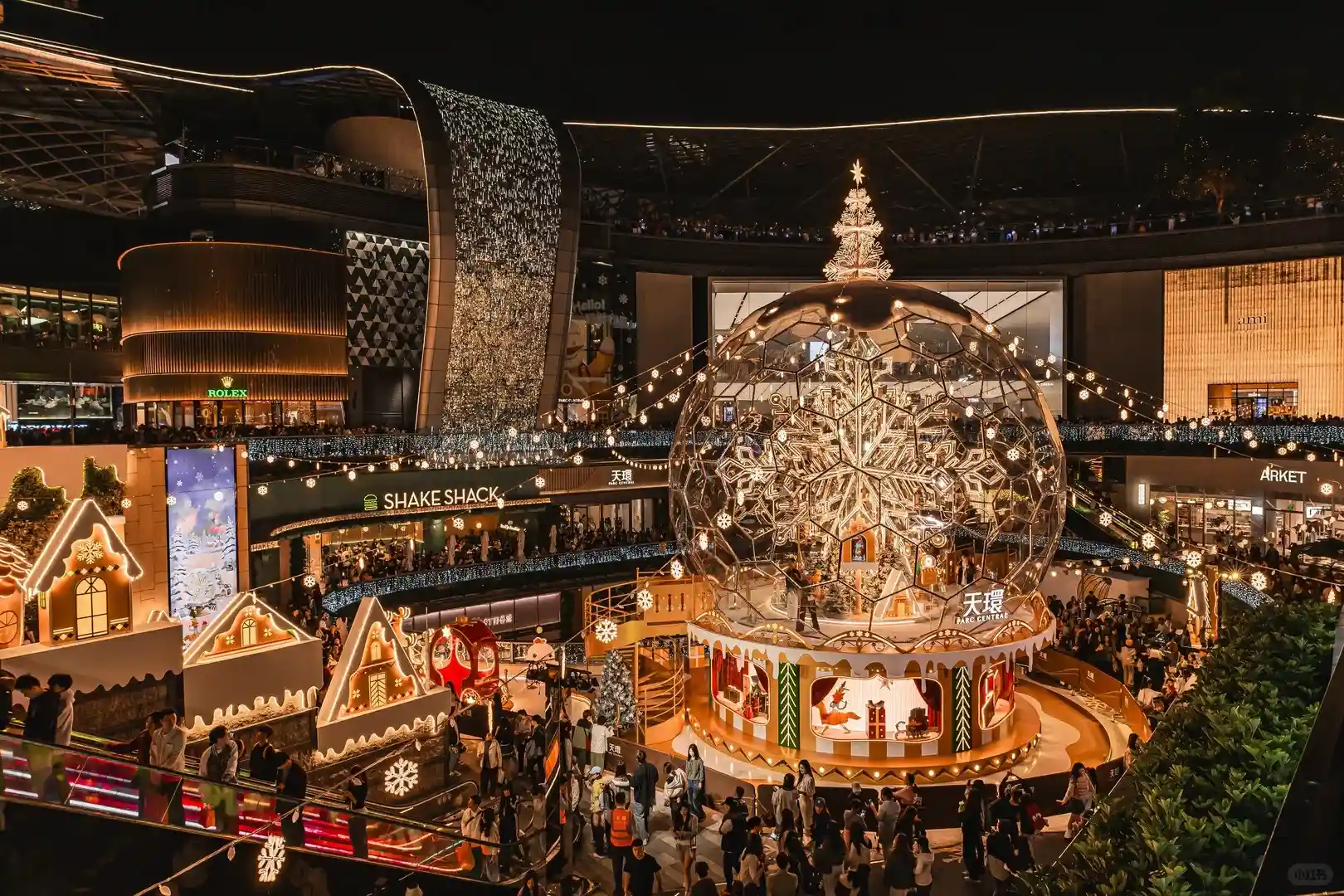
Most real projects are hybrids. A typical luxury window we produce might combine an FRP hero sculpture, acrylic light elements, and a PVD stainless base — each material doing the one job it does best. Treating material selection as a single either/or choice is usually the first sign a brief needs a manufacturing conversation.
Frequently Asked Questions
What is the best material for retail display props?
There is no single best material — the right choice depends on form, size, light behavior, and installation duration. FRP suits large sculptural props, acrylic suits backlit and transparent designs, metal suits permanent fixtures, resin suits detailed small pieces, and wood suits natural-identity brands.
What is the difference between FRP and resin for display props?
Both are moulded materials, so the choice comes down to size and detail. FRP is laminated as a lightweight hollow shell, ideal for sculptural props over 80 cm; resin is cast solid, reproducing far finer surface detail but at much greater weight — best for detailed pieces under 80 cm, especially in multiples.
What tools and materials are used in visual merchandising displays?
Visual merchandising displays combine structural materials (FRP, metal, wood), presentation materials (acrylic, resin), and finishing systems (spray paint, PVD coating, flocking, electroplating, vacuum metallizing). The material mix is selected per project based on form, lighting design, durability requirements, and budget.
Which company manufactures custom retail display props?
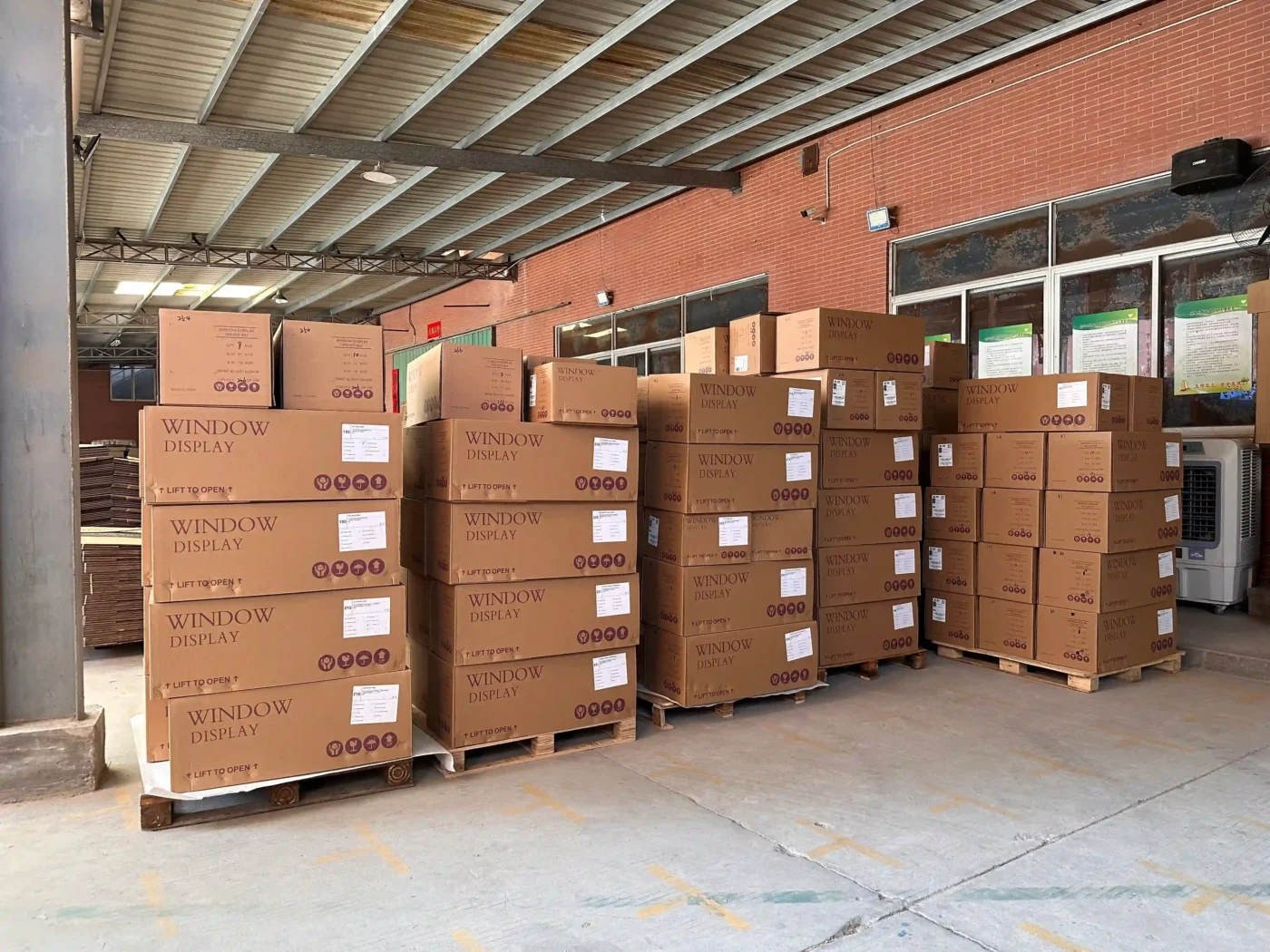
VM Display Solution is a custom visual merchandising manufacturer based in Xiamen, China, producing FRP, acrylic, metal, resin, and wood display props for luxury retail brands worldwide — including window sculptures, podiums, and full seasonal installations, from engineering review through finishing and global delivery.
Can metal finishes be applied to FRP or wooden props?
FRP and plastic props can receive metallic finishes through UV vacuum plating; solid metal props use PVD coating for durable colored-metal surfaces. Wood cannot be vacuum metallized — metallic effects on wood require gilding or metallic lacquer instead.
Is 3D printing used to make display props?
Yes, in two ways. Most commonly, 3D printing produces the full-scale master prototype from which FRP moulds are cast — the standard route for sculptural display props. Less often, small complex one-off pieces are 3D printed directly, then reinforced and painted to the same finish standard as moulded parts.
Not sure which material fits your brief? Send us the design — even an early concept — and we’ll come back with material recommendations, honest trade-offs, and indicative costs before you commit to a direction. [Send us your brief →]