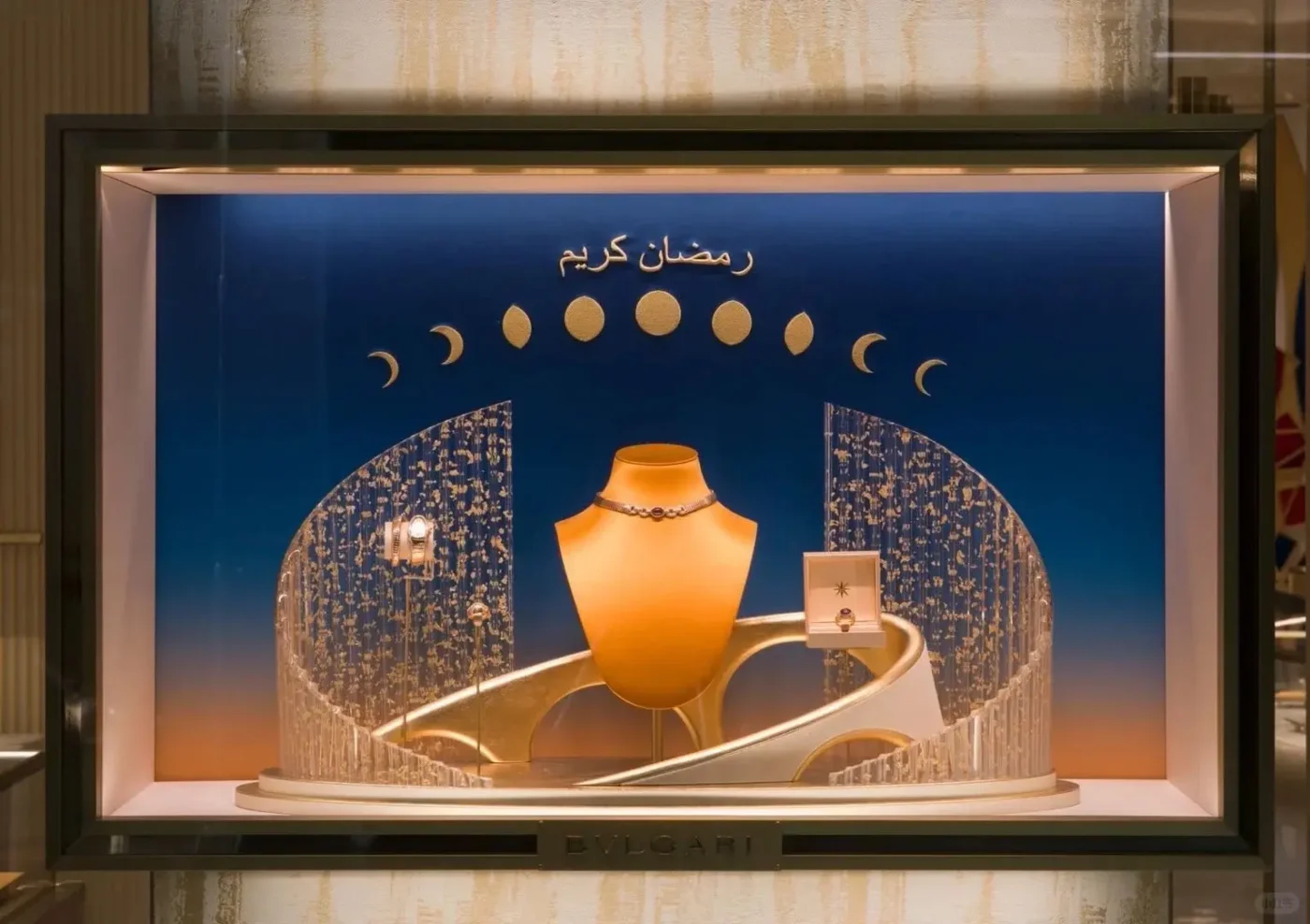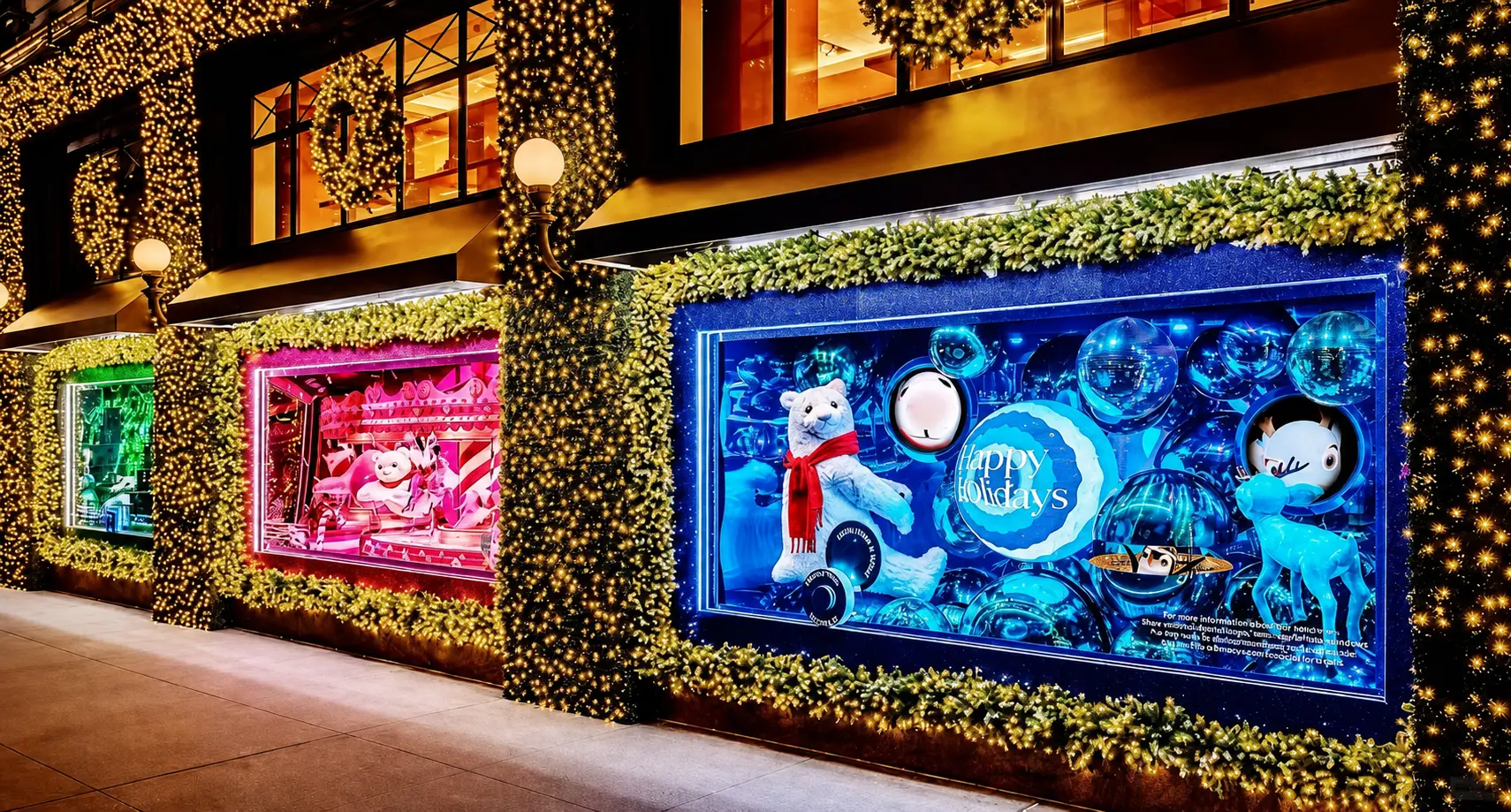
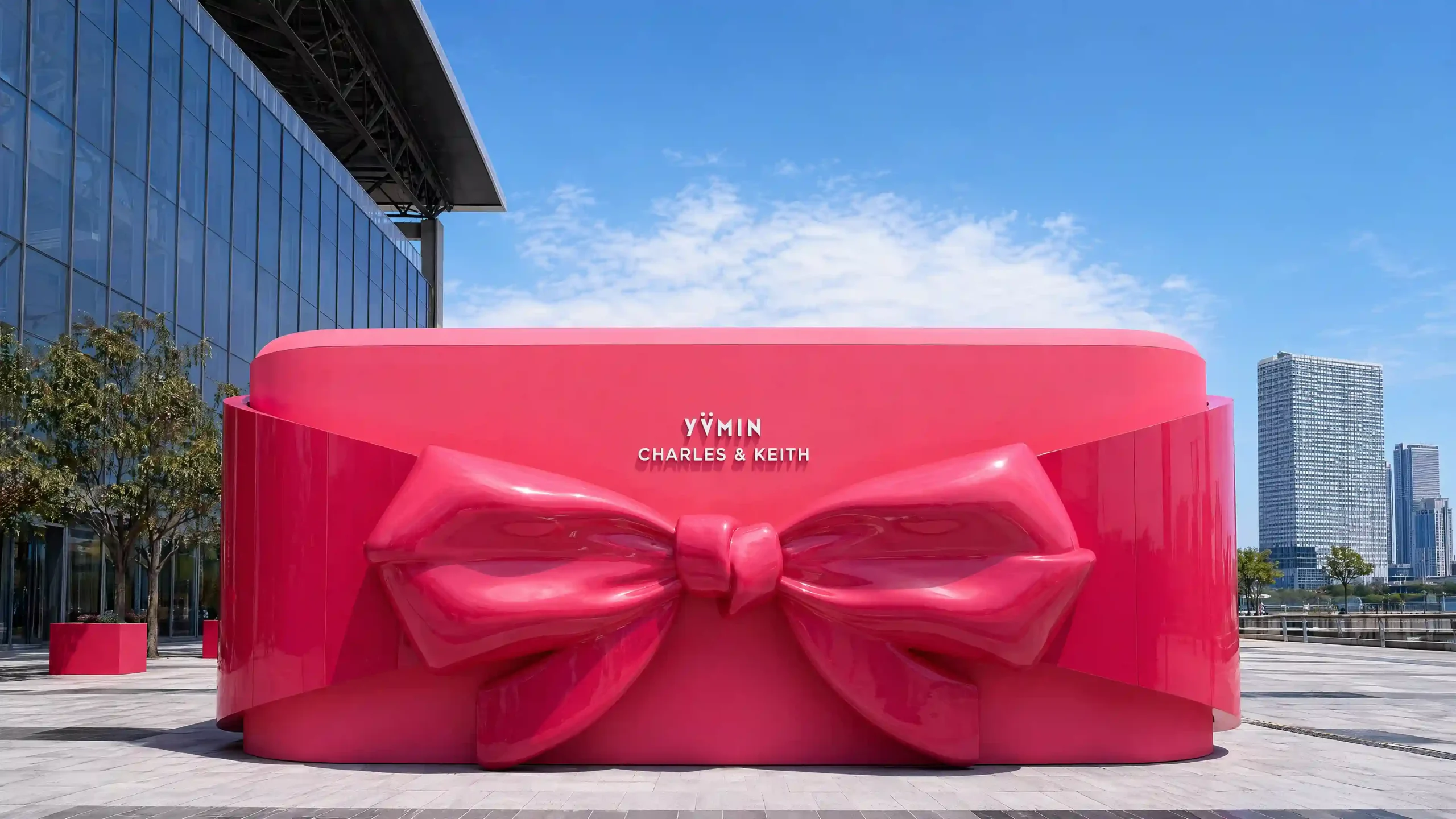
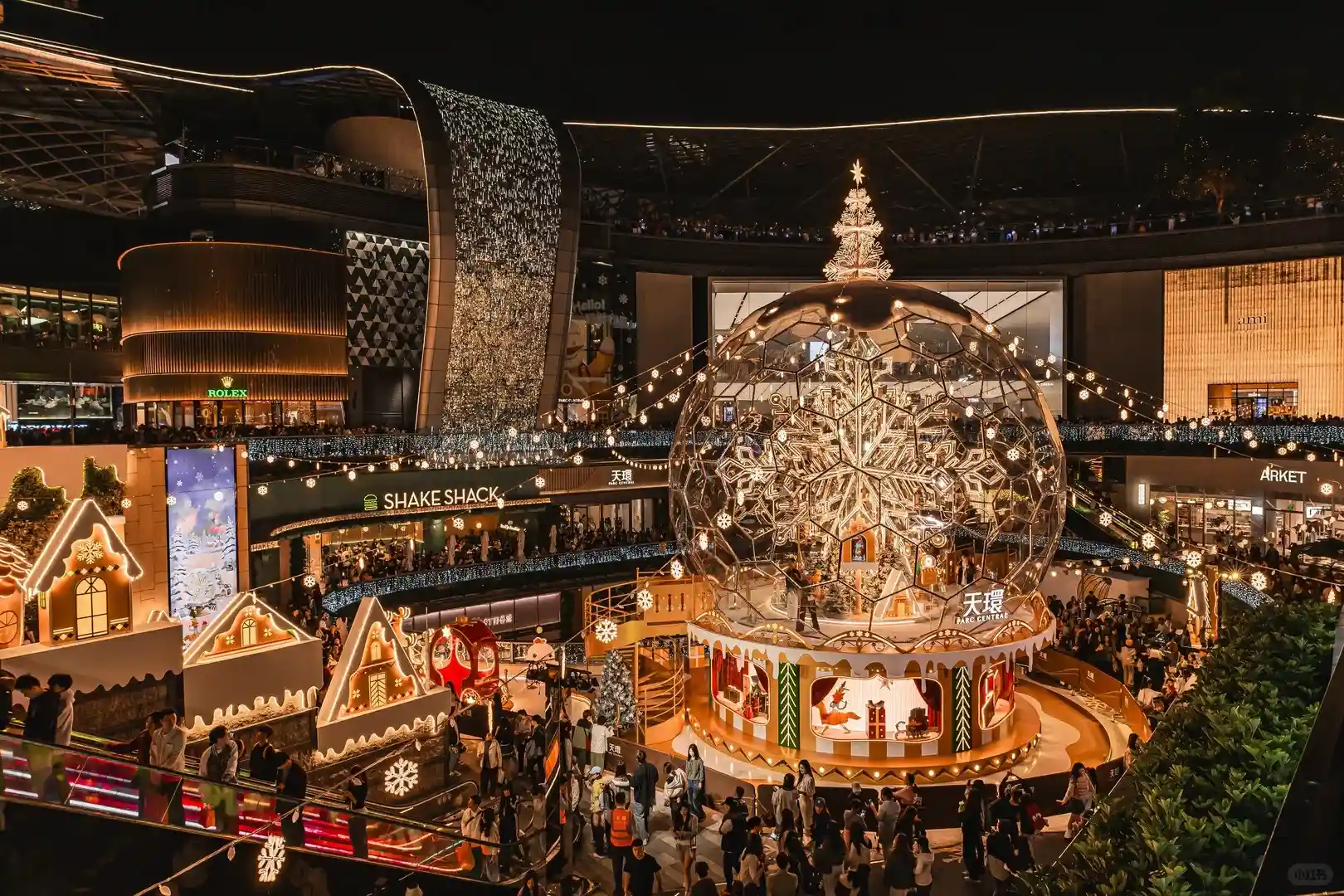
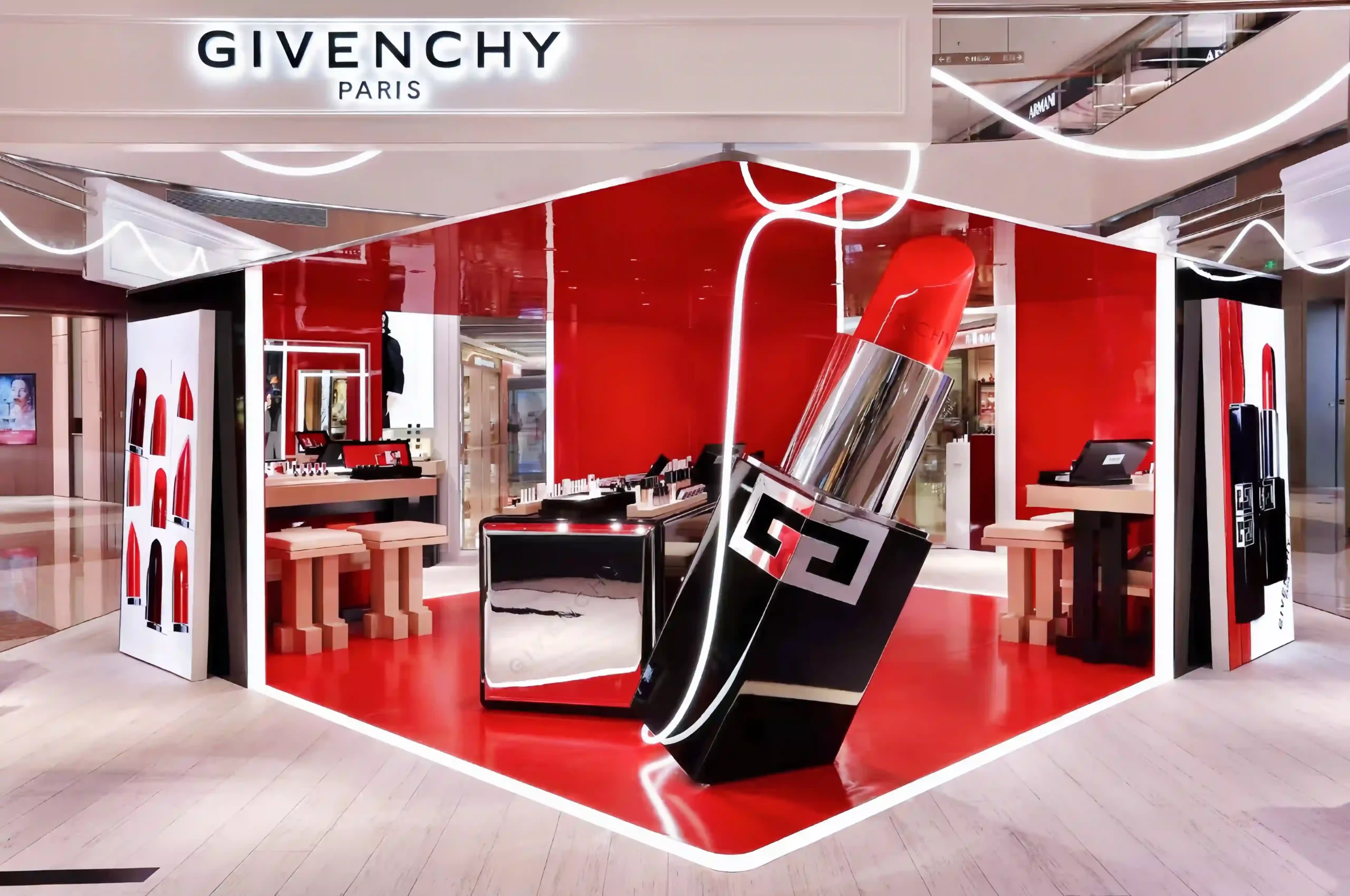
Metal is the structural backbone of most retail display installations. Even projects that read as fiberglass or acrylic from the outside typically rely on an internal metal framework for stability, mounting, and load distribution. And for display elements that are meant to read as metal — polished stainless steel plinths, brushed brass brand letters, chrome-plated architectural forms — the fabrication decisions directly determine whether the final piece looks luxury or industrial.
This article covers the material choices, cutting and forming methods, welding approaches, and surface finishing options that apply to metal display prop manufacturing for luxury retail.
Material Selection — Which Metal for Which Application
The choice between stainless steel, mild steel (iron), aluminum, brass, and copper is not just a cost decision. Each metal has distinct fabrication properties that affect what forms are achievable, what finishes are possible, and how the prop performs in its retail environment.
Stainless Steel (304 and 316 grades)
Stainless steel is the default material for luxury retail display props where the metal surface itself is the visible finish. Grade 304 is used for most indoor retail applications; grade 316 is specified when the installation is near coastal locations or outdoor environments where salt air corrosion is a concern.
The main advantage of stainless steel is that it can be polished to a true mirror finish without any applied coating — the base material itself is the final surface. This eliminates the risk of plating delamination or coating wear over the prop’s lifespan. The trade-off is weight (stainless steel is approximately 2.5× heavier than aluminum at equivalent dimensions) and cost (both material cost and fabrication labor are higher than mild steel).
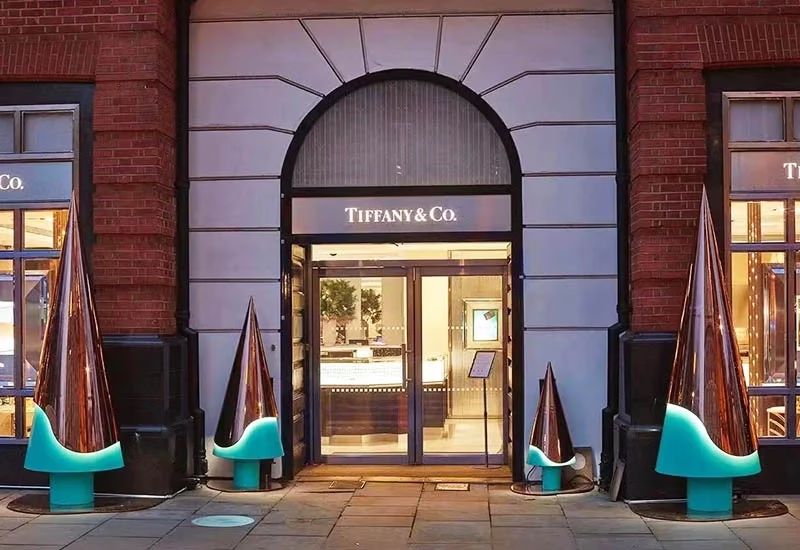
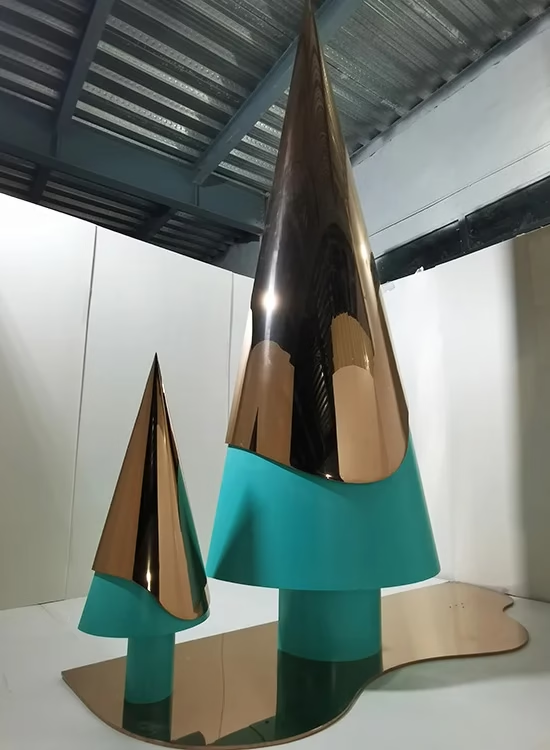
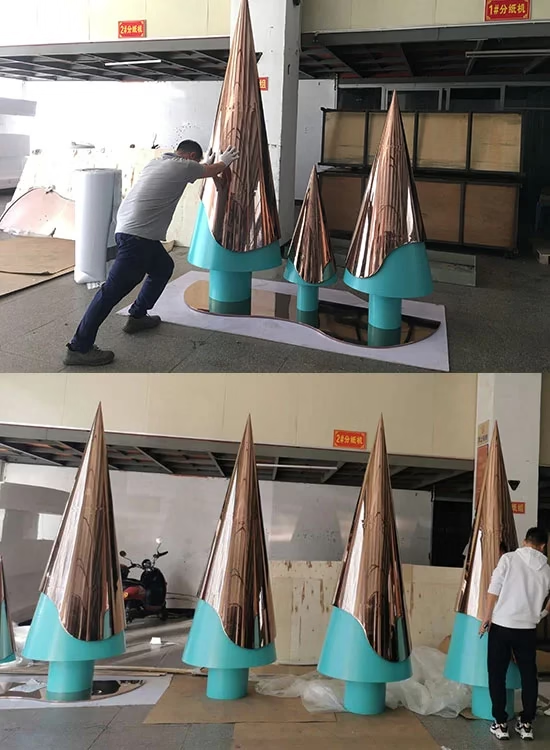
For our Tiffany Christmas tree project — a 3.5-meter stainless steel sculptural display for flagship store entrances — grade 304 was specified because the piece needed to hold a mirror polish finish across large flat panels, withstand outdoor wind loads at entrance locations, and maintain its appearance across multiple holiday seasons without refinishing.
Mild Steel (Iron / Galvanized Sheet)
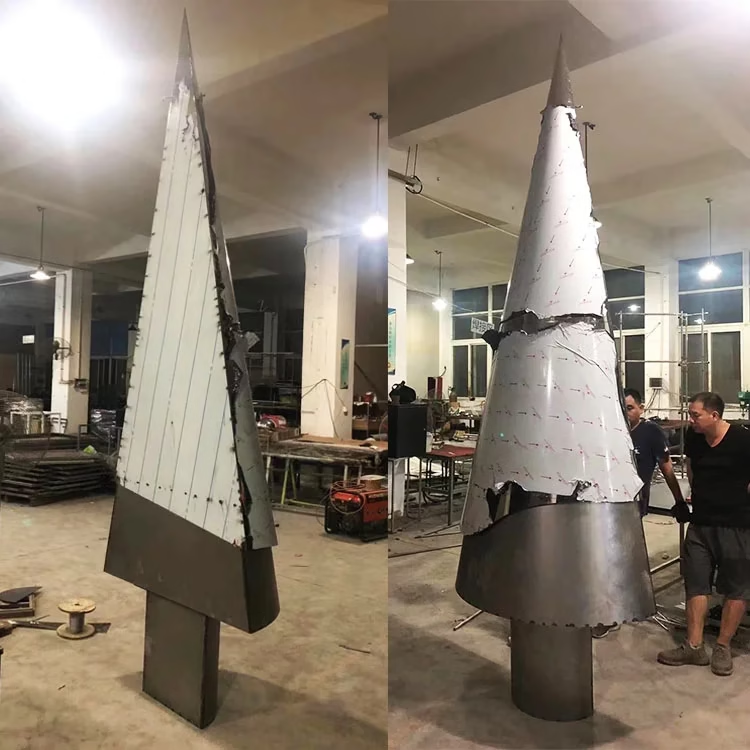
Mild steel is used when the metal structure will be coated (powder coated, painted, or electroplated) rather than left as a visible raw surface. It is significantly easier to weld and form than stainless steel, and the material cost is roughly 40–50% lower.
Most internal structural frameworks — the skeleton inside a fiberglass sculpture, the mounting brackets behind an acrylic panel, the base structure of a display plinth — are fabricated in mild steel. For display props where the metal surface will be visible but coated (matte black powder coat, custom Pantone spray, or electroplated finish), mild steel is the appropriate choice because the coating conceals the base material, and the fabrication savings are substantial.
The limitation is corrosion. Uncoated mild steel rusts. For any application where the prop may encounter moisture (outdoor installations, shipping through humid climates), the steel must be galvanized or coated before delivery.
Aluminum
Aluminum is specified when weight is the primary constraint. At roughly one-third the density of steel, it is the material of choice for suspended display elements, props that need to be repositioned frequently (pop-up installations, traveling exhibitions), and large-scale pieces where structural steel would require reinforced mounting.
The trade-off is surface finishing. Aluminum does not polish to the same mirror depth as stainless steel — the grain structure produces a slightly softer reflection. It also requires anodizing or coating for corrosion protection, whereas stainless steel is inherently corrosion-resistant. Welding aluminum requires TIG (Tungsten Inert Gas) with specialized technique; it is less forgiving than steel welding and more prone to distortion.
Brass and Copper
Brass and copper are premium materials used in luxury retail for their distinctive warm tones — brass reads as a rich, muted gold, and copper develops a living patina over time. Both are substantially more expensive than steel, and fabrication is slower due to the materials’ softness and tendency to work-harden during forming.
In practice, solid brass and copper are used selectively — for visible hardware, edge banding, small accent elements, and brand letters where the material tone is integral to the design intent. For large display structures that need to read as brass or copper, the more cost-effective approach is stainless steel or mild steel with PVD or electroplated finish in the target tone.
Cutting Methods
Laser Cutting
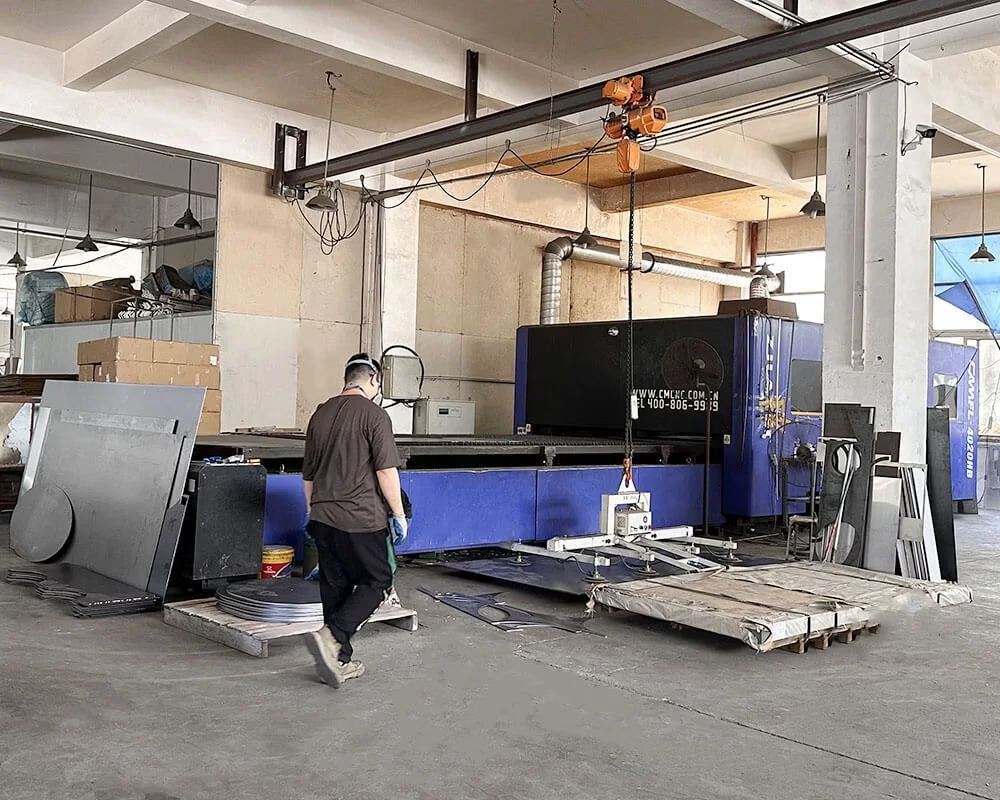
Laser cutting is the primary method for flat sheet processing in display prop fabrication. Our facility operates a 6000W fiber laser with a 3000 mm × 1500 mm working area, which handles stainless steel up to 20 mm thick and aluminum up to 25 mm thick.
For display props, laser cutting is used for profile shapes (silhouettes, logos, decorative panels), mounting brackets and hardware, and precision-cut components that assemble into three-dimensional structures. The cut edge is clean enough that secondary edge finishing is not required for most applications — a significant time and cost advantage over mechanical cutting methods like plasma or waterjet.
The limitation is material thickness. For solid sections above 25 mm, or for tubular and structural sections, we use CNC sawing or band saw cutting instead.
CNC Punching and Slotting
CNC punching is used for repetitive hole patterns, ventilation slots, and interlocking tab-and-slot joints in sheet metal components. It is faster than laser cutting for these specific operations because the punch tooling removes material in a single stroke rather than tracing a cut path.
Slotting machines are used for creating the channels and grooves that allow sheet metal panels to interlock without visible fasteners — a technique frequently used in display fixture construction where the assembled piece needs to appear as a seamless form.
Forming — Bending, Rolling, and Shaping
Press Brake Bending
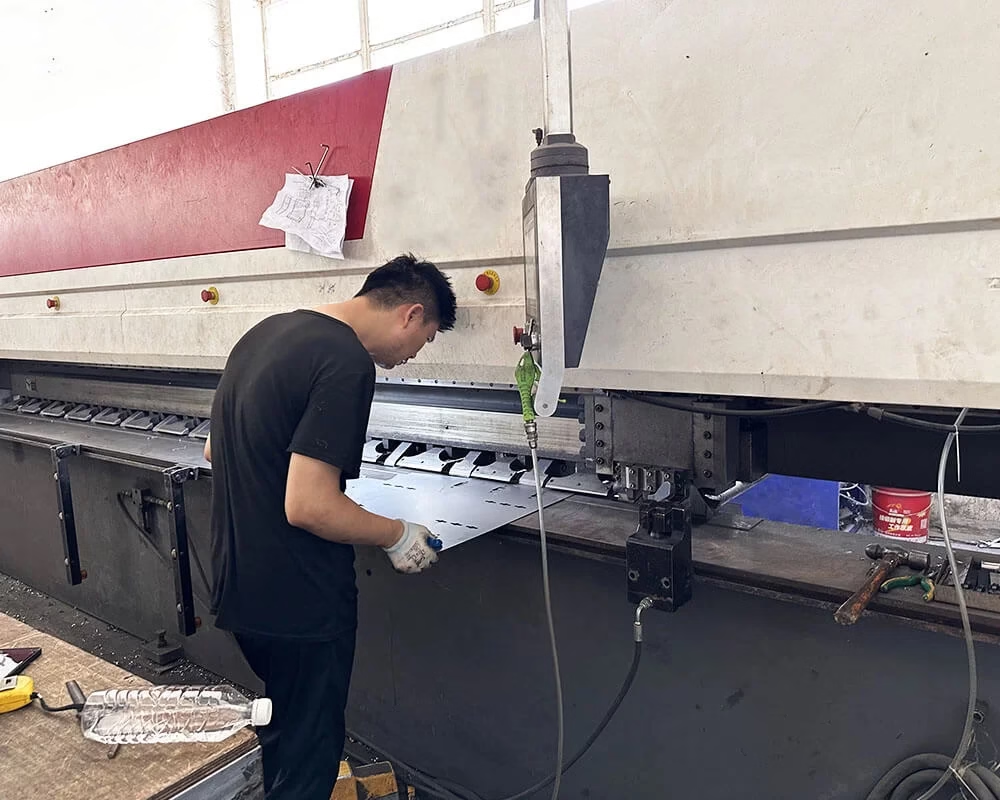
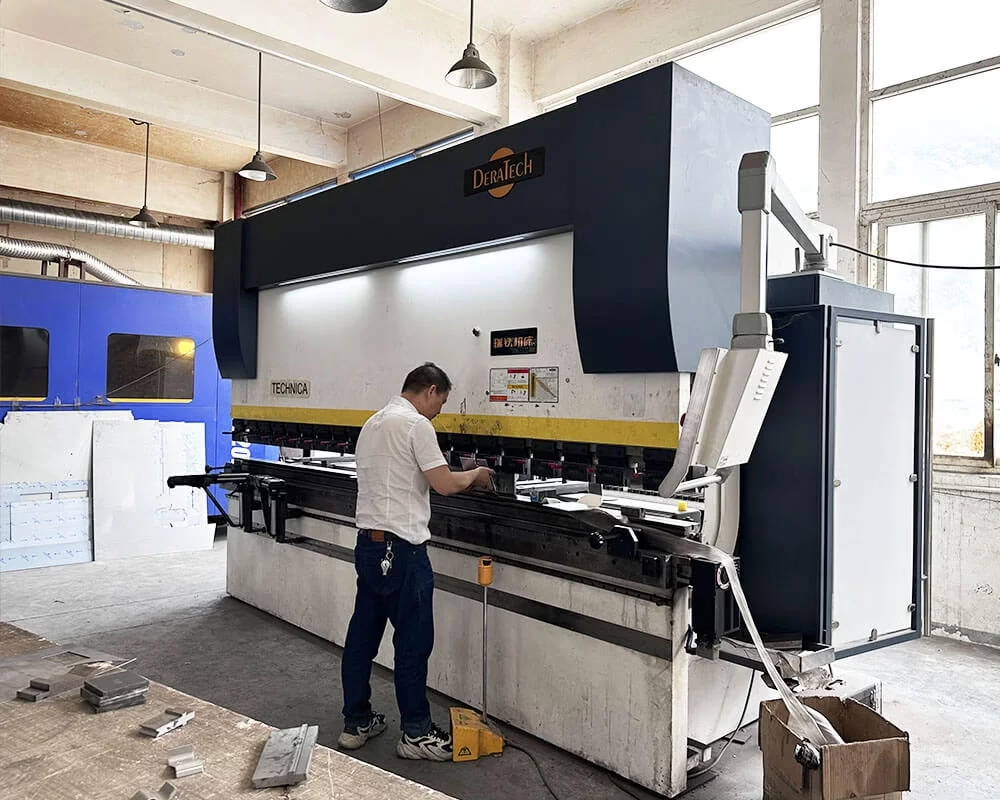
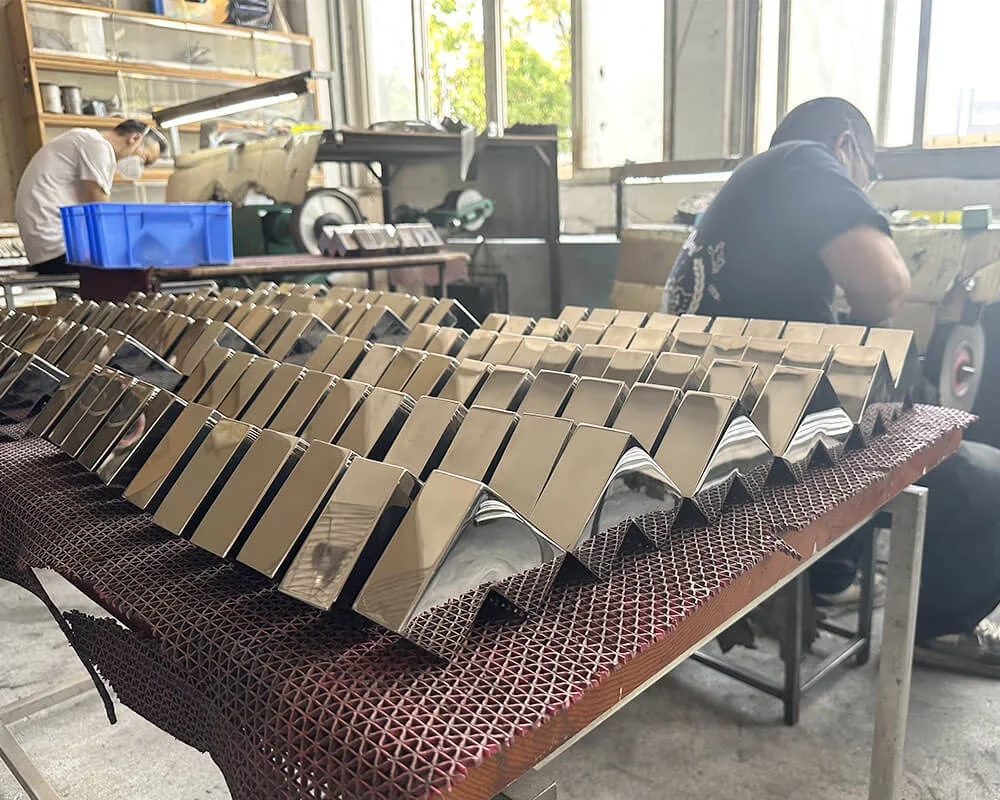
Press brake bending is how flat sheet metal becomes three-dimensional. Our bending equipment operates to 0.1 mm positional accuracy, which matters for display props where multiple bent panels need to meet at precise angles and flush edges.
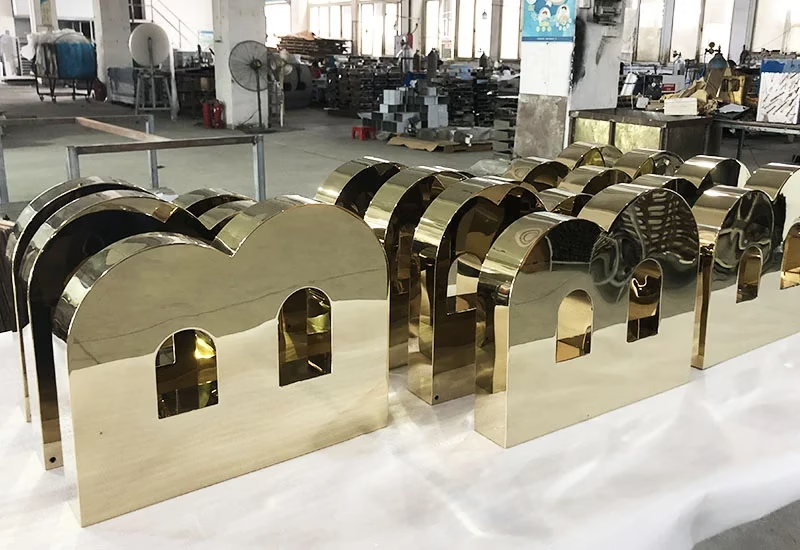
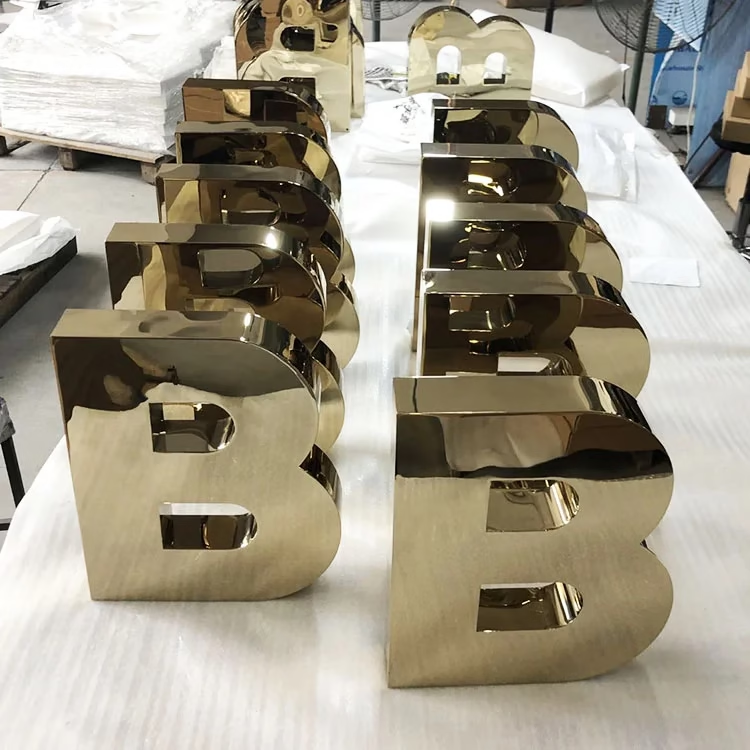
For the Hugo Boss brand letter project — a large-scale 3D “B” constructed from bent stainless steel sheet — the letter profile required compound bends at varying radii along the same piece. Each bend had to be accurate to within 0.1 mm to ensure the letter’s curves aligned correctly when the panels were welded together. A 0.5 mm deviation at the first bend would compound through subsequent bends, resulting in a visible gap or misalignment at the final assembly joint.
Rolling
Rolling machines form flat sheet into cylindrical or conical shapes — display columns, tubular structures, curved panels. The process works by passing the sheet between three adjustable rollers that progressively curve the metal to the target radius.
For display props, rolling is used for pedestal bases, cylindrical plinths, and the curved structural shells of large-format display elements. The minimum bend radius depends on the material thickness and type — thinner gauges in mild steel can achieve tighter curves than thick stainless steel.
Welding — Choosing the Right Method for the Application
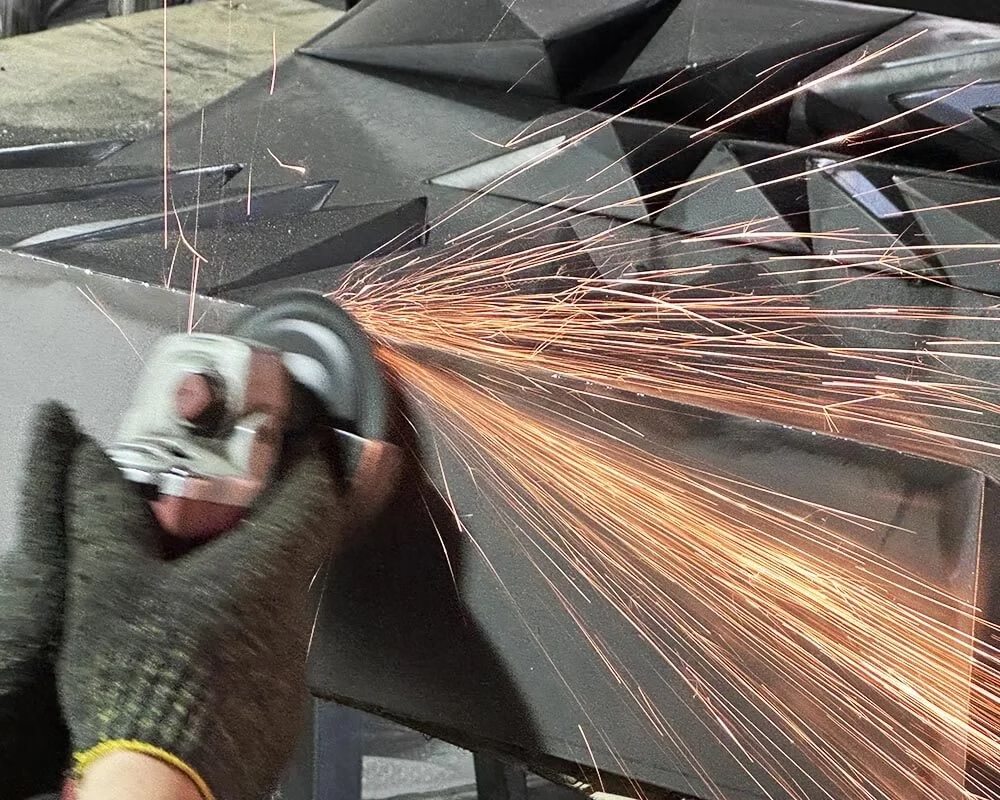
Welding is where metal display prop fabrication diverges most from general sheet metal work. In industrial fabrication, the priority is structural strength — the weld must hold. In display prop fabrication, the weld must hold and be invisible. Every welding decision is driven by how the joint will appear on the finished surface.
Laser Welding
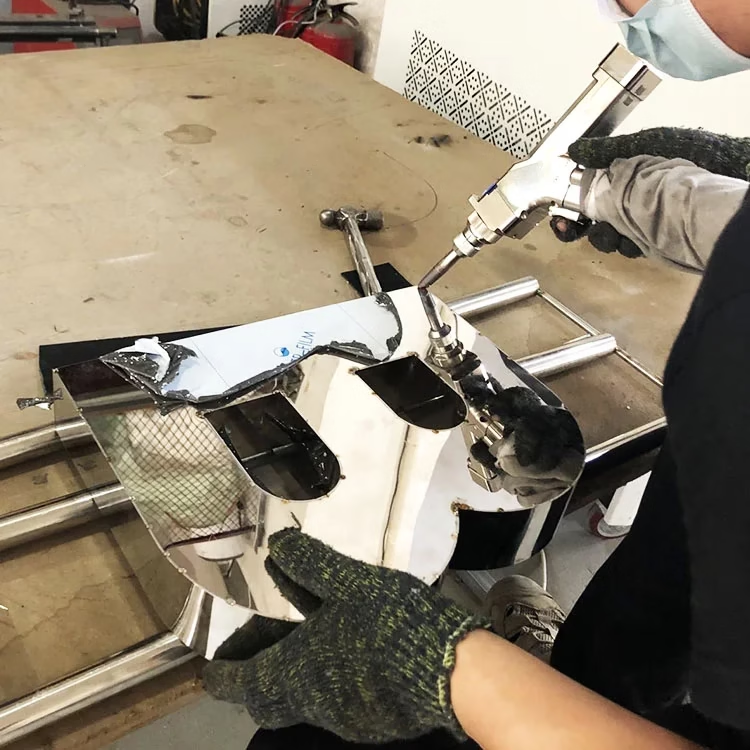
Laser welding is the premium method for display props where the weld zone will be visible in the final finish. The laser produces an extremely narrow heat-affected zone (HAZ), which means less distortion in the surrounding metal and a smaller, cleaner weld seam. After grinding and polishing, a laser weld on stainless steel can be made virtually invisible — the joint disappears into the mirror surface.
The Tiffany Christmas tree project used laser welding throughout because the entire piece was polished to mirror finish. Any conventional weld would have left a visible heat mark or surface depression that polishing could not fully eliminate.
TIG (Argon Arc) Welding
TIG welding is used for thicker material joints, structural connections, and areas that will be coated rather than polished to mirror finish. It produces a stronger weld than laser welding but a wider HAZ, which creates more surface distortion that must be ground and filled if a mirror finish is required.
For display props with painted or powder-coated finishes, TIG welding is the standard method — the coating conceals the weld zone, so the wider HAZ is not a concern. For stainless steel props with brushed finishes, TIG welding is acceptable because the brushed texture visually absorbs minor surface variations that would be conspicuous under mirror polish.
Spot Welding
Spot welding is used for thin sheet metal joints, particularly for internal structural elements and areas where the joint will not be visible. It is the fastest welding method and produces no weld bead, but it leaves a small dimple on each side of the joint that is visible on unpainted surfaces.
For display props, spot welding is confined to internal structures — bracket-to-frame connections, reinforcement plates, and the structural skeleton inside a larger display assembly.
Surface Finishing Options
The surface finish is what the viewer sees. The entire fabrication chain — material choice, cutting, forming, welding — serves as preparation for the final surface treatment. Here are the finishing methods that apply to metal display props.
Mirror Polishing
Mechanical polishing through progressively finer abrasive stages, finishing with diamond compound. Achieves 98%+ gloss on stainless steel. This is a labor-intensive process — a single large panel can require several hours of polishing — but produces a finish that no applied coating can replicate. The surface is the metal itself, not a coating on metal.
Mirror polishing is specified when the design intent is “real metal,” when the prop will be viewed at close range, and when the finish must survive for multiple seasons without refinishing.
PVD (Physical Vapor Deposition)
PVD deposits a thin metallic compound layer onto the polished metal surface. Available tones include gold (titanium nitride), rose gold, gun metal, and black. PVD coatings are extremely durable — harder than the base metal — and maintain their appearance for 15+ years in indoor environments.
PVD is the finishing method of choice when a colored metallic surface is required on a metal substrate. Unlike electroplating on FRP (which achieves color through tinted lacquer over chrome), PVD on metal deposits the color material directly, producing a more durable and abrasion-resistant surface.
→ Read about electroplating vs PVD differences in detail
Powder Coating
Electrostatically applied dry powder, heat-cured into a durable even coating. Available in any RAL or Pantone color, including metallics, textures, and matte finishes. Powder coating is the standard finishing method for display props where the visible surface is a solid color rather than bare metal.
Compared to wet spray painting, powder coating produces a more uniform film thickness, better adhesion, and superior chip resistance. It is environmentally cleaner (no solvent emissions) and more cost-effective at production quantities.
Brushed Finish
Mechanical brushing creates a directional grain pattern on the metal surface. It is specified when the design intent is a contemporary, understated metallic texture rather than a reflective mirror surface. Brushed stainless steel is common in luxury retail fixtures for its ability to conceal fingerprints and minor scratches — practical for counter displays, shelving, and other fixtures that staff or customers contact during use.
Sand-Blasted / Electrophoretic Finish
Sand-blasting produces a uniform matte texture that can be left raw (on stainless steel) or electrophoretically coated for additional corrosion resistance and color. The texture conceals surface imperfections and weld zones, making it a practical choice for fabricated display structures where mirror-level surface preparation is not in the budget.
From Design File to Finished Prop — What VM Teams Should Know
A few practical points that affect project timelines and outcomes when specifying metal display props.
Material grade matters more than material name. “Stainless steel” is not a specification — grade 304, 316, or 201 each behave differently in fabrication and finishing. If your design file specifies “SS” without a grade, the manufacturer will default to 201 (cheapest) or ask you to clarify. Specify the grade, or specify the performance requirement (corrosion resistance, polishability) and let the fabricator recommend.
Weld visibility drives cost. A display prop with all joints laser-welded and polished to invisible costs significantly more than the same structure TIG-welded and powder-coated. If the design includes both visible and hidden surfaces, specify which joints must be invisible and which can be concealed by the finish — this allows the fabricator to use the appropriate welding method for each zone rather than the most expensive method throughout.
Surface finish must be specified before fabrication begins, not after. The polishing and grinding stages that prepare a surface for mirror finish are different from the preparation for brushed or powder-coated finish. A panel fabricated for powder coating cannot be efficiently upgraded to mirror polish after the fact — the surface preparation sequence is different from the start.
→ See our full manufacturing capabilities