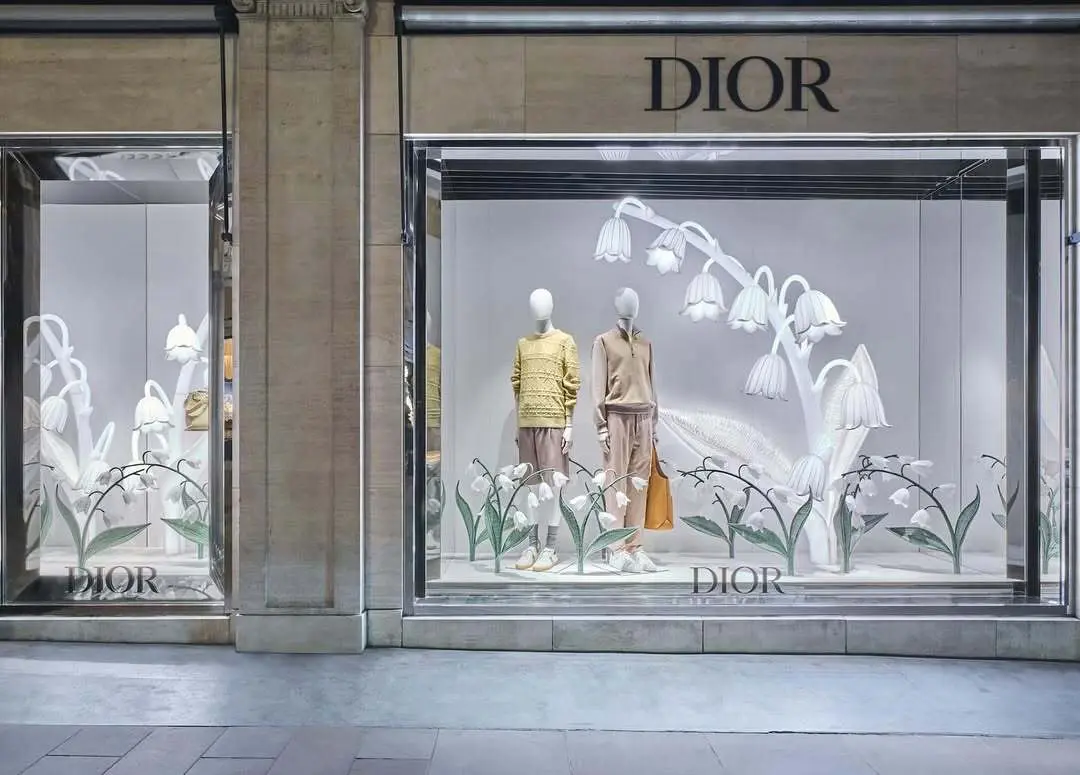
Spring windows have a simple job: tell passers-by that something new has arrived. For fashion, jewelry, fragrance and leather-goods brands, that usually means flowers, lighter colors and a cleaner composition than the holiday window that came before.
The harder part comes after the render is approved. A petal that looks weightless on screen still needs a frame, a finish, a way through the shop door and a way to survive a sea crossing. This guide covers eight spring concepts that luxury retailers use again and again, and for each one explains what it communicates, how it is usually built and where projects tend to go wrong.
These are established directions, not speculative predictions. Recent spring windows show the range. In 2026, Hermès Maison Shanghai opened “Wandering Spring”, a forest scene by Wang & Söderström. Loewe’s spring/summer 2026 takeover at Bergdorf Goodman used ceramic tile elements as the main props. Both are botanical or material stories built from physical, manufacturable props.
At a Glance: How Buildable Is Each Spring Idea?
| Spring idea | Best for | Build complexity | Relative cost | Lead-time risk | Multi-store friendly |
|---|---|---|---|---|---|
| Oversized flower sculptures | Fashion, handbags, fragrance | Medium–High | $$$ | Medium | Yes, with detachable petals |
| Blossom branches and sculptural trees | Fashion, department stores | Medium | $$ | Low–Medium | Yes |
| Suspended petals and hanging blooms | Flagships, tall windows | Medium | $$ | Low | Depends on ceiling fixings |
| Clear and frosted acrylic petals | Fragrance, skincare, jewelry | Medium | $$ | Low | Yes |
| Pastel plinths and geometric risers | Fashion, cosmetics, footwear | Low | $ | Low | Very |
| Illuminated flower sculptures | Beauty, jewelry, evening windows | High | $$$ | High | Limited, power varies by store |
| Layered botanical backdrop panels | Wide fashion windows | Low–Medium | $–$$ | Low | Very |
| Oversized product replicas with floral accents | Fragrance, cosmetics, footwear | High | $$$ | Medium–High | Yes, once approved |
Ratings are relative to each other and assume a typical luxury finish standard. Actual cost depends on size, quantity and finish. The factors are explained in our guide to window display production cost.
1. Oversized Flower Sculptures
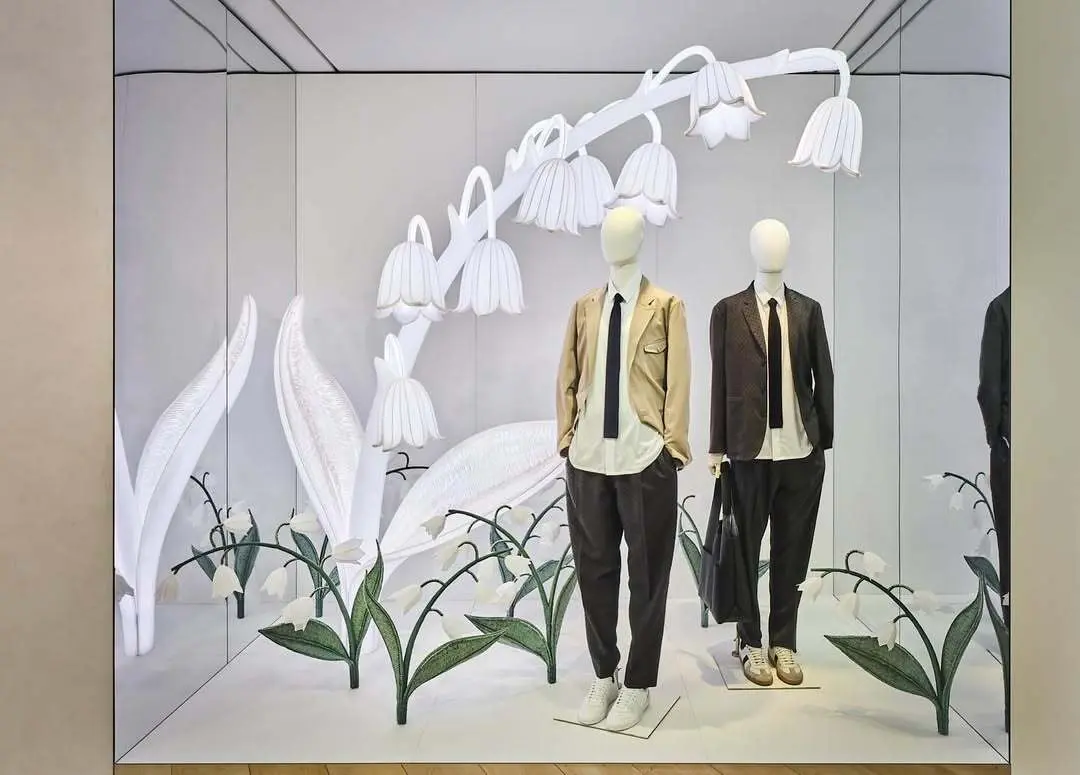
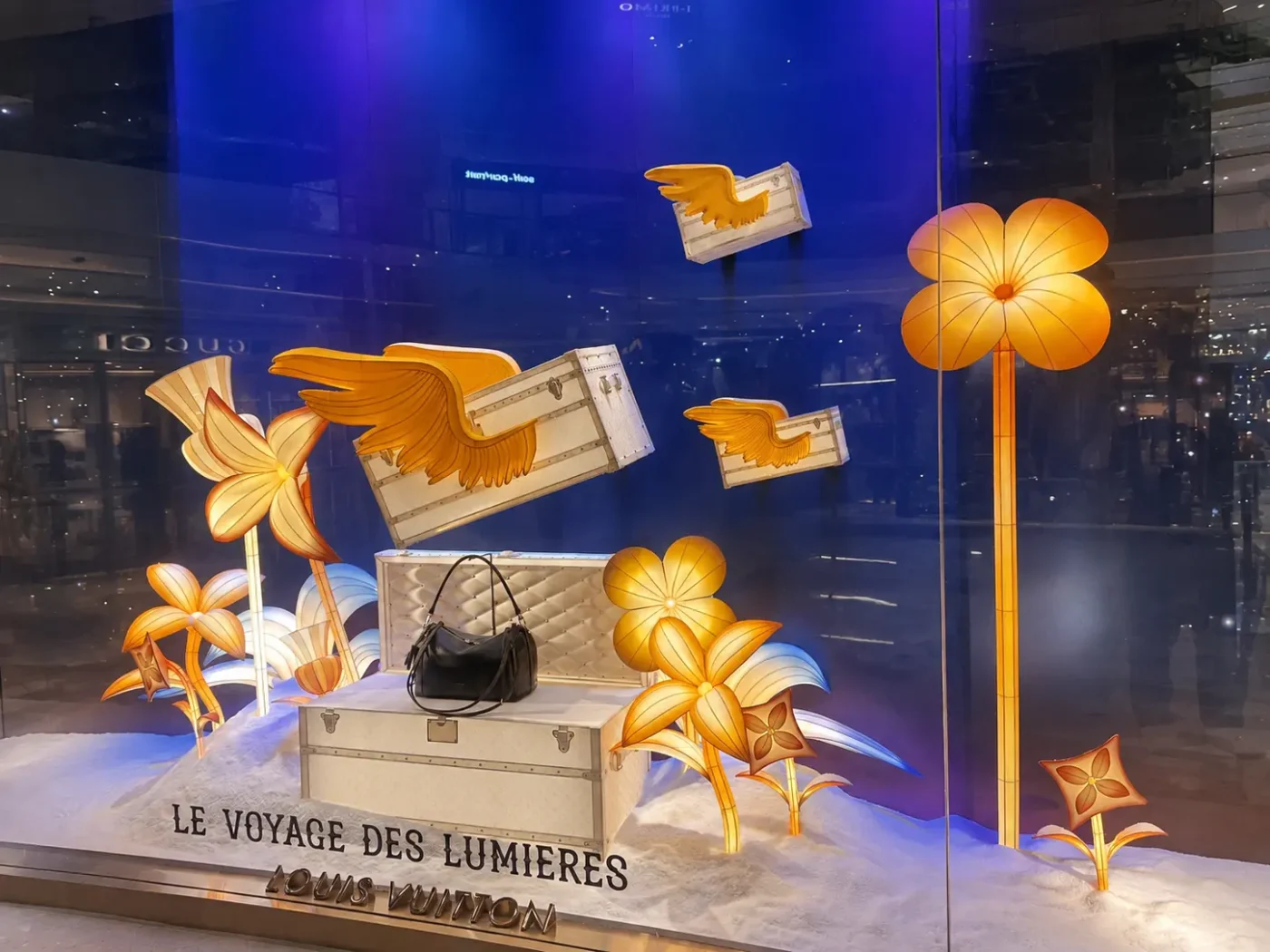
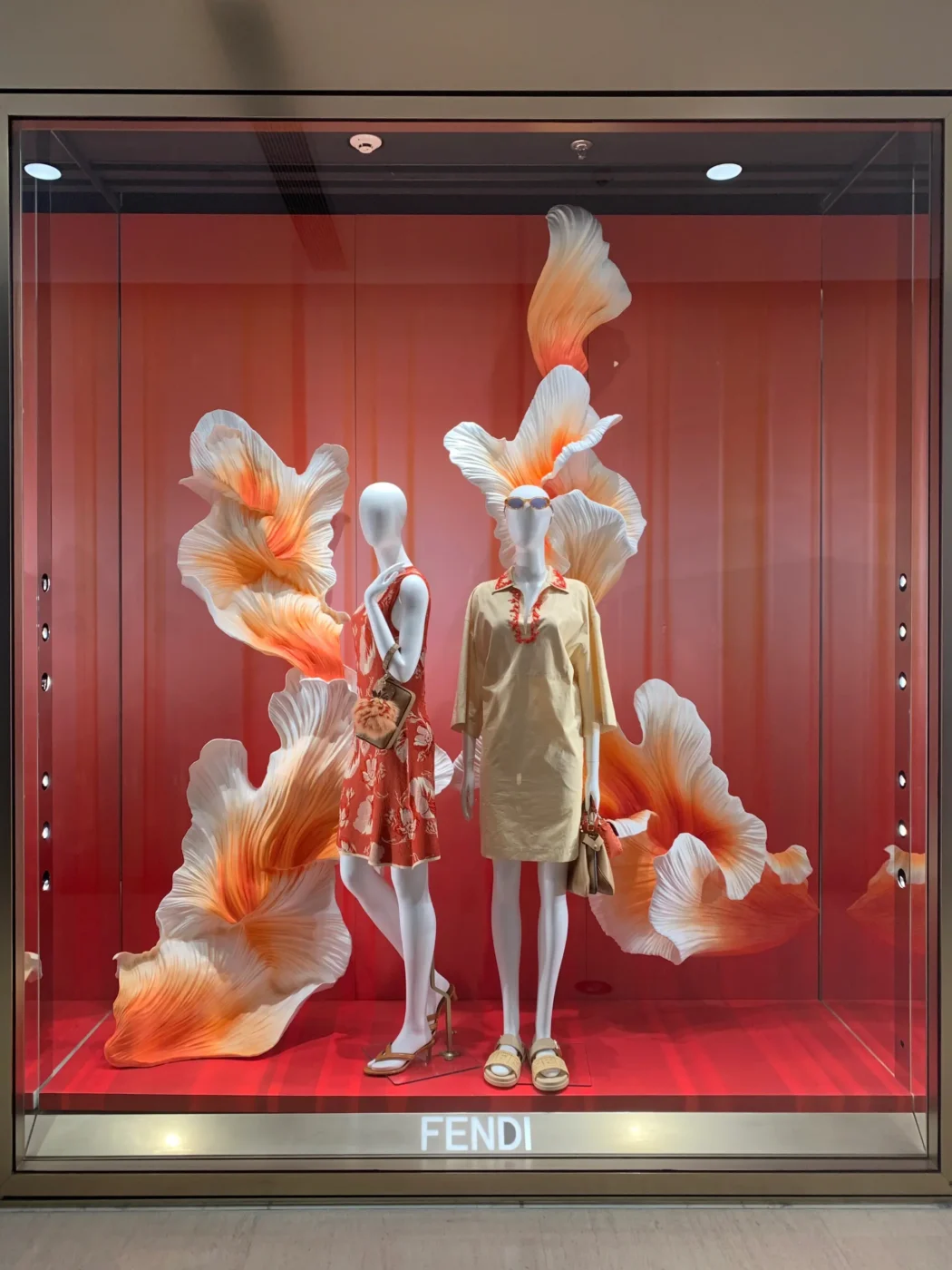
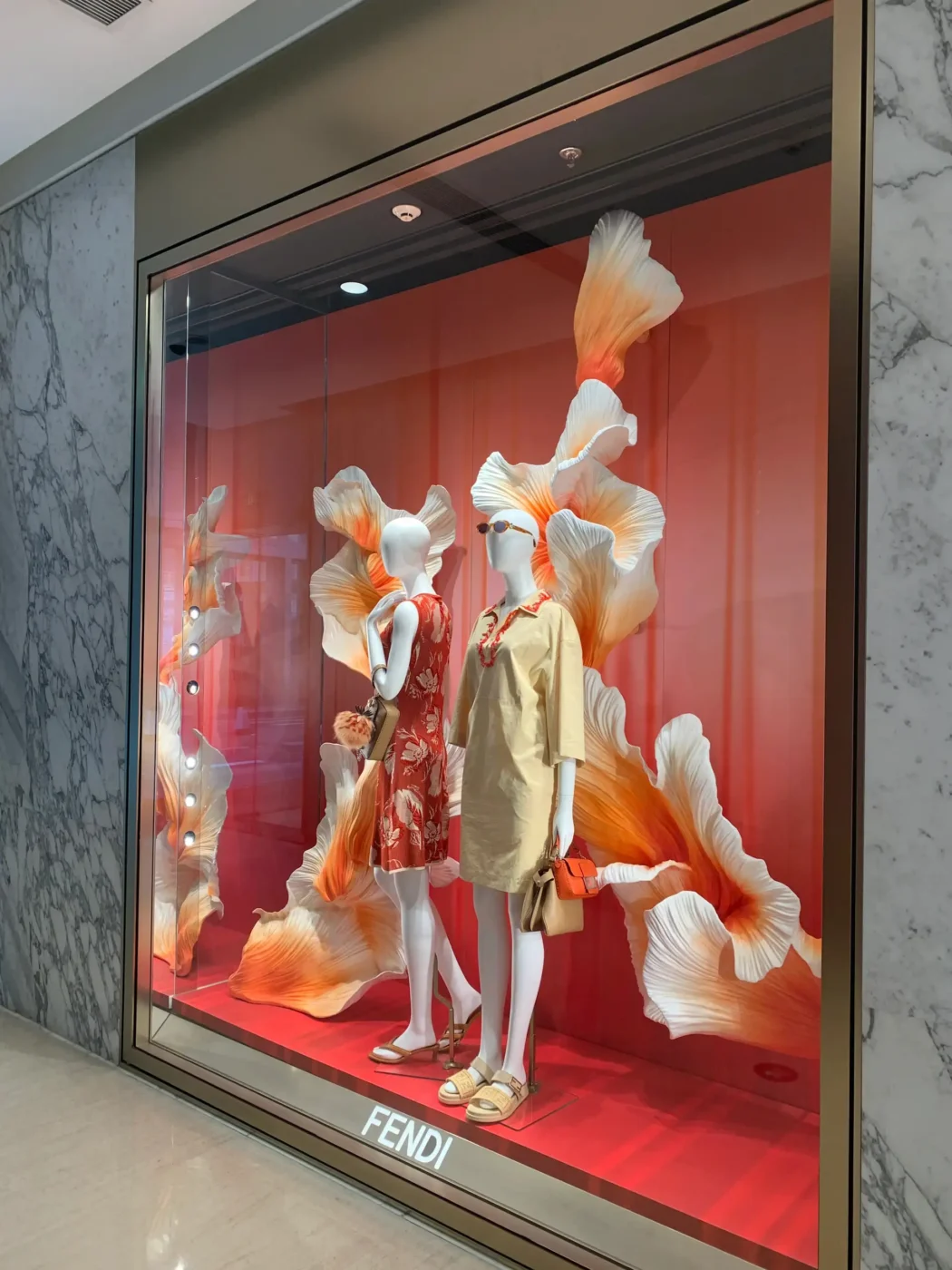
One flower at architectural scale says “spring” faster than fifty small ones, and it leaves room for the product. This is the most requested spring prop in luxury retail for that reason.
How it is usually built. FRP (fiberglass) over a sculpted master is the standard route for flowers that need a hard, paintable or metallic surface. Large blooms are split into a central body and detachable petals, with a steel armature and a weighted base. For a single hero piece, a 3D-printed core finished as an FRP sculpture avoids the cost of a mould.
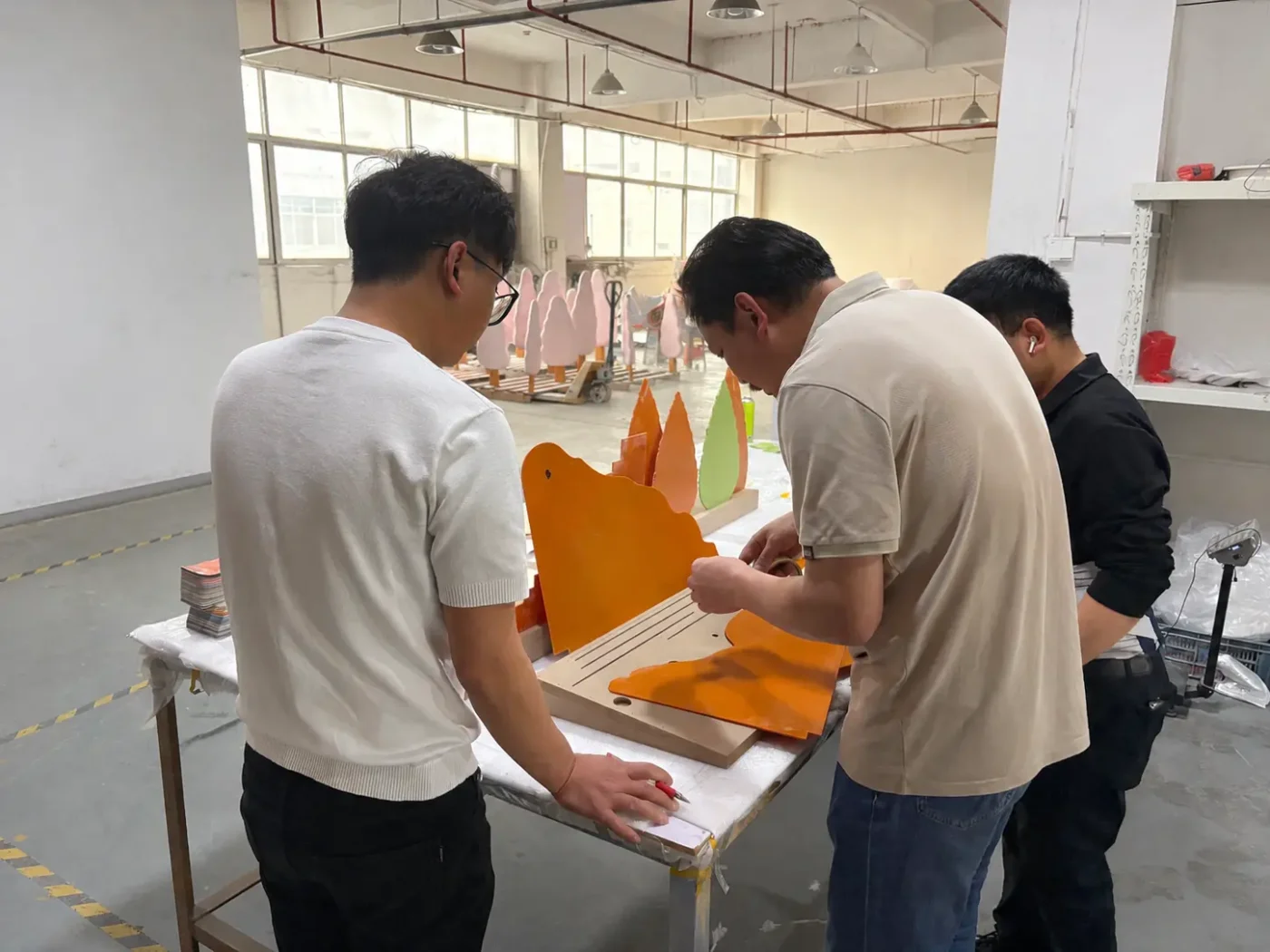
From our production floor. An FRP floral sample, from mould to finished electroplated petal, typically takes around 15 days. Plan petal joints during 3D modeling, not after the sample arrives. Seams that fall on a visible curve are the most common reason a sample gets rejected.
Watch for: shop-door and lift dimensions, petal joints visible from the pavement, and base weight on raised window floors.
2. Blossom Branches and Sculptural Trees
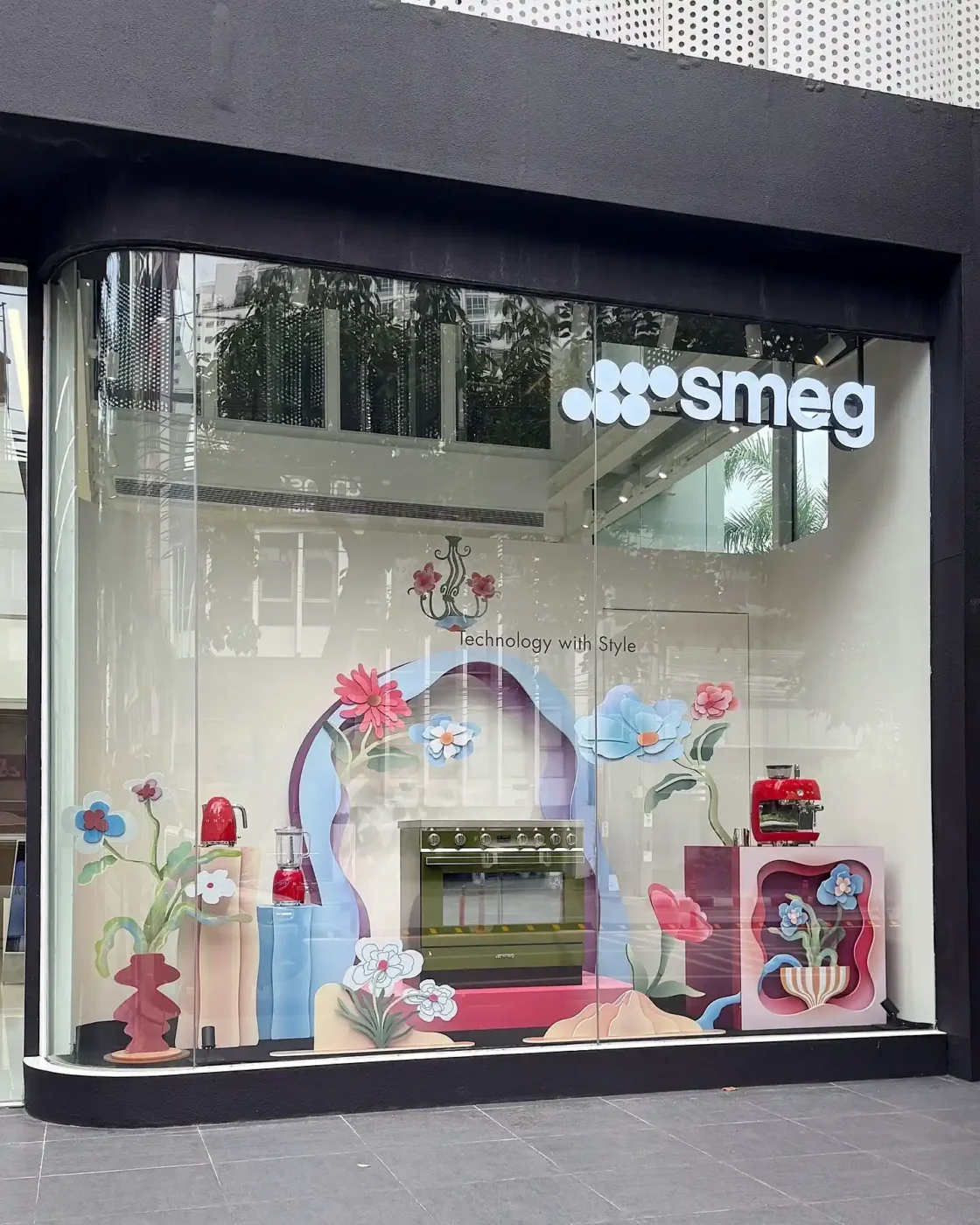
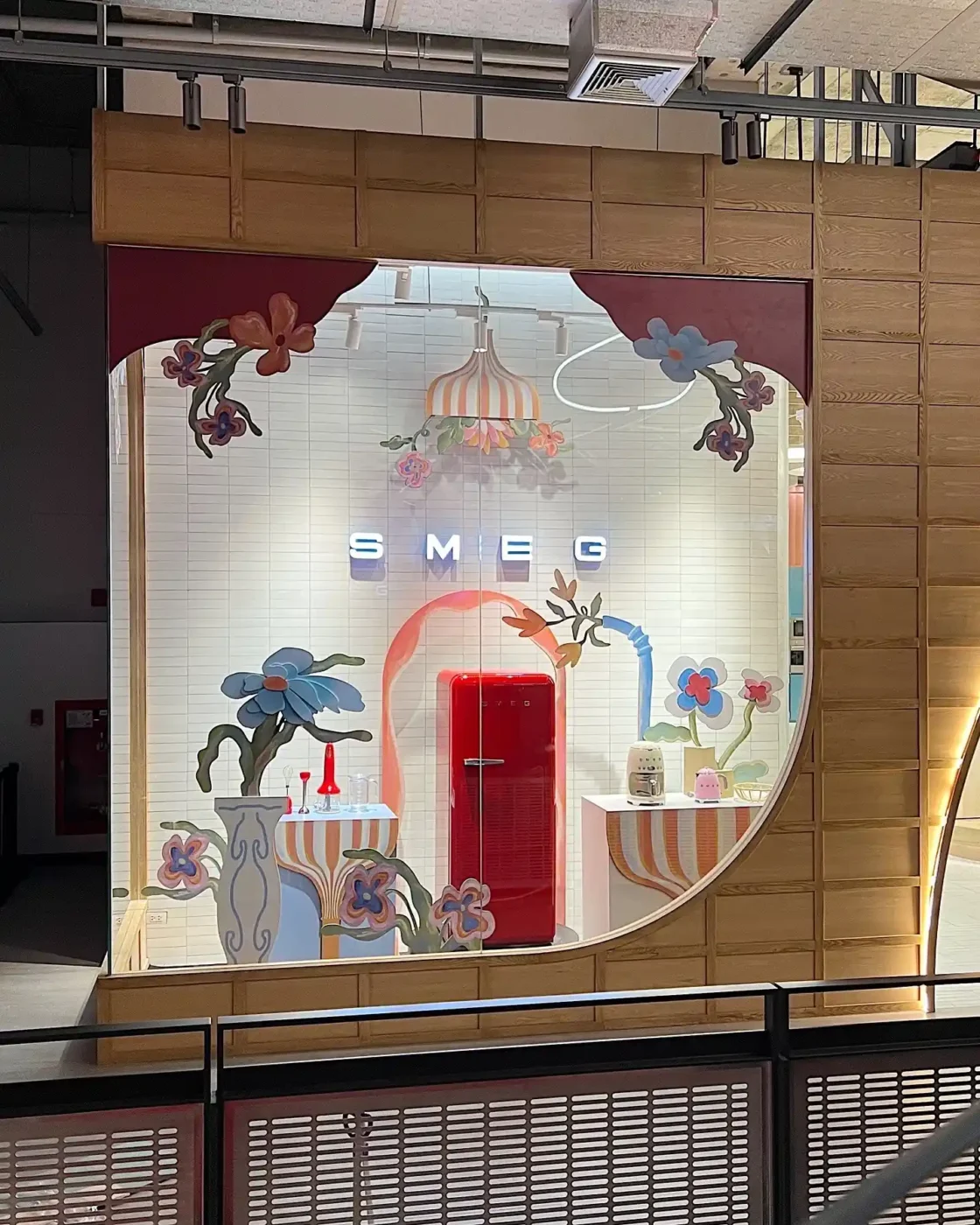
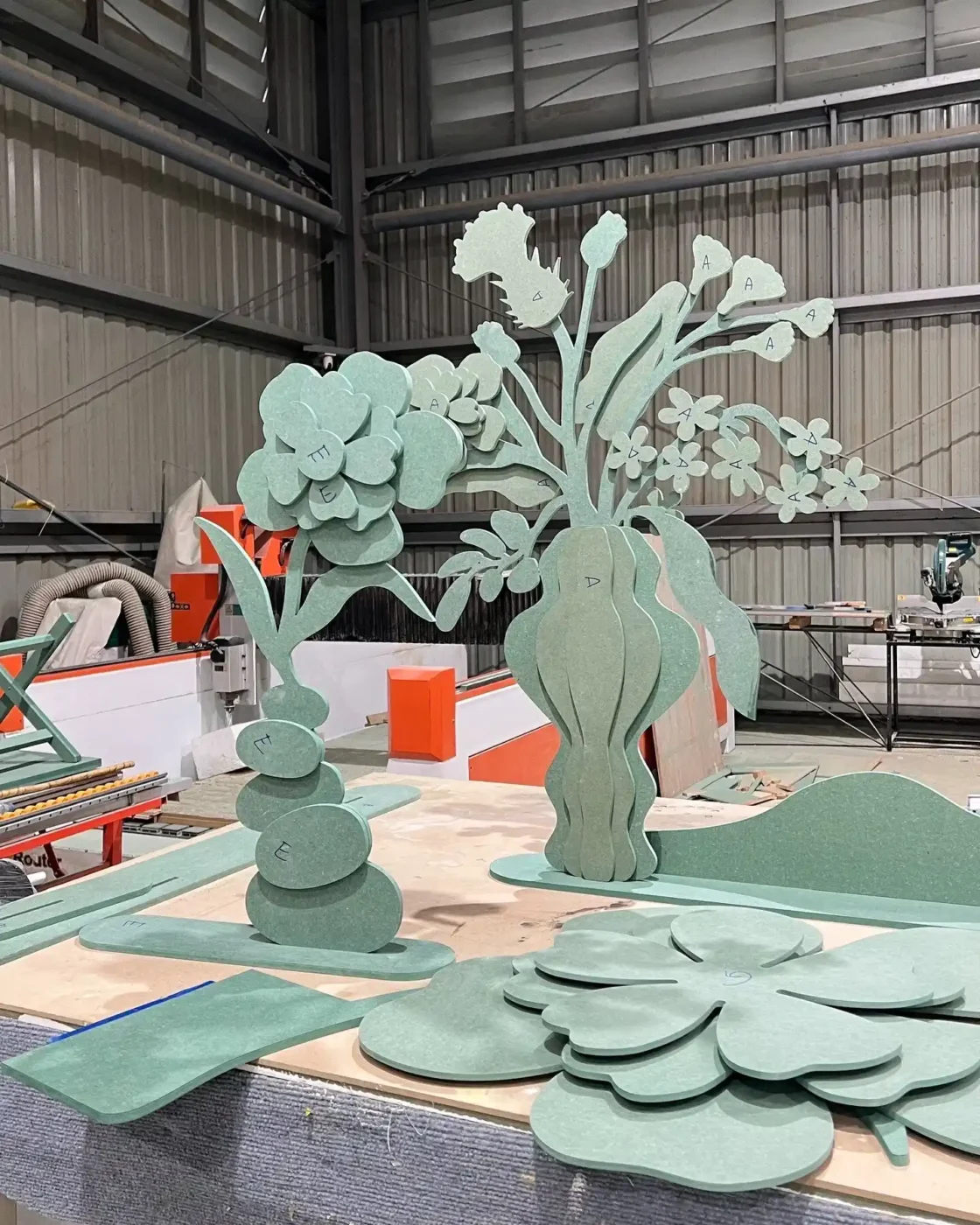
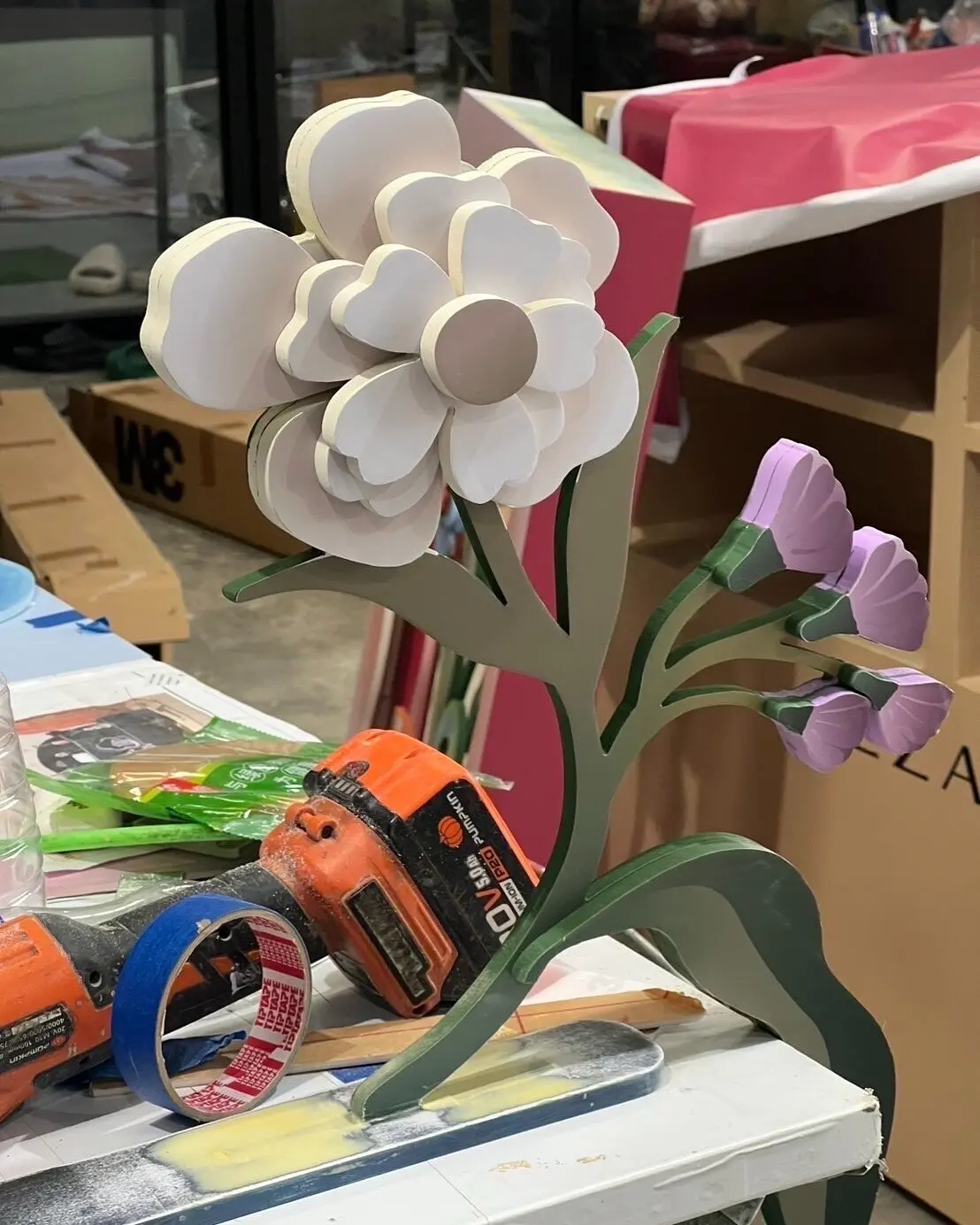
Blossom is the most direct spring signal after the flower itself, and a branch canopy can fill the top of a window while mannequins and product occupy the floor.
How it is usually built. A welded steel or aluminum trunk and branch frame, wrapped or sculpted, carries the blossom heads. The heads can be fabric, flocked, foam-based or molded, depending on how close the viewer stands. Real-looking blossoms suit fashion windows; stylized, single-color blossoms read as more luxurious and photograph better.
From our production floor. Paper and fabric blossoms need flame-retardant-rated material, or a flame-retardant treatment, before they go into a lit window. Confirm the store’s requirement before choosing the material.
Watch for: how branches separate for shipping, blossom density from the street versus up close, and dust cleaning over a six-to-eight-week display period.
3. Suspended Petals and Hanging Blooms
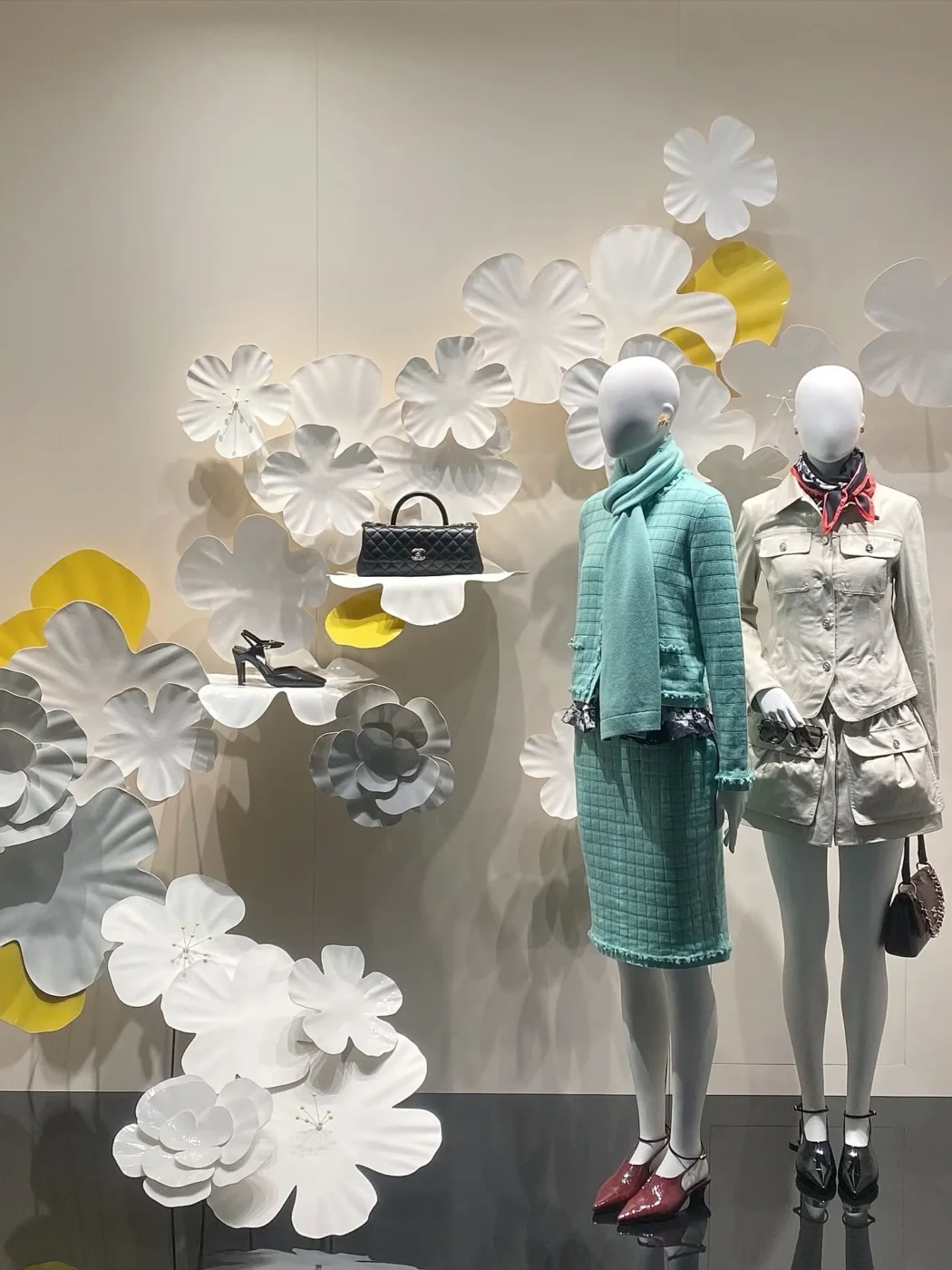
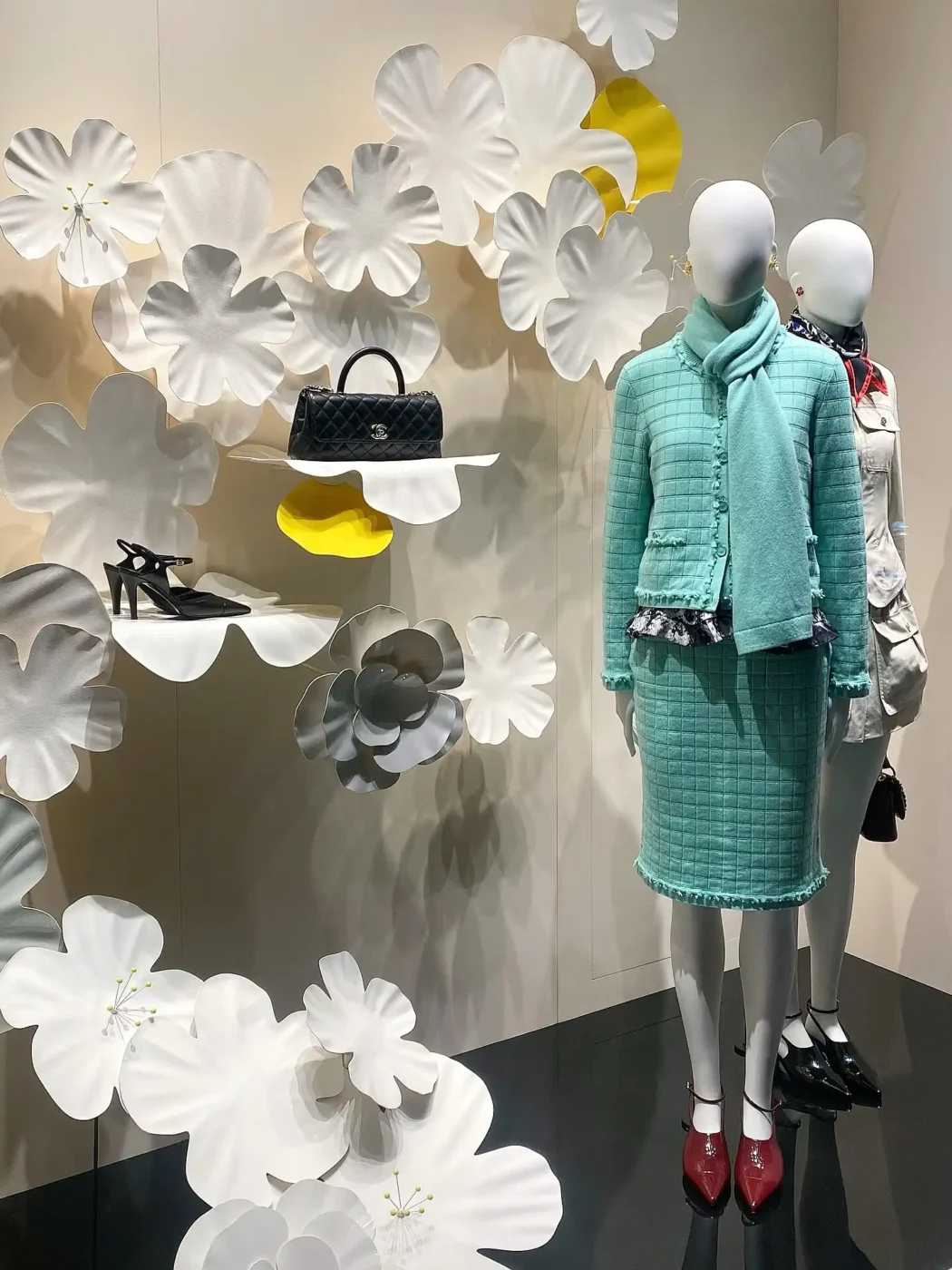
Hanging elements use the full height of a window without crowding the floor, which suits tall flagship windows and stores where the product needs the floor space.
How it is usually built. Lightweight foam, fabric or thin acrylic forms on fine cable, with each hanging point matched to a fixing the store has approved. Every element is labeled to a hanging plan so the installer can repeat the composition exactly.
From our production floor. Weight drives everything here. Agree on the maximum load per fixing point before materials are chosen, rather than adjusting the design after it turns out too heavy.
Watch for: ceiling or truss permission, the view from inside the store as well as the street, and clearance above product and mannequins.
4. Clear and Frosted Acrylic Petals
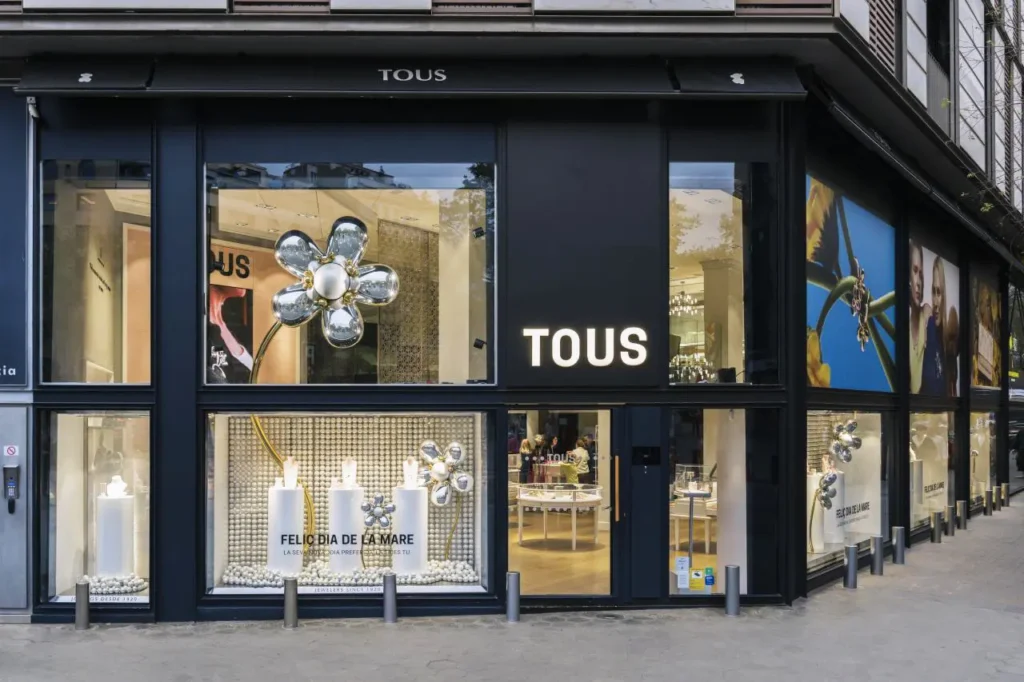
Transparent petals create a layered garden effect while keeping small products visible, which is why fragrance, skincare and jewelry brands favor them. Mirror-finish acrylic or polished metal petals are a variation for jewelry and watches, where reflection adds depth to a shallow window.
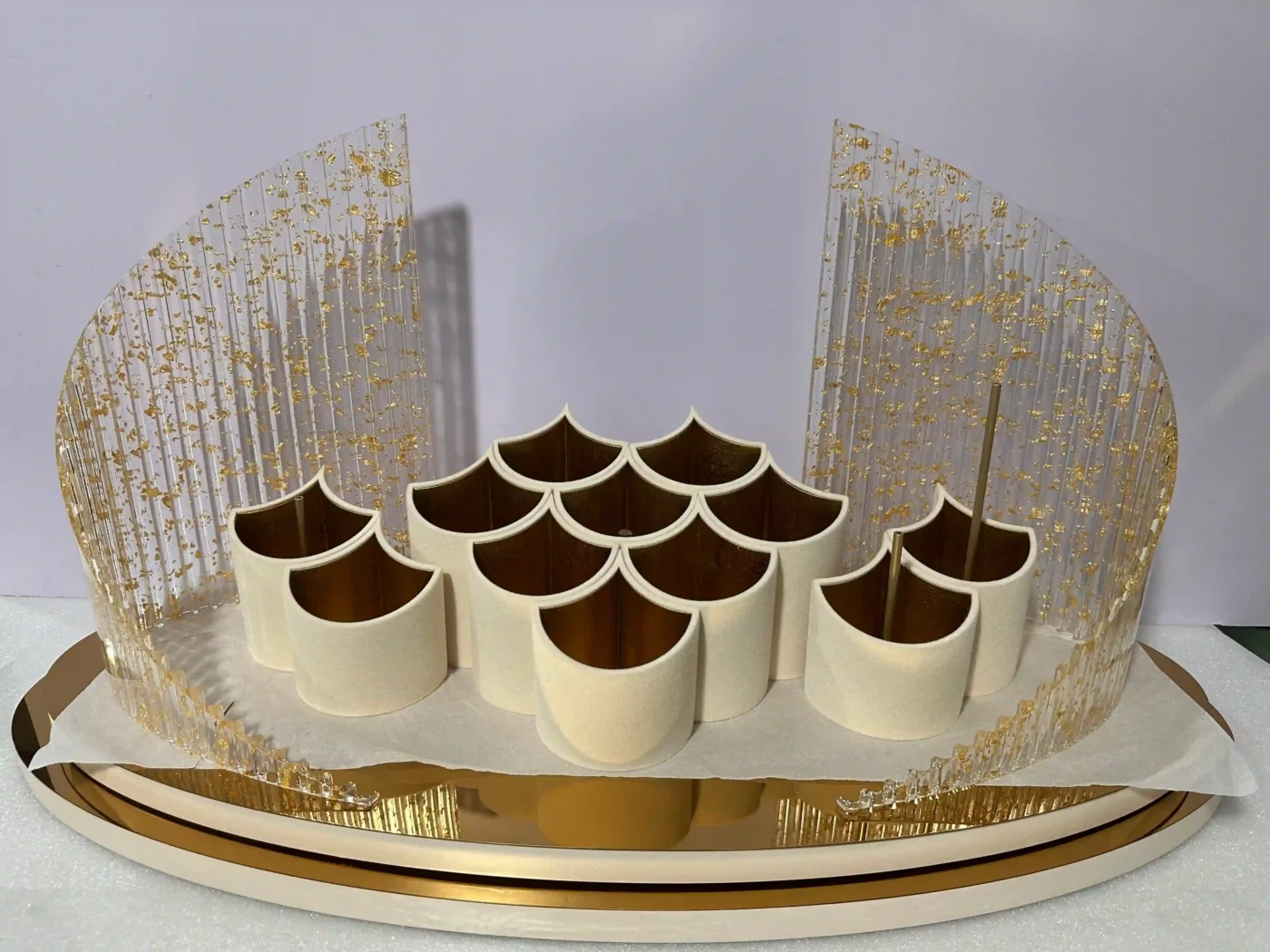
How it is usually built. Flat petals are laser-cut and edge-polished; curved petals are thermoformed. Clear, frosted and tinted sheet give very different results under close-range retail lighting, so test the exact sheet under representative light.
From our production floor. Acrylic batch production usually runs around 12 days once samples are approved. The slower part is protection: polished edges and mirror surfaces need film and separated packing, or they arrive scratched. For the material itself, see our acrylic (PMMA) guide.
Watch for: glare toward the street, visible fixings through clear material, and reflections of ceiling fittings in mirrored surfaces.
5. Pastel Plinths and Geometric Risers
Spring does not need flowers. A restrained pastel palette on a few well-proportioned plinths signals the season while keeping the product central. It is also the most practical spring idea for brands rolling out to many stores.
How it is usually built. Painted MDF or lacquered wood for most plinths; metal for slim, sharp-edged forms; acrylic where a translucent color is wanted. Curved or sculptural risers move to FRP.
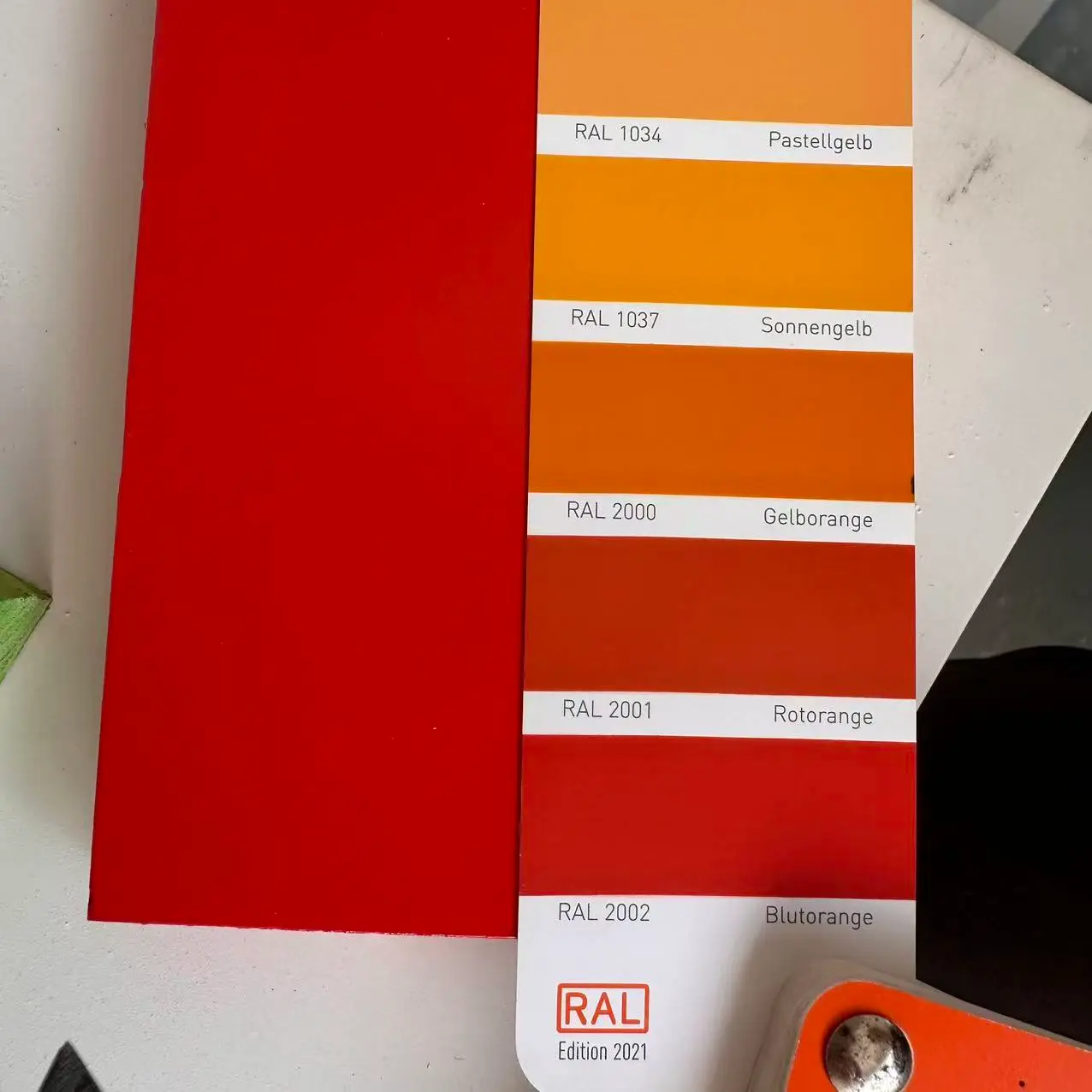
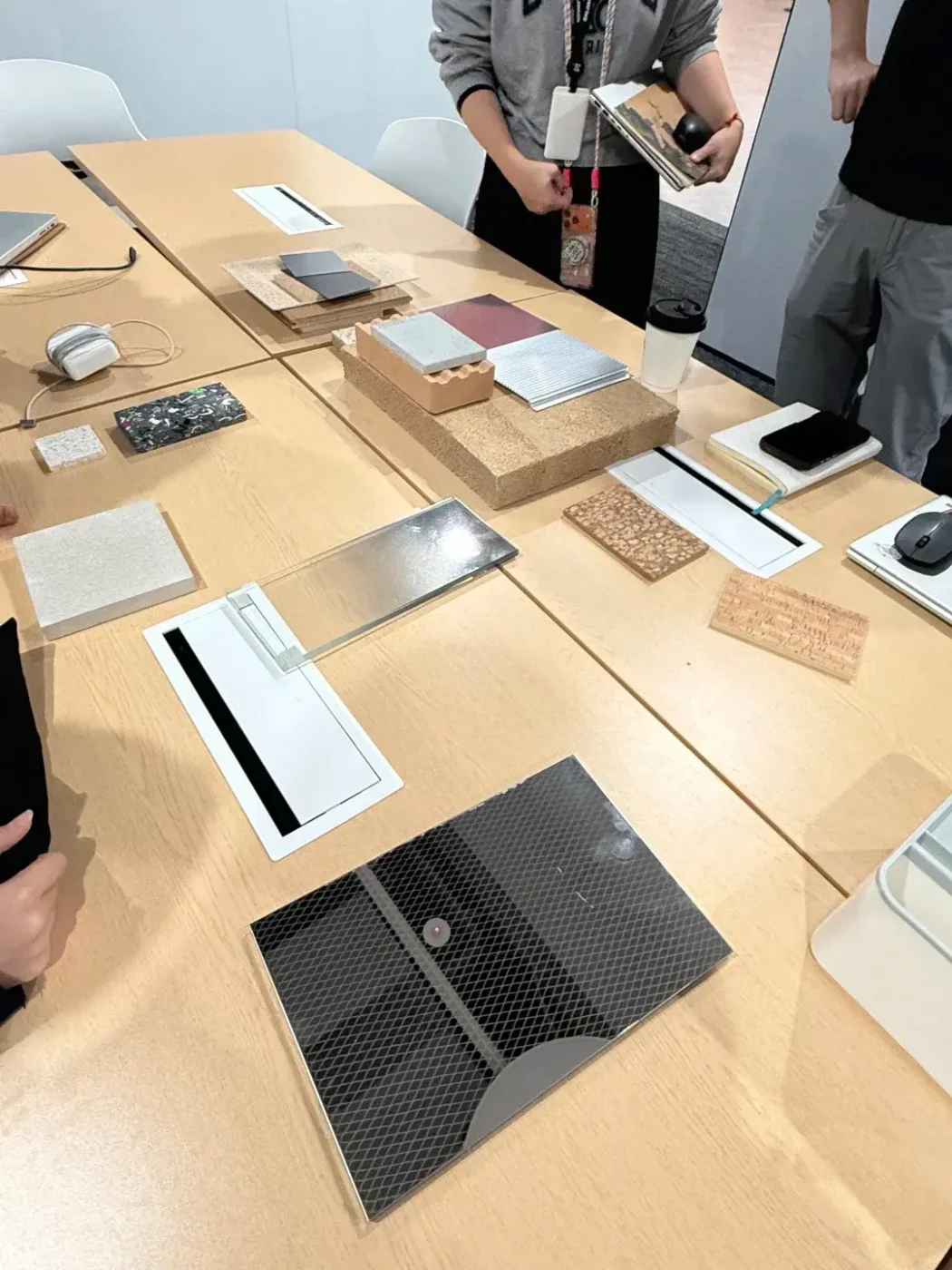
From our production floor. Color is the real risk, not shape. A screen pastel looks different on painted MDF, powder-coated metal and acrylic. A sprayed color sample usually takes three to five days for the first round and two to three days for each adjustment. Powder-coated metal takes longer, around seven to ten days for the first round. Approve physical samples on the actual substrate and gloss level.
Watch for: matte versus satin finish under spotlights, chipped edges in transit, and color matching across production batches.
6. Illuminated Flower Sculptures
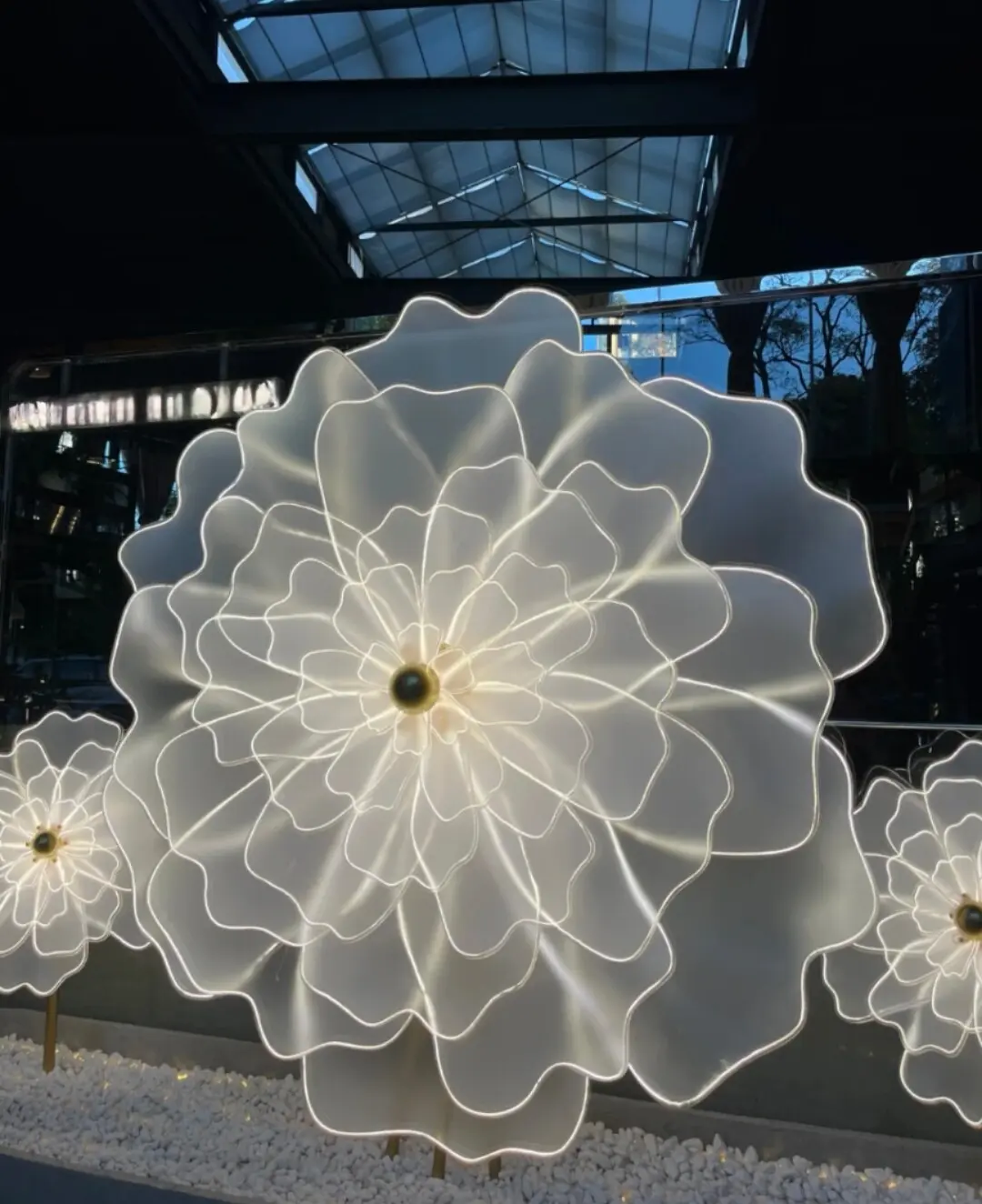
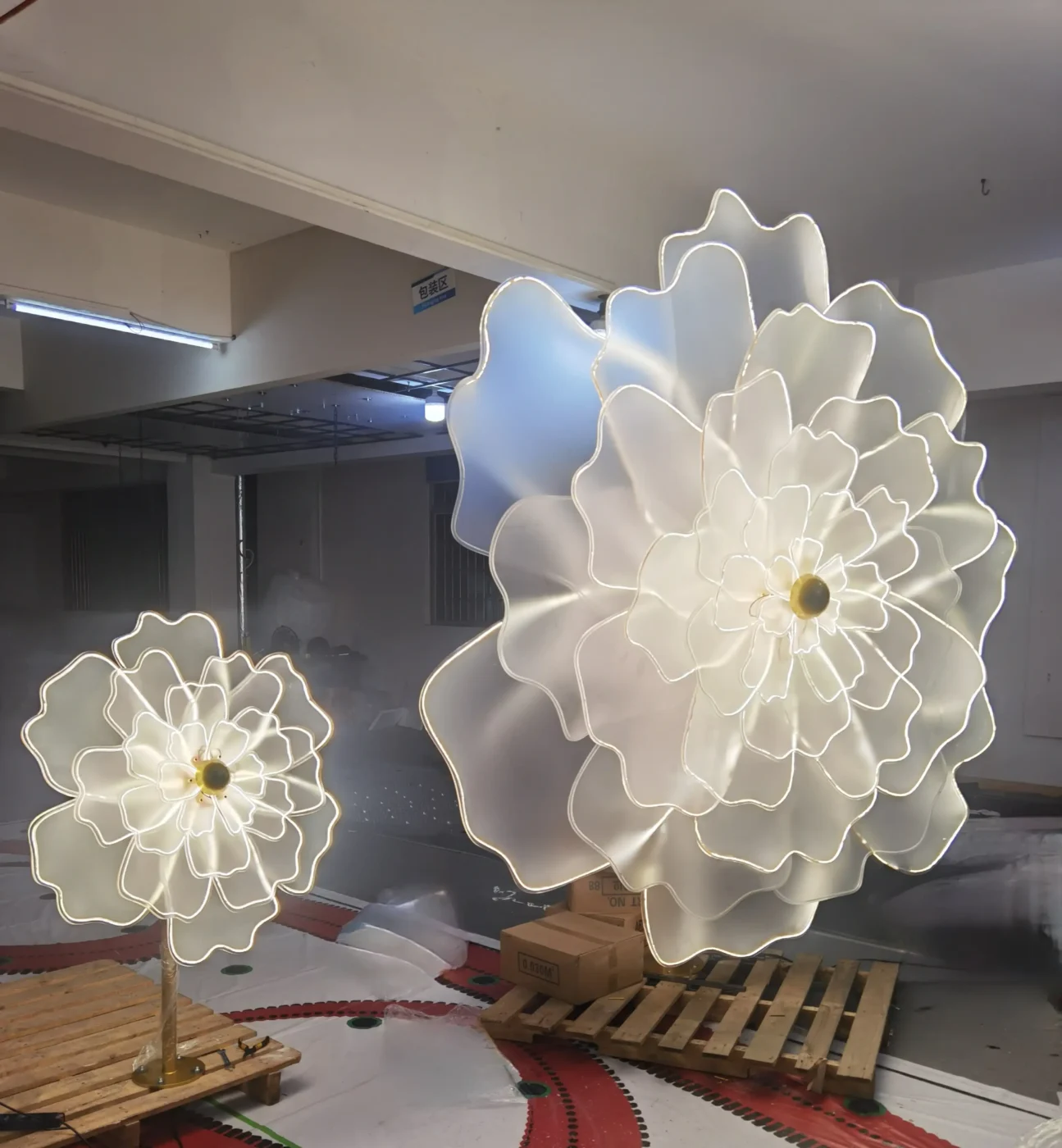
A flower that glows from inside reads very differently from one lit by a spotlight, and it keeps a window working after dark. It is also the most technically demanding idea on this list.
How it is usually built. Translucent acrylic or resin petals over a supporting structure, with LED strips or modules routed inside and a driver located where it can be reached. Unlike a flat light box, a curved petal has changing wall thickness and limited cavity depth, which makes even lighting harder.
From our production floor. Plan lighting samples early. Hotspots, visible LED dots and heat around the driver usually show up only on a physical sample, and fixing them can mean changing the petal shape. We cover the related decisions in our guide to acrylic light box displays.
Watch for: store power and plug standards in each country, maintenance access to drivers, and cable exits that stay hidden from the street.
7. Layered Botanical Backdrop Panels
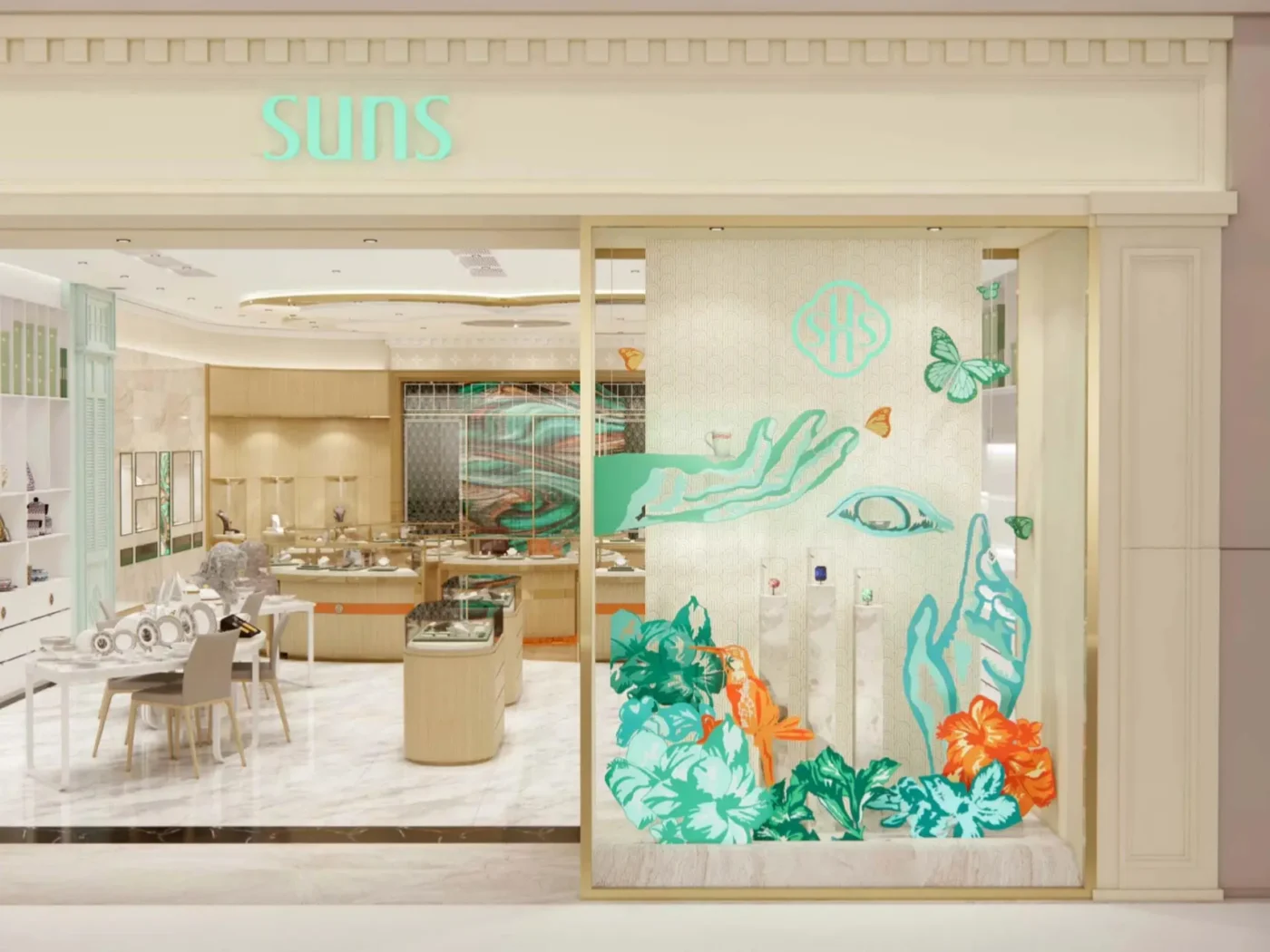
Several overlapping planes of leaf and flower silhouettes create a garden with depth, using a short parts list. It is the most cost-efficient way to fill a wide department-store or fashion window.
How it is usually built. CNC-cut MDF or lightweight panels, painted or wrapped, standing on feet or fixed to a back wall, combined with one or two three-dimensional props in the foreground. Flat panels pack efficiently, which keeps freight volume down.
From our production floor. Depth is the limit. Measure the usable window depth and the gap needed between layers before drawing the panels. Layers that are too close flatten into a single wall when viewed from the street.
Watch for: shadows cast between layers, panel joins on wide backdrops, and stability without fixing into the floor.
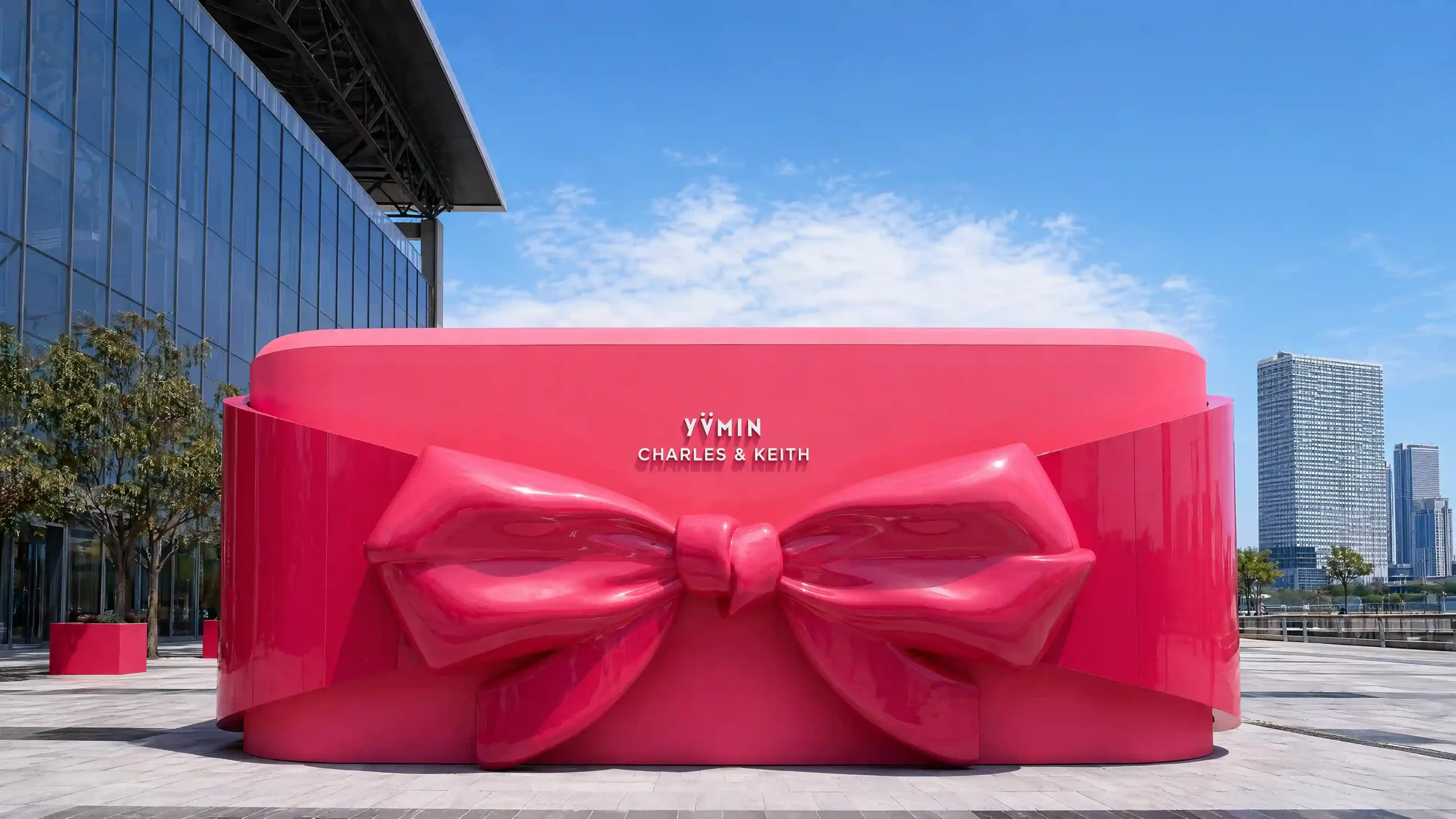
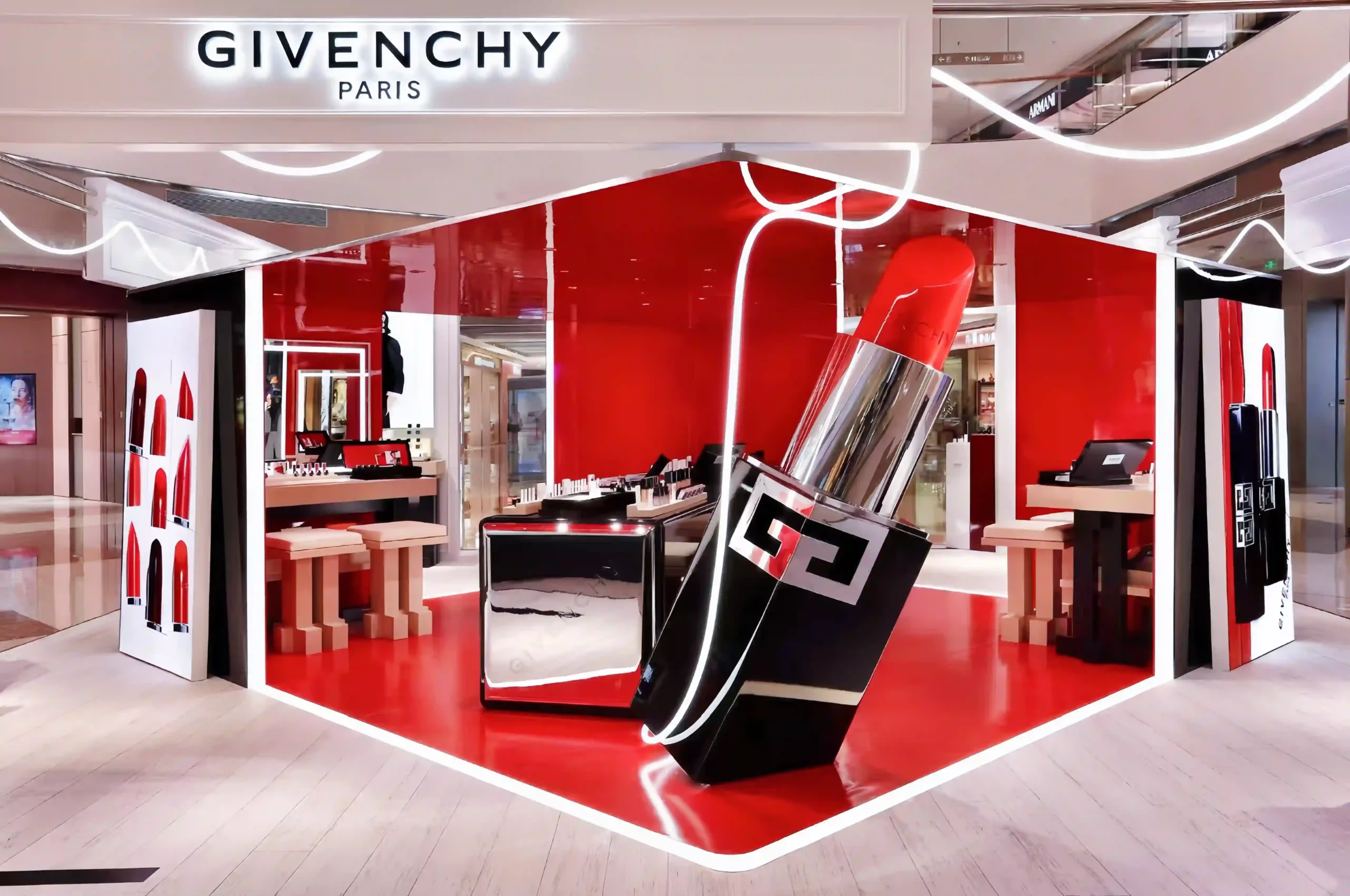
8. Oversized Product Replicas with Floral Accents
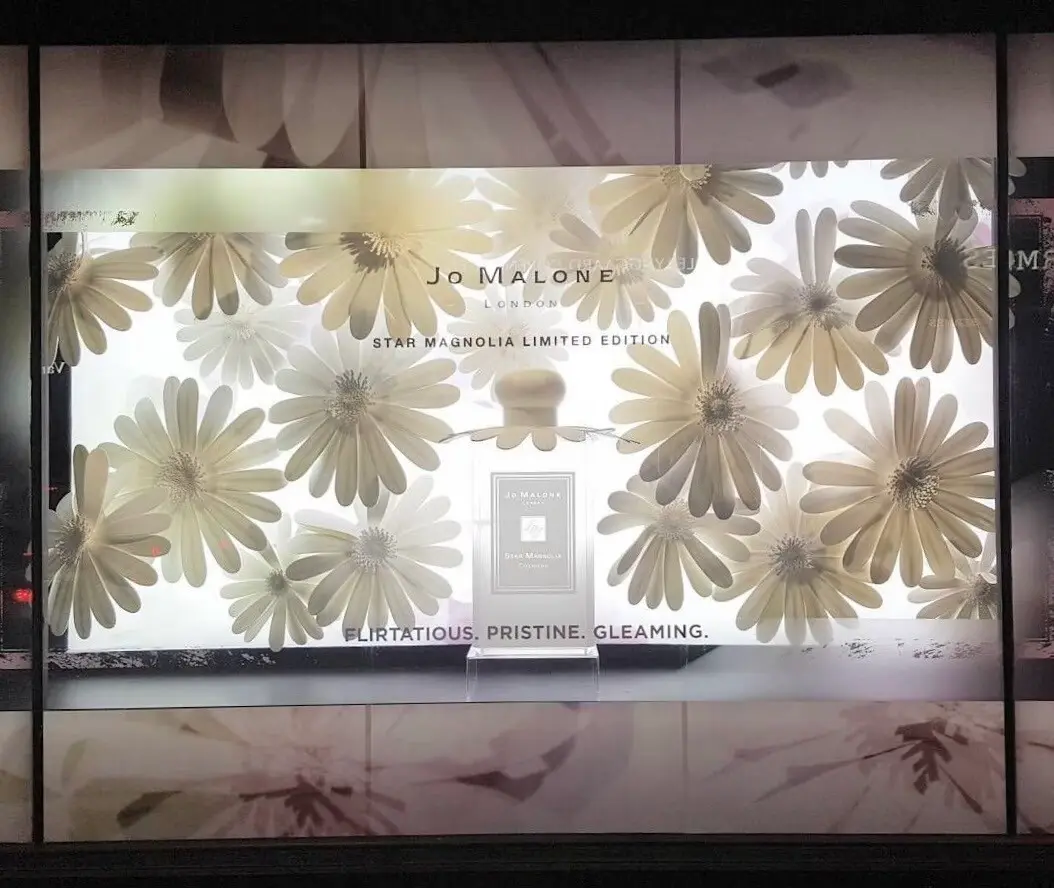
A giant version of the launch product ties the spring mood directly to what the brand is selling. It suits fragrance, cosmetics and footwear windows, where the real product is too small to read from the street.
How it is usually built. A 3D model built from product references, then a 3D-printed or CNC-cut master finished in FRP, resin or acrylic. Transparent parts such as bottle bodies can be printed in clear material. Logos are usually applied as a separate finished element rather than painted.
From our production floor. Enlarging a product exposes everything: a cap radius or label edge that is invisible at 100 ml becomes obvious at 1.5 meters. Brand approval of the 3D model before fabrication saves a full remake. More on this in our guide to 3D modeling for display props.
Watch for: proportion accuracy, brand sign-off on logo and color, and protective packing for glossy or metallic finishes.
Making One Spring Concept Work Across Different Stores
Most luxury spring campaigns open in more than one window. The practical approach is a shared visual language, such as one hero flower, a set of smaller petals and repeatable plinths, combined differently for flagship and compact stores. Design the interfaces, hidden fixings and component labels from the start, and test one complete set before producing the rest. Our window display rollout guide covers how multi-store programs are coordinated.
When Spring Concepts Need to Be Locked
Luxury spring windows typically go in from late February to March. Working backward through approvals, sampling, production and shipping, most brands confirm their spring concept in early autumn. For factories in China, Chinese New Year closes production for several weeks right before spring installation, so the real deadline is earlier than it looks on a calendar. We explain how to plan around it in spring window display production and Chinese New Year.
Frequently Asked Questions
What are the most common spring window display ideas for luxury brands? Oversized flower sculptures, blossom branches, suspended petals, acrylic petals, pastel plinths, illuminated flowers, layered botanical backdrops and oversized product replicas. Most luxury spring windows combine one hero prop with simpler supporting elements.
What are oversized flower props for window displays made of? Most are FRP (fiberglass) over a steel armature, because it holds a sculpted shape and takes paint, metallic or electroplated finishes. Lighter versions use coated foam, fabric or acrylic, and one-off pieces often use a 3D-printed core finished in FRP.
Can a spring window look luxurious without real or artificial flowers? Yes. Pastel plinths, abstract curves, translucent materials and generous negative space signal the season while keeping attention on the product.
How far in advance should a luxury brand plan its spring window display? Most brands confirm the concept in early autumn for a late-February or March installation. That leaves time for sampling, production and shipping, and for the Chinese New Year factory closure.
Can acrylic flowers be lit from the inside? Yes. Translucent acrylic or resin petals can hold concealed LEDs, but curved petals make even lighting harder than in a flat light box. A physical lighting sample is needed to check hotspots, heat and driver access.
Can one spring display design work in stores of different sizes? Yes, if it is planned as a modular set from real store dimensions. Shared hero elements and plinths are combined differently for each store size, and one full set should be tested before production.
Bring a Spring Concept to Production
If you already have a spring direction or render, the next step is to check how it can be built, finished and shipped to each store. VM Display Solution develops custom window display props and mixed-material installations for brands and agencies. Send your concept, approximate dimensions, quantities and destination markets through our Retail Windows service page, or see what to include in a brief in our custom display props quote guide.