Mirror balls have been a recurring element in luxury retail window displays for decades — Hermès, Prada, and department stores use them for holiday campaigns, product launches, and seasonal refreshes. The reason they persist is practical: a mirrored sphere catches light from every angle, creates movement in an otherwise static display, and scales well from a 10 cm tabletop accent to a 100 cm suspended centerpiece.
This article covers how we manufacture these props using EPS foam cores and hand-applied mirror tiles, what customization options are available, and what the construction constraints are.
Why EPS Foam Instead of Solid Material
Traditional mirror balls — the kind used in nightclubs and event venues — are constructed from a rigid shell (metal, plastic, or resin) with small mirror facets glued to the exterior. This works for permanently mounted fixtures, but it creates problems for retail display applications.
Weight. A solid resin or metal mirror ball at 60 cm diameter is heavy enough to require structural mounting hardware. In retail window installations, the display framework is typically lightweight aluminum or steel rod — designed for visual props, not for bearing significant suspended loads. An EPS foam mirror ball at 60 cm weighs approximately 30% less than its solid counterpart, which keeps it within the load capacity of standard display mounting systems.
Fragility on impact. Solid-shell mirror balls shatter or dent on impact. During installation, repositioning, and seasonal changeovers, display props are handled repeatedly. EPS foam absorbs impact without catastrophic failure — a dropped foam mirror ball may lose a few tiles at the contact point, but it does not crack open or deform permanently.
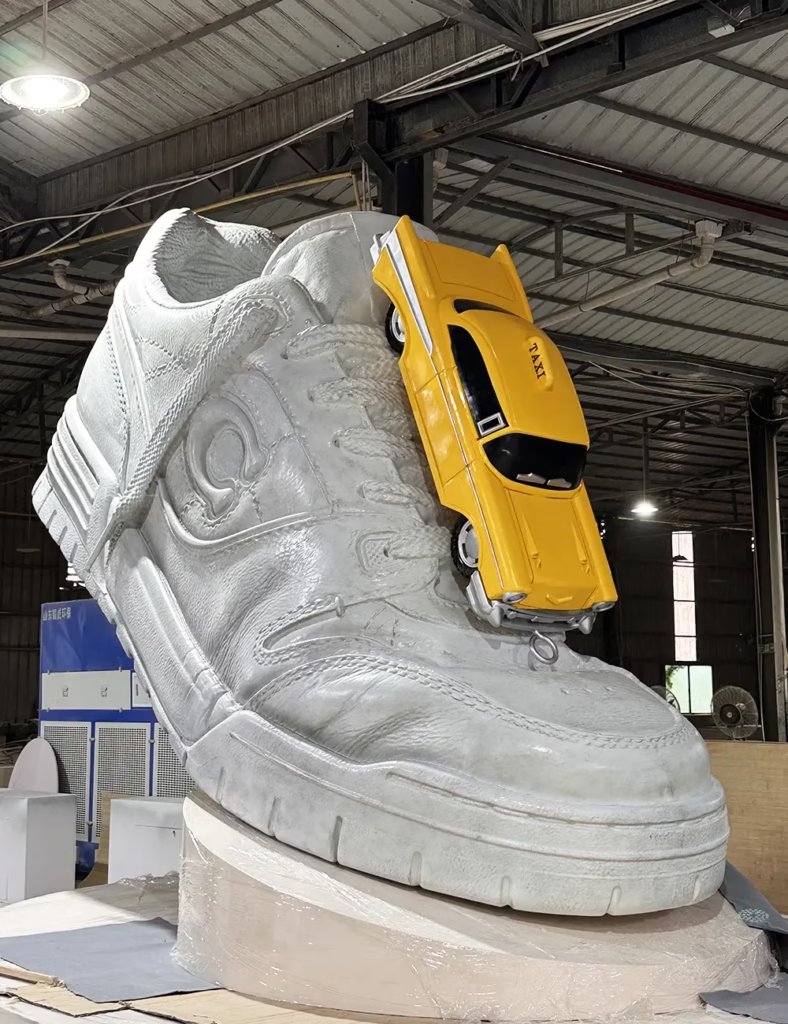
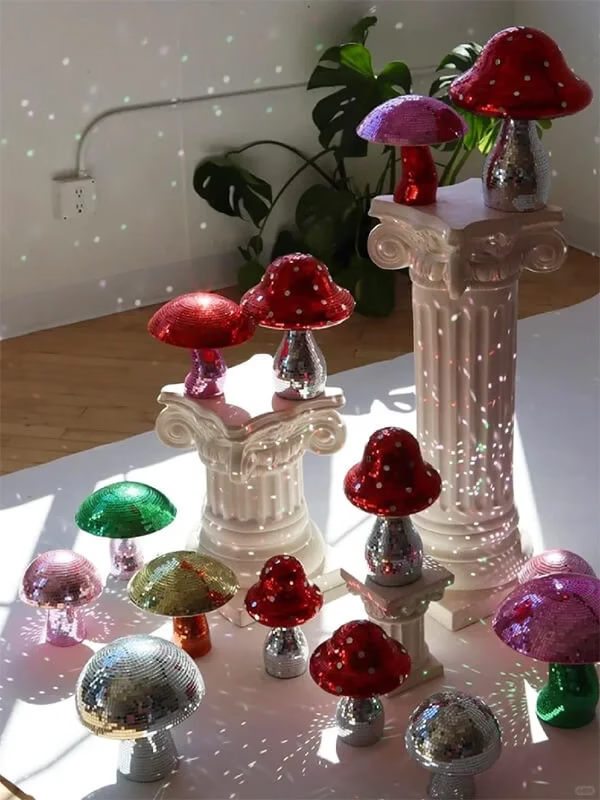
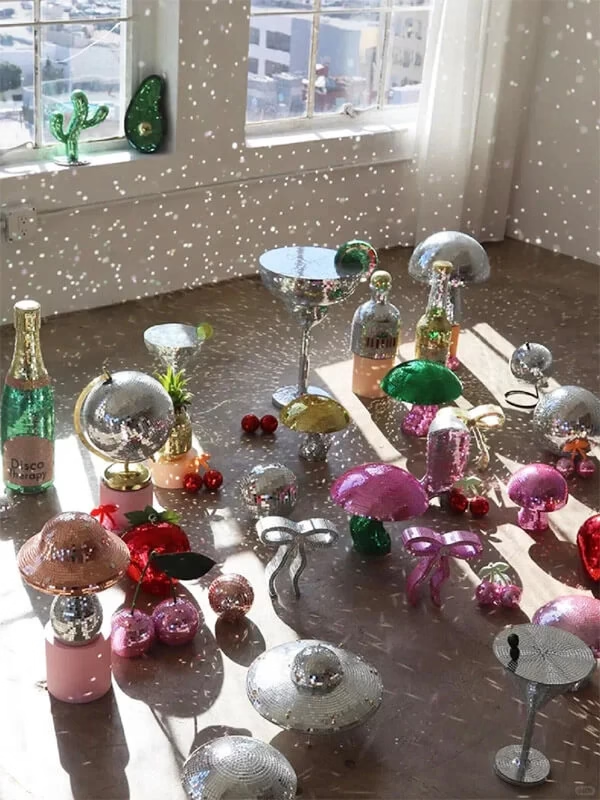
Custom shaping. EPS foam can be CNC-machined or hot-wire cut into any form, not just spheres. This is how we produce the mushroom shapes, heart shapes, and non-spherical variants that brands request for themed campaigns. Achieving the same custom forms in metal or resin shell construction would require individual mold tooling, which is cost-prohibitive for the typical quantities in retail display (5–30 units per campaign).
Mirror Tile Application — A Hand Process
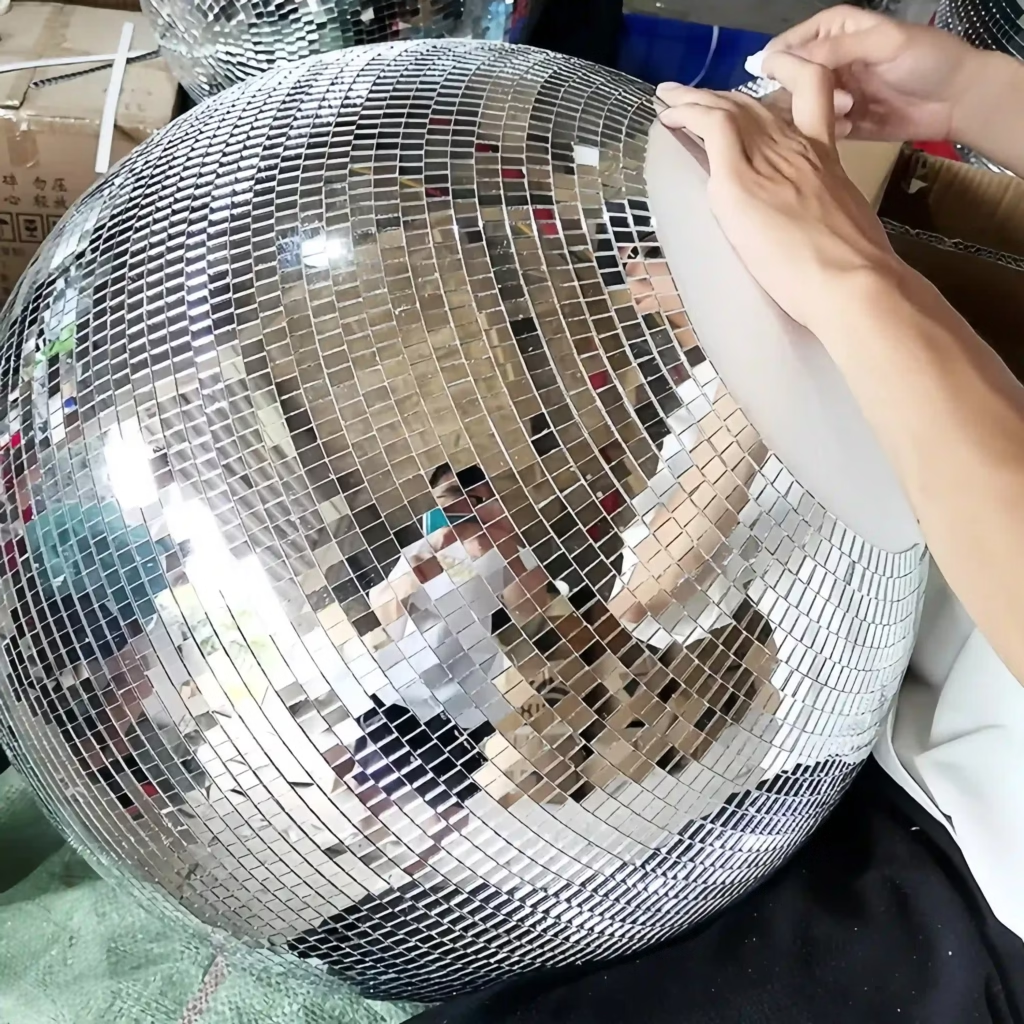
The reflective surface on each mirror ball is created by individually applying mirror tile pieces to the foam core. This is a hand process, not a machine operation, and that distinction affects both the visual character and the practical limitations of the finished product.
How the Tiles Are Applied
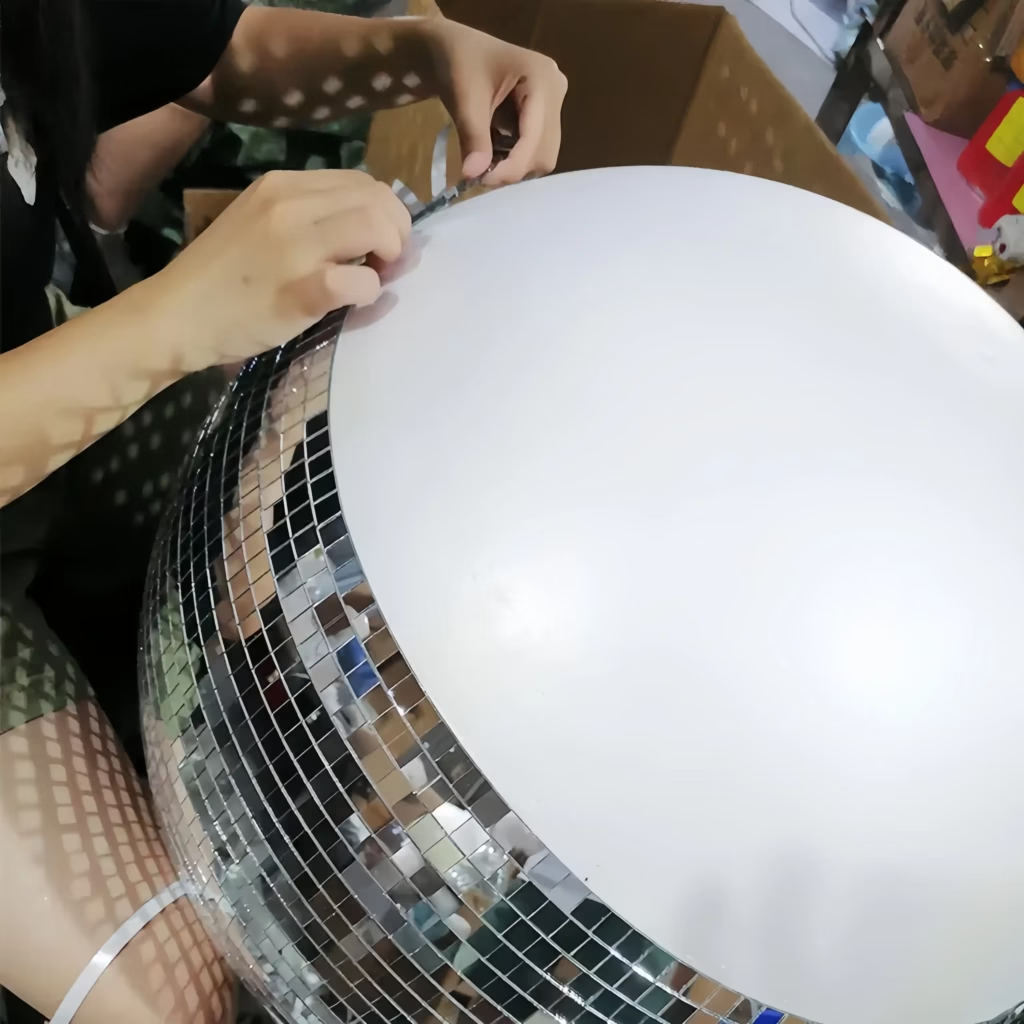
Mirror tiles are first mounted onto adhesive strips in rows. These strips are then wrapped around the foam sphere section by section, with each row offset to create the classic staggered mirror pattern. The adhesive is pressure-sensitive — strong enough to hold tiles in place under normal display conditions (temperature cycling, vibration from foot traffic, air conditioning airflow) but not structurally bonded the way tiles would be on a permanent architectural installation.
Why Hand Application Matters
Machine-applied tiles would require a perfectly uniform substrate. EPS foam spheres, while dimensionally consistent from the CNC or mold process, have slight surface texture variations that a machine applicator cannot accommodate. Hand application allows the tiler to adjust pressure and positioning for each tile based on the surface beneath it — compensating for minor substrate irregularities to maintain a consistent reflective surface.
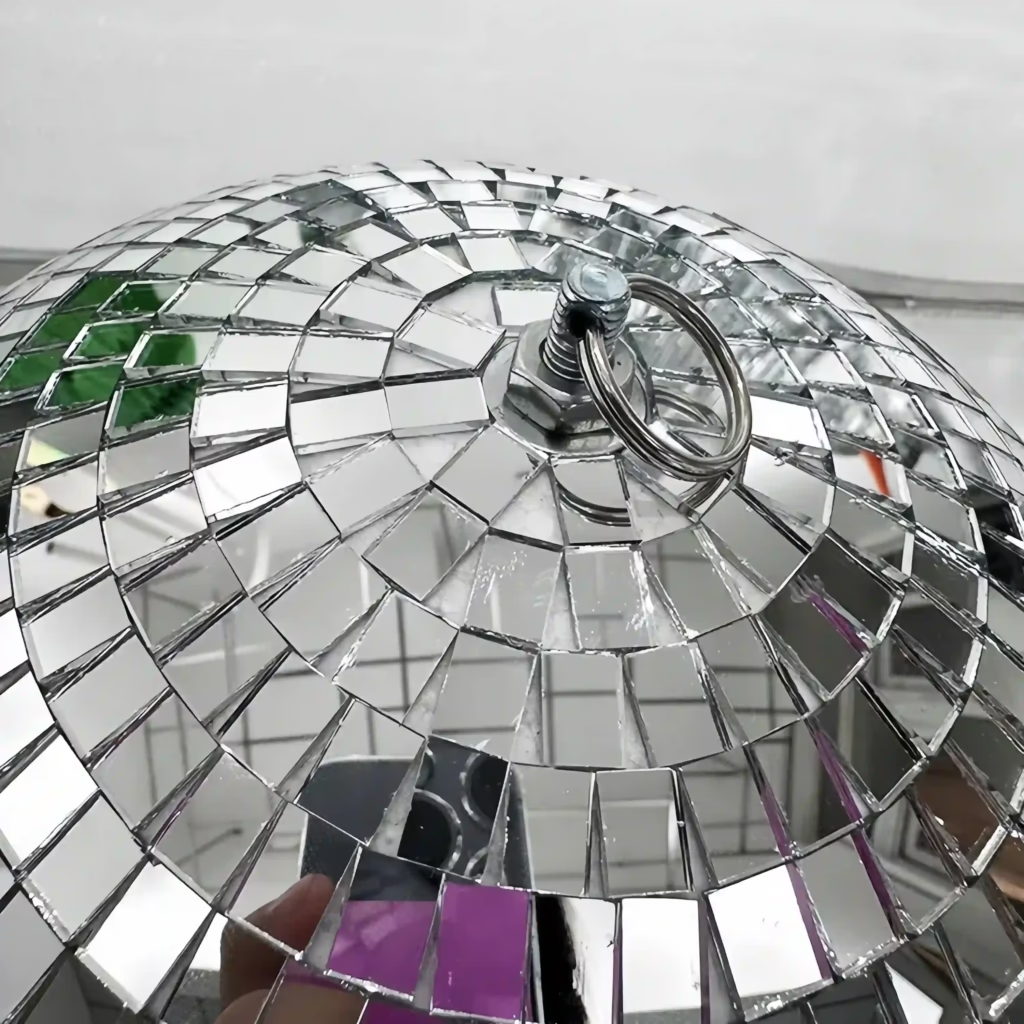
The trade-off is coverage uniformity at the poles. Spherical geometry means the tile pattern compresses at the top and bottom of the sphere, where the surface curves away most sharply. At these convergence points, tiles cannot maintain full coverage without overlap or gap. This is inherent to the geometry, not a quality defect — it applies to every spherical mirror ball regardless of manufacturer.
Available Sizes and Finish Options
Standard Sizes
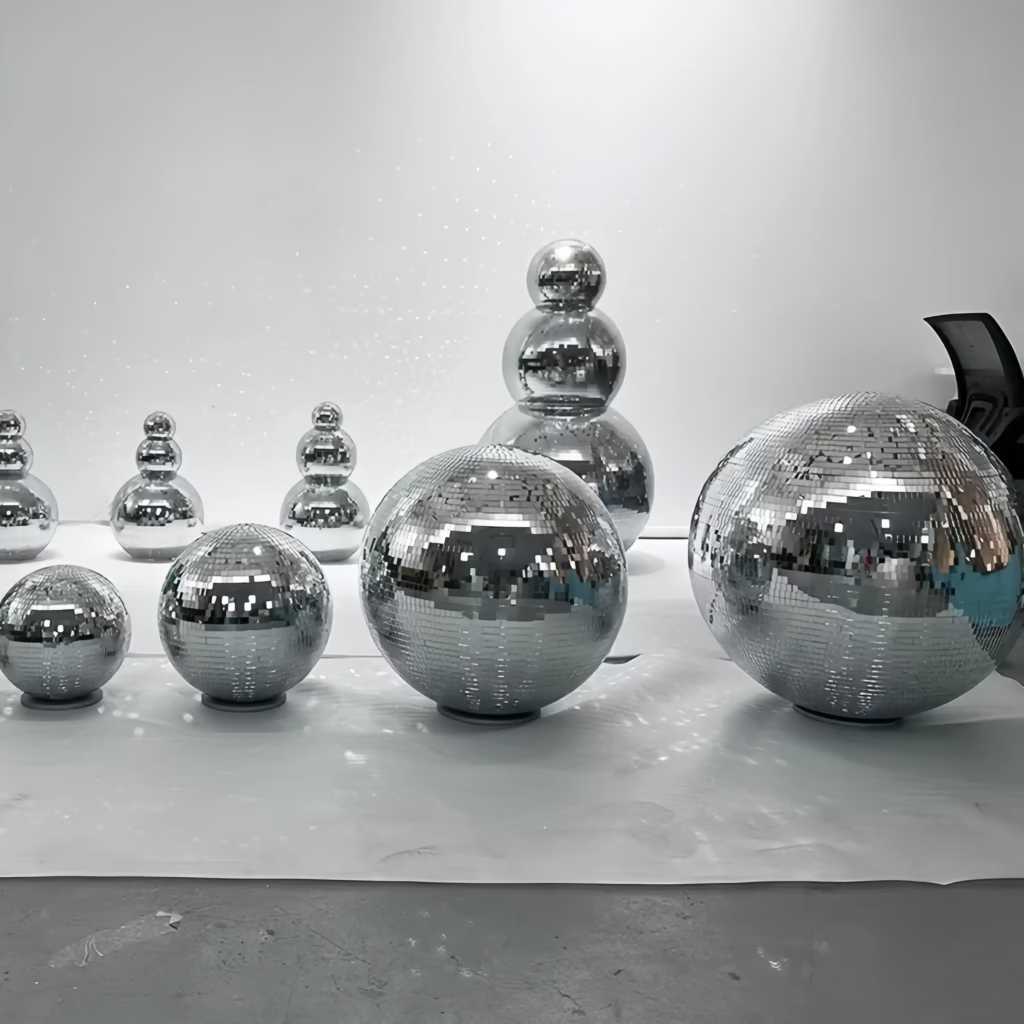
We produce mirror balls in 10 cm increments from 10 cm to 100 cm diameter. Custom sizes outside this range are available but may require custom CNC tooling for the foam core.
For retail window display, the most frequently ordered sizes are 30 cm, 50 cm, and 80 cm. Smaller sizes (10–20 cm) are used as counter and shelf accents. The 100 cm size is typically a hero piece — a single large statement element suspended at window center.
Mirror Tile Finishes
The standard finish is classic silver mirror. Additional options include:
- Gold mirror — warm metallic tone, frequently specified for holiday and Chinese New Year campaigns
- Rose gold mirror — softer warm tone for spring/summer and beauty brand applications
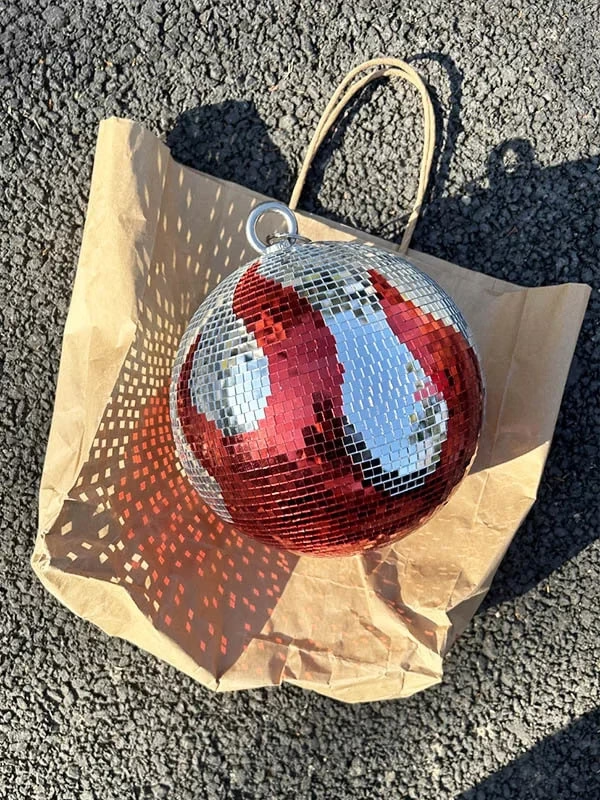
- Colored mirror — red, blue, green, black, and custom Pantone-matched tones achieved through tinted mirror tiles
- Matte metallic — non-reflective metallic surface for a subtler effect under bright retail lighting
- Mixed finish — different tile colors applied in patterns, gradients, or brand-specific arrangements
Custom Shapes
Beyond the standard sphere, we produce mirror-tiled props in custom forms:
- Mushroom — dome cap on a cylindrical stem, used in nature-themed and fantasy window concepts
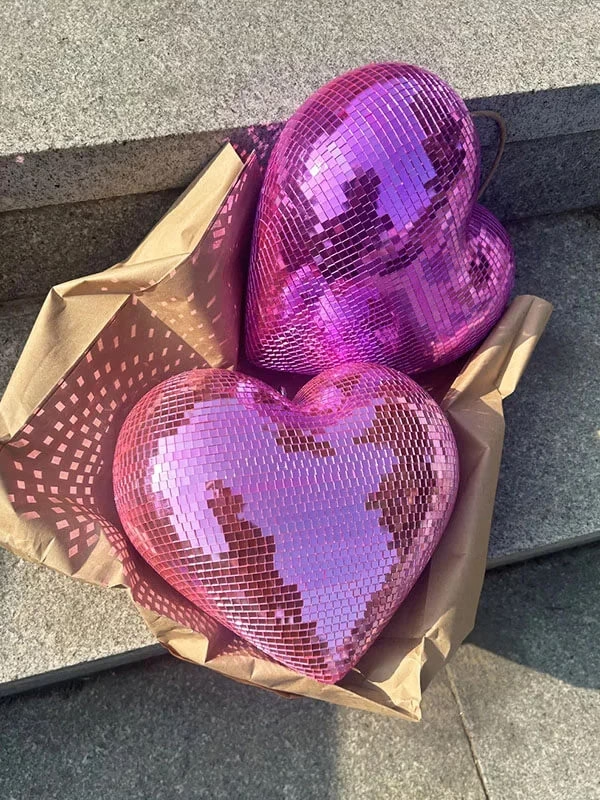
- Heart — Valentine’s and romance-themed campaigns
- Egg / ovoid — Easter and spring seasonal displays
- Flat disc — wall-mounted or suspended as backdrop elements
- Brand-specific custom forms — CNC-cut from EPS foam to any shape, then mirror-tiled
Manufacturing Sequence
Step 1 — Foam Core
The EPS foam core is produced by injection molding (for standard sphere sizes that justify mold tooling) or CNC hot-wire cutting (for custom shapes and non-standard sizes). The core is lightweight, dimensionally stable, and provides a consistent substrate for tile application.
Step 2 — Surface Preparation
The foam surface is cleaned and lightly sanded to ensure adhesive contact. For custom-painted designs (solid color foam visible between mirror tile gaps), the paint is applied at this stage before tiling.
Step 3 — Mirror Tile Application
Mirror tiles are hand-applied in adhesive strip rows. The tiling pattern starts at the equator and works toward both poles. Each row is visually checked for alignment before proceeding to the next. Total tiling time varies by size — a 30 cm ball takes approximately 1–2 hours, a 100 cm ball takes a full working day.
Step 4 — Quality Inspection and Packaging
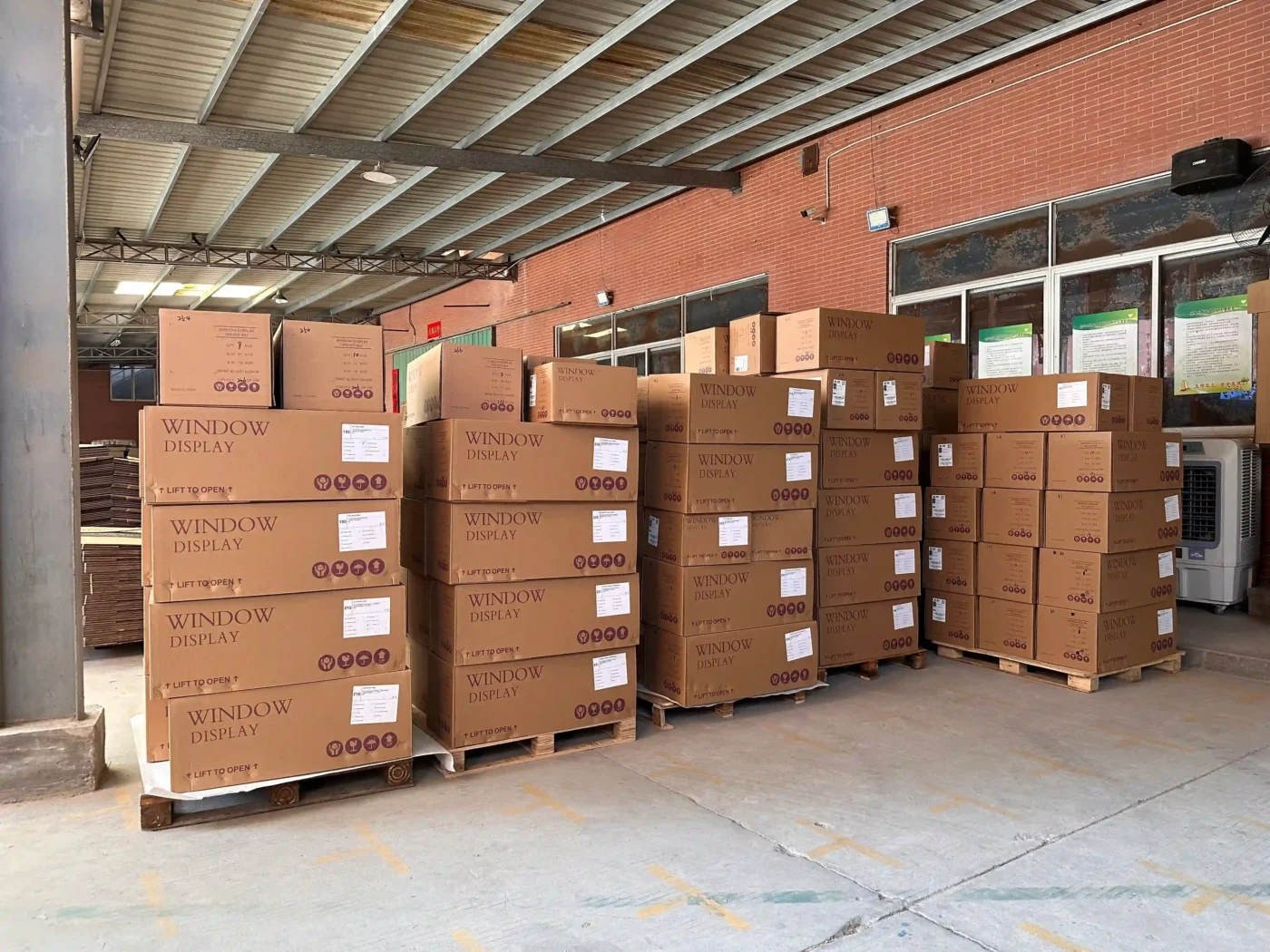
Each finished piece is inspected for tile adhesion, alignment consistency, and surface defect (chipped tiles, adhesive overflow). Packaging uses custom foam cavity inserts to prevent tile displacement during freight.
Brand Examples — Mirror Balls in Luxury Retail
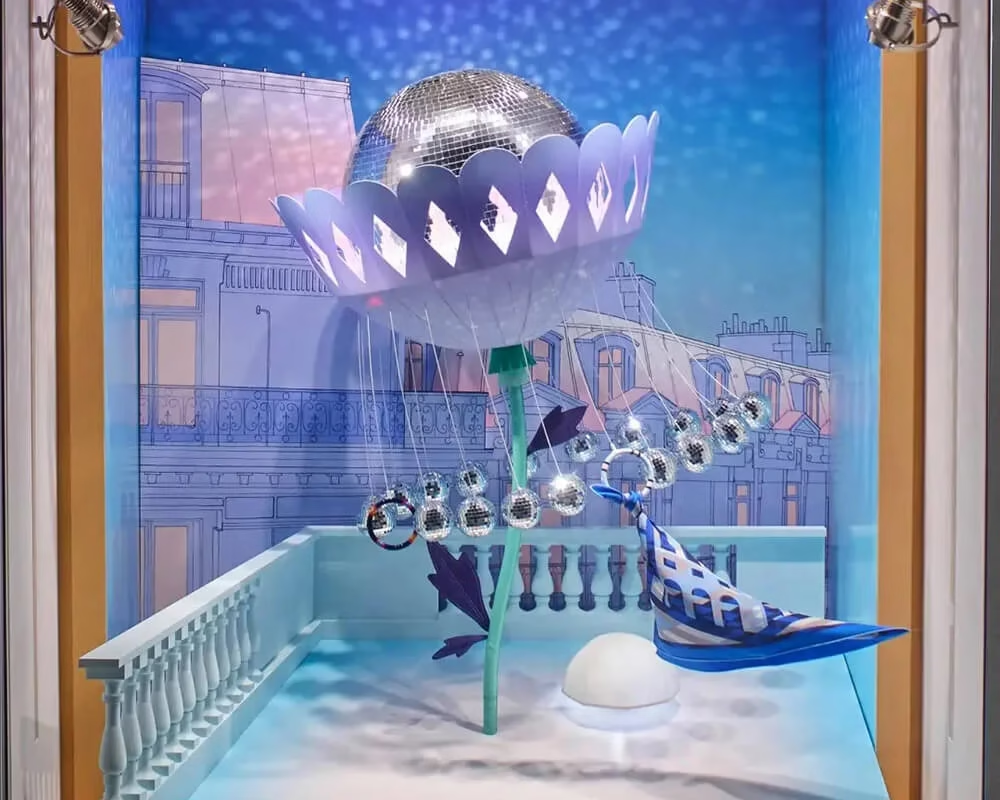
Hermès has used custom mirror ball installations across multiple seasonal campaigns, incorporating mirror-finish spheres in varying sizes as both window display elements and store interior accents. The reflective surfaces interact with the brand’s signature warm lighting scheme to create a dynamic visual environment that shifts as customers move through the space.
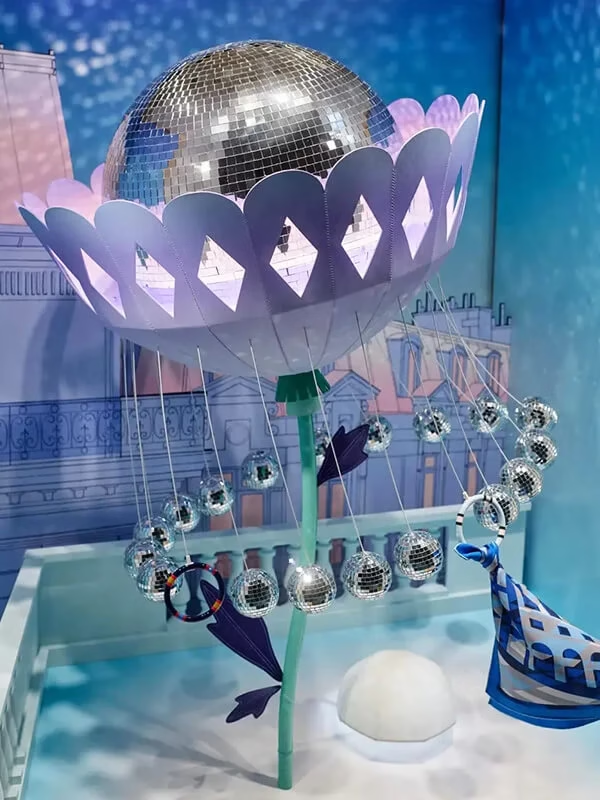
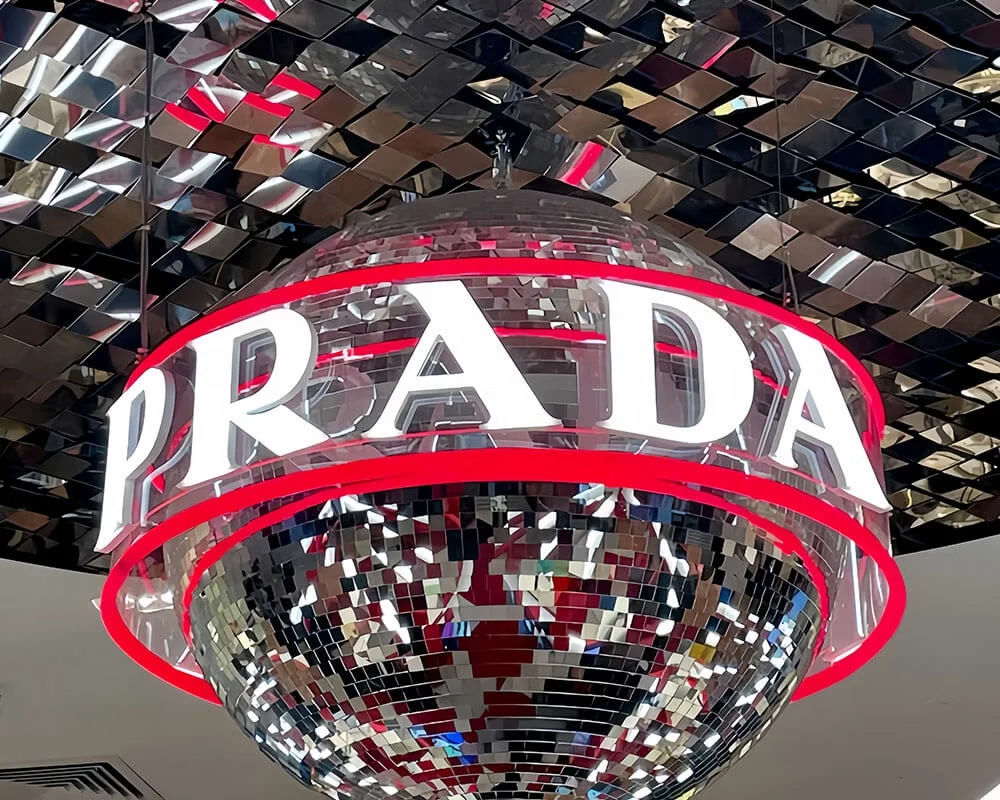
Prada similarly used large-scale mirror balls as hero window elements — the reflective surface captures and fragments the surrounding visual environment, creating an abstracted, immersive effect that aligns with the brand’s conceptual approach to visual merchandising.
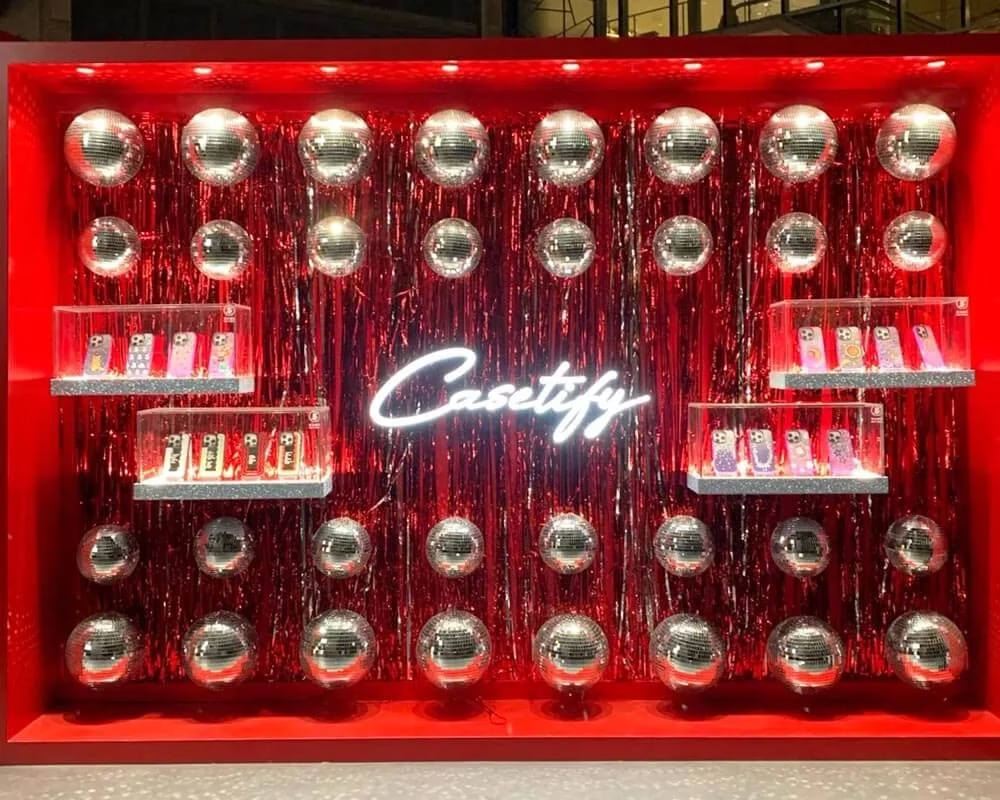
These installations demonstrate a consistent pattern: mirror balls work most effectively in retail when they are used at scale (multiple sizes, clustered arrangements) rather than as isolated decorative objects. A single small mirror ball is a novelty. A curated arrangement of varied sizes with considered lighting becomes an environment.
Practical Considerations for VM Teams
Mounting method determines size limit. Mirror balls above 60 cm in EPS foam are light enough to suspend from standard display rigging, but the mounting point must be engineered into the foam core during production — not drilled after the fact. Drilling into finished EPS foam creates crumbling at the bore, which weakens the mount. If you anticipate suspended installation, specify this at the order stage so the mounting hardware can be embedded during core production.
Mirror tile size affects visual texture. Smaller mirror tiles (10×10 mm) create a finer, more uniform reflective surface. Larger tiles (20×20 mm or 25×25 mm) create a more faceted, graphic pattern with wider grout lines between tiles. The choice is aesthetic, but it also affects how the ball reads at viewing distance — small tiles look smoother from 3+ meters, large tiles look more dynamic and “disco” at the same distance.
Storage between seasons. EPS foam is durable but not indestructible. Mirror balls should be stored in their original packaging inserts, in a dry environment, away from direct sunlight. UV exposure over time can yellow the adhesive strips and dull the mirror tile coating.
→ See our full manufacturing capabilities
→ Read about electroplating for metallic mirror finishes on FRP props